When Major General Reinhard Gehlen ordered his staff to microfilm the entire archive of Foreign Armies East, the Wehrmacht’s intelligence organization focused on the Soviet Union, he was preparing for Germany’s defeat. By the spring of 1945, he understood the war was lost. He also understood that the coming conflict between the Western Allies and the Soviet Union would make his intelligence network the most valuable commodity in post-war Europe. Over four years, Gehlen had built the most comprehensive intelligence picture of Soviet military capabilities, political structure, and strategic intentions that existed in the Western world.
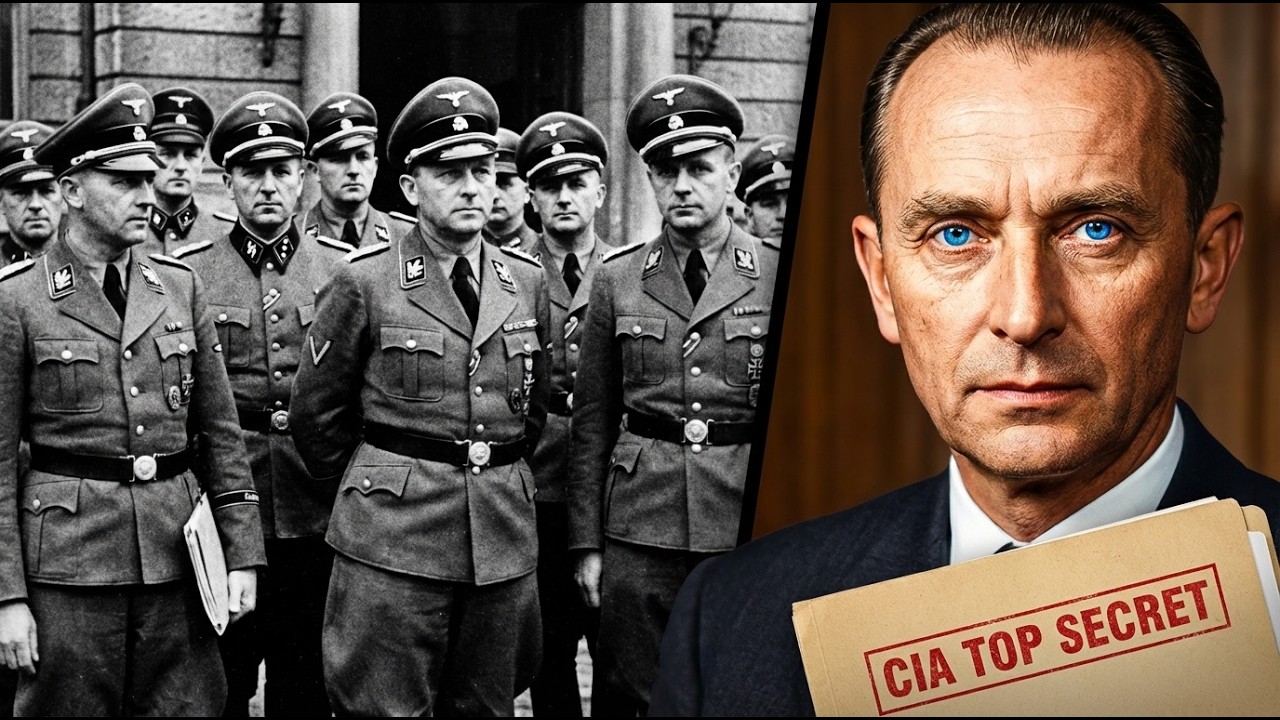
His network extended deep into Soviet territory, with agents in Moscow, contacts in the Red Army, and informants inside Soviet intelligence agencies. As the Third Reich collapsed, Gehlen decided to survive by making himself indispensable. In March 1945, he ordered that every document in the Foreign Armies East archive be photographed. Agent names, assessments of Soviet order of battle, maps of Soviet installations, and reports from deep-cover assets inside the Soviet Union were all committed to microfilm.
The film was sealed in watertight steel canisters, 50 in total, and transported to remote locations in the Austrian Alps where they were buried in the frozen soil. Gehlen memorized the locations, then destroyed the maps. Gehlen surrendered to American forces on May 22, 1945. He deliberately sought out United States Army units rather than Soviet forces, knowing the Soviets would execute him immediately.
The Americans might listen first. He was taken to a prisoner of war camp where initial interrogators classified him as a routine Wehrmacht general. Standard processing and war crime screening began. But Gehlen had anticipated this and requested a meeting with senior American intelligence officers.
He offered a trade: his intelligence network in exchange for protection and employment. His first leverage point was the buried microfilm. Gehlen told his interrogators about the canisters and offered to reveal their locations, but only after conditions were met. He would not be turned over to Soviet authorities.
He would not face war crimes prosecution. His senior staff would receive the same protections. He would be allowed to rebuild his intelligence organization under American supervision. The American officers were skeptical.
They believed the intelligence he claimed to possess either did not exist or was worthless. But they also understood that if he was telling the truth, the canisters represented strategic intelligence that could shape post-war policy. They agreed to investigate. Gehlen led recovery teams to the burial sites.
The canisters were genuine, the microfilm was intact, and the intelligence was comprehensive and current. The Americans realized they had captured something of significant value. The interrogation process then tested whether Gehlen was a double agent. American intelligence officers spent months verifying the information against their own sources, cross-referencing agent reports, checking Soviet unit identifications, and confirming geographical details.
The intelligence was accurate. More concerning for the Americans, it was more detailed and current than anything Western intelligence had on Soviet forces. Gehlen’s network had penetrated Soviet structures at levels the Americans and British had not achieved. The verification process convinced skeptics.
Gehlen had run the most effective intelligence operation against the Soviet Union that existed, and he was offering to continue running it under American control. Soviet intelligence complicated the negotiations. The NKVD knew about Gehlen and wanted his networks destroyed and Gehlen dead. Soviet teams were actively searching for former Wehrmacht intelligence officers with orders to capture or kill anyone connected to anti-Soviet operations.
Several of Gehlen’s former staff were kidnapped and disappeared into Soviet custody. Others were found dead. Each Soviet action increased Gehlen’s value to the Americans; if the Soviets wanted him dead, he must possess something worth protecting. The political wall nearly stopped the deal.
Washington politicians were uncomfortable hiring Nazi intelligence officers. The war had been fought to defeat Nazism, and now American intelligence wanted to employ Nazi spies. But the geopolitical reality was shifting. By late 1945, the alliance with the Soviet Union was fracturing, and Churchill’s Iron Curtain speech came in March 1946.
The Cold War was beginning. American intelligence argued that Gehlen’s network was essential for understanding Soviet intentions and capabilities. Without it, the United States was operating blind against the new adversary. The political objections were overridden by strategic necessity.
The deal was approved in July 1946, and the transformation of a Nazi intelligence ring into a spy agency funded by the United States began in September 1946. Gehlen and his senior staff were relocated to a compound in Pullach, Germany, a suburb of Munich. The facility was officially a United States Army installation; in practice, it was the headquarters of the Gehlen Organization. American intelligence provided funding, equipment, and protection.
Gehlen provided intelligence on the Soviet Union and Eastern Europe. His agents, many of whom had worked for the Third Reich, now worked for American interests. They spied on Soviet military movements, infiltrated the East German government, and monitored Warsaw Pact activities. In 1956, the organization was officially transferred to the West German government and became the BND, the Federal Intelligence Service.
Gehlen served as its first president until 1968. Former Nazi intelligence officers staffed key positions, and their expertise on Soviet operations was considered too valuable to dismiss. The ethical compromises were accepted as necessary costs of the Cold War. Gehlen was not the only Nazi spy who found post-war employment.
Otto Skorzeny, Hitler’s favorite commando and intelligence operative, escaped Allied custody in 1948 and fled to Spain, where Franco’s government provided protection. He became a military advisor to various governments, training special forces and intelligence officers for Egypt and Syria. Evidence later emerged that Skorzeny also worked with Israeli Mossad, positioning the Nazi commando who had rescued Mussolini and led covert operations for the Third Reich as simultaneously working for Arab governments and Israeli intelligence. Ratlines also used Nazi intelligence networks for criminal purposes.
Intelligence officers understood document forgery, secret routes, and how to move people covertly. After the war, some used those skills to help war criminals escape prosecution. Adolf Eichmann fled to Argentina using forged documents and routes established by former intelligence officers. Josef Mengele followed similar paths.
Klaus Barbie, the Butcher of Lyon, was protected by American intelligence because his anti-communist activities in France were considered valuable. He eventually fled to Bolivia. Moscow captured thousands of German intelligence personnel. Those who did not get Gehlen got many of his subordinates and competitors.
These men were not offered deals; they were forced into service. The NKVD used captured German intelligence officers to help build the East German Stasi, the Ministry for State Security, the most comprehensive surveillance state in the Eastern Bloc. Former Wehrmacht intelligence officers trained Stasi agents in interrogation techniques, surveillance methods, and counterintelligence operations under threat of execution or permanent imprisonment. The human cost of employing Nazi spies was measured in the survivors who saw their persecutors rewarded.
Concentration camp survivors watched former Gestapo intelligence officers working openly in West German government. Resistance fighters who had been tortured encountered their interrogators on the streets of Munich or Berlin, now respectable civil servants. The pursuit of Cold War strategic advantage required the sacrifice of justice for the victims of the Third Reich. The deals were secret initially.
The public did not know about the Gehlen Organization until journalists exposed it in the 1950s. By then, it was too late to undo. The organization was operational, its intelligence was valuable, and the political cost of shutting it down exceeded the ethical benefit. Western governments accepted the criticism and continued the relationship.
The standard justification was necessity. The Soviet threat required using every available resource, and German intelligence officers had the expertise and networks needed to counter Soviet operations. The moral compromises were regrettable but necessary. The 50 steel canisters buried in the Austrian Alps contained the foundation of Western Cold War intelligence on the Soviet Union.
The microfilm documented a network that Western intelligence could not have replicated in years of work. That intelligence bought Reinhard Gehlen his life, his freedom, and his career as the first head of West German intelligence. It bought protection for hundreds of former Nazi intelligence officers who staffed the Gehlen Organization and later the BND. It bought strategic advantage for the United States in the opening years of the Cold War.
What it cost was justice for the victims of the Third Reich and the integrity of the claim that the war had been fought for moral principles rather than strategic advantage. The men who spied for Hitler became the men who spied on Stalin. The only thing that changed was who signed their paychecks.