Belle da Costa Greene was hired in 1905 by J. P. Morgan to serve as his personal librarian. She would go on to build his vast collection into one of the world’s greatest libraries while earning millions in the process.
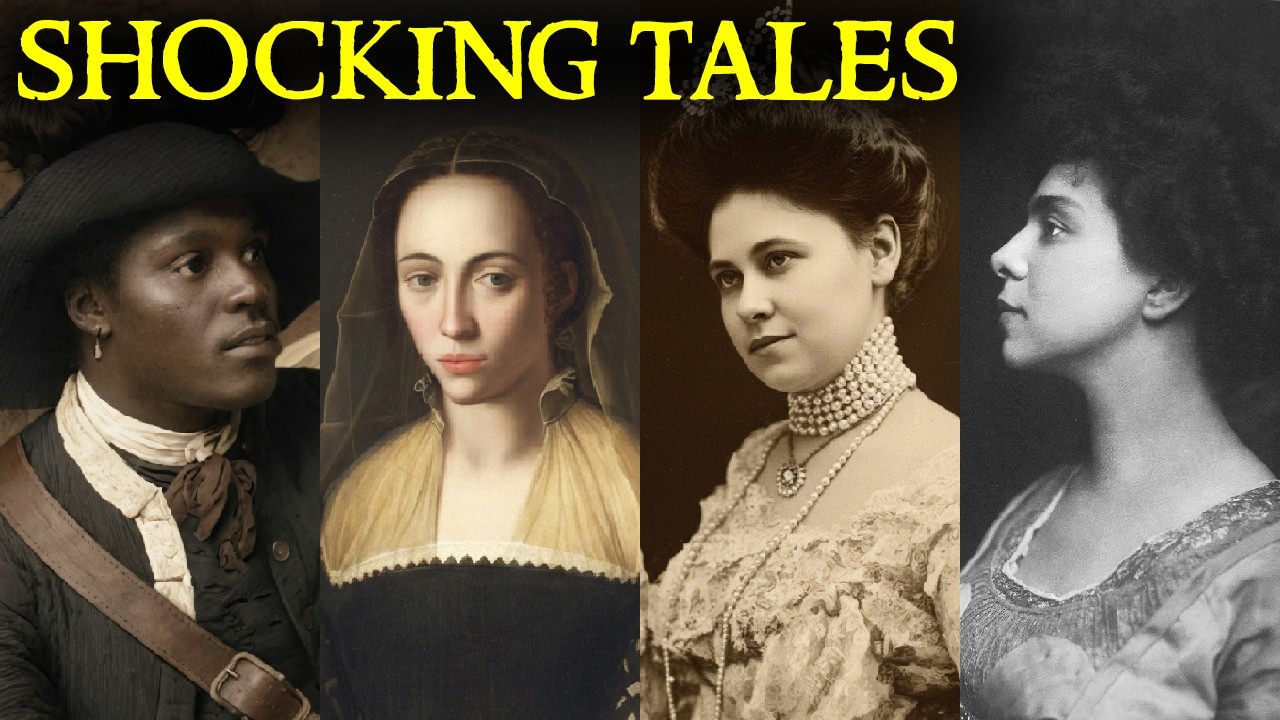
But Greene carried a secret that, if exposed, would have destroyed everything she had built. Born Belle Marian Greener in Washington, D. C. , in 1879, she was the daughter of Richard T.
Greener, the first African American to graduate from Harvard College. Her mother, Genevieve Ida Fleet Greener, was from a prominent Washington family. The couple had six children and raised their family in a home filled with intellectual and artistic ambition. That stable world collapsed, however, when Richard discovered that Genevieve had registered the family as white in a census record.
For a man dedicated to civil rights, it was a profound betrayal. Though they never divorced, the couple separated and Richard moved to Vladivostok, where he entered an informal marriage with a Japanese woman. After the separation, Belle and her siblings carefully changed their identities, dropping the “r” from their surname, Greener, to become Green. Belle dropped her middle name, Marian, and adopted “da Costa,” claiming Portuguese ancestry to explain her slightly darker skin.
Her mother similarly adopted the name Van Vliet to claim Dutch roots. These fabrications deepened over time, severing the family’s connection to their African American heritage. In 1896, Greene received a scholarship to study at the Northfield School for Young Women in Massachusetts. She later studied the emerging field of library cataloging and archiving at Amherst College’s summer school.
In 1902, Princeton University hired her to work in its prestigious library and archive. It was there that she met Junius Spencer Morgan II, a nephew of J. P. Morgan.
Impressed by Greene’s expertise, Junius recommended her to his uncle in 1905 when the banking tycoon decided to hire a librarian to organize his growing personal collection of books and documents. The collection had become a chaotic labyrinth of treasures with no system or order. Greene began cataloging the materials by subject and type, transforming the clutter into a functional library. She also organized events and exhibitions that brought Morgan’s private collection into public view.
Her role soon expanded far beyond that of a librarian. As Morgan’s reputation in philanthropy grew, Greene became a trusted advisor and gatekeeper, vetting the many individuals seeking funding and deciding who deserved his attention. The closeness of their relationship sparked inevitable rumors that it was more than professional. When they met in 1905, Greene was 26 and Morgan was 68.
While married, Morgan was known for affairs. Greene admitted to admiring him greatly, and when asked whether she had been his mistress, she reportedly replied, “We tried. ”
She eventually earned an astonishing salary of $10,000 a year, equivalent to more than $300,000 today. When Morgan died in 1913, he left her an additional $50,000 in his will, worth over $1.
5 million today. Whether that generosity reflected her undeniable work or something deeper remains a matter of speculation. Scholars today generally agree that they were not lovers and that Morgan likely did not know her true identity. From 1908 onward, Greene traveled the world attending auctions and meeting collectors to acquire new pieces for Morgan’s collections.
She had a particular interest in medieval manuscripts, and today the Morgan Library and Museum holds one of the largest collections of illuminated manuscripts and miniature paintings in the world. She also acquired African, Middle Eastern, and Asian art, including a 14th-century Ethiopian Gospel book. By the early 1920s, Greene oversaw the transformation of Morgan’s library from a private institution into a fully public one. The Pierpont Morgan Library opened its doors in 1924 with Greene as its first official director, a position she held for nearly a quarter century.
Under her leadership, the library grew to include thousands of rare books and manuscripts and hundreds of thousands of other items. Greene was also a striking social figure in New York society, known for lavish dress and feathered hats. She never married, but in 1909 she began a decades-long relationship with Bernard Berenson, a renowned Renaissance art expert. Though they maintained a strong connection, they never lived together because Berenson was married, and Greene valued her independence.
She retired in 1948 at age 68 due to failing health and died of cancer in New York on May 10, 1950, at age 70. The New York Times described her at her death as one of the most famous librarians in the country. Greene destroyed most of her personal papers before she died, but her letters to Berenson survive. In the summer of 1904, New York City was rocked by a scandal when millionaire John Platt accused Hannah Elias, a reclusive Black woman with a mysterious past, of blackmailing him for $685,000, equivalent to roughly $30 million today.
The accusation made Elias one of the wealthiest and most controversial Black women in America. Elias was born in Philadelphia in 1865, the year the Civil War ended. Her father, Charles Elias, was a caterer of mixed African American and Native American ancestry, and her mother Mary was light-skinned. The family was large, with nine children, and they lived in what was then the wealthiest Black neighborhood in the city.
Little is known about Elias’s early life until 1884, when her sister Hattie married. Before the wedding, Elias borrowed an expensive dress from the wardrobe of the wealthy woman she worked for as a servant. At the wedding, many praised how luxurious and magnificent her gown was. Days later, police arrived at the Elias home and arrested her.
She was quickly tried, convicted of theft, and sentenced to four months in a Philadelphia prison. When she returned home, her father refused to allow her to live with the family. Destitute and homeless, she moved north to New York, where she began working as a prostitute in the Tenderloin district. She became pregnant in 1885 and gave birth to a daughter named Clara in early 1886, whom she put up for adoption.
Shortly after, she was convicted of prostitution and spent a month in prison on Roosevelt Island. She then began claiming she was Cuban due to her light skin. Over the years, Elias became successful enough to buy properties and rent them out for additional income. By the early 1900s, she lived in luxury, serviced by a full household staff.
But whispers about her wealth were growing, and the truth behind her fortune was about to explode into one of New York’s biggest scandals. A wealthy businessman named John R. Platt, a married man in his sixties, had begun visiting Elias after they met again in 1887. Their secret relationship lasted for years, maintained through coded advertisements in a New York newspaper under the names “Bessie” and “Papa.
” Platt began giving Elias money, reportedly $2,000 to $6,000 a month. He advised her to invest in property and stocks, and she became one of the wealthiest Black women in the United States. One of Elias’s first investments was a house near Platt’s family home. One night in 1895, Platt came to visit, and a Black tenant named Cornelius Williams answered the door.
When Platt asked, using his alias “Mr. Green,” whether the owners were home, Williams slammed the door in his face. Weeks later, Elias evicted him. Convinced that the mysterious Mr.
Green was responsible, Williams left furious and swore revenge. Eight years later, in November 1903, Andrew Haswell Green, the quiet genius behind Central Park and the New York Public Library, was returning home after a family lunch. Williams, in a state of paranoia and obsession, mistaken Green for Platt, pulled out a gun and shot him. Green died on his doorstep, unaware he was the tragic victim of a revenge meant for another man.
Williams was later declared insane and spent the rest of his life in a mental institution. In 1890, Elias married a Black railway worker named Christopher Smith, but she continued her relationship with Platt. Smith left in 1897, claiming he found the affair unbearable. Platt paid off Smith’s legal troubles and gave Elias more money to keep the situation quiet.
By that time, his wife had died, and he bought Elias a beautiful home near Central Park. In the summer of 1904, Platt took legal action against Elias, accusing her of blackmailing him for more than $685,000 over the years. He claimed he had first visited her in the late 1880s seeking relief from rheumatism at her massage parlor, and later helped her establish a boarding house before becoming her victim. Police initially took his claims seriously, raided her home, and held her in a dreary Manhattan jail for several days.
Investigators ultimately concluded there was no evidence supporting his claim, and she was released. It emerged that Platt had not pursued the case willingly; his family had pressured him after discovering how much of their inheritance he had given away. After Platt dropped the charges, his family sued in civil court but also failed. By early 1905, Elias was cleared.
The press coverage was often more interested in her racial background than in the case itself, with some papers suggesting she was a foreign-born woman deceitfully preying on a helpless elderly man. Elias remained in New York for years, living on rental income from her many Harlem properties. Platt died in 1908, leaving an estate of only $10,000, a fraction of his former wealth. Nothing was left to Elias, and she did not attend his funeral.
In 1923, wishing to escape her notorious reputation in New York, she sailed for Europe with a Japanese servant named Kato and never returned. She settled in France, where accounts say she died in Paris or on the French Riviera in the late 1920s. On an autumn afternoon in October 1781, a line of British soldiers marched toward a field near Yorktown, Virginia. Opposite them stood American troops, with French officers under the Marquis de Lafayette on one side and Continental forces led by Benjamin Lincoln on the other.
But General Charles Cornwallis refused to appear, feigning illness, and many suspected a far more cowardly motive. Standing with the American leaders was a face many British soldiers would have found surprisingly familiar: that of a Black man named James Armistead, a double agent for the Continental Army. Cornwallis had believed James was his trusted servant, tasked with infiltrating the Continental Army and feeding the British headquarters information. In truth, James had been spying for the Continental Army for years, giving Cornwallis only lies.
Born into slavery in Virginia in the mid-18th century, James had been educated in reading and writing in both English and French. When the British issued a proclamation in 1775 offering freedom to any enslaved person who joined their ranks, James faced a difficult choice. The Marquis de Lafayette, a French nobleman who despised the institution of slavery, proposed a different path. He suggested that James exploit the British desire to recruit enslaved people by infiltrating the British army and passing intelligence to the Continental Army.
The risks were enormous; the punishment for spies was execution. James accepted the offer, and in March 1781 he became the newest double agent of the American Revolution. His first mission was to cross enemy lines, pretending to be a runaway slave to enter the British camp. The British saw him as an ideal asset, given his encyclopedic knowledge of the terrain around Williamsburg and Richmond.
They sent him to infiltrate the American camp and gather key details about American movements and supply lines. James attended British meetings, noting valuable information to pass to the Patriots, while the Americans fed him false information to relay to the Crown. His cover allowed him to become a messenger for senior British commanders, including Benedict Arnold and General Cornwallis. In August 1781, James learned that Cornwallis’s forces planned to move from Portsmouth to Yorktown, expecting to receive reinforcements and supplies through Chesapeake Bay.
He passed this information to Lafayette, and the French fleet moved to blockade the bay, cutting off British supply lines. The Continental Army then attacked Cornwallis’s positions, digging trenches and launching assaults under Lafayette and a young colonel named Alexander Hamilton. The siege of Yorktown began on October 9, and Cornwallis surrendered less than a month later. Had it not been for the intelligence James provided, the Patriots might have missed their chance to trap the British forces at Yorktown.
The war officially ended with the Treaty of Paris in 1783. When Cornwallis met James later while wearing an American uniform, he reportedly remarked, “Ah, you rascal, you have been deceiving me all this time. ” James never carried a weapon or wore a uniform during his service to avoid raising suspicion. After the war, James remained enslaved for years.
Virginia law since 1723 required that enslaved people could only be freed for meritorious service approved by the governor and council. Although Virginia passed legislation in 1782 allowing freedom for enslaved people who had served as soldiers, the law’s wording took precedence over its spirit. James had been a spy, not a soldier, so he did not qualify. For five long years, James remained in service.
His master, William Armistead, actively petitioned the Virginia legislature for his freedom. But it was Lafayette who finally made the difference. In a 1784 memorandum to the legislature, the Marquis testified that James had performed essential services, gathering information from the enemy camp with diligence and faithfulness. In January 1787, the governor of Virginia signed a petition guaranteeing James’s freedom.
The legislature compensated William Armistead 250 pounds, worth over $20,000 today, for the loss of his slave. James Armistead settled in eastern Virginia on a farm beside his former master. In 1824, he met Lafayette again when the Marquis visited Yorktown during a tour of the United States. Deeply moved by Lafayette’s kindness, leadership, and dedication to securing his freedom, James took the name “Lafayette” in honor of the French general.
James Armistead Lafayette lived the rest of his days in peace and relative prosperity, receiving a military pension and becoming a landowner in the region. He died in 1832 at around age 72, surrounded by loved ones, though his final resting place remains unknown to this day. Although James owned slaves himself late in life, a fact some modern observers may find troubling, his story serves as a reminder that even the most moral figures of the nation’s past were unable to fully transcend the cultural biases of their era. Julia de Medici was born in the 1530s in Florence as the illegitimate daughter of Alessandro de Medici, the first Duke of Florence, a man of mixed ancestry who may have been the first Black ruler of Renaissance Europe.
Julia’s life was intertwined with secrets, politics, and power from the moment of her birth. The Medici family rose to power through trade and banking in the 15th century. Alessandro was born in Florence in 1510, officially listed as the son of Lorenzo de Piero de Medici, though many historians argue he was actually the illegitimate son of Giulio de Medici, the future Pope Clement VII. His mother was believed to be Simonetta da Collevecchio, described by some as a servant in the Medici household.
Alessandro was nicknamed “il Moro,” or “the Moor,” due to his notably dark skin, leading to speculation that his mother was of African descent. Giulio de Medici treated Alessandro as his son, providing him with an excellent education and preparing him for leadership. After the Medici family was forced into exile during an uprising in 1527, Pope Clement VII reached an agreement with Emperor Charles V to restore Medici rule. Florence fell after a 10-month siege, and by 1531 the family was back in power.
Alessandro was made head of the Florentine state and became the first hereditary duke of the city in 1532. His reputation was mixed. Supporters saw him as a protector of the poor. Critics, especially those exiled after the 1530 siege, portrayed him as a tyrant, incompetent and morally corrupt.
From his relationship with Taddea Malaspina, a noblewoman, two children were born: Julia, born around 1532, and Giulio, born in 1535. Though illegitimate and without official titles, both were acknowledged by Alessandro and well cared for. In 1536, Emperor Charles V married his daughter Margaret of Austria to Duke Alessandro as part of a strategic alliance meant to solidify his rule. But on the night of January 6, 1537, Alessandro was lured to a private meeting and killed by his cousin and advisor, Lorenzino de Medici.
He died at just 26, without leaving a legitimate heir. A final child, named Portia, was born to another mistress a few months later. Power shifted overnight. Giulio, though the only son of Alessandro, was passed over for succession.
Instead, Cosimo I, a member of the younger branch of the Medici family, was elected as the new Duke of Florence. He promised to care for his predecessor’s orphans. Young Julia was sent to Villa Castello, where she was placed under the care of Cosimo’s mother, Maria Salviati. There she shared a home and room with Bia de Medici, Cosimo’s illegitimate daughter.
The two girls grew up close, but Bia died of a fever in February 1542, leaving Julia to mourn her deeply. As Julia grew, she became fully integrated into court life. Though illegitimate, her lineage from the main Medici line was honored, and she received a comprehensive education in manners, arts, and languages appropriate for a noblewoman. Court observers noted that she resembled her father Alessandro, with strong features and curly hair.
Despite her darker skin compared to most court ladies and rumors of her African ancestry, many considered her beautiful. Around 1550, when Julia was about 15, Cosimo arranged her first marriage to Francesco Cantelmo, Duke of Popoli. Her dowry was enormous, the equivalent of tens of millions of dollars today. She became a duchess in her own right.
When Cantelmo died in 1555, Julia was widowed in her early twenties. During her grief, she commissioned a portrait from Alessandro Allori, one of Florence’s leading artists. It shows her solemn, sorrowful, and proud, seated beside an elaborately carved chair with an armrest. Art historians have offered a wide range of interpretations of what it represents, though whether the painting depicts Julia at all has been disputed.
During her widowhood, Julia spent considerable time at the Augustinian convent of San Clemente in San Gallo, where her half-sister Portia served as abbess. In 1559, she remarried, this time to Bernardo de Medici, a cousin of Cosimo I. A year later, she gave birth to a son she named Alessandro in honor of her father. The family hosted parties and participated in diplomatic affairs, though tensions arose when Julia demanded to be treated as an equal to Cosimo’s young mistress, straining her once-close relationship with the duke.
In 1567, Julia and her husband moved to Naples, where they struggled to secure their rights to the lands of the Principality of Ottaviano. There she managed properties, supported religious institutions, and secured her family’s future. Her descendants through her son Alessandro carried the title of Princes of Ottaviano into the modern era. For centuries, Julia was gradually erased from history.
One notable example is a painting by Pontormo of Maria Salviati with a child. For hundreds of years, viewers saw only Maria, but a 1937 restoration revealed a child who had been painted over. Many now agree that child is Julia de Medici, with features resembling her father Alessandro. It is now believed to be one of the earliest European portraits of a girl of African and European ancestry, though some argue the child is actually Bia de Ricci.
Julia de Medici died in 1588 at around age 52 or 53. Few historical records detail her final years, but her life was intertwined with the fortunes and schemes of one of Europe’s most powerful dynasties. Her story remains a reminder that even those cast into the shadows of history can leave a legacy that echoes for centuries.