John Peter Ringo was born on May 3, 1850, in Wayne County, Indiana. His parents, Martin and Mary, moved the family to northern Missouri, and in 1864, when Johnny was fourteen, they joined a wagon train heading for California. Martin Ringo was suffering from tuberculosis and hoped the drier climate out west would help. The journey was brutal from the start.
On a single day, young Johnny watched a boy his own age fall from a wagon and be crushed to death under the wheels, and then saw the wagon master kill a teamster with a bullet to the head over a dispute. The worst tragedy came on July 30. As Martin Ringo was stepping down from a wagon, he accidentally shot himself in the head with a shotgun. Witnesses saw his brains scatter and his hat fly twenty feet into the air.
The family buried him beside the trail and pressed on. They eventually reached San Jose, California, where Johnny spent his formative years. By 1870, the twenty-year-old was listed as a farmer on the federal census, but he soon left for Texas. There he befriended a former Texas Ranger named Scott Cooley and became involved in the Mason County War, also known as the Hoodoo War.
Ringo’s exact role is debated, but he rode with Cooley and took part in the killing of a rival named James Chaney. He was arrested, escaped from jail, was recaptured by Texas Rangers, and faced serious prison time. An appeal resulted in a new trial, but no witnesses were willing to testify against him, so he went free. Ringo then won election as constable in the nearby town of Loyal Valley.
But by 1879, he had given up the badge and headed to Arizona, where he shot a man in a saloon for refusing a drink. The victim survived, but Ringo was building a reputation as a mean-tempered drunk. He allied himself with the Cochise County Cowboys, the outlaw group that clashed bitterly with Wyatt Earp and his allies. Ringo made enemies of both Earp and Doc Holliday, while befriending Earp’s rival Ike Clanton.
The two reportedly trafficked in stolen cattle together. Ringo was not present at the shootout at the O. K. Corral, but months later he nearly provoked a sequel.
A drunk Ringo confronted Wyatt and Virgil Earp on the streets of Tombstone, demanding their blood. The Earps refused to take the bait, and Doc Holliday stepped in, telling Ringo he was ready for a fight. The confrontation ended when Tombstone police chief James Flynn intervened, and Ringo, Holliday, and the Earps were hauled into court, where Holliday and Ringo were each fined thirty-two dollars. In December 1881, Virgil Earp was ambushed and seriously wounded.
In March 1882, Morgan Earp was assassinated. Before Wyatt Earp killed Frank Stilwell, Stilwell allegedly confessed that several others had been involved in Morgan’s murder, including Curly Bill Brocius and Johnny Ringo. The truth of that claim is uncertain, but Wyatt and his men embarked on their Vendetta Ride, systematically gunning down members of the Cochise County Cowboys. Sheriff Johnny Behan formed his own posse, made up partly of Cowboys, including a now-deputized Ringo.
The big show-down never came. In mid-April 1882, Wyatt Earp and his avengers left Arizona. Ringo was thirty-two years old. In less than three months, he would be dead.
During Tombstone’s celebration of America’s 106th birthday on July 4, 1882, Ringo went on a bender. He kept drinking for days. Ominously, he told a newspaperman he was as certain of being killed as he was of living, saying he might last two more years or might not last two days. A few days later, he turned up at a ranch about twenty miles north of Tombstone, still drinking heavily.
On July 13, Cochise County Deputy Sheriff Billy Breckenridge encountered him. According to Breckenridge, Ringo was very drunk, reeling in the saddle, and said he was heading for Galeyville. It was a hot summer day. Ringo offered the deputy a drink from a half-filled bottle of whiskey and had another full bottle with him.
Breckenridge tasted it, but it burned his lips in the heat. Knowing Ringo would have to ride nearly all night, Breckenridge tried to persuade him to go back to a nearby ranch and wait until after Sunday, but Ringo was too drunk and stubborn and went on his way. At around three that afternoon, a nearby rancher heard a single gunshot. The next day, a teamster found Johnny Ringo’s body against a tree in West Turkey Creek Valley, about sixty miles east of Tombstone.
His feet were wrapped in a torn shirt. His cartridge belt was on upside down. A small piece of his scalp and hair was missing, seemingly cut away with a knife. His horse was not with him; it was found miles away, still saddled, with Ringo’s boots hanging from it.
In his hand was a pistol, and he had a single bullet hole in his head. The coroner’s jury ruled the death a suicide. Not everyone accepted that verdict. Over the years, several suspects have been proposed.
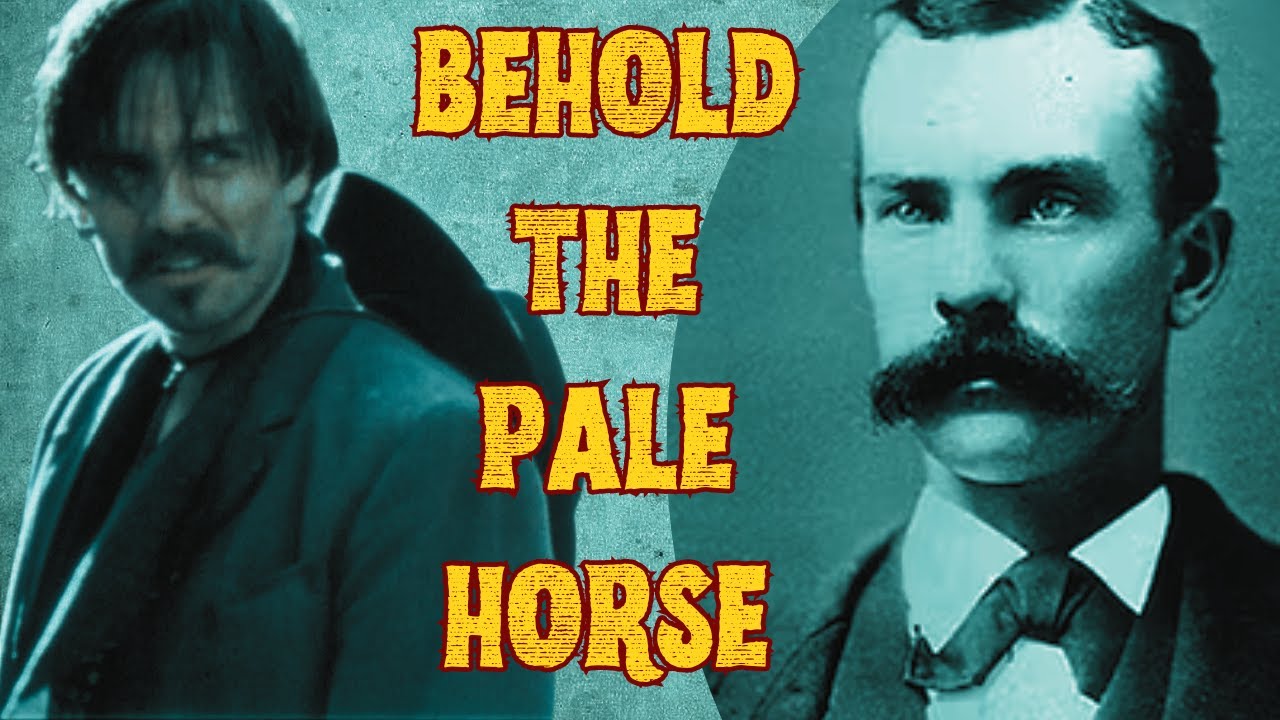
Doc Holliday was blamed, as portrayed in the movie Tombstone, but he was hundreds of miles away in Colorado at the time, having gotten into trouble in Pueblo. Wyatt Earp sometimes claimed he killed Ringo, but he was also in Colorado, in Gunnison, when Ringo died, with newspaper articles and court records confirming it. Another suspect was Michael O’Rourke, also known as Johnny-Behind-the-Deuce. He had escaped from jail in April 1881 and was last seen well-mounted and headed out of the territory, but his fate is a mystery.
Some claimed he was killed by outlaw Pony Deal in 1882 for murdering Ringo. Then there was Buckskin Frank Leslie, a Tombstone saloon owner and sometime Army scout. Leslie had killed a man in Tombstone and later killed Billy Claiborne in a confrontation outside his saloon. In the summer of 1889, he caught his girlfriend Molly Edwards with another man and shot her dead, pleading guilty and receiving a life sentence.
While in prison, Leslie began telling people he was the one who killed Johnny Ringo. Billy Claiborne’s alleged last words supported this, claiming Ringo had been shot by Frank Leslie. The physical evidence does not obviously contradict the suicide ruling. Ringo had been drinking for days and was having trouble staying in the saddle.
After his horse wandered off, he likely got up in a rush, put his belt on wrong, and tore his shirt to wrap his feet after realizing he had no boots. He then sat down at the base of a tree. Some who knew Ringo said they had seen trouble coming and that he had previously threatened to take his own life. He was described as polite and introspective, but also morose, sullen, and violent when drunk.
The missing piece of scalp is strange, but it is possible the teamster who found the body took a trophy. Ringo was buried near the base of the tree where his body was found. His grave still exists, though it lies on private property. As for the legends surrounding him, the romanticized image does not match the historical record.
Ringo reportedly dropped out of school at fourteen when his family left Missouri. There is no evidence he spoke Latin. His reputation as a deadly gunman was wildly exaggerated even in his own time. A newspaper in Minnesota reported that during the past few years, thirty-two men had dared to doubt his honor and now felt thirty-two grave waves.
But the truth is that Ringo is only known to have killed one person before he killed himself: James Chaney, back in the Mason County War, and himself seven years later. His only other known shooting was wounding the man in the saloon who refused a drink. There were many stories about how quick Johnny Ringo was with a gun, and he likely had the nerve and the temperament for violence.
But what the historical record suggests is a troubled man who had seen more than his share of death and had spent days drinking himself into a state where he could not go on.