On a Sunday evening in September 1986, John Fecarotta was shot and killed on a sidewalk outside a bingo hall in Chicago. He was 61 years old. He had spent three decades working for the Chicago Outfit, collecting debts and handling jobs that were never written down. He had a wife and grandchildren. He was not a boss and never would be. He was the man you called when something needed to be handled.
Three months before his death, Fecarotta was given a task. He botched it. The organization’s response was not to correct the mistake but to eliminate the man who made it. That decision, meant to protect the Outfit, ultimately destroyed its most valuable asset: its record of silence.
The version of events most people know comes from the 1995 film *Casino*. In the movie, two brothers are beaten with baseball bats in an Indiana cornfield and buried alive. That scene is famous, but it did not happen that way. The Spilotro brothers were killed inside a basement in the suburbs. The cornfield was not the crime scene. It was the disposal site. And the disposal was the part that went wrong.
Anthony Spilotro was the Outfit’s man in Las Vegas. He was sent there to protect the organization’s hidden interests in the casinos. Instead, he became the most visible gangster in Nevada. He ran burglary crews, drew constant law enforcement attention, and was banned from the casinos he was supposed to quietly protect. He also had an affair with the wife of a casino executive tied to the Outfit. All of that violated the organization’s only real principle, which was not honor or loyalty. It was invisibility.
By 1986, the Las Vegas skim was over. Federal cases were mounting, and Anthony Spilotro had become a liability. He was not killed because of the affair. He was killed because he had become a path leading straight back to Chicago.
On June 14, 1986, Anthony and his brother Michael were told they were being summoned to a meeting in Bensenville, Illinois. Anthony was promised a promotion. Michael was told he would be made a formal member. Instead, they were killed in that basement by a group of Outfit members waiting for them. The exact lineup of that group would not be known for decades.
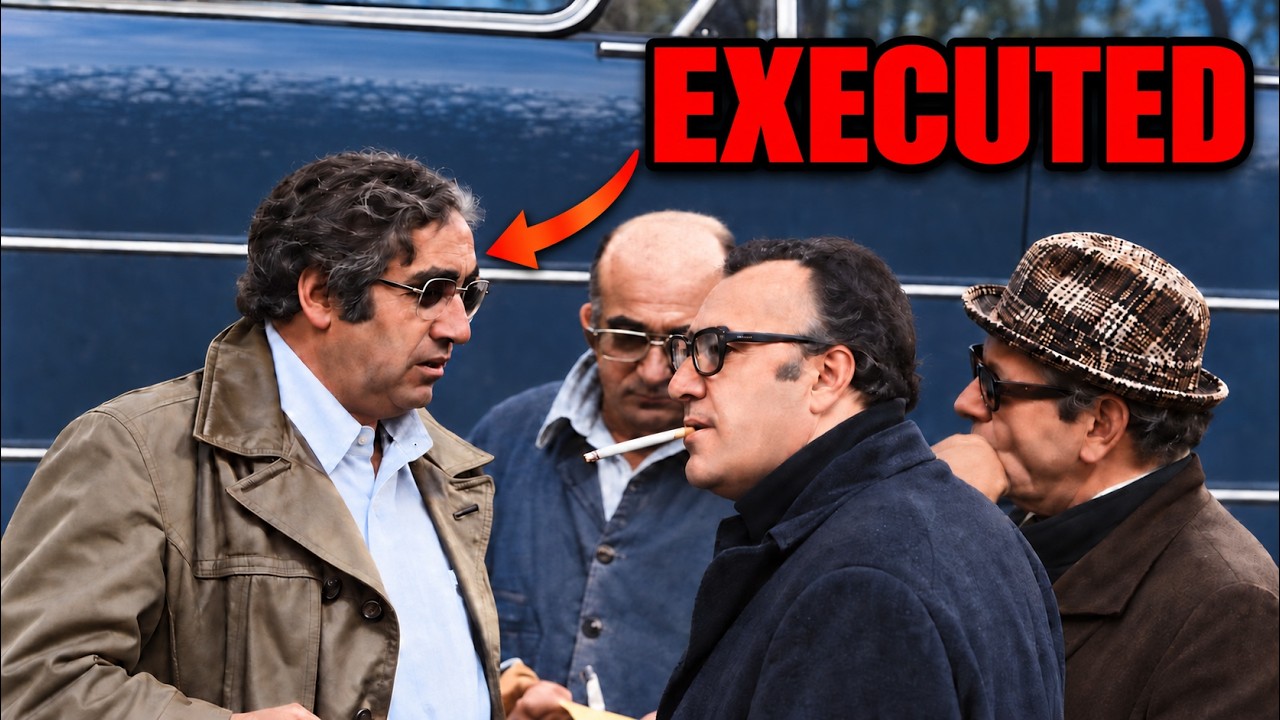
The bodies then had to disappear. That job was given to John Fecarotta. The grave was dug in a cornfield in Newton County, Indiana. It was too shallow. On June 22, a farmer noticed disturbed soil. The bodies were recovered within days.
The murder itself had gone perfectly. No one was tied to it. The only thing that went wrong was the hole. So why kill the man who dug it three months later? Because the Outfit did not correct errors. It disposed of the people who made them. That was policy, not anger. A man who made an obvious mistake might make another. A man who was reprimanded held a grudge. Removing him solved both problems. It also sent a message to the lower ranks that required no explanation.
There was also suspicion that Fecarotta had other issues, including questions about money and a bombing that was not carried out as ordered. Whether the burial was the cause or just the occasion is not fully settled. What is clear is the timeline. The grave was found in June. Fecarotta was killed in September.
The order went to the 26th Street crew and then to Frank Calabrese Sr., who assigned the job to his brother Nicholas. On September 14, 1986, Nicholas Calabrese drove John Fecarotta to a building on Belmont Avenue. Fecarotta thought he was there to plant a bomb at a dental office as part of an extortion scheme. He was not suspicious because the man next to him was someone he had worked with for years. The Outfit did not send strangers for these jobs. It sent friends, because a friend could get close enough.
Fecarotta realized what was happening in the final seconds. There was a struggle inside the car. Shots were fired. Fecarotta got out and ran. He was shot on the sidewalk and died there. During the struggle, Nicholas Calabrese was wounded. He bled and dropped a glove as he fled. Police recovered the glove that night and stored it.
In 1986, forensic DNA testing was not available for homicide investigations in Chicago. The case went cold, like most Outfit murders. The clearance rate for Outfit killings in the 1970s and 1980s was near zero. The evidence sat in storage for 11 years.

During that time, the Outfit continued operating. Men were promoted. Crews were formed. The Spilotro and Fecarotta murders remained unsolved. The organization concluded its methods were working. By every measure available at the time, it had won. No one was charged. No one talked.
But there was one flaw. The murder had been committed by a made member of the Outfit, and made members do not disappear.
In 1997, Nicholas Calabrese was in federal prison on an unrelated racketeering conviction. Investigators reopened the old evidence and tested the blood on the glove against a sample from Calabrese. The DNA matched. That match changed everything.
Calabrese was facing a murder charge he could not answer. His brother Frank was in the same prison system. Nicholas had spent his career under his brother’s control and threats. He believed the Outfit would kill him no matter what. In 2002, he agreed to cooperate with the government. He became the first made member of the Chicago Outfit in its history to testify against it.
What he gave prosecutors was not one murder. It was institutional memory. He described the structure, the crews, the chain of command, and the details of killings going back years, including what happened in the Bensenville basement. The case built on his testimony was called Operation Family Secrets. The name came from the fact that the government’s main witness was testifying against his own brother.
The trial began in federal court in Chicago in June 2007. The defendants included Joseph Lombardo, known as Joey the Clown, who had been a fugitive before his capture. Also charged were Frank Calabrese Sr., James Marcello, Paul Schiro, and Anthony Doyle, a former Chicago police officer. The indictment charged a racketeering conspiracy that included 18 previously unsolved murders, including those of Anthony and Michael Spilotro and John Fecarotta.
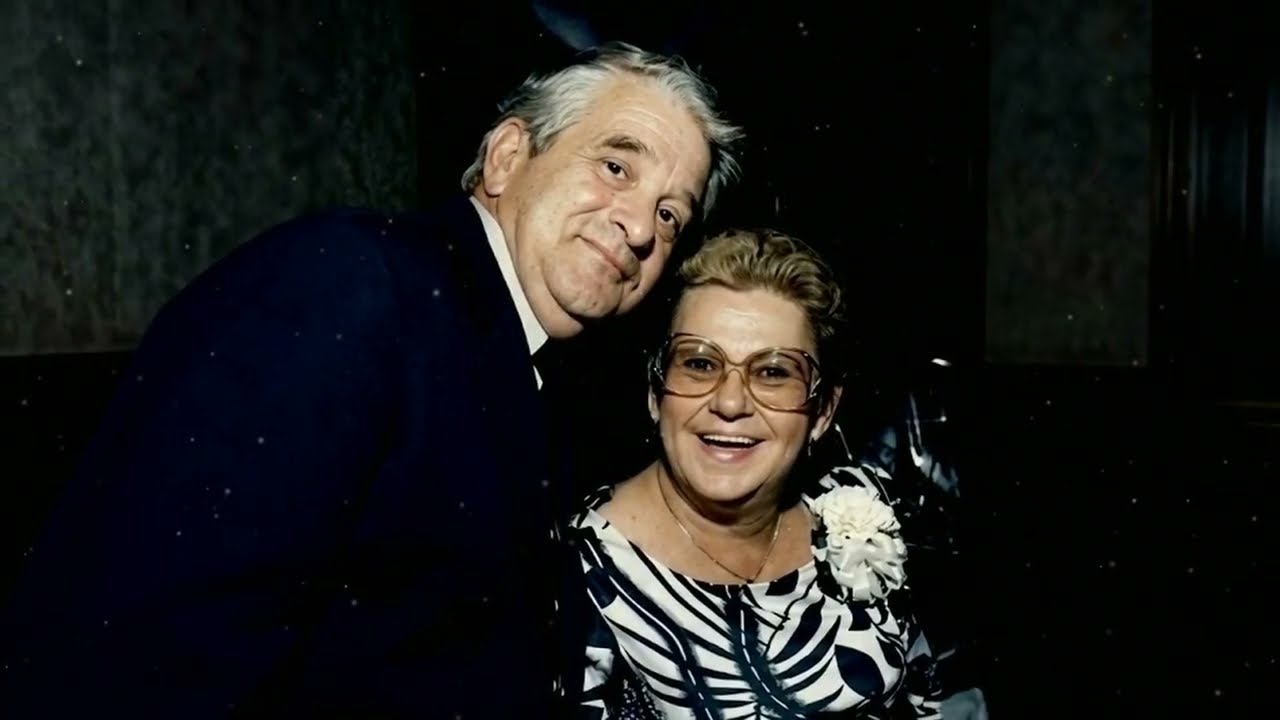
Nicholas Calabrese testified for days. He described his personal involvement in 14 murders. He described his brother. At one point, Frank Calabrese Sr. was accused of threatening a prosecutor inside the courtroom. In September 2007, the jury returned guilty verdicts on the racketeering charges. Specific defendants were found responsible for 10 of the 18 murders.
Joseph Lombardo, Frank Calabrese Sr., and James Marcello received life sentences. Frank Calabrese Sr. died in custody in 2012. Joseph Lombardo died in prison in 2019. Nicholas Calabrese, who admitted to participating in 14 murders, was sentenced in 2009 to 12 years and three months. The judge cited the extraordinary nature of his cooperation. He entered the witness protection program.
The eight murders the jury could not attribute to specific defendants remain officially unsolved. Some men named in the indictment died before the case reached trial. Several families who waited decades got a name and a conviction. Others got only a name.
Operation Family Secrets did not end the Chicago Outfit. Anyone who says otherwise is promoting an illusion. What it ended was the thing the Outfit had that no other American crime group possessed: an unbroken record of silence dating back to the 1920s. New York produced Valachi in the 1960s and Gravano in the 1990s. Chicago produced no one. That reputation was the reason Outfit murders went unsolved at a rate that frustrated federal law enforcement for 50 years.
After 2007, the Outfit became an organization that watched one of its own formal members document 10 murders from the witness stand, including one committed against his own brother’s interests. Every man in the organization now knew it could happen, because it had happened.
John Fecarotta’s family waited 21 years to hear a court say who killed him and why. The answer is simple. The Outfit killed him because the grave was too shallow and because its standing rule was to dispose of men who made obvious mistakes. That rule worked for 50 years. It kept the Outfit the most consistently successful criminal organization in the United States.
But the rule contained something no one accounted for. Every time the Outfit disposed of one of its own, it had to use one of its own to do it. That man carried the weight of the killing for the rest of his life. Fifty years of that policy produced a large number of made men carrying a large number of murders. Each one was one piece of evidence away from having something to sell.
The glove was that evidence. It sat in police storage for 11 years, worthless, until science changed. When it finally spoke, it did not reveal a stranger. It revealed a man inside the organization, in prison, afraid of his brother, carrying the details of 18 murders.
The Spilotro brothers were killed to protect the Outfit. Fecarotta was killed to protect the Spilotro murder. And that third killing, the smallest and most routine one, was the one that left blood on a glove on Belmont Avenue. John Fecarotta was 61 years old. He gave the organization 30 years of work it could not have done without him. It sent him a man he trusted on a Sunday evening, because a friend is the only one who can get close enough.