For over seven decades, Prince Philip stood beside Queen Elizabeth II as a pillar of duty and discipline. Behind that carefully crafted image, however, whispers of a more complicated private life have never fully faded. At the center of those murmurs was a French-born entertainer named Helene Cordet, a longtime friend of the Duke, whose two children born out of wedlock sparked enduring questions.
Was this simply kindness between old friends, or a royal secret hidden in plain sight? The truth remains elusive, but the story of their bond offers a fascinating look behind the royal curtain.
Helene Cordet was a dazzling presence on stage and screen. Born in France to Greek parents, she navigated a Europe in flux as she carved out a life in the performing arts. When war ravaged the continent, she fled the German occupation and settled in London.
There, her cosmopolitan charm and fluency in French and English made her a natural fit for broadcasting. She quickly rose to prominence as a radio presenter for the BBC’s French Service. Her warm voice became a beacon of resistance for occupied France, and she gained public admiration as a symbol of Allied resilience.
The connection between Philip and Cordet is believed to date back to childhood. They may have first met in the 1930s in the coastal French town of Le Touquet. Their families, linked by aristocratic and expatriate circles, reportedly spent holidays together, laying the foundation for a bond that would last a lifetime.

Both carried the imprint of displacement. Philip was a prince without a country, exiled from Greece as a child and raised across France, Germany, and Britain. Cordet, too, knew the emotional solitude of exile. Their shared cultural roots and fractured upbringings forged a quiet but enduring connection.
Philip’s own early life was marked by turbulence. Born in 1921, he was the youngest member of a royal family on the run. His family belonged to the House of Glücksburg, a branch of Danish royalty. His grandfather, King George I of Greece, had reigned for 50 years before his assassination in 1913.
Philip’s father, Prince Andrew, continued a military career that would end in disaster. After World War I, Greece attempted to expand into Asia Minor. Greek troops landed in Smyrna in 1919, but Turkish nationalists mounted fierce resistance. The campaign collapsed, and Smyrna was lost in a fire and massacre that claimed tens of thousands of lives.
Blame fell on the monarchy. King Constantine was forced to abdicate, and a military tribunal arrested Prince Andrew. His punishment was exile. In the winter of 1922, the royal family fled. Prince Andrew, his wife Princess Alice, and their infant son Philip, only 18 months old, were evacuated aboard a British warship.
They settled in a quiet suburb of Paris. Though surrounded by relatives, the family lived on fragile ground. Money was tight, and Princess Alice began showing signs of severe mental illness. By 1930, she was diagnosed with schizophrenia and committed to a sanatorium in Switzerland.
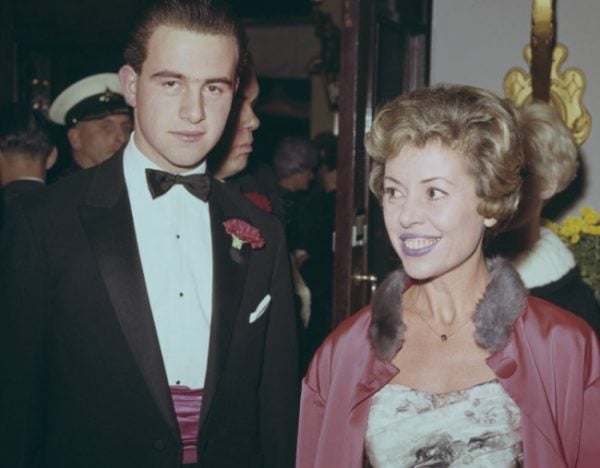
The family fell apart. Philip’s four older sisters married into German aristocracy, leaving him largely on his own. He became a child of shifting addresses, moving between relatives in Britain and Germany. It was not the ideal childhood of a prince, but it shaped the man he would become.
Philip arrived in Britain in the late 1920s under the guardianship of his maternal uncle, Lord Louis Mountbatten. A powerful and ambitious figure, Mountbatten became instrumental in shaping the young prince’s future. Philip’s education took him through several schools before he entered the Royal Naval College at Dartmouth in 1939.
As the Second World War broke out, his training was accelerated. At just 18, Philip began active service, eventually seeing combat in both the Mediterranean and Pacific. He earned respect for his leadership and composure under pressure, rising to the rank of first lieutenant by 1942.
During this same period, Cordet reconnected with Philip, now a decorated naval officer. Their friendship picked up where it had left off years before. They were often seen together at social functions. Reportedly, Cordet occasionally acted as a hostess by Philip’s side, especially before his courtship of Princess Elizabeth.
In 1939, Philip met Princess Elizabeth for the first time during a royal visit to Dartmouth. She was just 13, but clearly smitten with the confident naval cadet. Their correspondence began soon after, and over the war years it blossomed into a serious relationship. By 1946, Philip had asked King George VI for Elizabeth’s hand in marriage.

But during this same time, his friendship with Cordet continued. Then came the most controversial twist. In the late 1940s and early 1950s, Cordet gave birth to two children out of wedlock. At the time, this was highly unconventional and socially risky.
Prince Philip did not distance himself. On the contrary, he supported her quietly and became godfather to both children. It did not go unnoticed. Whispers began. Was there more to their relationship than friendship? Tabloids speculated on a possible royal scandal.
Neither Cordet nor Philip ever addressed the rumors publicly. Cordet later married a man who gave her children his surname, but she never revealed the identity of their biological father. For decades, their friendship endured even as Philip became Prince Consort and Cordet transitioned to a quieter life.
To this day, no definitive evidence has emerged to prove that Prince Philip fathered Cordet’s children. But neither have the whispers ever completely faded. A prince and a broadcaster, a war hero and a media star, they stood by each other for a lifetime, publicly quiet, privately close.
The truth may have gone with them, but the bond between Prince Philip and Helene Cordet remains one of the most intriguing personal stories behind the royal curtain.