In the 1990 film *Goodfellas*, Tommy DeSimone’s death is presented as a direct consequence of his murder of Billy Bats, a made man in the Gambino family. The movie suggests that the Gambinos waited years to collect their debt and finally killed Tommy as retribution. That version of events is clean and dramatically satisfying, but it omits the central figure in Tommy’s death: his own boss, Paul Vario.
Vario is portrayed in the film as a quiet, dignified patriarch. In reality, he was a survivor above all else. Born in Brooklyn in 1924, Vario spent four decades working his way through the Lucchese crime family. He avoided attention, kept his name out of the press, and built an invisible empire of loan sharking, gambling, stolen goods, and airport hijackings. His strategy was simple: stay useful, stay invisible, stay alive.
Vario’s partnership with Jimmy Burke was central to his operation. Burke was Irish and could never be made, but he was a talented earner. Vario provided protection and political cover, while Burke generated consistent income. Henry Hill served as the connector between the two men. Tommy DeSimone, however, was a different kind of asset.
Tommy was valuable to Vario the way a loaded gun with a broken safety is valuable. He was extremely useful and extremely dangerous. Tommy killed when he felt like it, not only when business required it. He killed bartenders, associates, and made men. His violence was a compulsion, but it made him useful for enforcement and intimidation. Vario kept Tommy around because Tommy produced, but Tommy was never truly protected. He was useful, and those are two different things.
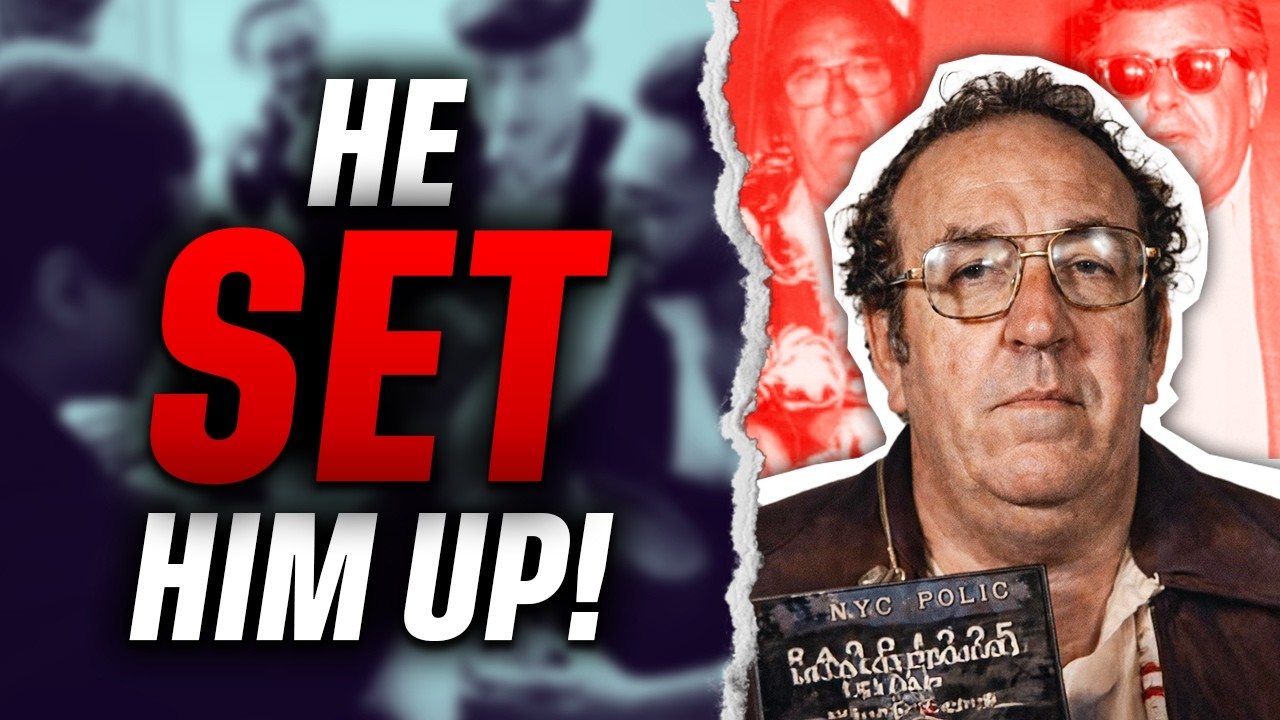
In organized crime, every unsanctioned killing goes on a ledger. Tommy’s ledger was catastrophic. In June 1970, he beat Billy Bats unconscious at the Bamboo Lounge. Bats was a Gambino made man, and Jimmy Burke helped finish the job. The Gambinos suspected Tommy but had no body and no proof, so they waited.
In December 1974, Tommy killed Ronald Jerothe, a Gambino associate connected to John Gotti’s crew. The motive was personal, but the result was another unpaid debt. Every time Tommy killed a Gambino-connected man without permission, that debt landed on Vario’s desk. The Gambinos did not demand immediate restitution. They waited, knowing that eventually Tommy would become too expensive to protect.
The Lufthansa heist on December 11, 1978, was supposed to be Tommy’s greatest score. The robbery itself went perfectly, but the cleanup did not. Parnell “Stacks” Edwards left the getaway van on a street in Ozone Park, and police found it three days later. FBI technicians pulled fingerprints from the vehicle, and the entire crew became visible.
Jimmy Burke responded by eliminating everyone connected to the heist. Tommy participated in those killings, including the murder of Stacks Edwards. But the bodies drew FBI attention directly back to Burke’s crew. Tommy was now on the radar for multiple murders connected to the biggest unsolved heist in American history. He had not become more powerful. He had become more exposed.

Sometime in late 1978 or early 1979, the Gambinos made their move. They did not announce their intentions. They communicated through proper channels that an outstanding matter required resolution. The question was put to Vario, and Vario had to do the math.
Option one was to defend Tommy and risk the goodwill of one of the most powerful families in New York. Option two was to step aside and let the Gambinos solve the problem. For Vario, that was not a difficult decision. It was arithmetic. By stepping aside, he cleared a nine-year political debt, removed a volatile liability, distanced himself from the Lufthansa investigation, and sent a message to every other associate under his umbrella.
The Gambinos could not have killed Tommy without Vario’s silence. Vario did not pull the trigger, and he did not order the hit. He simply declined to prevent it. In the mafia, declining to prevent something is the same as authorizing it.
Tommy thought loyalty was personal. He thought that because he had killed and earned for Vario, Vario would protect him like family. But Tommy was not family. He was an asset. When the asset’s liabilities exceeded its value, Vario wrote it off. That is betrayal in the coldest possible sense. No confrontation, no warning, just a door that does not open when you need it to.

*Goodfellas* frames Tommy’s death as inevitable mob justice. In the movie, Pauly is visibly shaken when he hears Tommy is dead, suggesting he did not know and genuinely mourned the loss. That reading is almost certainly wrong. A man of Vario’s experience did not get surprised by Tommy’s death. At minimum, he saw it coming. At maximum, he cleared the path.
The film is told from Henry Hill’s perspective, and Hill was close to Tommy. Hill grieved genuinely, but he was not in the room when Vario made his calculation. The real story is not Tommy dying for Billy Bats. The real story is a capo deciding that one of his men had become more expensive than he was worth and acting accordingly.
Paul Vario went to prison in 1979 for obstruction of justice connected to Henry Hill’s activities. He was later convicted again on other charges, largely as a result of Hill’s cooperation with federal authorities. Vario died in federal prison in 1988. He never publicly discussed Tommy DeSimone.
Tommy DeSimone’s body was never found. He was 28 years old. He had killed more people than anyone in Burke’s crew and participated in the biggest cash robbery in American history. In the end, he was undone not by the FBI or a rival crew, but by the man who was supposed to be in his corner.
Proximity to power is not the same as having power. Tommy confused being used with being valued. That confusion cost him everything. The real danger in that world is not the rival crew or the FBI. It is the quiet man at the top who has been doing math on your value since the day he met you. When the numbers stop working in your favor, you do not get a warning. You get a phone call telling you it is time to be made. Then you walk through a door that does not lead where you think it does.