In 1976, an elderly woman named Mary died on a sheep farm in Oxfordshire, England. She had no title, no fortune, and no public identity. Her husband was a former waiter, 26 years her junior. Her ashes were later placed on top of his casket in a churchyard in the Orkney Islands, as far from civilization as the English-speaking world allows.
Her real name was Cornelia Stuyvesant Vanderbilt. She had been born in the largest private residence in North America.
But 134 years before Cornelia vanished into the English countryside, another heiress made the same impossible choice. The consequences shook the Pennsylvania state legislature to its foundations.
This is not a love story. It is a story about what happens when love collides with architecture. Not the architecture of stone and mortar, but the architecture of money, trusts, legislative acts, and social registers. These are the invisible walls that wealthy families build not to keep the world out, but to keep their children in.
Two women, two centuries, one question. Can you own a fortune, or does the fortune own you?
Before Mary Croghan turned 16, her grandfather’s empire made her the wealthiest unmarried woman between New York and the Mississippi River. Her grandfather was Colonel James O’Hara, an Irishman who arrived in the American colonies just in time to pick the winning side.
He served as a quartermaster during the Revolutionary War, supplying Washington’s armies with everything from gunpowder to salt beef. When the war ended, O’Hara kept his connections and kept his eye on land.
Pittsburgh in the 1790s was not a city. It was a frontier outpost, a muddy triangle where three rivers met, smelling of coal smoke and animal hides. The population barely topped a thousand.
O’Hara saw a crossroads. Every settler heading west, every barge carrying goods down the Ohio, every merchant trading with the interior had to pass through Pittsburgh. He bought land, then he bought more.
He built glassworks, breweries, ironworks, and salt mines. He built the first glassworks west of the Alleghenies and operated one of the largest breweries in the region. By the time he died in 1819, James O’Hara owned more of Pittsburgh than any single person ever had or ever would again.
The fortune passed to his daughter, Mary Carson O’Hara, who married William Croghan Jr., a gentleman from a prominent Kentucky family. They settled into a 22-room Greek Revival mansion on a hill overlooking the Allegheny River.
The marriage was brief. Mary Carson O’Hara Croghan died when her only daughter was still a small child. The girl was named Mary Elizabeth Croghan.
Little Mary grew up in that 22-room mansion with a father who adored her and a fortune that terrified everyone around her. Colonel William Croghan was a kind man, a widower who never remarried, a father who poured the full weight of his affection onto his only child.
He dressed her in the finest clothes and hired tutors. He took her to church each Sunday and introduced her to every respectable family in the region.
But he was also a practical man. He understood what his daughter was. She was the sole vessel for the O’Hara estate, a fortune so vast that it included nearly a third of the developable land in the city of Pittsburgh.
In modern terms, adjusted for inflation, the O’Hara-Croghan holdings would be worth approximately 1.5 billion dollars. All of it was heading directly into the hands of one girl.
In Jacksonian America, coverture law meant that everything a woman owned became her husband’s property the moment she married. That girl was the most valuable prize west of the Allegheny Mountains.
Colonel Croghan knew this. Every fortune hunter in three states knew it, too. They came calling with polished boots and rehearsed smiles.
The colonel turned them away. He was polite about it. He was firm.
So he sent Mary away to boarding school on Staten Island, 300 miles from Pittsburgh. The school was run by a clergyman named Reverend Charles Anthon and catered to the daughters of the Eastern elite.
Mary would receive a proper education. She would be sheltered from the fortune hunters. He thought distance would keep her safe.
He was wrong.
In 1881, 1.6 million British women woke before dawn to scrub, dress, and feed people who were trained never to see them. That number represents the largest single category of female employment in the Victorian world. One in every three working women in Britain was a domestic servant.
In America, the numbers were comparable. The architecture of the great houses was designed to maintain one illusion, that the comfort surrounding the wealthy appeared by magic.
In the great mansions of the Gilded Age, architects built two complete circulation systems. The grand staircase was for the family. The service staircase, narrow and uncarpeted, hidden behind baize doors, was for the people who made the house run.
A footman carrying coal at 5:00 in the morning was never to be seen by the family. The corridors were designed so that the served and the servers could move through the same building without ever crossing paths.
The bells were the nervous system of this invisible empire. Every room had a pull cord connected to a board in the servants’ hall. The butler monitored the board. The appropriate servant responded.
The mechanism was hidden. The labor was hidden. Only the result was visible.
This was ideology. The gap between those who served and those who were served was the foundational social fact of the 19th-century Anglo-American world. It was policed with a rigor that would make a military commander proud.
Servants who became too familiar with the family were dismissed. Footmen who spoke without being addressed were fined. A servant who forgot her place was not merely reprimanded. She was erased.
The marriage market operated on the same principle of invisible boundaries. For the daughters of wealthy American families, marriage was not a private matter. It was a financial transaction negotiated between families and governed by lawyers.
Between 1870 and 1914, 454 American heiresses married European aristocrats in what historians would later call the dollar princess phenomenon. The brides brought cash. The grooms brought titles.
Consuelo Vanderbilt’s marriage to the Duke of Marlborough in 1895 came with a dowry of 2.5 million dollars in railroad stock. The Duke got the money. Consuelo got Blenheim Palace. Neither got much happiness.
This was the system. The marriage market was a market. The servant class was invisible. And the one line that could never be crossed was the line between those who served and those who were served.
A duke could marry an heiress. A banker’s daughter could marry a senator’s son. But no one, absolutely no one, married the help.
Which is precisely what made the events at Mary Croghan’s boarding school so explosive. The man who caught her eye was not a duke. He was not a banker. He was a soldier of uncertain means, nearly three times her age, working within the walls of her school.
Captain Edward Wyndham Harrington Shenley had survived the Battle of Waterloo, buried two wives, and freed enslaved Africans in South America before he met a 15-year-old girl at her boarding school.
He was born in England around 1799. He received a commission in the British Army as a young man and served at Waterloo in 1815. The battle killed roughly 47,000 men. Shenley survived it.
He married his first wife. She died. He married again. His second wife also died.
By his early 40s, Shenley was a twice-widowed veteran with children, a modest military pension, and a restless conscience. Before arriving in America, he served in British Guiana and was involved in efforts to suppress the illegal slave trade.
Accounts from the period suggest Shenley personally participated in the liberation of captured Africans from slave ships. This was not a man driven solely by self-interest.
But none of that mattered when he arrived at the Reverend Charles Anthon School for Young Ladies on Staten Island. He was 43 years old, and Mary Croghan was 15.
Some accounts describe him as a language tutor. Others suggest he was a military instructor of some kind. What is not debated is the result.
Mary Croghan, the richest girl west of the Alleghenies, fell in love with a man who was older than her father.
No diary survives. No letter describes the courtship. But Mary was 15, motherless, and raised by a father who kept her at a distance of 300 miles.
She was lonely in the particular way that only the very rich and very young can be lonely. She had everything except the one thing she wanted, someone who saw her, not her fortune.
In the spring of 1842, Mary Croghan and Captain Edward Shenley eloped. They did not elope to a justice of the peace in New Jersey. They eloped to a ship bound for Liverpool.
Try to hold the image. A 15-year-old girl raised in a 22-room mansion, heir to a fortune worth a third of Pittsburgh, standing on the deck of a transatlantic vessel, watching the American coastline disappear.
Beside her stands a man nearly three decades her senior, a man with battle scars and dead wives.
This was not a whim. Crossing the Atlantic in 1842 took three to four weeks. It required planning, secrecy, and money.
Mary believed that love was enough. That her fortune, her family, and her country could be left behind. She was about to discover how wrong she was.
Back in Pittsburgh, her father had received the news. He did not simply weep. He fainted. Then he stood up, dried his eyes, and declared war.
Colonel William Croghan did not simply threaten to disinherit his daughter. He persuaded an entire state government to do it for him.
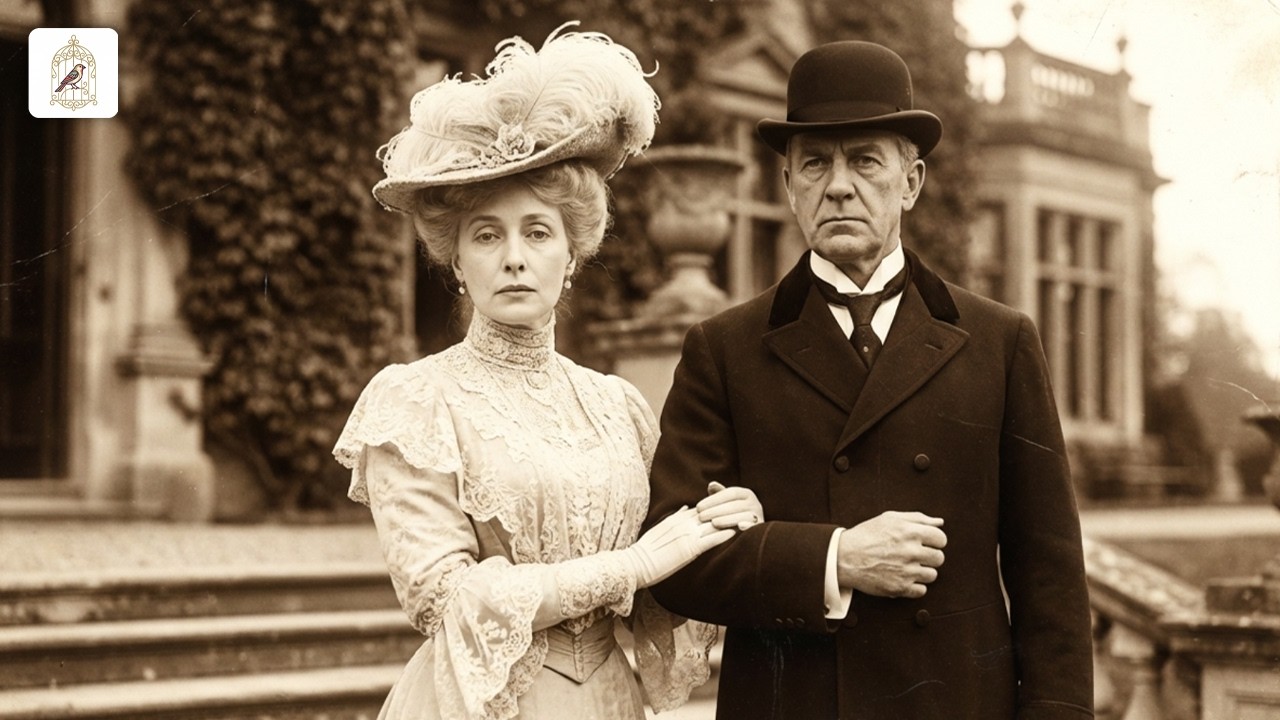
First came the attempt to stop the ship. Croghan petitioned the federal government to intercept the vessel. The request was denied. Mary was gone.
Then came the pulpits. Pittsburgh’s clergy denounced Mary from their Sunday platforms. She was called a fallen woman, a disgrace to her family.
The Reverend Anthon School was destroyed by scandal. Families pulled their daughters out within weeks. The school closed its doors and never reopened.
But Colonel Croghan was not finished. He wanted to ensure that Captain Shenley would never touch a single dollar of the O’Hara estate. For that, he needed the law.
In 1842, the Pennsylvania state legislature passed an extraordinary act. It was personal. This was a law written about one specific girl, one specific marriage, one specific fortune.
The act placed the entire O’Hara-Croghan fortune under the control of court-appointed trustees. Mary would receive an allowance determined by the trustees’ judgment. Captain Shenley would receive nothing.
To understand why this was possible, you need to understand coverture. Under coverture law, a woman’s legal identity was absorbed into her husband’s at the moment of marriage.
She could not own property in her own name. She could not sign contracts. Every asset she brought into the marriage became her husband’s property.
Colonel Croghan understood that the moment Mary said “I do” on that ship, every acre of Pittsburgh real estate became the property of Captain Edward Shenley.
The legislative act was Croghan’s counterattack. It created a legal barrier between Mary’s inheritance and her husband. The trustees, not Mary, would control the money.
The effect was a cage built of statute. The entire apparatus of state government had been mobilized because a 15-year-old fell in love with the wrong man.
This was not a family squabble. This was a fortune worth approximately 1.5 billion dollars. All of it was threatened by one girl’s decision to board a ship.
Croghan used social pressure through the churches. He used political connections to attempt federal intervention. He used the legal system to build a trust structure. He used the legislature itself as a battering ram against his own daughter’s marriage.
A father’s love transformed into institutional vengeance. Croghan was not a cruel man. He did not punish Mary because he hated her.
He punished her because the logic of dynasty demanded it. The money must not leave the architecture. The system must be preserved, even if preserving it meant destroying the one person it was built to protect.
Seven months after her elopement, Mary Shenley wrote the most heartbreaking letter in Pittsburgh’s archives. Her father refused to reply.
The letter is dated September 18, 1842. It survives in the Darlington Autograph Collection at the University of Pittsburgh.
Mary wrote to her father from England. She begged him to forgive her. She told him that her love for Captain Shenley was genuine.
She asked him to believe that she had not been deceived or coerced. She acknowledged that she had caused him pain. She asked him to write back.
Just a letter. Just a word. Just some sign that the father who had loved her for 15 years had not stopped.
He did not write back.
Captain Shenley also wrote. He addressed Croghan with military formality, acknowledging the impropriety of the match and defending his intentions. He was careful not to beg.
The silence that followed was not accidental. It was strategic. Croghan’s refusal to respond was itself a weapon.
In the social code of the 19th century, silence from a patriarch was a verdict. It meant the offender was dead to the family.
The exile deepened. Shortly after the elopement, the British authorities reassigned Shenley to British Guiana. This was not a promotion.
British Guiana in the 1840s was a malarial colony on the northern coast of South America. The heat was murderous. The fever was constant.
Imagine Mary, 16 years old, married to a man who loves her but cannot provide for her in the style she was raised. She had traded a 22-room mansion for a wooden house in a swamp in South America.
This is the point where the fortune hunter narrative collapses. If Captain Shenley had married Mary for her money, British Guiana would have been the end of the story.
He had no access to her fortune. The trustees in Pittsburgh controlled everything. He was living on his officer salary, supporting a teenage wife in one of the most dangerous postings in the British Empire.
A fortune hunter would have abandoned her. Shenley did not. He stayed. He endured.
They survived Guiana. They returned to England. But England was no paradise.
Word had crossed the Atlantic faster than any ship. Doors that should have opened for the wife of a Waterloo veteran stayed shut. Invitations did not arrive.
The most important door of all, the door to the royal court, was bolted. Queen Victoria would not receive Mary Shenley.
The Queen’s refusal had the effect of a second exile. Mary was shut out of American society by her father, and shut out of English society by the Queen. She was 17 years old, exiled twice over.
The years in England were not all darkness. Mary and Edward built a life. They had children. They created a household that was functional and loving.
But the absence of her father haunted everything. Mary had not run away from Colonel Croghan. She had run toward Edward Shenley.
She was a teenage girl who had married an older man. She was not a criminal. She was a daughter who wanted to be forgiven.
The letters tell us that a 15-year-old girl, stripped of her fortune, her family, and her country, wrote to the man who had done the stripping and asked him to love her again.
He refused.
It took eight years, a house in London, a replicated ballroom in Pittsburgh, and the death of a broken father before Mary Shenley saw a penny of her inheritance.
The reconciliation happened slowly. The first crack appeared around 1845. Colonel Croghan, aging and increasingly unwell, made the journey to England.
He did not announce his arrival. He simply appeared.
What he found apparently surprised him. Mary was not living in squalor. She was married to a man who treated her well.
Captain Shenley had not sued. He had not petitioned the Pennsylvania judiciary. He had simply lived on his salary and supported his wife.
Croghan began to soften. He purchased a house in London for the couple. He arranged for a living allowance to be paid from the estate.
Then came the gesture that broke hearts in two cities. Back in Pittsburgh, Colonel Croghan ordered an addition to Picnic House, the family’s rural retreat.
The addition was a ballroom. Croghan instructed his architects to replicate the dimensions and style of the London house he had purchased for Mary.
A ballroom in Pennsylvania built to look like a drawing room in England. A room designed so that a father who was too proud to say he was sorry could stand in Pittsburgh and feel, for a moment, that he was standing beside his daughter.
Colonel William Croghan died in 1850. He was roughly 68 years old. He had spent the last 8 years of his life navigating between the love he felt for his daughter and the institutional machinery he had built to control her.
He died with the ballroom finished. He died without ever dancing in it with his daughter.
Upon his death, the legal situation shifted dramatically. Over the following years, through a series of legal proceedings, Mary Shenley gained full control of her inheritance.
By the mid-1850s, Mary Elizabeth Croghan Shenley was one of the wealthiest women in the United States. The O’Hara lands were hers.
Pittsburgh, the city that had watched her father destroy her reputation, now watched her return as its richest citizen.

The fortune that had been weaponized against her was now in her hands.
On the morning of her 21st birthday, 250 servants and tenants gathered at dawn to celebrate the woman who would one day abandon every single one of them.
The year was 1921. The place was Biltmore Estate near Asheville, North Carolina. The woman at the center of the celebration was Cornelia Stuyvesant Vanderbilt.
If Mary Croghan’s story is about the machinery of punishment, Cornelia’s story is about the machinery of suffocation.
Biltmore was not a house. It was a statement. George Vanderbilt had commissioned it in 1889 from the architect Richard Morris Hunt.
The construction took 6 years and employed roughly 1,000 workers at its peak. The finished estate comprised 250 rooms, including 35 bedrooms, 43 bathrooms, and 65 fireplaces.
The grounds covered 86,000 acres of western North Carolina forest, landscaped by Frederick Law Olmsted. The total cost of construction was approximately $6 million in 1895 money.
It remains the largest privately owned house in North America.
Cornelia was born inside this monument in 1900. Her father died when she was 14. Her mother, Edith, took over the estate and ran it with the efficiency of a small government.
Cornelia grew up surrounded by luxury so extreme that it became invisible to her. The 250 servants and tenants who gathered at her 21st birthday celebration were the population of a small village.
In 1924, Cornelia married the Honorable John Francis Amherst Cecil. He was the son of Lord William Cecil, a direct descendant of the Marquess of Exeter.
The Cecils had served English monarchs for 400 years. John Cecil brought lineage that even the Vanderbilts could not match. What he did not bring was fortune.
The wedding at All Souls Cathedral in Asheville was the social event of the year. Thousands of people lined the streets.
Cornelia was 24 years old, married to a titled Englishman, living in the largest private home in North America. Everything that followed was descent.
When Cornelia Vanderbilt dyed her hair pink and declared it was her proper color aura, the servants at Biltmore knew the marriage was already over.
The early years of the Cecil marriage were conventional enough. Cornelia and John had two sons. John took over the management of the estate from Edith.
John Cecil loved Biltmore. He loved the land. He was the perfect steward for the estate.
But Cornelia was not looking for a steward. She was looking for a life.
The boredom set in gradually. Cornelia had been raised in a castle, but she had also been raised in the 1920s. She had tasted the energy of New York.
She began to drift. First to New York, where she rented an apartment in Greenwich Village and began moving in bohemian circles.
The pink hair was the visible sign of an invisible transformation. Cornelia embraced spiritualism, alternative lifestyles, and color therapy.
For a woman in the 1930s, this was radical enough. For a Vanderbilt, it was an earthquake.
The marriage deteriorated. Cornelia and John separated. The divorce would not come until 1934.
Cornelia had met the man who would accelerate her departure from the Vanderbilt world entirely. His name was Guy Baer. He was a Swiss artist.
He was not wealthy. He was not titled. But he was alive in a way that John Cecil was not.
In 1934, Cornelia Vanderbilt left America. She went to Europe with Guy Baer, leaving behind her two sons, her mother, and the 250-room house where she had been born.
She did not look back.
Contrast this with Mary Shenley’s story. Mary was punished by external forces. Cornelia’s departure was internal.
No one passed a law to strip Cornelia of her inheritance. No father collapsed in grief. The crack that broke the Vanderbilt architecture was emptiness.
Mary Shenley fought the system and was eventually readmitted. Cornelia did something more radical. She simply walked away from it.
By the time Cornelia Vanderbilt married William Goodsir in 1972, she had already erased her own name, her country, and every trace of the dynasty that made her.
The marriage to Guy Baer was the first step. They lived in Europe through the late 1930s and the war years. The relationship did not last.
Cornelia settled in England and began building a life that had nothing to do with Biltmore. She became an ordinary Englishwoman living a quiet life in the countryside.
Then she met William Goodsir. Goodsir was a waiter. He was also 26 years her junior.
When they married in 1972, Cornelia was 72 years old and Goodsir was 46.
The great granddaughter of the Commodore, the girl born in a 250-room chateau, married a man who served food for a living.
This was not a scandal. Scandals require an audience. Cornelia had spent nearly 40 years making sure she had none.
Around this time, Cornelia did something that reveals the depth of her transformation. She began calling herself Mary.
Not Cornelia. Not Mrs. Cecil. Mary.
A common name. An unremarkable name. A name that belonged to no dynasty.
She did not merely leave Biltmore. She did not merely leave America. She left herself.
The woman named Cornelia Stuyvesant Vanderbilt ceased to exist. Not through death, but through choice.
The name Mary is significant. It was the name of the other heiress in this story. Mary Croghan Schenley.
Whether Cornelia knew Mary Schenley’s story is unknown. But the parallel is haunting. Both women ended their stories as women named Mary.
She and William Goodsir settled on a sheep farm in Oxfordshire. The farm was modest. The life was rural.
The woman who had once commanded 250 employees now tended animals with her own hands.
Cornelia Vanderbilt, who called herself Mary, who married a waiter, who raised sheep in Oxfordshire, died in 1976. She was 76 years old.
The death was barely reported at all. Nothing in the New York Times. Nothing in the Asheville Citizen.
Her ashes were placed on top of William Goodsir’s casket in a churchyard in the Orkney Islands.
The Orkney Islands sit off the northern tip of Scotland, battered by Atlantic winds, closer to Norway than to London.
It is about as far from Biltmore Estate as it is possible to travel within the English-speaking world.
This was not an accident. Cornelia chose it. She chose the farthest point, the most remote churchyard, the most complete disappearance.
Mary Schenley fought the golden cage and eventually broke free. Cornelia Vanderbilt looked at the golden cage, decided it was not worth fighting, and simply vanished.

Every person who has ever walked through Schenley Park is walking on the conscience of a family that tried to erase its own daughter.
Mary Schenley did not merely survive her exile. She triumphed over it. And then she gave the triumph away.
By the 1890s, Mary had been in full control of her fortune for decades. The O’Hara lands had only increased in value as Pittsburgh transformed into the industrial capital of American steel production.
In 1889, the city of Pittsburgh asked Mary for a donation. They wanted land for a public park.
What they received stunned them. Mary Schenley donated 300 acres of prime real estate for what would become Schenley Park.
She donated the land on which the Carnegie Institute was built. She donated the Fort Pitt Blockhouse. She funded fountains. She supported schools.
425 acres of parkland in total. Schools and libraries and cultural institutions that served tens of thousands.
The woman who had been stripped of her inheritance by an act of the Pennsylvania legislature became the most generous benefactor the state had ever known.
There is a word for what Mary did, and it is not charity. It is restitution.
The fortune that had been used to cage her was transformed into public good. The money that had been the instrument of her suffering became the instrument of an entire city’s flourishing.
Captain Schenley died in 1878. Mary survived him by 25 years.
Mary Schenley died in 1903 in London at the age of 77. Her estate was valued at approximately $50 million.
She left behind a city that could not exist in its present form without her generosity.
More than a million tourists walk through Biltmore every year, and almost none of them know that the woman who was born there died as a farmer’s wife named Mary.
Biltmore today is a brand. It is a tourist attraction that charges between 70 and $100 per ticket. It has a winery, a hotel, and a Vanderbilt branded product line.
More than 1.4 million visitors pass through the estate each year. They admire the tapestries. They gaze at the Renoir paintings.
What they do not see is Cornelia.
The official Biltmore narrative handles Cornelia with the delicacy of a museum handling a forgery it would rather not acknowledge. She is mentioned. Her childhood is referenced.
But the pink hair is not discussed. Guy Baer is not mentioned. William Goodsir does not appear on any placard or timeline.
This is not accidental. Biltmore is a business, and every business has a story it tells its customers.
Cornelia’s story, the story of the woman who was born inside the castle and chose to die as an unknown farmer’s wife, does not fit that narrative.
It suggests that the most spectacular house in America was not enough to hold its own daughter.
The contrast between the two legacies is the spine of this entire story.
Mary Schenley’s name is written across the geography of Pittsburgh. It appears on parks, streets, bridges, schools, and fountains.
Cornelia Vanderbilt’s name appears on a birth certificate in Asheville and a death record in Oxfordshire. In between, she did everything in her power to make sure it appeared nowhere else.
One woman used her fortune to build a monument. The other used her anonymity to become invisible.
Both chose freedom. They simply defined it differently.
The Married Women’s Property Acts dismantled coverture, but the golden cage was rebuilt with newer, stronger wire.
When Mississippi passed the first Married Women’s Property Act in 1839, it was a crack in a wall that had stood for centuries. New York followed in 1848.
State by state across the second half of the 19th century, the legal doctrine of coverture was dismantled. By 1900, married women in most American states could own property and control their own finances.
Mary Schenley’s story was one of the forces that made this change necessary. The spectacle of a state legislature passing a law to strip a teenage girl of her inheritance illustrated the absurdity of the old system.
But the end of coverture did not end the golden cage. It simply modernized it.
Where Colonel Croghan used a legislative act, modern dynasties used spendthrift trusts. These trusts place assets beyond the reach of beneficiaries and their creditors, spouses, and former spouses.
The money is there. The beneficiary receives distributions at the discretion of the trustee. But they cannot touch it without permission from someone else.
Sound familiar? The Pennsylvania Act of 1842 placed Mary’s fortune under the control of trustees who managed it at their discretion. The modern spendthrift trust does exactly the same thing.
What was once an outrage has become a product.
Family offices manage the architecture. These private financial institutions exist for one purpose, to ensure that the wealth survives.
They hire the lawyers who draft the trusts. They employ the accountants who manage the taxes. They retain the investigators who vet the romantic partners of the next generation.
They are the modern equivalent of Colonel Croghan’s legislative allies, the Pittsburgh ministers, and the Pennsylvania trustees, all combined into a single institution.
Prenuptial agreements formalize the walls. Before a wealthy heir can marry, the family office produces a document that specifies what happens to the money if the marriage fails.
What took a colonel months of political maneuvering now takes a lawyer a weekend.
The machinery has evolved. It is quieter now. It operates through lawyers’ offices and trust documents filed in Delaware and South Dakota and the Cayman Islands.
But the function is identical. The money must not leave the architecture.
Can you own a fortune, or does the fortune own you?
Mary Schenley answered by returning to the system and giving it away. She took the fortune that had imprisoned her and turned it into the public inheritance of an entire city.
Cornelia Vanderbilt answered by disappearing. She did not fight the system. She simply refused to be part of it.
She changed her name. She married a waiter. She raised sheep. She placed her ashes as far from Biltmore as geography allowed.
And both answers confirmed the same truth. The architecture of inherited wealth was designed to outlast any individual who challenged it.
The trusts are more sophisticated now. The family offices are more powerful. The prenuptial agreements are longer. The walls are invisible.
But the cage has been remodeled, renovated, and reinforced across two centuries. It still stands.
It is still the same cage. The lock is still golden. And it still works.
Two women separated by a century asked the same question. One answered with generosity. The other answered with silence.
And somewhere tonight in a family office in Manhattan or a trust lawyer’s conference room in Wilmington, someone is building the cage again.
The wire is newer. The lock is digital. But the question has not changed.
Can you own a fortune, or does the fortune own you?
The ashes in the Orkney churchyard know the answer. The parkland in Pittsburgh knows it, too.