In the winter of 1946, a folder landed on a polished oak table in Nuremberg. Inside were 47 photographs, nine sworn affidavits, and 300 pages of typed medical reports. Within six months, four physicians would be sentenced to hang for what that folder documented—not for combat, not for orders followed under fire, but for experiments they designed, approved, and expanded at Dachau concentration camp between 1941 and 1944. Most people assumed they knew what happened at Dachau: starvation, executions, the machinery of the Holocaust.
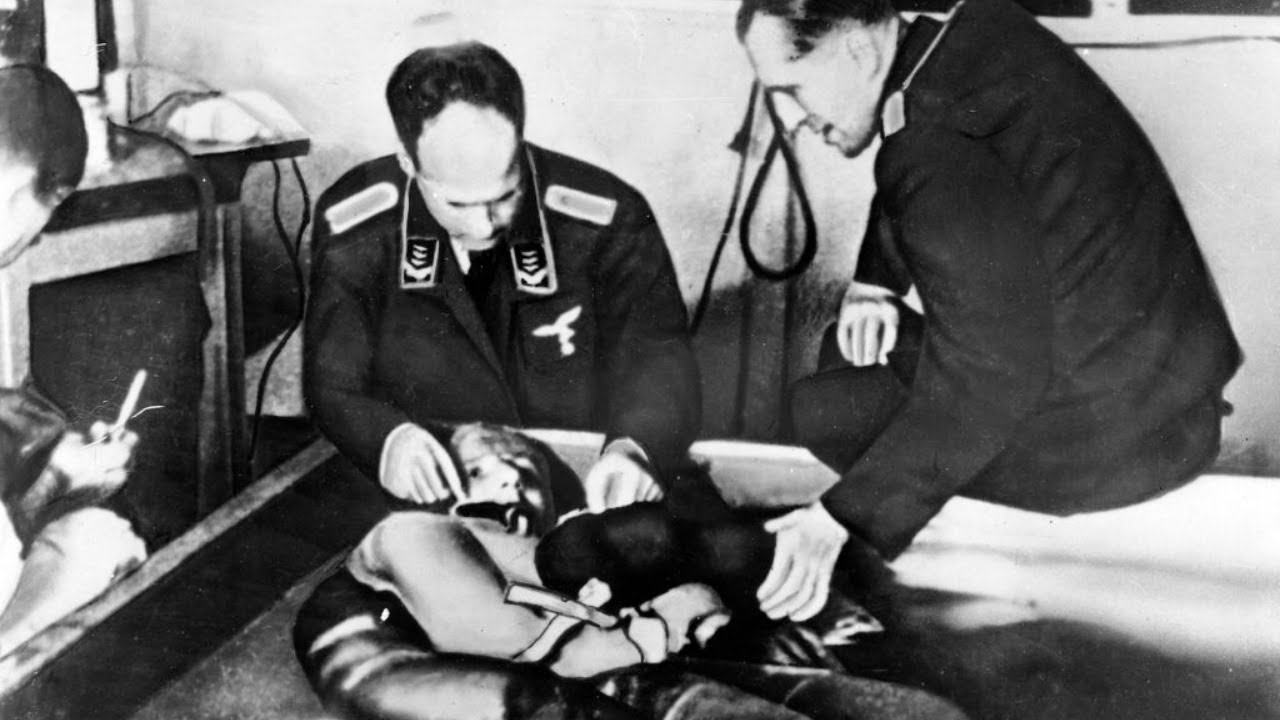
But the tribunal uncovered something different. A parallel system, clinical and systematic, where prisoners were not just murdered—they were measured. Death certificates included autopsy findings. Suffering was quantified in charts.
The question before the court was not whether crimes had occurred; the evidence made that impossible to dispute. The question was what specific moment made the judges realize that prison sentences were not enough. Dachau opened in March 1933, twelve years before American forces found it. Originally designed for political prisoners—communists, socialists, dissidents—it had expanded by 1939 into a sprawling complex holding over 30,000 prisoners from across occupied Europe.
But in 1941, SS leadership identified Dachau as suitable for special research projects. The camp had infrastructure, medical facilities, and an unlimited supply of subjects who, in the Reich’s view, had no legal rights. The first proposals came from military medical officers facing practical problems. Luftwaffe pilots were dying in high-altitude bailouts.
Soldiers were freezing in Arctic deployments. Battlefield medicine could not test extremes ethically, but concentration camps could. Dr. Sigmund Rascher, an SS physician and Luftwaffe researcher, wrote directly to Heinrich Himmler in May 1941 with a proposal: let him use prisoners to test human limits in low-pressure environments simulating high altitude.
No volunteers, no safety protocols, just data. Himmler approved within weeks. Between 1941 and 1942, Rascher conducted nearly 200 high-altitude experiments at Dachau. Prisoners were placed in low-pressure chambers replicating conditions at 68,000 feet.
Most lost consciousness. About 80 died. Rascher documented everything—time to blackout, convulsions, the exact moment respiratory failure began. He presented his findings at a military medical conference in October 1942.
Colleagues asked technical questions. No one objected. Encouraged, Rascher proposed a second series: cold-water immersion experiments testing survival times in freezing conditions faced by downed pilots and shipwrecked sailors. Again Himmler approved.
Between late 1942 and May 1943, approximately 300 prisoners were used in freezing experiments. Tribunal records confirmed at least 90 deaths directly attributable to the tests. The system functioned with bureaucratic precision. Prisoners were selected by camp administrators, usually political prisoners or Soviet POWs, told they had been chosen for medical work duty.
They were brought to a designated building within the camp, isolated from the general population. Medical staff recorded baseline vitals—weight, temperature, pulse. Then the procedure began. Subjects were stripped and immersed in tanks of ice water held between 36 and 54 degrees Fahrenheit, cold enough to kill but slow enough to measure.
Some experiments tested survival time. Others tested rewarming methods. A few pushed prisoners to the edge of death, then attempted revival. The doctors measured everything: core body temperature via rectal thermometer, time to unconsciousness, onset of cardiac irregularities, respiratory distress, muscular rigidity.
Rascher’s reports described prisoners shaking violently for the first 20 minutes, then going still. He noted the phenomenon clinically. Subjects ceased voluntary movement at the 34-minute mark. Core temperature 84.
6 degrees Fahrenheit. Some died in the tanks, others during rewarming, their hearts unable to handle the shock. A few survived and were returned to camp barracks, only to be selected again weeks later. What made this legally significant was not the brutality alone.
It was the documentation. Rascher kept obsessive records. Each experiment had a file: subject number, date, water temperature, immersion duration, survival outcome, autopsy findings. He took photographs.
He created data tables correlating temperature with time to death. He graphed survival rates. He genuinely believed he was contributing valuable research that would save German military lives. The prisoners were experimental variables—statistically useful, ethically irrelevant.
That mindset, clinical detachment applied to murder, became central to the prosecution’s case. One report, entered as prosecution exhibit 213, described an experiment on three Polish prisoners in March 1943. All three were immersed simultaneously in water at 39 degrees Fahrenheit. The goal was to test whether group immersion affected survival time differently than individual immersion.
Subject A remained conscious for 41 minutes and died during rewarming. Cause: cardiac arrest. Subject B lost consciousness at 38 minutes, survived rewarming, but died six hours later. Autopsy noted pulmonary edema.
Subject C was pulled from the tank after 50 minutes. Rewarming failed. Death occurred within 12 minutes. The typed conclusion read: “Group immersion does not significantly alter individual survival time.
Variance appears related to subject body mass rather than environmental factors. ” Three men dead, documented like a chemistry experiment. The documentation went deeper than individual reports. It revealed a bureaucratic machine.
Every step required coordination, approval, resources. Equipment was requisitioned through official Luftwaffe supply channels. Personnel were assigned through normal channels. Funding was allocated by the Reich Research Council and dispersed through standard military accounting.
Most damningly, prisoner requests went through Himmler’s office, and approvals came back on official letterhead. One letter dated January 1943 proved particularly devastating. Rascher wrote to Himmler describing preliminary findings from the freezing experiments, noting that survival rates were lower than expected, that rewarming methods were proving difficult, that more subjects would be needed. He requested 40 additional prisoners.
Himmler’s chief of staff responded within ten days: “Approved. Prisoners will be transferred from Auschwitz. ” Forty human lives allocated like laboratory equipment. That letter became prosecution exhibit 92.
When it was read aloud in court, people in the gallery gasped. It was routine correspondence about mass murder conducted through proper channels. The prosecution team, led by Brigadier General Telford Taylor, made a calculated decision. Taylor would not present every atrocity equally.
He would focus on specific experiments that demonstrated three things: premeditation, systematic cruelty, and zero scientific justification. The Dachau freezing experiments checked every box. To prove the third point, Taylor brought in allied military physicians who had conducted legitimate hypothermia research. One, a US Navy commander named John Hayward, had overseen cold-water immersion studies using volunteer personnel with strict safety protocols.
Hayward reviewed Rascher’s reports and testified that the methodology was scientifically worthless. Variables were uncontrolled. Data could not be applied to real rescue scenarios. In other words, prisoners died for nothing.
The experiments produced no usable knowledge. What Rascher was really testing was how much suffering a human could endure. December 9th, 1946. The trial began.
Twenty-three defendants sat in the dock: twenty physicians and three SS administrators who had facilitated the experiments. The lead defendant was Dr. Karl Brandt, Hitler’s personal physician and the highest-ranking medical official in Nazi Germany. Beside him sat Rudolf Brandt, no relation, Himmler’s chief of staff who handled administrative coordination of camp experiments.
These were the architects of the system, not low-level camp doctors. The only defendant conspicuously absent was Sigmund Rascher himself, executed by the SS in 1945 for personal corruption and fraudulent research claims. His absence created a prosecution problem: they could not put the man who actually immersed prisoners in ice water on trial. They had to prove that senior administrators and policymakers were responsible for murders they did not personally commit.
The prosecution presented evidence in layers. First, the experiments themselves—dozens of Rascher’s reports, photographs, clinical descriptions of men dying in ice water. Second, the approval chain—letters requesting prisoners, approvals from Himmler’s office, budget allocations, equipment requisitions, each document with signatures, dates, official stamps. Third, the normalization—evidence of the October 1942 medical conference where 95 aviation medicine specialists heard Rascher describe the experiments in detail.
Several asked follow-up questions. Some requested copies of his data. No one objected. No one reported it.
The tribunal heard testimony from Dr. Franz Blaha, a Czech physician imprisoned at Dachau from 1941 to 1945 who had been forced to work in the camp medical facilities. Blaha described the selection process, prisoners told they were going to light work duty, their terror when they understood what was about to happen. He described hearing screams from the experiment area that lasted for hours.
He described performing autopsies on prisoners who died during the experiments—bodies showing massive hypothermia damage, frozen tissue, cardiac rupture, pulmonary hemorrhaging. He testified that Rascher and his team showed excitement during successful experiments. Survival was treated as scientific breakthrough. Death was unfortunate data loss.
The turning point came on April 15th, 1947. The prosecution called a surprise witness: a 24-year-old secretary named Irmgard Huber who had worked in Himmler’s administrative office from 1942 to 1945, filing correspondence related to medical research projects. She identified a letter from Rascher to Himmler dated February 17th, 1943, reporting that the current batch of prisoners used in freezing experiments had been exhausted and requesting 30 more subjects. She remembered it because of one line: “Of the previous 80 experimental subjects, approximately 60 have expired.
The remaining 20 have been returned to camp duties, but show signs of permanent cardiac and neurological damage, making them unsuitable for additional trials. ” Sixty dead, twenty permanently damaged, described in administrative language as if reporting office supply usage. She identified the response, written by Rudolf Brandt, sitting twenty feet away in the dock: “Approved. 30 subjects will be transferred from Sachsenhausen.
Expect arrival by March 5th. ” The prosecutor asked Huber if anyone in that office had ever expressed concern about these requests, ever questioned whether this was appropriate. Her answer was barely a whisper: “No, it was just paperwork. ”
The courtroom fell absolutely silent.
That answer captured something more damning than any atrocity description. It showed how murder became routine, how bureaucracy normalized mass death. Rudolf Brandt’s defense had been that he was a mid-level administrator following procedure who did not understand the full implications of the paperwork he processed. Huber had just testified that everyone in the office knew.
Everyone understood. No one questioned it. The choice to approve was made with full knowledge that approval meant death. The defense’s final argument was that the experiments, while harsh, served legitimate wartime necessity.
The prosecution called back Commander Hayward and asked a direct question: Did the Dachau experiments produce any data that saved lives? His answer was unequivocal: No. The prisoners did not die for science. They died because doctors wanted to see what would happen when human beings were pushed to absolute limits.
On July 19th, 1947, the judges returned with their verdict. Seven defendants were sentenced to death by hanging. The tribunal’s reasoning was explicit: these men systematically dismantled the entire ethical framework that separates medicine from murder. The judgment cited the freezing experiments specifically.
Rascher’s meticulous records showed nine months of continuous experimentation, 90 prisoners subjected to near-freezing water, at least 60 deaths directly attributable to the tests. Throughout that entire period, senior medical officials reviewed reports, saw death counts, read descriptions of suffering, and approved continued funding. Not one person in that chain stopped and said this was wrong. That systematic moral collapse merited the death penalty.
The executions were carried out on June 2nd, 1948, at Landsburg prison in Bavaria. Karl Brandt’s last words were defiant. He claimed history would vindicate him. The trial also established ten principles governing human subject research, which became known as the Nuremberg Code.
The first: voluntary consent of the human subject is absolutely essential. No state, no military emergency, no research goal can override that right. Every clinical trial, every consent form, every institutional review board that exists today traces its ethical framework back to those judgments. The Declaration of Helsinki in 1964, the Belmont Report in 1979, modern ethics committees that evaluate research proposals before approval—all of it stems from one principle forced into law by the evidence from those ice-water tanks: your body belongs to you.
In the decades after the trial, a moral debate raged over whether Rascher’s hypothermia data, flawed as it was, should be used in legitimate research. The consensus that emerged was that it should never be used to advance medical knowledge, because doing so would suggest the experiments had value. The principle had to remain absolute: human subjects require consent, no exceptions. The freezing experiments at Dachau were not the most widespread Nazi medical atrocity.
They did not kill the most people. But they became the legal centerpiece of the trial because the evidence was undeniable, the documentation complete, and the moral bankruptcy absolute. Rascher thought his meticulous records would secure his scientific legacy. Instead, they secured protections against everything he represented.
Every time a patient signs a consent form before a medical procedure, every time a researcher must explain risks before a study, the framework established at Nuremberg protects them. The judges looked at those reports and drew a permanent line: medicine without consent is not medicine at all.