On the first of October 1946, in Nuremberg, Germany, the International Military Tribunal read its sentences to twenty-one of the most powerful political, military, and economic leaders of Nazi Germany. After more than ten months of trial, these men were forced to answer for the atrocities committed during the Second World War. Twelve of them were sentenced to death by hanging. Among them stood Wilhelm Frick, a man whose legal craft had helped build the machinery of Nazi persecution from its earliest days.
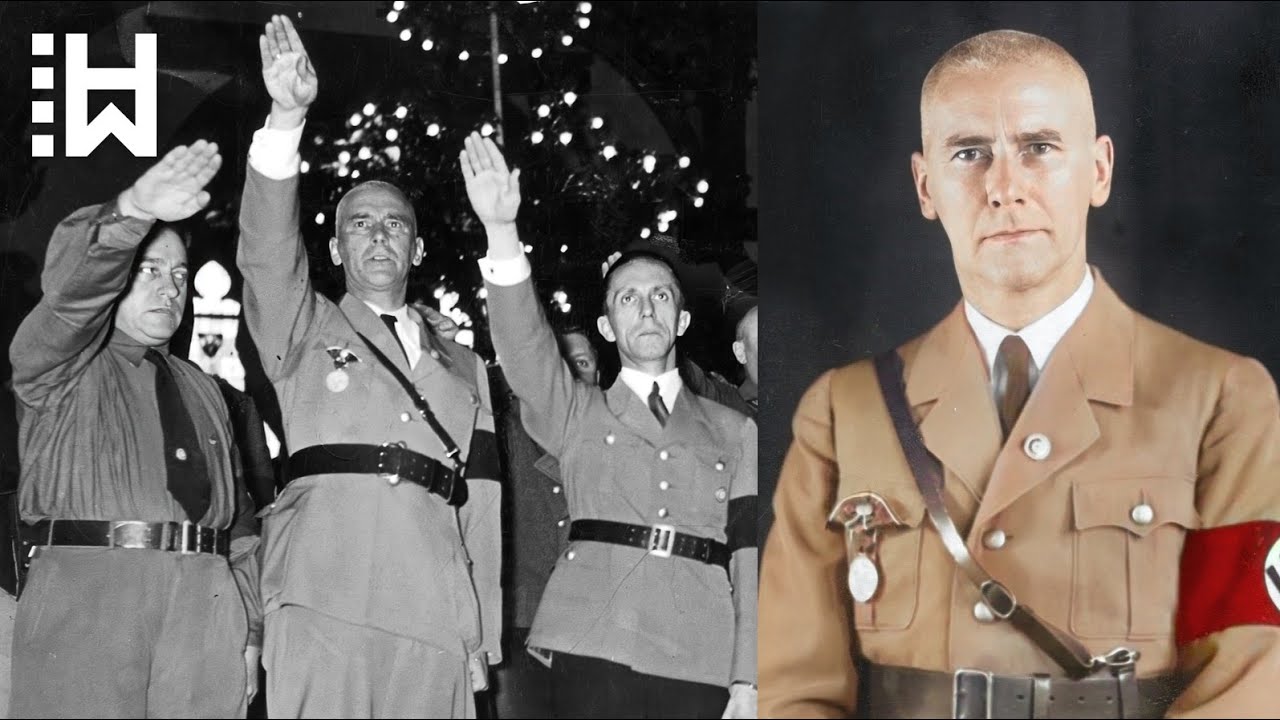
Frick was born on the twelfth of March 1877 in Alzey, then part of the German Empire, the youngest of four children of a Protestant teacher. He studied law at the universities of Munich, Göttingen, and Berlin, earning his doctorate in 1901. He then joined the Munich Police Department as an attorney. Rejected as unfit for military service during the First World War, Frick remained in the police and in 1919 was put in charge of the political police as a district officer.
In that role, he sympathized openly with right-wing extremism. On one occasion, he helped a Freikorps member who had committed murders escape by issuing false passports. That same year, the Munich chief of police introduced Frick to Adolf Hitler, and Frick willingly helped the rising Nazi leader obtain permission to hold political rallies and demonstrations. By 1923, Frick had become a senior officer and head of the security service of the Munich criminal investigation department.
When Hitler and the Nazi Party launched the Beer Hall Putsch on the eighth and ninth of November 1923, Frick played his part. Had the coup succeeded, he was to become the new police chief. During the attempted putsch, Frick remained at police headquarters and made sure the state police were not alerted immediately. The insurrection failed, leaving sixteen Nazi Party members and four police officers dead.
Frick was arrested, tried for aiding and abetting high treason in April 1924, and sentenced to fifteen months of imprisonment, suspended. He was dismissed from the police, though a later disciplinary appeal declared the dismissal unfair, since his treasonous intention had not been proven. While the Nazi Party was banned in the wake of the putsch, Frick was elected to the Reichstag in May 1924 under the banner of the National Socialist Freedom Movement, a legal front for the Nazis. When the ban was lifted in 1925, he joined the Nazi Party directly.
By May 1928, he was one of the first twelve Nazi deputies elected to the Reichstag. His speeches there were marked by radical anti-Semitism, racism, and constant abuse of his political opponents, and he played a decisive role in undermining the Weimar Republic’s parliamentary system. In January 1930, Frick became the first Nazi to hold a ministerial-level post in Germany when he was appointed Minister of the Interior and Education in the state of Thuringia. He used that position to dismiss communist and social democratic officials and replace them with Nazi Party members.
When President Paul von Hindenburg appointed Hitler Chancellor on the thirtieth of January 1933, Frick joined the government as Reich Minister of the Interior. Along with Hermann Göring, he was one of only two Nazi ministers in the original Hitler cabinet, and the only one with an actual portfolio. For a time, Frick’s ministry held little power, but that changed with the Reichstag Fire Decree and the Enabling Act of 1933, which abolished constitutional protections and cleared the way for dictatorship. Frick saw the fire as an opportunity to expand his own authority and begin the Nazification of the country.
He drafted many of the laws that consolidated the Nazi regime, including the law of the fourteenth of July 1933 that made the Nazi Party the only legal party in Germany. By 1935, he had near total control over local government, with sole power to appoint the mayors of all municipalities over one hundred thousand people. Frick was instrumental in the racial policy of the Nazi state. He drafted the law for the restoration of the professional civil service, which forced Jews, non-Aryans, and political opponents out of government posts, teaching, law, medicine, and other professions.
He also drafted the Reich Citizenship Law and the Law for the Protection of German Blood and German Honor, announced on the fifteenth of September 1935 at a Nazi Party rally in Nuremberg, which became known as the Nuremberg Laws. These laws defined a citizen as a person of German or related blood, stripped Jews of political rights, and banned intermarriage and sexual relations between Jews and Germans. The Nuremberg Laws changed everyday life for Jews in Germany, isolating them legally from the rest of society and laying the groundwork for the Final Solution. Frick pushed for stronger persecution of homosexuals as well, declaring that men committing unnatural sexual acts must be persecuted with the utmost severity, for such vices would lead to the disintegration of the German people.
In July 1933, he implemented the Law for the Prevention of Hereditarily Diseased Offspring, which authorized forced sterilizations and later fed into the Aktion T4 euthanasia program. During the war, nursing homes, hospitals, and asylums where euthanasia was practiced fell under his jurisdiction. He knew that the mentally disabled, the sick, and the aged, whom the Nazis deemed useless eaters, were being systematically put to death. Complaints reached him, and he did nothing.
It is estimated that two hundred seventy-five thousand people for whose welfare he was responsible became victims. Frick also took a leading part in Germany’s rearmament in violation of the Versailles Treaty, drafting laws that introduced universal military conscription and extended the armed forces service law to annexed Austria and the Sudetenland. From the mid-1930s, however, Frick’s standing within the Nazi Party declined. He became locked in a power struggle with Heinrich Himmler, who wanted control of Germany’s police.
Frick’s authority was greatly reduced in June 1936, when Hitler named Himmler chief of German police, effectively uniting the police with the SS. On paper, Frick remained Himmler’s superior, but in practice the police were independent of his control. The struggle ended in August 1943, when Himmler replaced Frick as Reich Minister of the Interior. Frick remained in the cabinet as a minister without portfolio and was appointed Reich Protector of Bohemia and Moravia, Hitler’s personal representative in the Czech lands.
In that office, real power rested with the state minister, Karl Hermann Frank, and Frick’s duties were largely representative. Yet he was fully aware of Nazi occupation policy, particularly toward Jews, and by accepting the office he assumed responsibility for carrying it out. During his time as Reich Protector, thousands of Jews were transferred from the Theresienstadt Ghetto to Auschwitz, where they were killed. Of roughly eighty-two thousand Jews deported from the Protectorate, about seventy-one thousand were killed in the Holocaust.
At Nuremberg, Frick was indicted for conspiracy, crimes against peace, war crimes, and crimes against humanity. He was the only defendant besides Rudolf Hess who refused to testify on his own behalf. The prosecution showed that he had been one of the architects of the Holocaust. As early as 1932, he had threatened his opponents in the Reichstag, telling them that when the Nazis came to power, all of them would be put in concentration camps.
He kept that promise. During the Nazi regime, Frick was the highest controlling authority of the concentration camps, his ministry made the legal arrangements for the land for Auschwitz, and he personally inspected camps while prisoners were beaten, tortured, starved, worked to death, and murdered in gas chambers. In 1943, he visited Dachau to inspect the malaria station and Dr. Sigmund Rascher’s experimental station, where healthy inmates were forced to endure malaria mosquitoes and freezing and air pressure experiments.
On the first of October 1946, the tribunal found Frick not guilty of conspiracy but guilty of crimes against peace, war crimes, and crimes against humanity, and sentenced him to death by hanging. He showed no remorse. He said he had a clear conscience, that his whole life had been a service to his people and country, and that no patriotic American or citizen of any other country would have acted differently in his place. On the sixteenth of October 1946, Frick was executed by American Army Sergeant John C.
Woods. The execution was botched. The drop from the gallows was too short to snap the necks of the condemned, and they died by slow strangulation. The trapdoor was too small, and several of the men, including Frick, suffered bleeding head injuries as they fell.
Frick stumbled on the thirteenth step of the gallows. His only words were, Long live eternal Germany. His convulsions lasted twelve minutes before he died. His body was cremated, and his ashes were scattered in the Wenzbach, a small tributary of the River Isar.
There were no tears shed for Wilhelm Frick.