On the morning of April 5, 1945, Karl-Otto Koch stood before a firing squad, one week before American troops would liberate the camp he had once commanded. His last words were simple: “Boys, shoot well! ” His body was burned in the crematorium of Buchenwald, the same facility where thousands of prisoners he had brutalized had been reduced to ash. The execution was not carried out by Allied authorities, but by the SS itself, which had turned on one of its own.
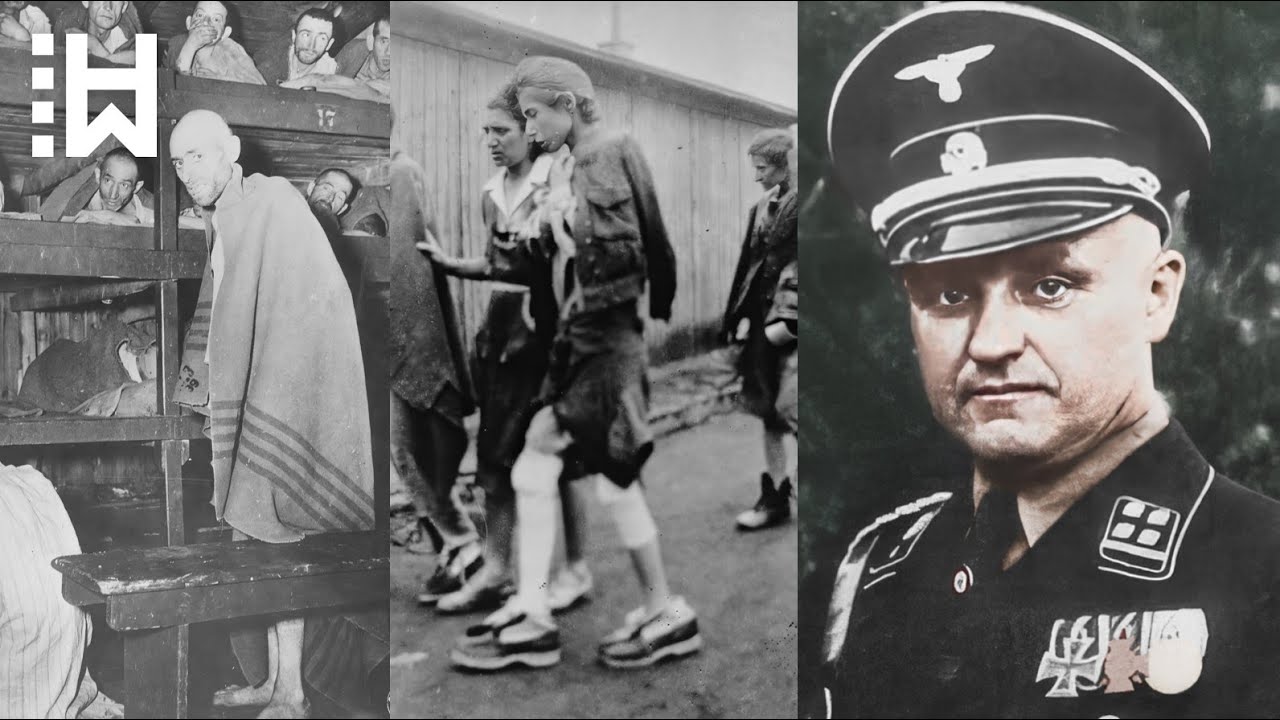
Koch’s path to that firing squad began decades earlier, in circumstances that gave little hint of the terror he would later command. Born on August 2, 1897, in Darmstadt, then part of the German Empire, he lost his father at age eight. After finishing school, he trained as an accountant. When the First World War broke out in July 1914, he enlisted against his mother’s wishes, serving from March 1916 as a rifleman in the 153rd Infantry Regiment.
Wounded twice on the western front, he was awarded the Iron Cross Second Class. Near the end of the war, while scouting enemy lines, he was captured by the British and held as a prisoner of war until October 1919. The postwar years brought instability. Koch worked briefly as an accountant, then found a permanent job as a bank clerk in the early 1920s.
But he could not hold a position for long. Between 1922 and 1930, he was employed by at least seven companies, and in 1928 petty cash thefts were proven against him. In 1930, he was sentenced to a short prison term for embezzlement and forged documents. After his release, he was unemployed.
In 1931, he divorced the wife he had married in 1924, the marriage having produced one son. That same year, Koch joined the Nazi Party and the SS. The party had been founded in 1920 with the aim of pulling German workers away from socialism and communism and binding them to its antisemitic, anti-Marxist ideology. After Hitler assumed leadership, he transformed it into a mass movement built on the vision of a German “master race” prevailing in a “racial struggle” against peoples deemed inferior, especially Jews.
The party won little popular support until the Great Depression crippled Germany. In January 1933, President Paul von Hindenburg appointed Hitler chancellor. Non-Nazis still dominated the government at first, but the Nazis used emergency decrees, violence, and intimidation to seize control at every level, a process they called “coordination. ”
In this new Germany, Koch rose through the ranks of the camp system.
In April 1936, he arrived at Esterwegen, near the German-Dutch border, where most prisoners were political detainees, many of them Communists. The camp closed that summer. In October 1936, Koch became commandant of Sachsenhausen, near Oranienburg north of Berlin, which had opened in July of that year when the SS transferred fifty prisoners from Esterwegen to begin construction. Sachsenhausen was established as the principal concentration camp for the Berlin area and held political opponents, criminals, and later Jews, homosexuals, Jehovah’s Witnesses, Roma and Sinti, and Soviet civilians.
Among its most prominent prisoners was Yakov Dzhugashvili, Joseph Stalin’s son, who died there in 1943 after his father refused to negotiate his release. It was at Sachsenhausen in 1936 that Koch married Ilse Köhler, a camp guard and secretary. In August 1937, he was assigned to build a new camp at Buchenwald, one of the largest concentration camps within German borders. There, Karl-Otto became known for his greed, while Ilse became feared for her brutality.
At Buchenwald, the Kochs lived in the largest villa on the site, known as Villa Koch, with their three children, Artwin, Gisela, and Gudrun, born in the camp between 1938 and 1941. Gudrun died unexpectedly before her first birthday during a skiing holiday. At least twelve prisoners worked as servants in the villa, washing, cleaning, and cooking. One survivor, Kurt Titz, described being taken from the prisoner area by an SS guard at five in the morning to wake and dress the children, perform housework, and return to the prisoner area after fourteen hours of work.
When Ilse once caught him drinking something in the kitchen, he was given twenty-five strokes of the cane on his bare bottom, then sent to the Bunker, the camp’s notorious punishment block, where he was beaten and tortured by Martin Sommer, one of the most sadistic guards at Buchenwald. Afterward, he continued working at the villa. The main camp at Buchenwald was surrounded by electrified barbed wire, watchtowers, and sentries with automatic machine guns. Inside were thirty-three wooden barracks, disinfection buildings, a brothel, and a crematorium.
Most early inmates were political prisoners, but the camps also held repeat offenders, Jehovah’s Witnesses, Sinti and Roma, German military deserters, and so-called “work-shy” individuals, people incarcerated as “asocials” because they could not or would not find gainful employment. Prisoners were deployed as forced laborers in workshops, armaments factories, stone quarries, construction projects, and the German Equipment Works, an SS-owned enterprise. The SS earned enormous sums from prisoner labor, which was used by more than one hundred companies around the camp. They also enriched themselves through confiscated valuables.
One survivor recalled Koch’s welcome to arriving prisoners: “So now you are here, you Jewish pigs. Once you get in this camp, there is no way out. Remember that—you won’t get out of here alive. ”
SS physicians periodically conducted selections, sending prisoners too weak or disabled to work to so-called euthanasia facilities.
As commandant, Koch bore responsibility for all atrocities in the camp, including those committed by his wife, who became known as the “Witch of Buchenwald. ” Obsessed with tattoos, Ilse would ride her horse through the camp looking for tattooed prisoners. When she found one, she would send them to their death, carving out the tattooed skin before they were killed and burned. She called these pieces of skin her “trophies” and collected lampshades, book covers, gloves, and handbags made of human skin.
She shared this obsession with Dr. Erich Wagner, allegedly her lover, who claimed to want to find a connection between tattoos and criminal tendencies. Despite having three children, she hated pregnant women and beat them with a whip into which pieces of razor were inserted. She enjoyed beating child inmates and laughed when she saw them being sent to the gas chambers.
She organized orgies with SS men and their wives and forced male prisoners to rape female prisoners in front of her. She walked around the camp half-naked or in skimpy clothes, provoking prisoners to look at her. If a prisoner dared to make eye contact, Karl allowed her to have that prisoner whipped or shot in the head by Martin Sommer. Initially, the SS had the bodies of those who died in the camp incinerated at the Weimar municipal crematorium.
In 1940, Buchenwald had its own crematorium built, with a dissection room where corpses were plundered before burning. Gold fillings were removed, and specimens were made from skin, organs, and skeletons. The mortuary cellar held the dead before they were transported to the oven room by lift. The cellar also served as an execution site, where the SS hanged some 1,100 men, women, and adolescents on hooks in the walls.
In 1941, Buchenwald caught the attention of Josias, Hereditary Prince of Waldeck and Pyrmont, the Higher SS and Police Leader for Weimar, who had supervisory authority over the camp. Reviewing the camp’s death list, Waldeck came across the name of Walter Krämer, a head hospital orderly who had once successfully treated him. Investigating, Waldeck discovered that Koch had ordered Krämer and Karl Peix, a hospital attendant, killed as “political prisoners” because they had both treated him for syphilis, a fact Koch wished to keep secret. Waldeck also received reports that a prisoner had been shot while attempting to escape.
He confronted Koch, who was disarmed and arrested. An investigation before the SS and Police Court was opened, but Heinrich Himmler ordered Koch released immediately and decreed that no high-ranking SS leader should be arrested without his order in the future. At the end of 1941, through Himmler’s intervention, Koch was transferred to Majdanek, where he again became camp commander. There he established the same reign of terror.
In the winter of 1941-1942, Majdanek authorities began using Zyklon B gas to murder prisoners too weak to work in a makeshift gas chamber. Mass murder operations using poison gas continued from October 1942 until the end of 1943. At least one of the camp’s three gas chambers was used to kill human beings. Majdanek also held storage facilities for clothing and personal items stolen from Jews before their deaths at Belzec, Sobibor, and Treblinka II.
Tens of thousands of Jews died at Majdanek, most arriving as forced laborers who either died from the brutal conditions or were gassed once deemed unable to work. Koch’s command at Majdanek ended in August 1942, after eighty-six Soviet prisoners escaped. He was charged with criminal negligence and transferred to Berlin, where he worked at the SS Personnel Main Office and as a liaison between the SS and the German Post Office. The proceedings were discontinued in February 1943, but his punitive transfer from the Waffen SS to the general SS remained in place.
Waldeck, meanwhile, had continued investigating the corruption affair at Buchenwald and ordered a full-scale investigation. It was discovered that the prisoner “shot while trying to escape” had been sent to fetch water from a well some distance from the camp and then shot from behind, because he had also helped treat Koch for syphilis. Waldeck interviewed guards and prisoners and sent his findings to Himmler, who allowed the investigation to continue. More of Koch’s orders to kill prisoners were revealed, along with evidence that he had embezzled possessions stolen from prisoners.
Searches of his former employees’ accommodations turned up large sums of money, jewelry, and lumps of gold from the teeth of murdered prisoners. Koch had bought a luxury car and opened Swiss bank accounts with money extorted from prisoners. Ilse was accused of embezzling over 700,000 Reichsmarks, and Karl-Otto was charged with both embezzlement and the unauthorized murder of three prisoners. Because all possessions stolen from murdered Jews were regarded as the property of the Reich, their downfall was inevitable.
On August 24, 1943, Koch was arrested again by the Gestapo, and Ilse was arrested as well. Both were taken to the police prison in Weimar. Karl-Otto confirmed the accusations against him. Other camp officials and guards were arrested as accomplices, including Martin Sommer and Waldemar Hoven, a doctor who performed medical experiments on inmates regarding typhus and the tolerance of serums containing phenol and Evipan.
It was revealed that Hoven, Ilse’s lover, had injected an SS man named Köhler with phenol because he was a potential witness in Koch’s investigation. In September 1944, the trial began. During the proceedings, Koch said: “I can’t find an explanation for my actions, unless I was spoiled by my superiors. Everything I suggested and did was approved.
I got nothing but praise and laurels. This got into my head. I became megalomaniac at the time. ”
Koch was forty-seven when he was executed.
Although Ilse was acquitted for lack of evidence, she did not escape justice. After the war, she was tried at the Buchenwald trial, but because she was in the advanced stages of pregnancy, she was spared the death penalty imposed on twenty-two of her thirty co-defendants. She was sentenced to life imprisonment, and her son Uwe, conceived while in custody, was born in October 1947. Artwin, the only son of Ilse and Karl Koch, could not live with the shame of his parents’ crimes and committed suicide in 1967.
By then, his mother suffered from delusions, convinced that concentration camp survivors would abuse her in her cell and that the dead prisoners of Buchenwald came through the walls demanding the return of their skin. Mentally ill, Ilse Koch hanged herself with a bedsheet on September 1, 1967, at age sixty. She was buried in an unmarked grave. Her suicide note was short: “I can’t help it.
For me, death is a salvation. “