Late afternoon on December 11, 1897, in Chestnut Flats, Tennessee, a hollow on the southwest edge of Cades Cove deep in the Great Smoky Mountains, George Washington Powell Jr. stood in his yard with his three children. He was twenty-six years old. His wife, Martha, was inside the cabin, pregnant with their fourth child.
Someone waited in the tree line with a rifle. It was not a stranger but a neighbor, and the reason one of them was about to die had nothing to do with land or cattle. It had to do with testimony. A man had talked to the government, and a family did not forgive that.
What happened next left the young father dead on his cabin floor, his pregnant wife barricading the door until morning, and the most dangerous man in the Smoky Mountains walking free for another eighteen years. Samuel Birchfield was born in 1840 in Carter County, Tennessee, to William Wilson Birchfield and Elizabeth Baker. The family was mountain poor, tied closely to the soil in a part of Appalachia where the ridges ran so steep that a man could farm one side of a hollow and never meet the man farming the other. What Birchfield did during the Civil War is not fully documented.
He would have been twenty-one when the fighting began. Carter County was Union country, and most men there either fought for the federal side or hid in the mountains to avoid conscription by either army. What is documented is that in 1866, the year after the war ended, Birchfield married Mary Ann Shuler and moved his family to Cades Cove in Blount County. He settled on the southwest edge, in a place that came to be called Chestnut Flats.
Chestnut Flats was not a town. It was a cluster of homesteads carved into the timber at the base of the mountains, connected only by footpaths and wagon ruts. The families who settled it were the Birchfields and the Powells. They arrived around the same time, married into each other, and made whiskey.
Before 1878, that was legal. George Powell Sr. , the uncle of the man who would later be murdered, ran an orchard and operated distilleries in the open. When Tennessee outlawed the manufacture of whiskey that year, every still in Chestnut Flats became a federal crime overnight.
The Powells kept distilling. The Birchfields kept distilling. The only thing that changed was who was watching. The federal government sent revenue agents into the Smoky Mountains to enforce the new excise laws.
They came from outside, answered to Washington, and had no allies in the hollows they raided. The mountain communities did not recognize their authority. They did not see whiskey as a vice but as corn in a portable form, the only cash crop a man could carry on a mule over a ridge where no wagon road existed. Sam Birchfield made moonshine, and by every surviving account, he made the best in the mountains.
He was raided many times and hauled before the federal court more than once. He was convicted exactly once and served six months in the county jail. A newspaper later reported that the imprisonment was a terrible ordeal for the free spirit of Birchfield, but to him, it was not a punishment for moonshining but for being caught at it. That conviction happened because two men informed the revenue agents of the location of his still.
The Knoxville Journal and Tribune, writing in 1900, noted that those two informers did not live long to enjoy their reward. The paper added that they were quietly put out of the way, but no one attached Birchfield to their taking off. The phrasing was careful. The implication was not.
By the 1880s and 1890s, Chestnut Flats was not a quiet farming community. Durwood Dunn, the historian who wrote the definitive study of Cades Cove, described the flats as a haven for lawless behavior, with drunken brawls over cards, fighting, and shooting matches. Criminals from across the region drifted in because the mountains offered a natural border. If Tennessee law was after you, you slipped across the ridge into North Carolina.
If North Carolina wanted you, you came back. The terrain was the law. Inside that system, Sam Birchfield was not just a moonshiner. He was a patriarch.
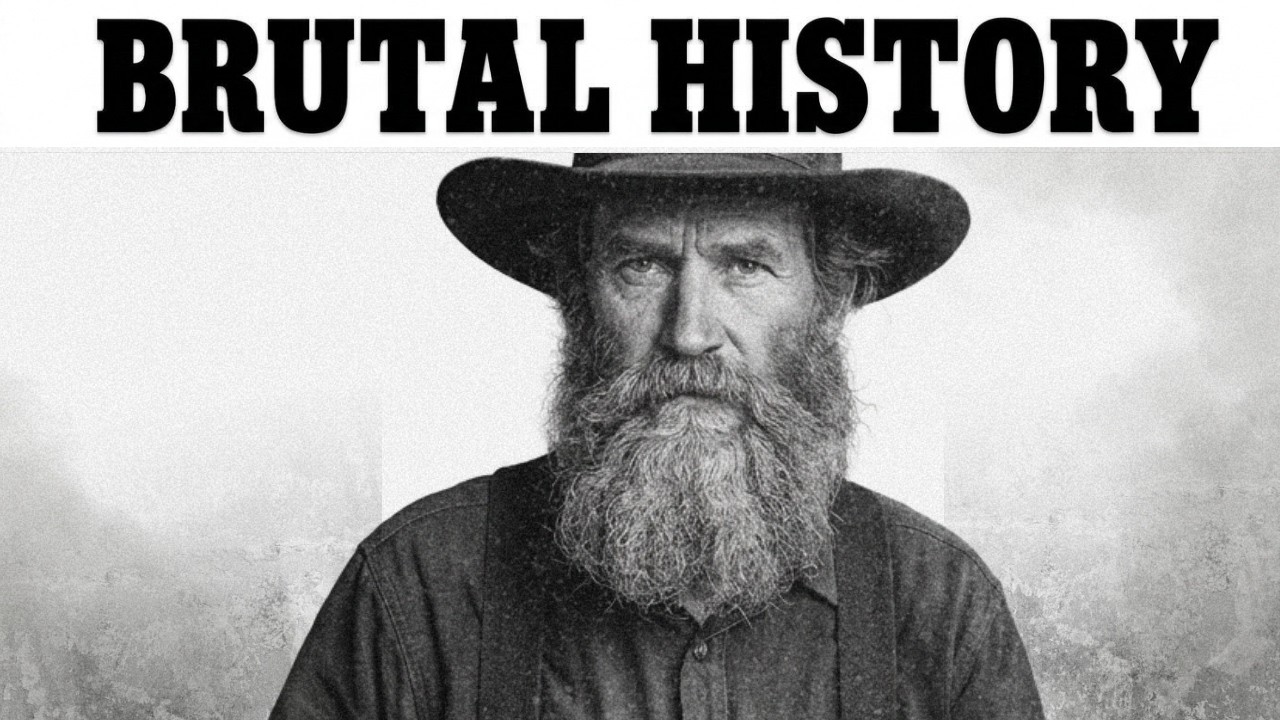
He stood over six feet tall and wore his hair long and coal black, curled and kept with a vanity that newspapers could not stop describing. They called him Long Hair Sam. They called him Uncle Sam. He ran a grist mill and let his neighbors use it for free.
He never gave up the names of his associates or customers in court. The community protected him because he protected the community. That is how power works when the official system has no reach. George Powell Jr.
broke that code. He lived in Chestnut Flats like everyone else, and like everyone else, he knew who ran whiskey and where the stills were hidden. When federal agents came asking about an illegal distilling operation connected to Hale Hughes, Powell talked. Hughes was Birchfield’s son-in-law.
Powell’s testimony helped convict him, and Hughes was sentenced to twenty years in the state penitentiary. In a place like Chestnut Flats, that testimony was not a civic duty. It was a death sentence with a delay. On December 11, 1897, two men positioned themselves near the Powell home, each at a different stand, waiting for Powell to walk into range.
The plan, according to the confession that would come later, was to ambush him on the road home. But Powell was already home, so they adjusted. One of the men fired. The bullet struck Powell.
He staggered from the yard into the cabin and collapsed on the floor in front of Martha and the children. He bled out and died. Martha barred the door and did not leave until morning. She was pregnant, her nearest neighbor miles away through winter dark, and she stayed with the body and the children all night.
Nobody came forward, and nobody was arrested for months. Then in March of 1898, Hale Hughes was taken into custody for the murder. He was convicted and sentenced to twenty years, added to the time he was already serving. For a year and a half, that was the end of it.
One man dead, one man in prison, and Sam Birchfield still in Chestnut Flats, still making whiskey, still untouched. Then in June of 1899, a letter arrived from the penitentiary. Hale Hughes had written to the authorities with a new version of the story. According to Hughes, he and his father-in-law, Sam Birchfield, had made it up together to kill Powell.
Both men had taken positions near the Powell cabin. Both were armed, but it was Birchfield, Hughes wrote, who actually pulled the trigger. Hughes admitted he would have shot Powell himself if Powell had passed his way, but Powell did not, so the kill belonged to Birchfield. The Maryville Times ran the story.
Sheriff Rule and Deputy Edmonson rode into the mountains and brought Birchfield down. The paper described a man of sixty years, over six feet, with long coal-black hair and a bushy mustache to match. A man found guilty of manufacturing illegal spirits multiple times. A man whose informers had a habit of disappearing.
Prosecutors summoned sixteen witnesses scattered across the mountains and into North Carolina. There was a written confession from the convicted accomplice naming Birchfield as the triggerman. A dead man shot in his own yard in front of his children. A widow who barricaded herself inside a cabin through the night.
The grand jury did not indict. Not a single charge was brought. Sam Birchfield walked out of that courthouse the same way he walked in. Free.
How that happened, the record does not fully answer. Perhaps the witnesses vanished when they learned who they would be testifying against, which would not have been unusual. Perhaps the grand jury members feared for their own safety. Or perhaps they looked at Hughes’s letter and saw a convict trying to shift blame.
What is certain is that the system, for whatever combination of reasons, could not or would not touch Sam Birchfield. What followed was not punishment. It was celebrity. In April of 1900, the Knoxville Journal and Tribune published a feature on Birchfield under the headline Mountain Character.
The tone was not criminal biography but folklore. The paper praised him as a fair man to his neighbors, noted his refusal to name associates, and called his moonshine the best in the mountains. The murder charge, just months old, was treated as a colorful footnote to an already colorful life. By 1910, Birchfield’s rehabilitation was complete.
The federal government, the same government whose revenue agents had raided his stills for decades, granted him permission to operate a working moonshine still at the Appalachian Exposition in Knoxville. Theodore Roosevelt spoke at the exposition that year, and William Howard Taft would speak the next. An advertisement in the Knoxville Sentinel called him Uncle Sam Birchfield, the veteran moonshiner of the Appalachians. Admission to watch him work was ten cents, and every visitor received a souvenir, though the article did not say what it was.
The Sentinel also ran a feature that September, apparently based on an interview with Birchfield himself. He told the reporter he had inherited a rifle from his father and used it to shoot about seventy-five bears, and that he had never once used it to shoot a man. The newspaper printed it that same way. His wife, Nancy Evelyn, had died in 1907, and all ten of his children were living nearby at the time of the exposition.
He had outlasted every institution that tried to contain him: the revenue agents, the courts, the county jail, the grand jury. He had outlasted the man he was accused of killing by more than a decade and counting. Hale Hughes, the son-in-law who wrote the letter that should have brought Birchfield down, was pardoned in December of 1908. The Knoxville Sentinel noted only that some people doubt his guilt.
He settled in Tellico Plains with his wife and children, worked as a carpenter, owned his own home, and died in 1927 at sixty-one. Martha Gregg Powell, the woman who barricaded the door with her husband’s body on the floor, stayed in Cades Cove. The 1900 census lists her as a farm laborer and head of household with four children. In 1908 she married John Noah Birchfield, not Sam but a different Birchfield.
She did not blame the entire family for what happened to her first husband. She died in 1911 at thirty-nine. Sam Birchfield died on August 8, 1917, at the age of seventy-six or seventy-seven, in Chestnut Flats, the same hollow he had lived in for fifty years. There was no ambush, no gunfight, no dramatic last stand.
The most feared man in the Smoky Mountains died in his bed in a place where nobody with a badge had ever been able to hold him accountable for anything. The record does not prove whether Sam Birchfield killed George Powell Jr. It also does not try very hard. A son-in-law’s confession, sixteen witnesses who either scattered or stayed silent, and a grand jury that would not indict.
The system was not broken. It was working exactly the way a system works when the most powerful man in the hollow is the one on trial. The people of Cades Cove understood this. They used his gristmill.
They bought his whiskey. They did not testify against him. When the Knoxville papers came looking for a mountain character to print, they gave them Sam Birchfield, because he was the version of themselves they wanted the outside world to see: defiant, ungovernable, free. The man who testified against that code paid for it with his life.
His widow paid for it with a night alone in a cabin with a dead man and three screaming children. The system that was supposed to answer for that failure never did. Nobody was held responsible for the murder of George Powell Jr. Not formally.
Not ever. Cades Cove today is the single most visited destination in Great Smoky Mountains National Park, with more than two million people driving the loop road every year. They stop at the preserved homesteads and photograph the deer in the fields. Behind the Cades Cove Primitive Baptist Church is a cemetery, and one of the stones reads Sam Birchfield, long hair of Chestnut Flats, 1840 to 1917.
A few miles away, Parson Branch Road cuts through what used to be Chestnut Flats. The cabins are gone. The stills are gone. The Powells and the Birchfields are all in the ground now, some of them in the same cemetery, a few rows apart.
Two families settled that hollow together after the war, married into each other, and distilled together. One of them talked, and the other one made sure that nobody in those mountains ever forgot what happened when you did. The grave does not mention any of that. It just says long hair.
The tourists read the name, take a photograph, and keep walking. They do not know who George Powell was. They do not know about Martha bearing the door.
The mountains remember what the markers leave out.