In 2004, Oregon Senate President Peter Courtney walked through Oregon State Hospital in Salem during a tour of the facility. What he found behind a locked door in a small brick building stopped him cold: more than 3,500 copper canisters, corroding on pine shelves from floor to ceiling. Each canister held the cremated remains of a patient who had died at the hospital and was never claimed by any family member. No one had ever come for them.
Staff had taken to calling the room “the room of forgotten souls. ”
Most people know Oregon State Hospital through the film “One Flew Over the Cuckoo’s Nest. ” But that film was fiction. What Courtney found was proof that the real hospital had been erasing its patients for nearly a century—one death, one canister, one forgotten name at a time.
Oregon achieved statehood in 1859, with no real system for caring for people with mental illness. Counties managed their own troubled citizens, often paying private individuals to take them in. An 1845 contract held in the Oregon archives shows a man named William Doerty paying Andrew Hembrey $1 per day for the boarding and keeping of one Eli Smith, described simply as “a lunatic. ”
In 1862, physician James C.
Hawthorne opened the Oregon Hospital for the Insane in Portland, running it on state contracts that paid him $6 per week per patient. Critics accused him of protecting his contract through political friendships. The Salem Statesman called the arrangement “outrageous extortion” and accused Hawthorne of holding “a life franchise on Oregon’s insane. ”
Hawthorne died in February 1881.
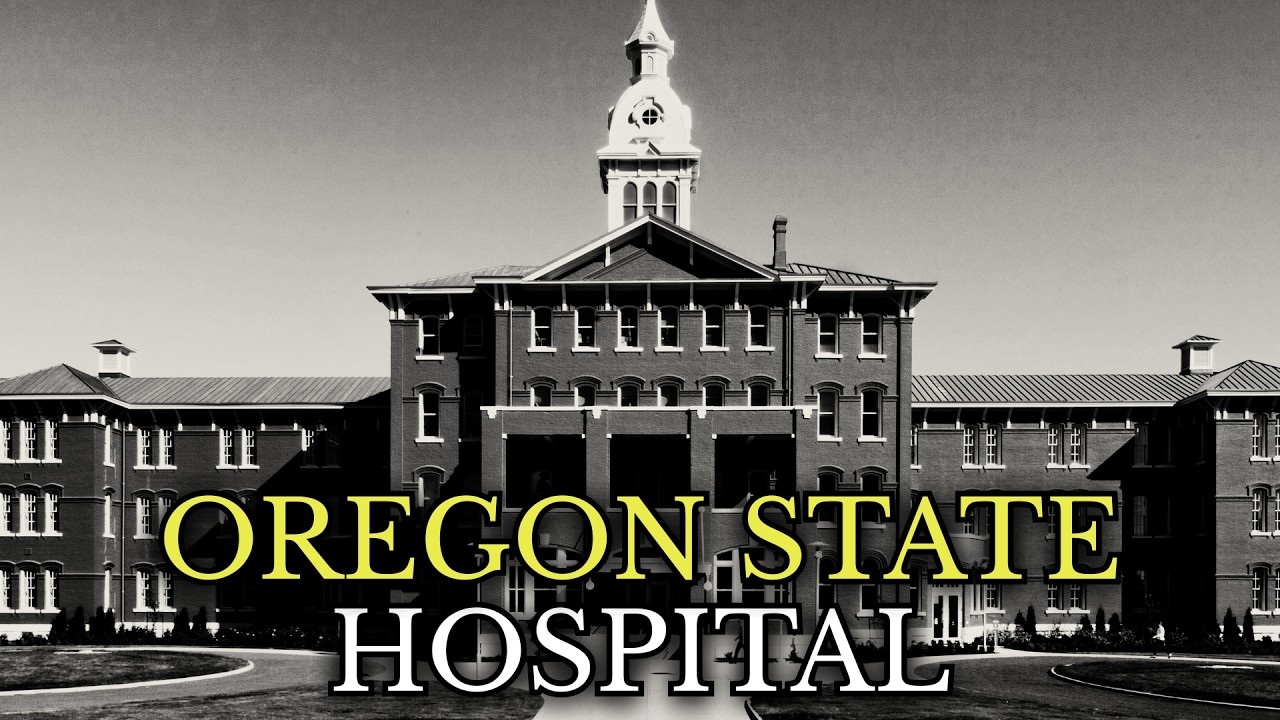
By then, the Marion County delegation had pushed through funding for a permanent state asylum in Salem. Construction began in May 1881, with much of the labor coming from the state penitentiary next door—the bricks for the walls were made by convict hands. The street leading to the front entrance was designated Asylum Avenue. The hospital was designed on the Kirkbride plan, named for Philadelphia physician Thomas Story Kirkbride, who believed the environment itself was a form of medicine.
His theory of “moral treatment” held that fresh air, natural light, ordered routine, and beautiful surroundings could restore a broken mind. The main building, known as the J building, was a three-story brick structure on 107 acres with an orchard, a poultry yard, and a working farm where patients were expected to labor as part of their recovery. Dr. Horus Carpenter was appointed the first superintendent, with a staff capable of serving 412 patients.
That number was the line between a manageable institution and an overwhelmed one. The hospital opened in the summer of 1883. On October 23, a special train arrived from Portland carrying 268 male patients from Hawthorne’s old institution. A Morning Oregonian reporter described them as representing “almost every known stage or degree of insanity, idiocy, imbecility, or helplessness.
” The next day, 102 women arrived, including three girls between the ages of six and nine. The hospital had been open less than a week and was already holding 370 patients. Kirkbride himself had insisted no asylum should house more than 250 patients. Beyond that, the superintendent could no longer know each patient personally, and the therapeutic environment would collapse.
Oregon’s asylum was bending toward that future almost from the moment it opened. By the turn of the 20th century, the hospital had become a world unto itself. The north wing was extended in 1899. By 1912, the dome building, designed by Portland architect Edgar Lazarus, rose as the receiving ward, crowned with a copper dome visible across the valley.
It housed hydrotherapy facilities where patients were submerged in warm baths for hours or subjected to cold sprays and wet sheet packs. The true engine of the institution was patient labor, performed quietly and without wages. Patients worked the farm, the laundry, the bakery, and the canery. By 1924, the hospital held 1,864 patients and employed just over 200 staff members.
Administrators framed the work as therapeutic, but the hospital could not have operated at its scale without the labor of the people it was supposed to be treating. The recorded causes of admission revealed a society using institutionalization to manage human difference. The hospital’s own registers listed causes including epilepsy, alcoholism, “fanaticism,” and one woman’s reason for admission: “too much marriage. ” Once a person passed through the gates, the burden of proof for release rested almost entirely with the institution.
To the west of the main buildings, the hospital maintained its own cemetery. In 1913, the year the institution changed its name from the Oregon State Insane Asylum to Oregon State Hospital, the legislature passed a new law: any person who died at a state institution near Salem and was not claimed would not be buried—they would be cremated. The graves were opened, bodies exhumed, and a crematory was constructed on the hospital grounds. The remains were placed into copper canisters handmade by hospital staff and given numbers.
For the better part of six decades, Oregon State Hospital practiced what is now recognized as institutional violence in the name of scientific progress. In 1923, the hospital formally joined the eugenics movement. Oregon had established a board of eugenics in 1917, and over the next six and a half decades, that board oversaw a program of forced sterilization that would touch an estimated 2,648 Oregon citizens. The program targeted the poor, the uneducated, women who had given birth outside marriage, young people deemed delinquent, and homosexual men—social judgments made by people with power about people who had none.
Dr. John C. Evans, superintendent from 1937 through 1948, was among the program’s most vocal advocates. He believed the existing sterilization law was too narrow and supported proposed marriage laws requiring mental examinations before marriage.
The eugenics program was not dismantled until 1983. In 2002, Governor John Kitzhaber issued a formal apology on behalf of the state. In 1937, the hospital introduced insulin shock therapy, inducing comas with large doses of insulin, and Metrazol shock therapy, which produced convulsions so severe patients sometimes sustained serious physical injury. Electroconvulsive therapy followed.
In an overcrowded institution with a stretched staff, these treatments became less precise instruments of care and more mechanisms of management. In 1947, Superintendent Evans formally requested permission to begin performing lobotomies at Oregon State Hospital. The procedure severed connections in the brain’s frontal lobe. Permission was granted.
Lobotomies continued for 34 years until the practice was abolished at the hospital in 1981. In 1958, Oregon State Hospital reached its peak census: 3,545 patients living behind a single set of walls. The original building had been designed for 412. Beds had moved into corridors.
Wards designed for dozens held hundreds. The ratio of physicians to patients had fallen so low that meaningful individual attention was not realistic for most people living there. The hospital’s history was not uniformly grim. There were reform-minded superintendents and staff who treated patients with genuine kindness.
One patient from the 1960s described roller skating with other residents through the underground tunnel system that connected the campus buildings. But the overcrowding pressed down on everything. Superintendent John Coghran stated plainly that his most difficult problem was curbing the abuse of patients. It was in this context that the copper canisters began to accumulate in earnest.
Between 1913 and 1971, every patient who died at Oregon State Hospital whose body was not claimed was cremated on the grounds and placed into a handmade copper canister stamped with a number. The canisters were stored in a basement room, then moved and consolidated, eventually finding their way into an underground vault constructed in the 1970s beneath Memorial Circle, a flower garden on the western edge of the campus. The families had in many cases not abandoned them deliberately. They had moved, died themselves, been told things that were not true, or stopped asking questions because the answers were too painful.
The institution had not set out to make people disappear, but disappearing was what had happened to thousands of them. In the late 1950s, a young writer named Ken Kesey worked the night shift as a ward aid at the Menlo Park Veterans Hospital in California. Out of those nights came the novel “One Flew Over the Cuckoo’s Nest,” published in 1962, telling the story of Randall McMurphy locked in a struggle against a system of control embodied in Nurse Ratched. It became one of the defining American novels of its decade.
Kirk Douglas purchased the stage and screen rights for $47,000 and played McMurphy in a Broadway adaptation that closed after three months. He eventually signed the rights over to his son Michael, who partnered with producer Saul Zaentz to make the film independently. Director Miloš Forman, a Czech filmmaker who understood life under political repression, was brought on. When the production approached Oregon State Hospital’s superintendent, Dr.
Dean Brooks, they found enthusiasm. Brooks, a reform-minded administrator, saw the film as a chance to bring public attention to the realities of psychiatric care. He agreed to allow filming on one condition: that real patients be incorporated into the production. Eighty-nine patients were hired as paid production assistants or cast as extras.
Actors shadowed real patients, observed therapy sessions, and shared meals in the dining hall. Dr. Brooks himself was cast as the hospital administrator, playing a fictionalized version of his own role. Actor Sydney Lassick, who played Charlie Cheswick, became so overwhelmed during filming that Dr.
Brooks ordered him off the set for a day to stabilize. Michael Douglas later recalled that he had not realized until well into production that many of the patients appearing in the background had been criminally committed. When filming concluded, a private screening was arranged at the Elsinore Theater in Salem in December 1975 for an audience of patients and staff. When the credits rolled, there were five minutes of silence.
Then a hospital spokesperson came forward in tears and told the filmmakers that the patients felt they had been depicted as human beings. The film won all five major Academy Awards at the 48th Oscar ceremony in 1976—best picture, best director, best actor, best actress, and best adapted screenplay. It was only the second film in history to sweep all five categories. The film’s success brought photojournalist Mary Ellen Mark to Salem.
She had come in 1974 to document the making of the film, but what she saw compelled her to return. After a year of negotiations, she was permitted to move onto the women’s ward and live there alongside the real patients. The book that resulted, “Ward 81,” published in 1979, was portraiture, not fiction. Neither the film nor the photographs said anything at all about the room where the copper canisters were waiting.
By the early 2000s, the hospital’s physical campus was in a condition approaching danger. The Salem Statesman Journal conducted a two-month investigation in 2004, finding overcrowded wards, drug addicts and alcoholics wrongly admitted to a facility designed for acute psychiatric care, and staffing levels so low that safety was compromised. Patient assaults on staff were frequently not investigated and almost never prosecuted. A federal lawsuit had been filed by the Oregon Advocacy Center alleging that conditions posed an unacceptable risk to everyone within the walls.
Then, in 2004, Senate President Peter Courtney took his tour. Someone led him to building 60, a small unremarkable brick structure built in 1896, originally a pest house, later the morgue. A key was produced. A door swung open.
Inside were the copper canisters, stacked three deep on simple pine shelves, corroding badly. Many of the paper labels that had once identified the contents had been destroyed by years of moisture. The canisters had been moved here after the underground vault proved susceptible to flooding. Courtney later said that standing in that room, he thought about the relationship between the way the canisters had been treated and the way Oregon had always treated the people inside them: neglected, forgotten, stored somewhere out of sight and left to deteriorate.
He called it the room of forgotten souls. Journalists Rick Attig and Doug Bates of The Oregonian visited the hospital on a rainy day in December 2004. They saw the adolescent girls who had dragged their mattresses into hallways to sleep within sight of staff because the wards felt unsafe. They saw the prison-like adult wards and the decaying buildings.
They saw the copper canisters. Over the next nine months, they produced a 15-part editorial series titled “Oregon’s Forgotten Hospital. ” The Pulitzer Prize board recognized the series in 2006, awarding Attig and Bates the Pulitzer Prize for editorial writing. The coverage brought national attention, and it brought photographer David Maisel to Salem.
He spent several days photographing the copper canisters in natural light, producing a body of work he titled “Library of Dust. ” The corroding canisters had developed surfaces of astonishing complexity—mineral blooms of green and blue and orange spreading across the copper like landscapes, like weather systems. The canisters bore numbers ranging from 1 to 5,118. Each number had once corresponded to a name.
Some of those names could still be read. Others had been taken by the damp and the years. In 2007, the Oregon legislature approved $458 million for the construction of two new hospital facilities: a replacement campus in Salem with capacity for 620 patients and a satellite facility in Junction City with room for 360 more. Construction on the Salem facility began in 2009 and was completed around 2011.
The Junction City campus followed in 2013. But before the wrecking crews moved in, there was a question: what was to be done with the copper canisters? They numbered approximately 3,500. The hospital had begun releasing the names of the deceased in 2007 after the legislature granted permission.
The newly public list prompted some reunifications, but the vast majority of the canisters remained unclaimed. In 2011, a Seattle design studio called Lead Pencil Studio—the collaborative practice of Annie Han and Daniel Mihalyo—was selected to create a permanent memorial. Han and Mihalyo spent three months at the Coler Company factory in Sheboygan, Wisconsin, working 16-hour days to handcraft the ceramic urns into which the ashes would be transferred. The ashes from each corroding copper canister were carefully moved into the new ceramic vessels, engraved with a number, a name where one was still known, and dates of birth and death where those records had survived.
The empty copper canisters were retained and housed in the memorial as permanent fixtures, visible through glass. The memorial was dedicated on July 7, 2014, in a ceremony led by Senator Courtney, who said that what had once been hidden behind locked doors and brick walls was now visible. The structure was built within the restored walls of building 60. A columbarium wall held the ceramic urns, designed with a detail that would reveal itself only over time: as each family came forward to claim a canister, a hollow brass tube was inserted into the niche in the wall.
As more families arrived, more brass tubes appeared, and the wall began to grow slowly more transparent—a visual record of the gradual return of the forgotten to the world that had let them go. Around the same time, a retired school teacher named Phyllis Ziggers in Roseburg, Oregon, began genealogy research into her own family. In November 2013, she found a distant cousin who had died at Oregon State Hospital in the 1890s. She discovered the list of unclaimed remains.
She began writing biographies of the individuals on the list and posting them online. Then she realized that finding living relatives was not nearly as difficult as anyone had assumed. She began reaching out with handwritten letters to families who had never known that someone they had lost had been here all along, waiting in a copper canister on a pine shelf in Salem. The responses were not what she had feared.
People were grateful. Some wept. Some had grown up with a hole in their family history—a name that was never spoken, a person who had been quietly erased from the family’s account of itself. Some learned for the first time that a grandmother hadn’t died in childbirth, that a great uncle hadn’t hopped a freight train to nowhere.
The work Ziggers began as a personal genealogy project has since helped reunite hundreds of families with the people they had lost. She volunteers every hour of it. The memorial garden at Oregon State Hospital is open to visitors. Hundreds of brass tubes are now in place in the columbarium wall.
Hundreds of niches still hold urns. Hundreds of people among the cremated remain unidentified—their names lost to moisture and time and institutional indifference. Their niche in the wall will hold its ceramic urn until the Garry oak at the center of the courtyard has grown large enough to shade the entire space. Oregon State Hospital still operates today.
The new buildings on the Salem campus represent a genuine attempt to provide psychiatric care that the old institution never could. The original 1883 facade of the J building has been preserved and converted into a museum of mental health history. The dome building still stands.
And somewhere in Roseburg, Phyllis Ziggers is at her desk, writing a letter by hand to a family that does not yet know what she is about to tell them—that someone they lost has been found, that there is a canister with a number on it, and behind that number is a name, and behind that name is a person who was here, who lived, who mattered, and who has been waiting a very long time to come home.