In September 1979, Howard B. “Bud” Johnson accepted an offer from a London-based company for the entire Howard Johnson’s chain, a deal worth more than $630 million. He collected $35. 2 million for his own shares alone, then handed the most recognized restaurant brand on American highways to a group of strangers who had never run a single restaurant.
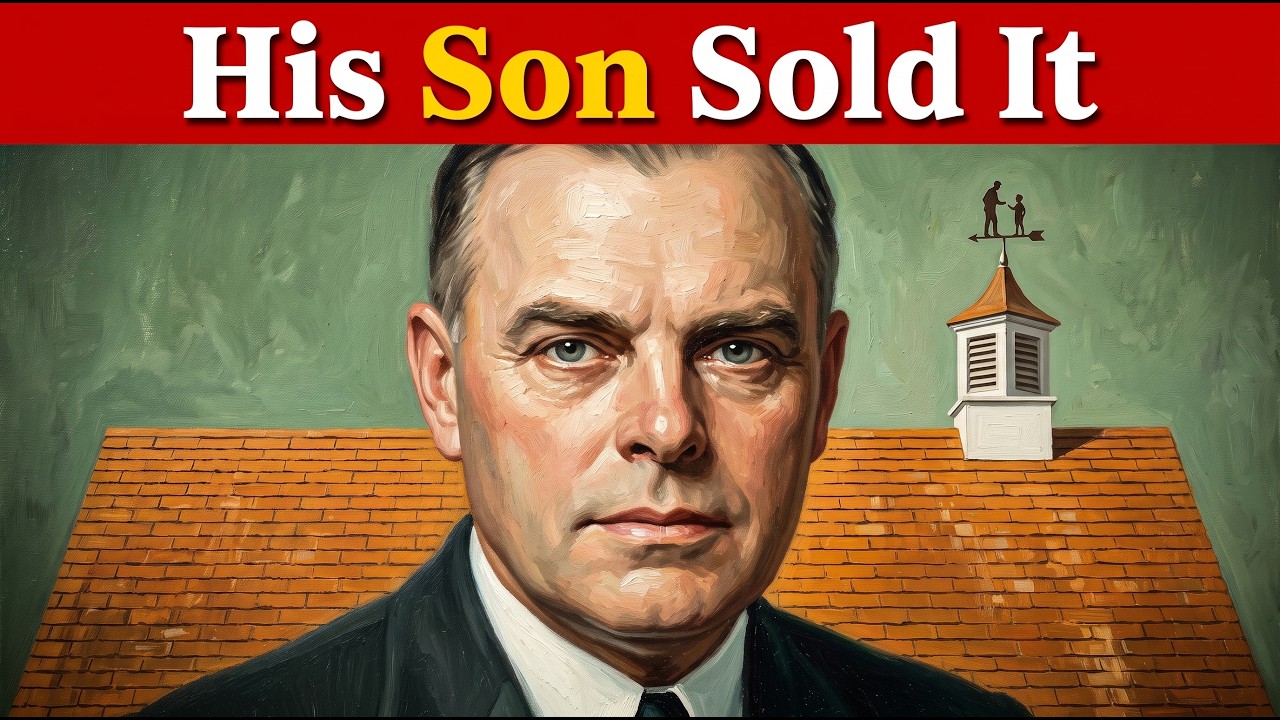
They let it die. At its peak, Howard Johnson’s was the largest restaurant company in America. In 1965, it took in more in sales than McDonald’s, Burger King, and Kentucky Fried Chicken combined. By 1975, the company had reached its all-time high with 929 restaurants and 536 motor lodges across more than 40 states and into Canada.
The empire began in 1925 in a corner drugstore in the Wollaston section of Quincy, Massachusetts. Howard Deering Johnson was 28 years old and borrowed $2,000 to buy the struggling shop, which sold candy, newspapers, patent medicines, and ice cream at a soda fountain. He noticed that what brought people back day after day was the ice cream. Johnson bought a push cart vendor’s recipe for $300, doubled the butter fat to make the ice cream richer and creamier, and built it into 28 flavors.
By 1928, that single soda fountain was pulling in close to $240,000 a year, far out-earning the rest of the drugstore. He then began building restaurants marked by a bright orange roof and a cupola topped by a weather vane featuring Simple Simon and the Pieman. The orange roof became a signal to families on long road trips that the food would be clean and the coffee hot, a promise that held the same in every town. In 1935, Johnson cut a deal with businessman Reginald Heber Sprague to open a restaurant in Orleans on Cape Cod.
Sprague would put up the money and run the place; Johnson would supply the name, the recipes, and the standards. It became the first modern restaurant franchise, years ahead of the model McDonald’s and Burger King would later make famous. By 1951, the company was doing $115 million a year in sales. By 1954, about 400 Howard Johnson’s stood across 32 states.
Johnson also added fried clams from the Soffron brothers of Ipswich, Massachusetts, to the menu, making them one of the things customers remembered best. In 1959, Johnson handed the presidency of the company to his 26-year-old son, Bud. The founder had built the business himself, one flavor and one roof at a time. The son inherited a finished empire and never had to earn a dollar of it.
Howard Deering Johnson died on June 20, 1972, at age 75, three years before the company reached its highest point. He never saw the decline that followed the summit. The end came from London. The Imperial Group, a British tobacco and beer conglomerate that had never run a restaurant, offered to buy the company outright.
In September 1979, Bud Johnson accepted, and the deal closed in 1980. Imperial received 1,040 restaurants and 520 motor lodges. Bud Johnson left the company for good at the close of 1981, roughly two years after the deal was done. The Johnson family’s tie to the company was finished, and they had cashed out very well.
It was not the family’s money that was lost; it was the orange roof itself and the shared American memory of it. From the moment Imperial took over, the standards that had made Howard Johnson’s special began to slip. A conglomerate reading a spreadsheet from across the ocean could not hold together the obsessions that had built the chain, the freshness of the clams, the clean bathrooms, the promise that a meal in one state tasted the same in the next. In 1985, just five years after buying the company, Imperial agreed to sell Howard Johnson’s to the Marriott Corporation for $314 million, roughly half of what they had paid.
Marriott kept 418 of the restaurants for itself and sold the franchise system and motor lodges to Prime Motor Inns for $235 million. The empire was being carved into parts and sold by the pound. Through the 1990s and into the 2000s, the orange roofs came down one at a time. Some were torn out, many were repainted into other restaurants, and others sat empty until the bulldozers arrived.
The chain shrank from hundreds of locations to dozens to a bare handful. The final Howard Johnson’s restaurant closed for good in 2022. It was an independent operation trading on the name, with no real connection to the company the founder built. The name itself now survives only as a brand of budget roadside motels under the ownership of the hotel company Wyndham.
The same forces that are often blamed for killing Howard Johnson’s, changing tastes, the rise of the drive-thru, the pressure of the modern road, hit McDonald’s, Burger King, and Kentucky Fried Chicken at the same time. All three of those companies lived through the same decades and are still standing today. The difference was that Howard Johnson’s was handed over to strangers who did not love it. The founder built his empire out of borrowed money and double butter fat and was proud enough of it to bolt its initials to his own car.
His son inherited everything and, in one afternoon, signed it away.