On the afternoon of March 19, 1993, Terresa Marie Cullen left the hotel where she worked the morning shift at the front desk, walked three blocks toward her parked car on Palafox Street in Pensacola, Florida, and was never seen alive again. She was thirty-one years old. What happened in the hours between that moment and the discovery of her body the next morning in a drainage easement off Old Chemstrand Road would remain unresolved for nearly three decades. Pensacola in 1993 was the kind of Florida city where families had lived on the same streets for generations.
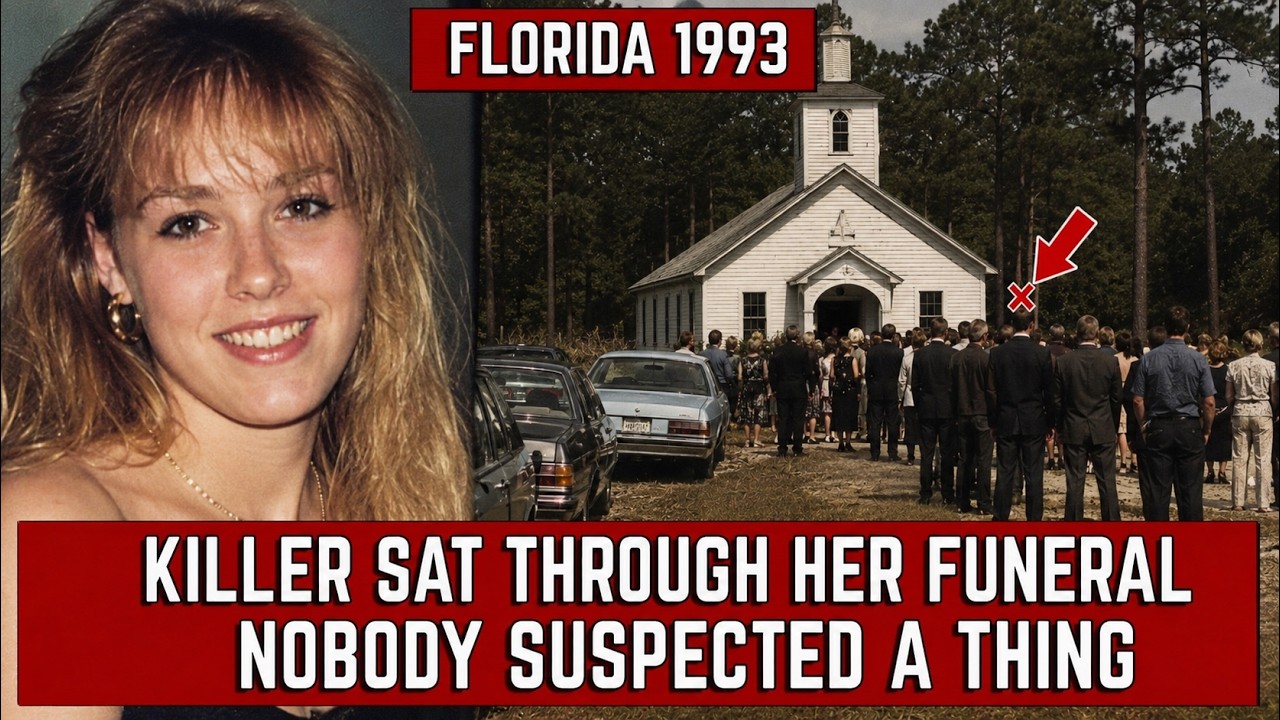
Terresa had grown up there, attended Escambia High School, and worked weekends at a Dairy Queen on Davis Highway. Her mother, Rosemary, taught third grade at a local elementary school. Terresa had worked at the Gulf Palms Hotel for three years, and guests often asked for her by name. She had enrolled part-time at Pensacola Junior College, pursuing a business degree, with plans she kept in a notebook at home—a florist, a small bed and breakfast on the Gulf Coast, steady ambitions recorded in neat handwriting.
It was a bright March afternoon, and Terresa finished her shift at two o’clock. Her manager watched her pause at the door to put on her sunglasses before stepping outside. She never reached her car, a 1989 Toyota Corolla parked three blocks away. That evening, when she did not come home, her mother called the hotel, then the Escambia County Sheriff’s Office at 8:15.
Deputies noted she was an adult, filed a missing person report, and told Rosemary they would be in touch. At 6:40 the next morning, a man walking his dog found Terresa in a drainage easement roughly four miles north of the hotel. The autopsy established blunt force trauma as the cause of death. Detective Frank Okafor, a fifteen-year veteran of the sheriff’s office who had worked homicides since 1986, took the case.
At the scene he noted the location, hidden from the road and accessible by a gravel service track. He noted the absence of Terresa’s handbag and the lack of any obvious physical evidence identifying who had brought her there. Two witnesses emerged from canvassing the Palafox Street area. A parking attendant said he had seen a woman matching Terresa’s description speaking to a man near the corner of Palafox and Garden at around 2:15 that afternoon.
The conversation had not seemed distressed. He described the man as white, medium build, dark hair, possibly late thirties to mid-forties, wearing a collared work shirt. A second witness, a woman waiting for a bus, gave a similar description and added that the man had a dark-colored pickup truck parked nearby. Those details sat at the center of the investigation for three decades without resolving into a name.
Okafor worked the case for two years, interviewing sixty-one people and building and eliminating eleven persons of interest. Trace evidence from the scene—fibers and a partial shoe print in the soft ground—was submitted to the Florida Department of Law Enforcement lab in Tallahassee. No match was found. He pulled employment records for three companies in the industrial corridor near Old Chemstrand Road, looking for workers who drove dark pickup trucks without alibis for that Thursday afternoon.
He narrowed the field to four men and interviewed all of them but found nothing that permitted him to proceed. Terresa’s brother, Kevin, then twenty-six, took time off work, placed notices in the Pensacola News Journal, put up posters, and offered a private reward. Rosemary kept a photograph of her daughter on her classroom desk and told her students who the woman in the picture was. She wanted people to keep saying her daughter’s name.
By 1998 the file had been marked inactive. Okafor retired, and the case passed through subsequent detectives who found no new leads. By 2005 the physical evidence sat in a state archive. By 2010 the parking attendant had died, and the bus stop witness had relocated and could not be found.
The dark pickup remained unidentified. In 2022, the Escambia County Sheriff’s Office joined a nationwide initiative to submit qualifying cold case biological evidence for forensic genealogical analysis. The case qualified on every count. A swab taken from beneath Terresa’s fingernails during the 1993 autopsy had been preserved in a sealed evidence envelope, moved through three storage facilities, and survived intact for twenty-nine years.
Detective Sergeant Maria Delgado of the county cold case unit spent four months reviewing the file before submitting the swab for analysis in January 2022. The results came back that April. The swab contained male DNA, and the genealogical profile matched into a family network centered in northwest Florida. Delgado built the family tree backward, tracing branches and eliminating lines until the evidence pointed to a single male contributor in the correct age range with a documented connection to Pensacola in 1993.
The tree kept pointing to one name. She pulled a driver’s license photo, then a photograph from a 1994 local newspaper showing a community awards ceremony eight months after Terresa’s death. The man stood three rows back, smiling at the camera. She then pulled the funeral register photograph that Kevin Cullen had kept in a box in his garage for nearly three decades, along with every other document and photograph connected to the case.
He had handed the box to Delgado at their first meeting and said, Whatever you need. The man in the photographs was Raymond Earl Stokes. He was sixty-four years old. He had worked as an HVAC service technician in Pensacola from 1987 until 2001, when he relocated to Tallahassee.
He drove a dark-colored pickup throughout the 1990s. Employment records from 1993 showed he had serviced a contract at the Gulf Palms Hotel in January and February of that year, two months before Terresa disappeared. He would have stood at the front desk. He knew who she was.
Physical surveillance began in May 2022. Stokes now lived in a retirement community outside Tallahassee, a tidy place with a clubhouse and a putting green. He had been married twice and had three adult children from his first marriage. His neighbors described him as pleasant.
He coached a junior golf clinic on Saturday mornings. A DNA sample was obtained from a discarded water bottle collected from a public recreation area where he walked each morning, and the Florida Department of Law Enforcement returned a confirmed match to the nail swab from Terresa’s autopsy. The partial shoe print from the drainage easement was then re-examined with enhanced imaging techniques unavailable in 1993. It was consistent with a size 10 ½ steel-capped work boot of a type manufactured from 1988 to 1996.
Stokes’s 1993 employment file contained a reimbursement receipt for steel-capped work boots purchased in February of that year. On the morning of September 6, 2022, two detectives drove to the retirement community and rang the doorbell of Stokes’s unit. He answered in a golf shirt, looked at their identification, and said nothing. He stepped back from the door and sat down slowly in a chair inside.
One detective later recalled that he sat down the way a person sits when they have been expecting this moment for a long time and their legs have finally decided they have carried the weight long enough. Stokes was arrested and charged with first-degree murder. He said nothing at the time of his arrest, nothing on the drive, and nothing at booking. He entered a not-guilty plea through his attorney.
The retirement community held a resident meeting. The golf clinic was cancelled. His second wife stated through a lawyer that she had no knowledge of the events described and was cooperating with investigators. His three children have not commented publicly.
The trial is scheduled. In Florida, first-degree murder carries a mandatory life sentence. Stokes will be in his mid-sixties when he faces the verdict. Rosemary Cullen died in 2018, four years before the arrest.
She taught third grade for thirty-one years and kept Terresa’s photograph on her desk until she retired, then moved it to the mantel of her home, where it remained until her own death. She never stopped giving interviews, never stopped saying her daughter’s name. When Detective Delgado called Kevin in September 2022, he sat for a long time without speaking. Then he said his sister would have wanted to know it was solved cleanly with evidence.
Terresa had been the kind of person who believed in doing things properly, that it mattered how you got there, not just that you got there. He still has the box in his garage, still has the funeral register photograph, and intends to bring it to court. Terresa Cullen was thirty-one years old. She had a notebook full of careful plans and a mother who made sure that twenty-three years of third graders knew her daughter’s name.
Her case changed something in Escambia County. The cold case unit now maintains active eligibility reviews for all unsolved violent crime cases with biological evidence in archive, submitting new batches for forensic genealogical analysis each year. Two additional cold cases from the county have been submitted since her case broke. Forensic genealogy, once a technique borrowed from hobby ancestry websites, is now a formal investigative tool in Florida law enforcement.
Detectives who used to be told that a case had gone cold are now being told that cold is not the same as closed. The work that found the answer came from a detective who read an old file without deciding in advance what it meant, a brother who kept a box in his garage for twenty-nine years, and a piece of biological evidence that outlasted everyone who thought the case was finished.