On the morning of March 12, 1938, German troops crossed into Austria without firing a shot. They were not met by an army, but by cheering crowds throwing flowers. Thousands of Austrians lined the roads to hail Adolf Hitler as he traveled first to Linz, then to Vienna. Meanwhile, terrified Jews, leftists, and opponents of the Nazi regime raced toward the borders, hoping to escape before the country was sealed shut.
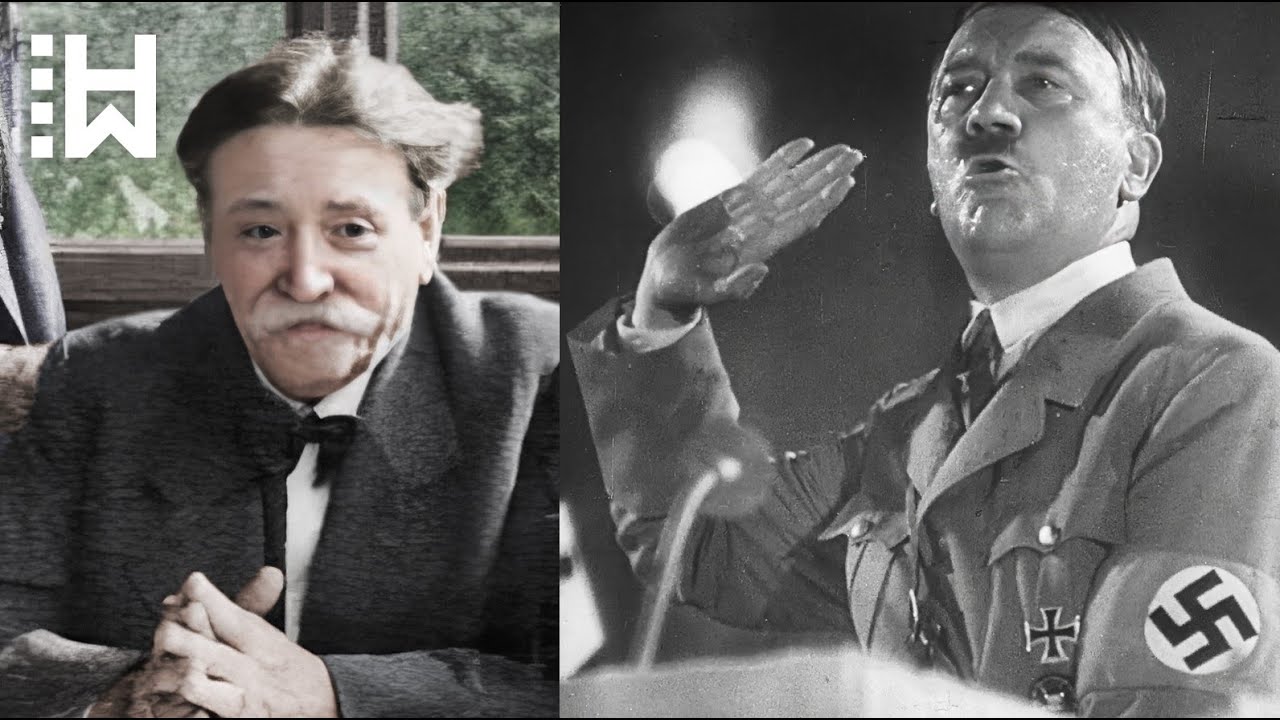
Some made it. Most did not. They were trapped inside an Austria that was rapidly being absorbed into Nazi Germany. One Austrian Jew, however, moved through this chaos under a singular protection: that of Adolf Hitler himself.
His name was Eduard Bloch, and his connection to the dictator reached back decades, to a time before anyone could have imagined the horrors to come. Eduard Bloch was born on January 30, 1872, in Frauenberg, then part of Austria-Hungary. He studied medicine in Prague and served as a medical officer in the Austrian army. In 1899 he was posted to Linz in Upper Austria, where he opened a private practice in 1901.
The following year he married Lilli Kafka, and the couple soon had a daughter, Trude. Like most Jews in Linz at the time, the Bloch family was fully assimilated into local society. Bloch gained a strong reputation, especially among poorer families, because he was willing to visit patients at any hour of the night. One of those families was the household of Klara Hitler.
Her husband Alois had died in 1903, leaving her with six children. Alois had been a stern, domineering man who demanded absolute obedience and frequently resorted to the switch. One of those children was Adolf Hitler, born in 1889, who would one day rule Germany. After Alois’s death, Klara sold the family house in Leonding and moved to an apartment in Linz.
In 1906, Klara Hitler discovered a lump in her breast but did nothing about it at first. Only in January 1907, after chest pains began keeping her awake at night, did she finally consult the family doctor, Eduard Bloch. She explained that she had been too busy with the household to seek medical attention. Bloch chose not to tell her she had breast cancer, leaving that task to her son Adolf, then nearly eighteen.
He told the young man that his mother had a small chance of survival and recommended a radical mastectomy. The Hitler family was devastated. Bloch later recalled that Klara accepted the verdict with fortitude, deeply religious and convinced that her fate was God’s will. She underwent the operation in Linz, but the surgeon discovered the cancer had already spread to the tissue of her chest.
Bloch informed the children that their mother’s condition was terminal. Adolf had been in Vienna, hoping to study art, but he moved home to care for his mother, as did his siblings. By October her condition had worsened sharply. Adolf begged Bloch to try something new.
For the next forty-six days, from November into early December, Bloch treated Klara with iodoform, an experimental form of chemotherapy. Her surgical incisions were reopened, and large doses of iodoform-soaked gauze were pressed directly onto the tissue in an attempt to burn away the cancer. The treatments were agonizing and eventually paralyzed her throat, leaving her unable to swallow. Bloch charged the Hitler family reduced fees, and sometimes took nothing at all, knowing how poor they were.
Adolf Hitler never forgot that. The treatments, however, were futile. Klara Hitler died on December 21, 1907, at age forty-seven, from the toxic side effects of the very medicine intended to save her. She was buried in Leonding.
In February 1908, Adolf Hitler moved to Vienna, intent on entering the art academy. That same year he sent Bloch a postcard assuring the doctor of his gratitude and respect, and he expressed the same feeling through handmade gifts, including a large wall painting. But in October 1908, Hitler tried a second time to gain admission to the Vienna Academy of Fine Arts. His drawings were judged so poor that he was not even permitted to take the formal exam.
In May 1913 he left for Munich, where he drifted and supported himself selling watercolors and sketches until the outbreak of World War I in July 1914. The war gave Hitler new direction. He joined the army, was wounded twice, and received several medals. In October 1918, partially blinded by a mustard gas attack near Ypres in Belgium, he was sent to a military hospital in Pasewalk.
It was there that he learned of the armistice of November 11, 1918. Released from the hospital, he returned to Munich and in 1919 joined the Information Office of the Bavarian Military Administration, where he gave anti-Communist political education to troops. In August 1919 he delivered his first virulently antisemitic speeches, and a month later he put an antisemitic, racist ideology on paper, calling for the removal of Jews from Germany. Hitler joined what would become the Nazi Party in October 1919 and helped draft its program in 1920.
The program rested on racist antisemitism, expansionist nationalism, and hostility toward immigrants. By 1921 he was the party’s absolute leader. He proved a spellbinding speaker and attracted a following of Germans desperate for change. In July 1932 the Nazis became the largest party in Germany, and on January 30, 1933, President Paul von Hindenburg appointed Hitler chancellor.
One of the Nazi regime’s central objectives was redrawing the map of postwar Europe. Hitler and his followers considered the borders imposed after World War I unfair, and they demanded the unification of all Germans within a single Nazi empire. Annexing Austria would serve that goal directly. In March 1938, Hitler threatened invasion and ordered Wilhelm Keitel to stage military maneuvers near the Austrian border to make an attack seem imminent.
Austrian Chancellor Kurt Schuschitz played a key role in Austria’s resistance to Nazi pressure, and under this pressure, Schuschnigg resigned on March 11, and Arthur Seyss-Inquart, Austria’s interior minister and Hitler’s loyal ally, was appointed in his place. Austrian Nazis took control without firing a single shot. On March 12, German troops crossed the border. On March 13, Seyss-Inquart signed the law known as the “Reunification of Austria with Germany,” the Anschluss law, formally incorporating Austria into Nazi Germany.
That same day, Hitler visited his parents’ grave in Leonding. Austrians welcomed him warmly as he traveled to Linz and then to Vienna, where on March 15 he addressed a huge crowd in the Heldenplatz. Newsreels and newspapers across Germany showed the crowds, carefully demonstrating Austrian enthusiasm to justify the illegal takeover. When Hitler returned to Berlin, he was greeted as a conquering hero.
The April 10 plebiscite provided another propaganda opportunity. The result suggested that around 99 percent of Austrians wanted unification with Nazi Germany. But between 300,000 and 400,000 Austrians, including Jews, Roma, and political opponents of the Nazis, were forbidden to vote. For Austria’s roughly 200,000 Jews, the Anschluss marked a terrible turning point.
From the night of March 11 onward, pogrom-like violence swept the country. Austrian Nazis beat Jews, humiliated them, and forced them to scrub streets and clean public toilets. Many Jews tried to leave, and long lines formed outside consulates across Vienna. Eduard Bloch was not among them.
After the Anschluss, Hitler himself had specifically ensured his safety. Even in 1937, Hitler had inquired about Bloch’s welfare and called him an Edeljude, a “noble Jew,” saying that if all Jews were like him, there would be no Jewish question. Now, the sixty-six-year-old Bloch wrote to Hitler asking for help. Hitler personally intervened, and Bloch was placed under special protection by the Gestapo, the only Jew in Linz with that status.
Two weeks after the Anschluss, on March 28, 1938, Gestapo officers came to his home. One told Bloch that he understood the family had some souvenirs of the Führer and demanded to see them: two postcards and a painting from Adolf Hitler. The officers confiscated the postcards. The painting had already passed out of the family’s possession.
For nearly three years, the Blochs remained in their Linz home undisturbed. Then Eduard asked Hitler for permission to join his daughter in New York, where she had emigrated with her husband, Dr. Franz Kren, before the war began. Hitler ordered that the emigration procedures be eased.
Martin Bormann, Hitler’s private secretary, personally supervised the process. The Gestapo made sure no one bothered them. When the formalities were complete, the Blochs were allowed to sell their family home at market value, a striking exception at a time when Jews fleeing the Reich were forced into distress sales and stripped of their assets by the Reich Flight Tax. They were also permitted to take sixteen Reichsmarks out of the country; the usual allowance for Jews was ten.
In October 1940, Eduard and Lilli Bloch left for Lisbon, neutral Portugal, and from there they sailed for the United States aboard a Spanish ocean liner, settling in the Bronx borough of New York City. Bloch could no longer practice medicine, since his degree from Austria-Hungary was not recognized in America. Looking back on the man he had once treated, Eduard Bloch remembered a quiet, well-mannered boy who waited patiently in the waiting room and always bowed respectfully. He described Hitler as tall, pale, looking older than his age, with large, melancholic eyes inherited from his mother.
Bloch said he never witnessed a closer attachment than the one between mother and son, and that Klara adored her son, supported his artistic ambitions against his father’s wishes, and allowed him his own way whenever possible. When told of his mother’s imminent death, Adolf Hitler, in Bloch’s words, was the saddest man he had ever seen. In Mein Kampf, Hitler wrote: “I honoured my father but loved my mother. Her death was a dreadful blow.
”
Eduard Bloch died on June 1, 1945, at the age of seventy-three, barely a month after Hitler’s own death in Berlin. He had outlived the dictator of the country that had once tried to destroy his people, protected to the end by the peculiar gratitude of the most murderous man in modern history.