On December 29, 1905, the newspapers announced that Charles Tyson Yerkes had died worth $22 million. His widow, Mary, had stood by him since she was 16 years old through a prison sentence, two cities, and decades of humiliation. She had every reason to believe the fortune was real.
But when the lawyers opened the books, $22 million became less than $1 million. The debts consumed nearly everything. The Fifth Avenue mansion, the art collection, even the hospital he had promised to the poor. Mary Yerkes discovered at the age of 48 that her entire adult life had been funded by a lie.
This is a story about three wives who spent millions they did not have because the law, their husbands, and all of polite society conspired to make sure they never learned the truth. It is a story about the architecture of enforced ignorance.
In 1870, a married woman in New York could not open her husband's desk drawer and read his bank statement because legally she did not exist. This was not a metaphor. Under the common law doctrine of coverture, a wife's legal identity was absorbed into her husband's the moment she said, "I do."
She could not sign a contract. She could not file a lawsuit. She could not own property in her own name without special legislative permission. Her wages, if she earned any, belonged to him. Her inheritance, if she received one, was his to manage.
The law did not treat this as theft. It treated it as the natural order. A husband and wife were one person, and that person was the husband.
The English legal theorist William Blackstone had codified the principle a century earlier. "The husband and wife are one," he wrote, "and that one is the husband." American courts adopted Blackstone's framework wholesale.
Reformers had been chipping away at coverture for decades. The Married Women's Property Act of 1848 in New York was the first major crack. It allowed women to hold property they brought into a marriage. Similar statutes followed in state after state through the 1850s and 60s.
By 1870, a wealthy bride could, in theory, keep her own money. In practice, the money still traveled through a maze of male gatekeepers. A woman's fortune was placed in a trust. The trust was managed by a male trustee. That trustee was often her father, her brother, or her husband's business partner.
The trustee decided what she could spend. The trustee decided what she could know. If the trustee was colluding with her husband, or was simply negligent, or believed that financial details would only confuse or distress a woman, the wife had no practical way to discover what was happening to her own wealth.
A wealthy man in the 1880s might control a dozen entities. A railroad holding company, a trust for his wife's inheritance, a brokerage account, a real estate partnership, a bank directorship. The paperwork for these entities filled entire offices.
The wife saw none of it. She did not receive quarterly statements. She did not review balance sheets. She did not attend board meetings or read correspondence from the family's banker.
If she asked too many questions, she was not being prudent. She was being unfeminine. She was violating the unspoken bargain of her class.
The bargain was simple. He provided, she displayed. He managed the money. She managed the household, the guest lists, the Newport season, the charity boards. Her job was to spend with taste and confidence. His job was to make sure there was something to spend.
If the money was running out, that was his problem. If the debts were mounting, that was his secret. She would discover the truth only when the truth became impossible to hide. In a courtroom, at a funeral, or standing over a safe she did not have the combination to open.
This was not an accident. It was an architecture. The legal system built the walls. The social system furnished the rooms. For three decades, from the end of the Civil War to the dawn of the 20th century, this architecture sheltered some of the most spectacular frauds in American domestic history.
A single dinner party at a Newport cottage could cost more than most Americans earned in a decade. And the hostess who gave it was forbidden by custom from asking where the money came from.
The machine that consumed these fortunes had a name. Several names, actually. The 400. The social register. The Newport season. Mrs. Astor's ballroom. They all described the same thing. A closed system of display, competition, and enforcement that turned wealth into obligation and obligation into ruin.
Mrs. Caroline Schermerhorn Astor, the undisputed queen of New York society from the 1870s through the 1890s, held a ballroom in her Fifth Avenue mansion that fit exactly 400 guests. Her social secretary, Ward McAllister, cultivated the list with the precision of a general staffing a campaign.
If you were not on the list, you did not exist in the only world that mattered. If you were on the list, you had to perform.
Performance meant spending. A woman of the 400 changed her outfit 300 times during a single Newport season. That is not a misprint. 300 wardrobe changes across a summer that ran from June through September. Each gown was worn once.
The average American household income in 1890 was roughly $400. A single Worth gown from Paris could cost $3,000. To repeat a dress was social death. To appear underdressed was social death. To fail to host your own dinner, your own ball, your own reception, was social death.
The numbers were staggering. A single evening's entertainment could run $70,000. The flowers alone for one dinner at Marble House in Newport cost $10,000. The Bradley Martin Ball of 1897, held at the Waldorf-Astoria, cost $369,000 for one night.
The newspapers published every detail. The public was furious. Clergymen denounced the waste from their pulpits. The Bradley Martins fled to England and never returned.
But here is what the newspapers did not report. They did not report who was paying with money they actually had and who was paying with money borrowed against stocks that were losing value. They did not report which husbands had leveraged their railroad holdings to fund their wives' performance of wealth.
The social machine did not care about solvency. It cared about appearance. A family that stopped spending was a family that had fallen. And a family that had fallen was cut from the list.
One season without a Newport cottage and the whispers began. Two seasons and the invitations dried up. A wife who failed to appear at the opera in a new gown was not frugal. She was finished.
Her children would not be invited to the right parties. Her daughters would not make the right matches. The social death of the parents became the social death of the next generation.
So, the wives kept spending. They had to. The gowns kept arriving. The dinners kept growing. The cottages in Newport, each one a 40-room marble palace built for 8 weeks of summer use, kept demanding fresh flowers, fresh staff, fresh crystal, fresh performances of limitless abundance.
And behind the platinum-plated doors, the husbands borrowed. They leveraged. They mortgaged. They pledged assets that were already pledged. Because the alternative, telling your wife the truth, meant admitting failure. It meant social extinction.
The system made honesty more expensive than fraud.
Charles Tyson Yerkes opened his first brokerage at 22, lost everything at 34, served time for embezzlement, and emerged from a prison cell with a 16-year-old girl on his arm and a second fortune already forming in his mind.
The year was 1871, and Yerkes was one of Philadelphia's rising young financiers. He was born in 1837 to a Quaker family of modest means. He went to work at 17, skipping college for the counting house, and discovered that he had a gift for numbers that bordered on compulsion.
By his mid-20s, he was dealing in municipal bonds with the confidence of a man twice his age. He managed money for the city treasury. He had a wife, Susanna, and two children. He had the respect of men who controlled Philadelphia's financial life.
Then the Great Chicago Fire happened, 300 miles away, and the financial shock rippled east like a wave. Bond prices collapsed. Banks called in loans. Yerkes was caught holding the city's money in positions he could not unwind.
The loss was $388,000. He was charged, tried, convicted of embezzlement, and sentenced to 2 years and 9 months in the Eastern State Penitentiary. He served 7 months before a political pardon set him free.
In 1876, still rebuilding, he met Mary Adelaide Moore. She was 16. He was 39. She was devoted to him in a way that his first wife had never been. She visited him during his darkest periods. She believed in his genius with the unconditional faith of a girl who had not yet learned that genius and honesty are not the same thing.
They married. He divorced Susanna. And he turned his attention to Chicago.
Chicago in the 1880s was the city where fortunes were built by men who did not flinch. Yerkes did not flinch. He bought streetcar lines. He understood that controlling urban transit was controlling the blood supply of a growing city.
He bribed aldermen to secure franchises. When political opponents resisted, he deployed a strategy that was breathtaking in its cynicism. He sent attractive women to compromise them. One alderman was photographed in a situation that destroyed his career and his family. Yerkes got his franchise.
By the 1890s, he controlled most of Chicago's public transit. The money was enormous. But the money was not clean, and it was not stable. Every dollar was leveraged against something else. Every streetcar line was collateral for the next acquisition.
The empire was a tower of debt dressed in mahogany and gilt. It required constant forward motion to keep standing.
Mary did not know this. Mary knew the mansion on Michigan Avenue. She knew the dinners with senators and industrialists. She knew the art Yerkes was collecting with the veracity of a man who believed beauty could be purchased by the crate.
In 1892, Yerkes donated the money for a telescope at the University of Chicago. It would become the Yerkes Observatory, home to the largest refracting telescope in the world. His name on a building dedicated to the stars. It was the apex of the performance. A convicted embezzler buying immortality with a lens pointed at heaven.
Then Chicago turned on him. The franchise battles became public scandals. The city council refused his extensions. Reform newspapers published his methods. By 1899, he decided to leave.
He sold his Chicago holdings, packed the art collection, and moved Mary to New York. Fifth Avenue. A mansion so extravagant that the doors were plated in platinum. Not gilded. Platinum.
An art collection that included works by Rembrandt, Turner, Hals, Corot, and a dozen other masters. A household staff of dozens. A wife who presided over rooms that announced to all of New York society, "We have arrived. We are permanent. We are beyond question."

None of this was true. Yerkes was already leveraging the mansion, the art, and every remaining asset to fund his next venture. But Mary did not know. She could not know. The system that had made her husband rich was the same system that made her a stranger to the truth.
Count Boni de Castellane arrived in New York with a title older than the Republic, pockets entirely empty, and a shopping list that started with an American heiress.
The Castellane name stretched back to the 11th century. The family had served French kings for 800 years. The title carried the scent of crusader castles and Bourbon courts. What it did not carry was cash.
Boni, at 27, had cultivated exactly the taste that his income could not support. He dressed impeccably. He collected art. He hosted dinners. He did all of this on credit and connections, which is to say, on charm.
He arrived in America in 1894 with a plan as deliberate as a military campaign. He needed an heiress. Not just any heiress. He needed one whose fortune was large enough to fund the life he intended to live and whose personality was quiet enough to let him live it without interference.
He found Anna Gould. Anna was the daughter of Jay Gould, the railroad baron who had died in 1892 leaving $72 million to six children. Anna's share was roughly $12 million held in trust.
She was 20 years old. She was shy. She was plain by the cruel standards of Gilded Age society. She had been engaged to Oliver Harriman, a perfectly respectable American match. Then Boni appeared.
The courtship was swift and strategic. Boni was charming in the specific way that French aristocrats were charming. Literate, cosmopolitan, effortlessly superior to the clumsy American men who competed for the same prize.
Her family was suspicious. Her brother George, the eldest and the manager of the Gould estate, objected. He saw in Boni exactly what Boni was. A man whose interest in Anna was inseparable from his interest in Anna's trust fund.
But Anna was of age. In March of 1895, they married at a ceremony attended by 3,000 guests. Within weeks, they were on a ship to Paris.
Boni did not simply spend Anna's money. He spent it in a way that removed it from her family's oversight. In Paris, the Gould trustees could not easily monitor every transaction. The geographic distance was the first weapon. The cultural distance was the second.
He rented a mansion that had belonged to Marie Antoinette's hairdresser on the Rue de Rivoli. He found it insufficient. He built the Palais Rose on the Avenue Foch, a private palace of pink marble modeled on the Grand Trianon at Versailles. The construction alone cost millions.
He purchased two country chateaus. He acquired a yacht, the Dogaressa, with a crew of 100 men. He hosted parties that were legendary even by the standards of a city that had invented the modern dinner party.
At one gathering, he spent $14,000 on flowers alone. At another, the entertainment budget exceeded $60,000.
Boni spent approximately $750,000 per year. Anna's trust income was approximately $500,000. The deficit of $250,000 per year had to come from somewhere. It came from the principal.
Year after year, Boni was not merely spending the income from Anna's inheritance. He was devouring the inheritance itself like a man heating his house by burning the walls.
In 1900, a French tribunal reviewed the Castellane finances and found that Boni had spent nearly $10 million in 5 years. That figure, in an era when a comfortable American family lived well on $5,000 a year, is almost impossible to comprehend.
Anna knew portions of this. She signed checks. She approved budgets, or at least she was presented with budgets to approve. But the full scale of the spending, the erosion of the principal, the mounting debts to builders and jewelers and wine merchants, these were hidden in the complexity of French banking, in the language barrier, in the social expectation that a comtesse did not audit her husband like a bookkeeper.
For Boni, the crisis came around 1903. The trust income could no longer cover the interest on the debts. Anna began receiving letters from her family in New York. George Gould, for all his own failures, could see what was happening from across the ocean.
But Boni had one more weapon. The children. By 1903, Anna and Boni had five children. Under French law, custody was weighted heavily toward the father. A divorce would mean a battle for the children in French courts, on French terms, with French judges who might well sympathize with a French nobleman over an American heiress.
The children were hostages, and Boni knew it.
Jay Gould left $72 million and six children. And he made the catastrophic mistake of trusting the eldest to manage both.
Jay Gould was many things. A speculator, a manipulator, a man who once cornered the national gold supply and caused a financial panic on a Friday that earned the name Black. He was the most hated man on Wall Street.
But he was also, undeniably, a builder. His railroad empire, centered on the Missouri Pacific and the Texas and Pacific lines, was real infrastructure. The tracks existed. The trains ran. The freight moved.
When he died in 1892 at the age of 56, the $72 million he left behind represented one of the 10 largest American fortunes of the century.
His will placed George J. Gould, the eldest son, in effective control of the family's business interests. George was 31. He had worked alongside his father for years. He believed, with the confidence of a man who had inherited both money and the assumption that he deserved it, that he could do what his father had done.
He could not. And the difference between Jay and George was the difference between a man who understood risk and a man who confused risk with ambition.
Jay Gould bought railroads that were undervalued and squeezed profit from them through efficiency and ruthless negotiation. He understood leverage the way a surgeon understands a knife. It is useful precisely because it is dangerous.
George Gould bought railroads that were overpriced and tried to squeeze profit from them through expansion. He understood leverage the way a child understands a match.
George's grand project was a transcontinental railroad system. He wanted to connect the Missouri Pacific to the Western Pacific, creating a line that would stretch from the Atlantic to the Pacific under Gould control.
The execution was disastrous. The Pittsburgh and Western Virginia Railroad, a key link in the transcontinental chain, hemorrhaged money from the day construction began. Labor costs overran every estimate. Strikes shut down lines for weeks.
The freight revenues that were supposed to justify the expansion never materialized because competing roads, controlled by men like Edward Harriman, who actually understood the business, undercut his rates.
Meanwhile, the Gould estate funds were the fuel for all of this. George was not spending his own money alone. He was spending the family's. The trusts that were supposed to protect his siblings' inheritances were being raided to fund his railroad dreams.
Helen Gould saw it first. Helen, the eldest daughter, was the most formidable of the Gould children. She was unmarried by choice, fiercely independent, and deeply involved in charitable work.
She gave hundreds of thousands to the Red Cross during the Spanish-American War. She funded the construction of YWCA buildings. But she could not give away money that was being spent by her brother on railroads that were losing it.
The family split along predictable lines. George controlled the purse strings and insisted that expansion was the path to greater wealth. Helen questioned the numbers and demanded transparency.
The Panic of 1907 accelerated the collapse. The stock market crashed. Credit froze. Railroad stocks, which formed the backbone of the Gould portfolio, lost half their value in weeks. George's leveraged positions unraveled.
By 1910, the $72 million fortune was in visible decline. The railroads George had built were being sold off or merged into larger systems at fire sale prices. The trusts were depleted.
But George would not stop. He could not stop. To stop was to admit that he was not his father. And that admission, for the eldest son of Jay Gould, was a form of death more frightening than bankruptcy.
While Mary Yerkes hosted dinners behind platinum-plated doors on Fifth Avenue, her husband was furnishing an apartment for a girl who was younger than their marriage.
Her name was Emily Grigsby. She was approximately 16 years old when Charles Tyson Yerkes noticed her.
Mary Adelaide Moore had been 16 when Yerkes noticed her decades earlier. He had married Mary when she was barely more than a girl, and she had given him her youth, her loyalty, and the performance of a respectable marriage. Now, in his 60s, with his hair white and his debts multiplying, he found another 16-year-old, and the cycle began again.
Yerkes installed Emily in a townhouse on Park Avenue. He provided her with an allowance that could have funded a middle-class family for years. He introduced her to his social circle, escorted her to events, and began treating her as something between a mistress and a replacement wife.
All of this happened while Mary continued to host dinners in the mansion a few blocks away, performing the role of Mrs. Charles Tyson Yerkes for guests who knew or suspected or pretended not to notice.
Yerkes began pressuring Mary for a divorce. He told her he would leave everything to Emily if Mary did not comply. He threatened to rewrite his will, cutting her out entirely.
Mary refused the divorce. She understood something that Yerkes, for all his financial genius, had never fully grasped. The legal structure that kept her ignorant of the finances also protected her claim to them.
As his wife, she was entitled to a share of his estate under New York law. As his ex-wife, she could be left with whatever he chose to give her, which could be nothing.

The same coverture system that made her invisible also made her immovable. She could not see the money, but she could not be easily separated from it either. The shield was also a chain. The chain was also a shield.
So, the marriage became a siege. They lived in the same mansion, but occupied different wars. He spent more time with Emily. She spent more time with lawyers.
And the money, the mountain of money that was supposed to fund all of it, was disappearing. Because Yerkes had found his next great project. The London Underground.
Yerkes saw in London what he had seen in Chicago. A growing city choking on its own traffic, desperate for a transit system that could move millions of people efficiently. He invested in the electrification and expansion of the tube system. He formed the Underground Electric Railways Company.
The financing was, once again, a tower of leveraged debt built on the assumption that future revenues would justify present borrowing. Yerkes borrowed against the Fifth Avenue mansion. He borrowed against the art collection. He pledged stocks that were already pledged elsewhere.
By 1904, Yerkes was ill. The years of stress, the transatlantic crossings, the battle with Mary, the management of a financial structure that required constant attention to keep from collapsing, all of it was taking a physical toll.
He was 67. He was spending more time in London. Mary was in New York. Emily was in New York. The creditors were circling in both cities.
In October 1905, while her husband lay dying in London, Mary Yerkes hired a man to drill open the safe in her own house because the combination was one more thing her husband had never shared.
The locksmith drilled. The tumblers gave way. The door swung open. And inside, among the documents and papers, Mary found something that changed everything.
A bill of sale dated 1896. It recorded a property transaction that suggested Yerkes had been quietly liquidating assets nearly a decade earlier than anyone suspected.
Mary took the documents to her lawyers. She began asking questions she had never been permitted to ask. She demanded access to bank records, to trust documents, to the corporate filings of Yerkes holding companies.
The picture that emerged was catastrophic. The Fifth Avenue mansion was mortgaged. The art collection was pledged as collateral for loans that funded the London Underground. The railroad stocks were sold or pledged elsewhere.
Two months later, on December 29th, 1905, Yerkes died in New York. He was 68.
The newspapers announced the death of a man worth $22 million. They printed descriptions of the mansion, the art, the grand philanthropic vision outlined in his will. Yerkes had instructed that his art collection be donated to the city of New York as a public gallery. He had directed that a charity hospital be built in his name.
The lawyers opened the books. $22 million was the gross estate. The debts were $21 million. The net estate, what remained after the creditors were satisfied, was less than $1 million.
The platinum-plated doors on a mansion that was already the bank's property. An art collection that would be sold to pay interest on loans taken to build a subway in London. A charity hospital that would never be built. A public gallery that would never open.
Mary Yerkes, who had spent decades as the wife of one of America's most visible millionaires, was left standing in the ruins.
The art was auctioned. The Rembrandts went to dealers who recognized a distressed sale and bid accordingly. The household staff was dismissed. The bills from caterers and dressmakers and florists arrived for months afterward, ghostly invoices for a lifestyle that had already been charged to a dead man's empty account.
Yerkes had maintained the appearance of a $22 million fortune while carrying $21 million in debt. For every dollar of apparent wealth, 95 cents was owed to someone else.
The mansion, the art, the dinners, the staff, Mary's wardrobe, Mary's social position, every element of her life as Mrs. Charles Tyson Yerkes had been funded not by wealth, but by borrowing.
She had not been living on a fortune. She had been living on a line of credit extended by men who trusted that the underground would eventually pay. And the credit had run out before the train started turning a profit.
When Boni de Castellane came home from the legislature one evening in 1906, the house was dark, the furniture was gone, and 11 years of marriage were over.
Anna Gould had finally acted. After years of mounting debts, after warnings from her brothers and lawyers in New York, after the slow and agonizing realization that her husband viewed her not as a partner, but as a treasury with a pulse, she had waited for Boni to leave for his session at the Chamber of Deputies, and then emptied the Palais Rose.
The furniture was carted away by workers she had hired in secret. The children were gathered and secured. The locks were changed. When Boni returned to the Avenue Foch, he found a house as hollow as the marriage it had symbolized.
The divorce proceedings that followed laid bare the full scope of the Castellane consumption. The accountants tallied the damage. Approximately $10 million spent in 11 years.
$10 million on a palace of pink marble that served no purpose except to demonstrate that its owner could afford a palace of pink marble. $10 million on a yacht that sailed the Mediterranean carrying guests who contributed nothing. $10 million on parties that fed hundreds of people who would forget the menu by morning, but remember the splendor for decades.
The court filings read like an inventory of a civilization in decline. $14,000 spent on flowers for a single reception. $60,000 for a costume ball. $85,000 for a set of Gobelin tapestries that Boni hung in a hallway no one used.
Boni's defense was magnificent in its arrogance. He did not deny the spending. He explained it. This, he said, was how a Castellane lived. He was not extravagant. He was authentic.
The judges were not persuaded. The divorce was granted. Anna received custody of the five children, though the battle for them was exactly as brutal as Boni had promised.
And then Boni did something remarkable. He wrote a memoir. He titled it The Art of Being Poor. The title was not ironic. Boni genuinely considered his reduced circumstances an injustice.
Anna's life after Boni was not a simple recovery. She married again in 1908, this time to Boni's cousin, Elie de Talleyrand-Périgord, the Duke of Talleyrand.
The second marriage was quieter. The spending was controlled. But the damage from the first marriage rippled forward across decades in ways that accountants could not measure.
In 1929, Anna's son, Howard de Talleyrand-Périgord, died by suicide. He was 29 years old. The world that Howard inherited was a world shaped by the collision of his mother's first marriage and the crash of the American stock market. A world of reduced means, family fracture, and the long shadow of a father who had spent his mother's fortune on pink marble and called it art.
The Palais Rose stood on the Avenue Foch for decades after the divorce, its pink marble facade growing grimy in the Paris rain. When it was finally demolished in 1969, it was replaced by something that tells you everything about the world's final verdict on the Castellane legacy. A parking lot.
George Jay Gould died on the French Riviera in 1923, and when the accountants finished, $72 million of dynasty had become $5 million of wreckage.
Jay Gould died in 1892 with $72 million. His six children should have inherited a fortune that, conservatively invested at 4%, would have generated nearly $3 million in annual income. That income alone, without touching the principal, would have sustained the entire family in extreme luxury for generations.
Instead, by the time George died 31 years later, the estate's net value was roughly $5 million. $67 million gone.
Where did it go? It went to railroads that lost money. It went to the Pittsburgh and Western Virginia, to the Western Pacific extension, to dozens of branch lines that never generated the freight revenue their projections promised.
It went to labor disputes. The Gould lines were struck repeatedly, and each strike cost hundreds of thousands in lost revenue and settlement payments.
It went to a palace in Paris and a yacht in the Mediterranean, and $14,000 worth of flowers for a single evening.
It went to legal fees as the siblings fought George and each other. It went to interest payments on debts that grew faster than the income that was supposed to service them.
George's death on the Riviera was the final act of a man who had been performing wealth long after the wealth was gone. He had retreated to Europe in his later years, where the cost of maintaining appearances was lower, and the distance from American creditors was comfortably wide.
Helen Gould took what remained of her share and gave most of it away. She donated to hospitals. She funded the education of returning soldiers. She built libraries. It was philanthropy, but it was also, perhaps, a liquidation. A recognition that the Gould money carried a weight she no longer wished to bear.
The other siblings fared differently and more quietly. They did not try to build empires. They did not cross the Atlantic to marry titled Europeans. They survived, which in the context of the Gould family history counts as a kind of triumph.
This collapse was not unique to the Goulds. The panic of 1893 had exposed the fragility of the entire Gilded Age financial architecture. 500 banks closed their doors. 156 railroads declared bankruptcy. 15,000 businesses failed across the country.
The panic of 1907 repeated the lesson with even greater force. The stock market collapsed. The banking system froze. J.P. Morgan personally organized a rescue from his private library on Madison Avenue, locking the doors until the bankers agreed to pledge their own funds to prevent a complete collapse.
The system was saved, barely, by one man's personal authority. But the families who had been exposed by the panic were not saved. Their debts became public. Their leveraged positions unwound. Their wives discovered what their husbands had been hiding.
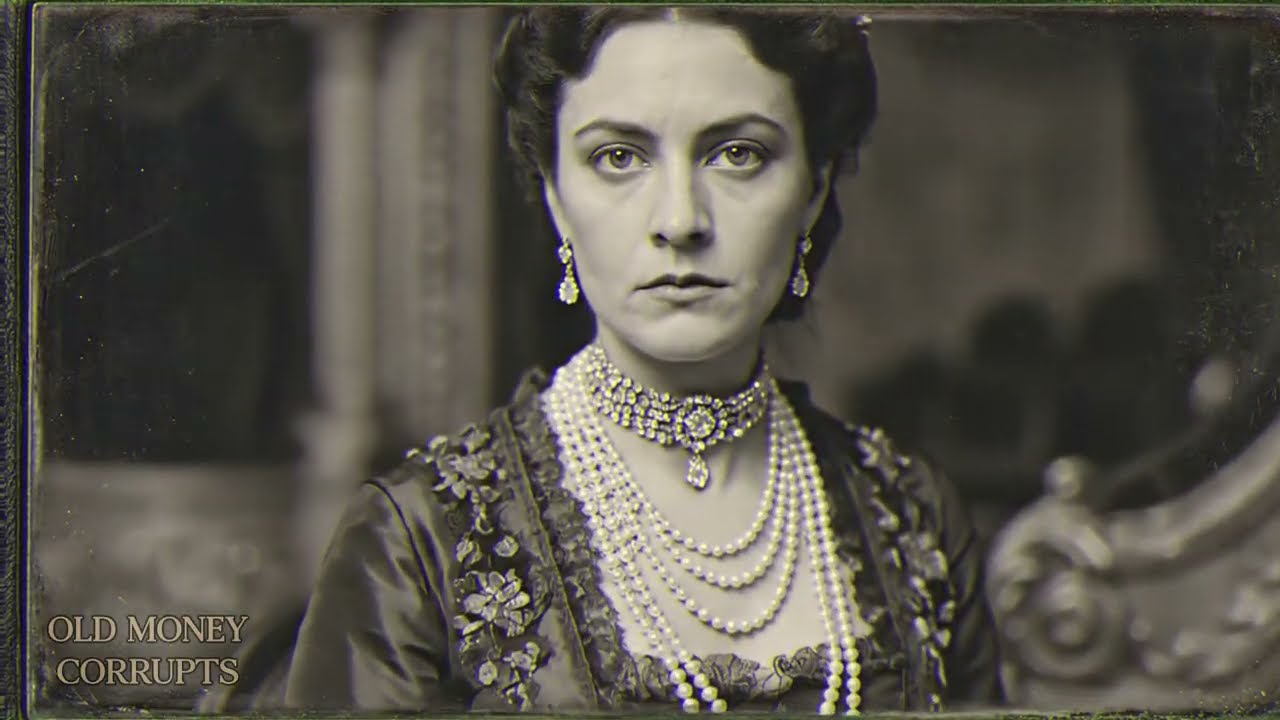
Less than a month after burying the husband who left her almost nothing, Mary Yerkes married a 29-year-old confidence man, and the cycle began again.
His name was Wilson Mizner. He was tall, quick with words, and at 29, exactly the kind of man who understood that a recently widowed woman with a famous name and uncertain finances was vulnerable in ways that polite society would never publicly acknowledge.
Mizner was an adventurer in the American mold. He had mined for gold in the Klondike and found none. He had drifted through San Francisco's theater district, managing fighters and cultivating friendships with men who lived on the boundary between charm and crime.
He saw Mary Yerkes and recognized an opportunity. She was grieving. She was humiliated by the revelation of the debts. She was surrounded by lawyers and creditors and the wreckage of a life she had not known was a wreckage. And she was lonely.
They married in 1906. The marriage lasted, depending on which account you trust, somewhere between a few months and two years. What is not disputed is the result.
Mary realized, with the terrible clarity of a woman who had already been deceived once, that Mizner had married her for whatever money she had left. The same transaction. The same arithmetic. The same architecture of deception, performed at a smaller scale and with cheaper furniture, but identical in its logic.
The divorce came in 1907. Mary was left with the remnants of the remnants.
She told a reporter, toward the end of her life, that she felt like just another idol shattered. Not a unique tragedy. Not a special case. Just another woman broken by a system that treated wives as decorative objects and discarded them when the decoration no longer served its purpose.
Mary Yerkes died in 1911. She was 54. The obituaries were brief.
The mansion on Fifth Avenue, the one with the platinum-plated doors, was demolished by its next owner. In its place, he planted a garden. Roses grew where Rembrandts had hung.
The Yerkes name survived in one place. The observatory in Wisconsin. A telescope, still the largest refractor in the world, still pointed at the stars, built with money that a convicted embezzler had donated to make himself look respectable.
Of all the things Charles Tyson Yerkes built, the telescope was the only one that was real. The only one not leveraged. The only one that looked upward.
Between 1870 and 1914, 454 American heiresses crossed the Atlantic to marry European titles, and almost none of them were told what their husbands actually owed.
The Castellane marriage was not an anomaly. It was an industry.
On one side, American families with more money than social standing, desperate for the prestige that only a European title could deliver. On the other side, European aristocrats with more title than money, desperate for the cash that only an American fortune could provide.
The brides supplied the dollars. The grooms supplied the coronets. And the terms of the trade were almost never honest.
Helena Zimmerman, daughter of a Cincinnati railroad and oil magnate, married the ninth Duke of Manchester in 1900. The Duke's debts were extensive and his habits were expensive. Helena's dowry was supposed to clear the debts and fund a new beginning. It did neither.
Jenny Jerome, daughter of New York financier Leonard Jerome, married Lord Randolph Churchill in 1874. She brought a dowry of 50,000 pounds. She gained a title and a position in British political society that would have been unattainable for an American by any other means. She also gained a husband who spent freely, speculated poorly, and died young, leaving debts that took years to untangle.
There was even a catalog titled Americans, first published in 1890, which listed which American women had married which European nobles, including the financial terms of the settlements. It listed names, titles, dowries, and estates. It did not list debts.
454 women, 454 transactions, 454 versions of the same lie. That marriage to a titled man was a partnership of equals, when in fact it was an acquisition in which the American bride was the asset.
The system that enabled these transactions was identical to the system that had failed Mary Yerkes and Anna Gould. Trusts managed by men. Finances hidden from wives. Social pressure to spend in accordance with the title's demands.
Then the system broke. Not because anyone confessed. Not because the law finally caught up with the liars. The system broke because the economy broke.
The panic of 1907 exposed the entire unregulated financial architecture as what it was. A gamble dressed in marble.
The institutional response was the Federal Reserve Act of 1913. It created a central bank. It imposed regulations on the banking system. It required reserves, mandated examinations, and established a lender of last resort.
It was the government's admission that the unregulated architecture of the Gilded Age was broken beyond the capacity of private individuals to repair.
But the reform came in the form of institutions, not apologies. No one apologized to Mary Yerkes. No one apologized to Anna Gould. No one apologized to Helena Zimmerman or to the 454 brides who crossed the Atlantic and discovered that their dowries had been spent before the wedding cake was cut.
The Gilded Age did not end because anyone told the truth. It ended because the weight of all the lies finally broke the floor.
This was not a failure of the system. This was the system working exactly as it was designed.
Coverture was not a legal accident. It was a philosophy. It held that a wife's ignorance of her own finances was not a flaw, but a feature.
A wife who did not know the numbers could not question the numbers. A wife who could not question the numbers could not challenge the decisions. A wife who could not challenge the decisions could not threaten the authority of the man who made them.
The ignorance was the point.
And the social machinery enforced it from the other direction. Mrs. Astor's ballroom, the Newport season, the 400 families and their endless performance of abundance, all of it created a world in which spending was proof of solvency.
If you were spending, you must be solvent. If you stopped spending, something was wrong. No one looked behind the spending to ask where the money was coming from. The spending was the evidence. The display was the verdict.
The law built the walls. The social machine filled the rooms. And the husbands, the Yerkeses, and the Castellanes, and the George Goulds operated in the space between, concealing their debts behind their wives' performance of wealth.
Was it cruel? Without question. Was it conscious? That depends on the man.
Boni de Castellane knew exactly what he was doing. He was a professional. George Gould may have genuinely believed his railroad expansion would pay off. He may have hidden the losses not out of malice, but out of the desperate hope that next year's revenues would erase this year's debts.
Yerkes probably fell somewhere in between. A man who knew the debts were growing, but believed, as he had believed since his 20s, that the next venture would make them vanish.
But the consciousness of individuals matters less than the logic of the structure. A system that makes honesty more expensive than fraud will produce fraud. A system that rewards concealment and punishes disclosure will produce concealment.
Today, the physical remnants of this era tell their own story. Lyndhurst, the Gould family estate on the Hudson River, is a museum. The Palais Rose was demolished in 1969. The site today holds a parking lot and an apartment building.
The Yerkes mansion on Fifth Avenue is gone entirely. A garden grows where platinum-plated doors once stood.
But the Yerkes Observatory still operates. The telescope that a convicted embezzler funded to purchase respectability still points at the sky. It survives because it was the one thing Yerkes built that was not leveraged. It was the one gift that was genuine.
Everything else, the mansions, the art, the marriages, the fortunes, the platinum and the pink marble, and the 300 gowns worn once and discarded, was built on debt, on performance, on the agreed-upon fiction that the money was real and the wives need never know.
The Gilded Age ended. Coverture eroded. Women gained the right to vote in 1920. The legal walls that had kept Mary Yerkes and Anna Gould in the dark were dismantled statute by statute, decade by decade.
Today, a wife can open a bank statement. Today, a wife can hire an accountant. Today, the law, at least, no longer conspires to keep her ignorant.
But the question we should sit with is not whether the law changed. The law changed. The question is whether the silence changed.
Because the mechanisms that kept these wives ignorant of their own financial lives were never purely legal. They were cultural. They were emotional. They were woven into the fabric of what it meant to be a good wife, a trusting partner, a woman who did not make her husband uncomfortable by asking about the mortgage or the investments or the credit card statement.
Those mechanisms, the ones that live not in statute books, but in the space between a question and the decision not to ask it, are harder to legislate.
Mary Yerkes never saw the bank statements. Anna Gould never saw the full ledger. Helen Gould saw the numbers, but could not stop her brother. Three women, three different relationships to the truth, and not one of them was given the information she needed when she needed it.
The Gilded Age is over. But somewhere tonight, in a house with a mortgage that one spouse does not fully understand, in a marriage where the investments are managed by one partner and trusted by the other, in a financial life where the full picture is available, but never quite discussed, the architecture of enforced ignorance is still standing.
The mechanisms have changed. But has the silence?