In the fall of 1958, a photograph captured what appeared to be the pinnacle of the American dream. Virginia Joan Bennett, a poised and gifted young woman, was marrying into a political dynasty. She was marrying a Kennedy.
On paper, her life was a fairy tale. She would become the wife of a United States senator, the sister-in-law of a president, and a figure in the myth of Camelot. She was given a role in a grand historic play. For years, she played that part flawlessly. She smiled for the cameras. She raised the children. She stood by her man through triumph and tragedy.
To the world, she was Mrs. Edward M. Kennedy. But behind the closed doors of the Kennedy compound, the fairy tale was unraveling. The story the public never saw was one of profound loneliness, of a vibrant identity slowly being erased, and of a sensitive soul crushed under the weight of a legendary name.
To understand the cage built around Joan Kennedy, you have to understand the era that designed it. The America of the late 1950s was governed by rigid conventions. For women, the path was narrowly defined. The cultural ideal was the happy homemaker, a woman who found fulfillment in serving her husband and raising her children.
Nowhere was this code more fiercely enforced than in Washington, DC. A political wife was a strategic asset. She was expected to be a flawless hostess, a charming conversationalist, and a living embodiment of her husband's family values. Her own opinions and needs were to be sublimated for the good of the team.
There was no team more demanding than the Kennedys. It was a corporation, a brand, and a political machine built by its patriarch, Joseph P. Kennedy, Senior. He transferred his dynastic dreams onto his sons. He controlled every aspect of the family's public image. The Kennedys were to be portrayed as vigorous, intelligent, and blessed with effortless grace.
To marry into this clan was to be assimilated. The women who became Kennedy wives were expected to adhere to a code of unwavering loyalty and public silence. Weakness was unacceptable. The emotional toll of living under this scrutiny was a price they were expected to pay without complaint.
Joan Bennett was in almost every way ill-suited for the role. Born in 1936 and raised in Bronxville, New York, her world was one of culture and refinement. She was educated at Manhattanville College, the same school attended by her future mother-in-law, Rose Kennedy.
Unlike Rose, Joan's passions were private and artistic. She was a gifted classical pianist capable of playing complex pieces by Chopin and Debussy. Music was the language of her soul. She was also a successful model, her blonde beauty gracing magazine pages and television commercials.
In the autumn of 1957, that world collided with Ted Kennedy’s. He visited Manhattanville to give a speech and was introduced to Joan. He was captivated by her beauty. She was charmed by his charisma. A whirlwind courtship began.
But Joan harbored deep reservations. Ted's world of politics felt alien to her. When he proposed, her first instinct was to say no. But time was a luxury the Kennedy machine did not afford. Joe Kennedy had seen Joan and approved. He pressed Ted to finalize the engagement.
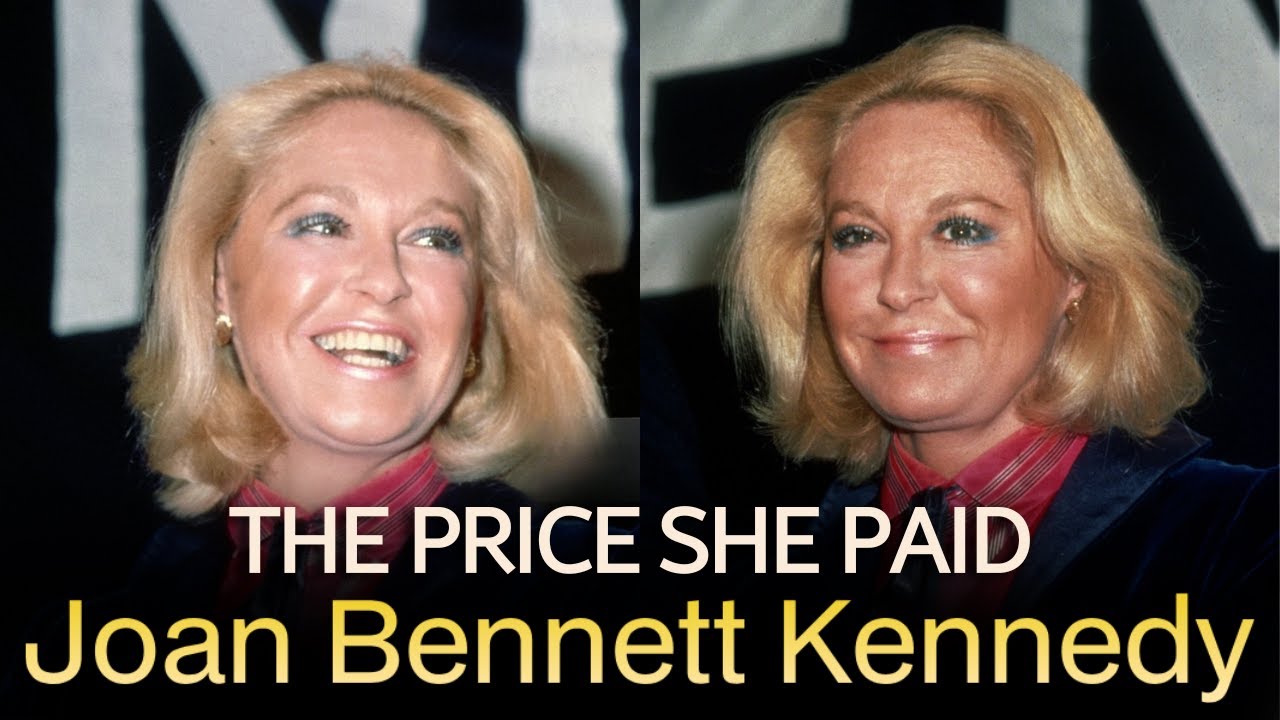
On November 29th, 1958, Virginia Joan Bennett walked down the aisle and became Mrs. Edward M. Kennedy. The wedding was a major social event. Looking at the photos, she is the image of the radiant bride. But she was also a woman taking her first steps into a life that would demand the sacrifice of the very things that made her who she was.
The assimilation was immediate. Her life as Joan Bennett was over. She moved to Virginia while Ted finished law school. Her world quickly narrowed to the domestic sphere. She became pregnant with their first child, Kara, born in February 1960. Just weeks later, she was expected on the campaign trail for John F. Kennedy’s presidential run.
In 1961, their son Edward Jr., known as Teddy, was born. The following year, Ted ran for the Senate seat JFK had vacated. Joan was a sensation on the campaign trail. She charmed voters and stood gracefully by her husband's side. At just 26, she became the wife of the youngest member of the US Senate.
The private cost was immense. The competitive atmosphere of Kennedy family gatherings was overwhelming for her. While the others shouted about politics, Joan often felt like a spectator. She would slip away to find a piano, losing herself in the familiar chords of a Chopin nocturne. It was her escape.
Then came the first of the great shattering blows. In November 1963, President John F. Kennedy was assassinated in Dallas. The nation grieved, but for the Kennedys, it was an intimate, soul-crushing loss.
Just eight months later, in June 1964, another crisis. The private plane carrying Ted crashed, killing the pilot and one of Ted's aides. Ted was pulled from the wreckage with a broken back, a punctured lung, and internal bleeding. He would spend six months in a hospital bed.
With his reelection campaign underway, it was Joan who stepped into the breach. She took over the campaign. She tirelessly crisscrossed the state, giving speeches and shaking hands. Ted won the election in a landslide from his hospital bed, a victory credited in large part to his wife's efforts.
The strain of these successive traumas was beginning to take a hidden toll. Then came 1968. In June, Robert F. Kennedy was assassinated in Los Angeles. The grief was suffocating. Joan was so overcome that she was unable to attend the funeral.
It was in the long dark shadow of this loss that the event that would irrevocably destroy her marriage occurred. On the night of July 18th, 1969, Ted Kennedy attended a party on Chappaquiddick Island. He left the party late that night with 28-year-old Mary Jo Kopechne.
His car went off a narrow wooden bridge and overturned in the dark waters of a tidal pond. Kennedy escaped. Kopechne did not. Kennedy failed to report the accident for nearly 10 hours.
Back in Virginia, Joan, pregnant for the fifth time after three previous miscarriages, was on doctor-ordered bed rest. She learned of the incident from a news report. The shock was cataclysmic. The Kennedy damage control machine roared to life. The focus was on saving Ted Kennedy's career.
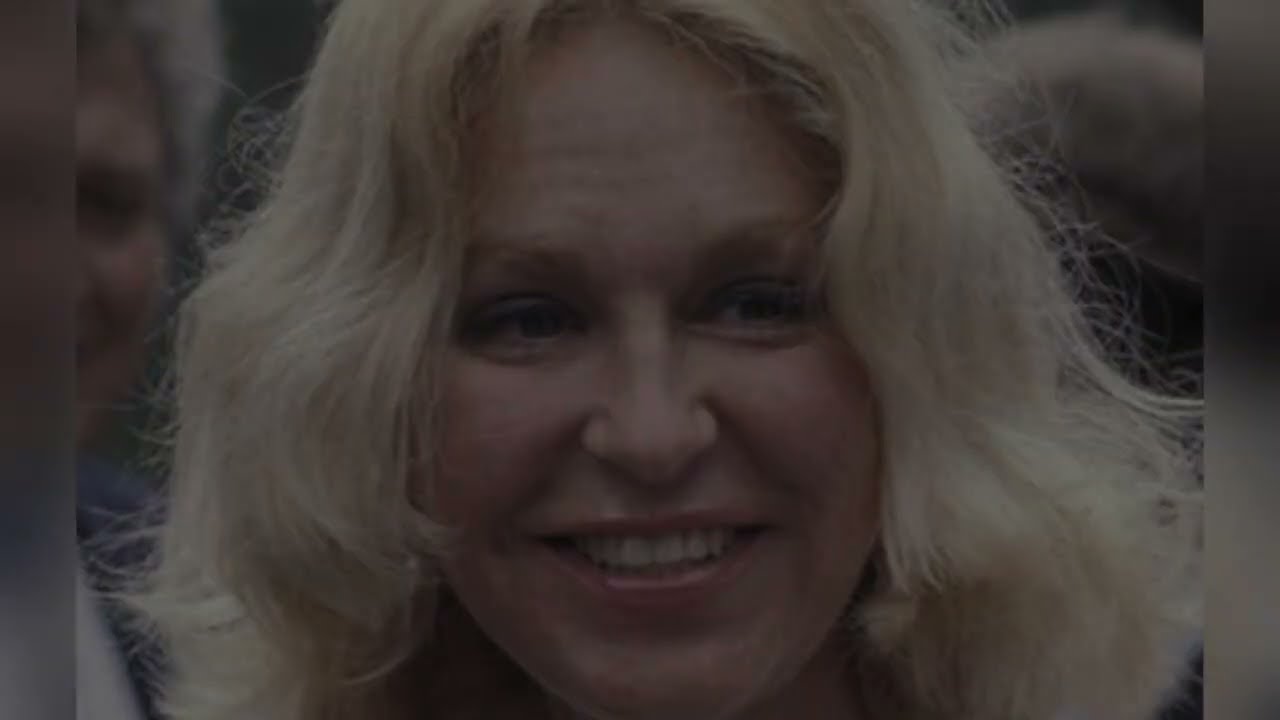
Joan was once again called upon to perform. She flew to Hyannis Port. Just days later, she was made to attend her husband's televised address to the nation. The most excruciating performance was yet to come. She had to stand beside him in the Edgartown courthouse as he pleaded guilty to leaving the scene of an accident.
Shortly after this public ordeal, she suffered her third miscarriage. Chappaquiddick was the final fatal blow to the marriage. It wasn't just the accident. It was the public nature of the betrayal. The man she was forced to stand by was a man she could no longer trust.
The loneliness she had felt for years became a vast, terrifying abyss. It was in this abyss that she began to search for an escape. She found it in a bottle.
Her descent into alcoholism was a slow, creeping surrender. It began as a way to numb the pain. In a 1978 interview with McCall's magazine, she explained the insidious logic of her addiction. "I found out that alcohol could sedate me," she confessed. "So, I didn't care as much, and things didn't hurt so much."
It numbed the searing humiliation of her husband's notorious infidelities. Ted's womanizing was an open secret in Washington. She admitted the newspaper stories "went to the core of my self-esteem."
In the Kennedy ethos, appearances were everything. Her drinking was treated not with compassion, but as another embarrassing secret to be managed. "I was embarrassed, and Ted was embarrassed," she recalled. "Everybody was embarrassed, but nobody would really talk about it."
Then in 1973, life delivered another savage blow. Her beloved 12-year-old son, Teddy Jr., was diagnosed with chondrosarcoma, a rare form of bone cancer. The only course of action was to amputate his right leg above the knee.
Joan's maternal instincts took over. She became a pillar of strength for her son. Throughout his hospitalization and grueling chemotherapy, she did not touch a drop of alcohol. But the effort of being so brave was depleting her reserves. The moment Teddy was on the road to recovery, she collapsed.
She became a spectral presence in her own home. Her youngest son, Patrick, later wrote movingly in his memoir, "A Common Struggle," about the confusion and pain of growing up with a mother who was there but not there.
By the mid-1970s, Joan knew she could not survive this way. In 1977, in an act of profound self-preservation, she left her Virginia home and moved into her own apartment in Boston's Back Bay. It was a declaration of independence.
She began seeing a therapist. She started attending Alcoholics Anonymous meetings. She enrolled in a master's program in education at Lesley College. She was fighting her way back to the woman she had been before the Kennedys.

But the ghost of her marriage was not easily exorcised. In 1979, Ted Kennedy decided to challenge President Jimmy Carter for the 1980 Democratic presidential nomination. The campaign called on Joan. They needed the illusion of a happy, united family.
She agreed to campaign for him. It was a painful public charade of a marriage that was in private already over. Ted's presidential bid failed. They formally separated, and the divorce was finalized in 1983 after a quarter century of marriage.
Freedom was not a magic cure. The years that followed were a painful public spectacle of recovery and relapse. There were arrests for drunk driving and court-ordered stays in rehabilitation facilities. Each setback was fodder for a new tragic headline.
But what this cruel narrative missed was the extraordinary resilience it took for her to keep fighting. Each time she fell, she got back up. She completed her master's degree. She worked with children with learning disabilities. Most importantly, she returned to her first love: music.
She began to perform the piano publicly again, playing with orchestras like the Boston Pops. She co-authored a book, "The Joy of Classical Music," to share her passion with children. These were the actions of a survivor reclaiming her soul.
"It's such a relief now to be free," she said in an interview. "So much of my married life was about keeping secrets. Once you sober up, the whole idea is to become honest with yourself."
Her public struggle helped demystify the disease of alcoholism. If it could happen to a Kennedy, it could happen to anyone. Her children witnessed her battle firsthand. Patrick Kennedy in particular devoted his political career to fighting for mental health parity and addiction treatment.
Joan Kennedy's story is not a tragedy. It is an epic of survival. She was expected to be a footnote in her husband's story, a beautiful broken ornament of the Camelot years. But she refused to be erased.
Her sister once remarked that if Joan hadn't left Ted, she would be dead. But she did not die. She lived. She outlasted the scandal, the whispers, and the larger-than-life man in whose shadow she was supposed to disappear.
In her later years, Joan lived quietly in Hyannis Port. Her health began to decline. Decades of emotional trauma, alcoholism, and solitude had left their mark. In the 2000s, she was diagnosed with cognitive impairment, and eventually with dementia.
On August 9th, 2020, Joan Bennett Kennedy passed away at the age of 84. Her death was not marked with the fanfare that so often accompanied the passing of a Kennedy. There were no grand funeral processions.
But across America, there was a quiet moment of reflection. She was not just the former wife of a senator. She was not just a mother of political heirs. She was a survivor of one of the most merciless machines in American public life.
She was a musician, a mother, and a woman of grace who fell and rose again more times than most could bear. She did not die broken. She died free. She leaves behind a legacy of quiet strength, of truth, of resilience, and of music.