The Gilded Age produced some of the most extraordinary fortunes in American history, and the families who built them left behind legacies that would define the nation’s cultural and social landscape for generations. But by the late twentieth century, the direct link to the original industrial spirit of these dynasties had faded. What emerged was a final generation of heiresses—women who inherited not just vast wealth, but the weight of a fading era.
These women became the last guardians of their families’ stories, often without fully realizing it. Their roles evolved beyond preserving fortunes. They became arbiters of culture and philanthropy, tasked with adapting old money values to new societal norms. Their lives, marked by both splendor and tragedy, offer a window into the final chapters of America’s most storied families.
Gloria Vanderbilt: The Last Queen of a Gilded Legacy
Gloria Vanderbilt was born on February 20, 1924, to Reginald Claypoole Vanderbilt and his young bride, Gloria Morgan. She entered a world where her surname carried the weight of American royalty. Her father, a great-great-grandson of the legendary Cornelius Vanderbilt, had inherited a fortune of $40 million—roughly $700 million today. But Reginald’s life was marked by excessive spending and personal struggles. His marriage to Gloria Morgan was his second attempt at family, and it began under tense circumstances.
His daughter from his first marriage, Cathleen, opposed the union so strongly that she cut all ties, missing her father’s wedding and later refusing to attend his funeral. But the family rift was just the beginning of a turbulent chapter. Reginald’s battles with alcohol and gambling drained both his health and his vast wealth. His death from cirrhosis of the liver, just 15 months after Gloria’s birth, left the young girl fatherless and her family in financial instability.
While Reginald left no money to his widow, he secured a $4 million trust fund—worth about $73 million today—for his two daughters. The fund was meant to provide for Gloria’s upbringing, managed by her mother, who received $50,000 annually, equivalent to $1 million today. But instead of focusing on her daughter’s welfare, Gloria Morgan chose a life of leisure and travel. Accompanied by her twin sister Thelma, she frequented the glittering social circles of Europe, often leaving young Gloria in the care of others.
Thelma lived a life full of dramatic stories and romantic entanglements, marrying British nobleman Marmaduke Furness and engaging in a high-profile relationship with Edward, Prince of Wales. The twins were staples of gossip columns, and Thelma’s romantic adventures inadvertently introduced Edward to Wallis Simpson—a relationship that would eventually lead to one of the most scandalous royal love stories in history.
Meanwhile, Gloria Morgan found herself under increasing scrutiny for her parenting style, or rather, its absence. Her long trips away from her daughter meant that young Gloria spent most of her early life in Paris, primarily under the care of her nanny, “Dodo.” This nanny was more than a caregiver; she was a lifeline. Loyal and loving, Dodo provided the stability and affection that Gloria’s mother failed to offer. In fact, Dodo’s dedication was so profound that she never took a single day off, even when her own mother died.
But as young Gloria grew, so did her awareness of her mother’s absence. Despite the luxury of her surroundings and the high society that filled her life, the emotional bonds she formed were with those physically present. Dodo became more than a nanny; she was the mother young Gloria yearned for, the constant in a life full of glittering instability.
In 1934, Gloria Morgan, caught in a whirlwind of extravagance and questionable choices, inadvertently drew the attention of the strict Vanderbilt family. Young Gloria found herself at the center of a family storm about to become a custody battle of epic proportions. While recovering from a tonsillectomy under the care of her aunt, Gertrude Vanderbilt Whitney, the stage was set for a confrontation that would captivate the nation.
Gertrude, a highly skilled sculptor and patron of the arts, had inherited her family’s vast fortune along with the legacy of her late husband, the prestigious banker Harry Whitney. With her resources and determination, she was a force to be reckoned with. The drama unfolded when Gertrude, looking beyond family ties and social obligations, judged Gloria Morgan to be a neglectful mother. Convinced that her niece deserved the stability and grandeur of the Vanderbilt environment, Gertrude made her move.
The early days passed quietly as young Gloria’s stay was extended, with her mother naively viewing it as a temporary measure. However, as the stakes became clear—control of a massive inheritance—Gloria Morgan’s maternal instincts flared. The moment she sensed a threat to her position and potential financial loss, she acted immediately. Legal papers were filed demanding the return of her daughter.
What followed was nothing less than a cinematic spectacle. The courtroom became an arena where personal grievances turned into public display. Gloria Morgan’s attempt to reclaim her daughter met a wall of resistance that shook her to the core. Accusations flew, not from strangers, but from her own kin. In a chilling development, it was revealed that her own mother had sided against her, aligning with Gertrude and their shared confidante, Dodo.
Dubbed the “trial of the century,” this legal battle reflected the struggles of a nation caught in the grip of the Great Depression. With unemployment at 21%, the American public was disillusioned. Their resentment toward the wealthy was simmering dangerously beneath the surface. Gertrude, embodying the wealth and power of America’s elite, and Gloria Morgan, cast as the villain in this family saga, became symbols of extravagance and moral decay.
Throughout the trial, the press hounded Gloria Morgan, feeding the fiery narrative. Witnesses portrayed her as a woman lost in a whirlwind of frivolity, spending her nights with high society and European royalty. Stories of her lounging in silk pajamas and reading risqué material tarnished her image, but it was the testimony of a French maid that delivered the most shocking blow. The maid testified to seeing Mrs. Vanderbilt in an intimate embrace with her friend Nadejda Mountbatten, a scandal that reached the highest echelons of the British royal family.
When it came time for young Gloria to testify, the courtroom doors were closed, leaving only Judge John F. Carew to hear her words. In private, she expressed fear and contempt toward her mother, influenced by her aunt and the careful guidance of her legal team. In her later writings, Gloria admitted to being coached on damaging stories, including a particularly cruel fabrication about her mother’s lover and a cigarette burn.
The carefully coordinated testimony swayed the court decisively. Gertrude Whitney was granted custody, leaving Gloria Morgan with limited visitation rights. Gloria Morgan, feeling insulted and humiliated, protested, comparing her situation to that of any “Park Avenue” mother who relied on nannies and tutors. But her objections fell on deaf ears, and the scandal remained a topic of sensationalism and horror for the public and press alike.
For young Gloria, the ruling did not herald a new beginning but rather the start of further trials. She was sent to boarding schools, where she faced bullying and isolation. Her only connection to her aunt was through dry legal correspondence. The absence of her mother was compounded by the loss of her beloved nanny, Dodo, who was accused of turning her against her mother and subsequently forbidden from contacting her. This separation from Dodo, as Gloria later recounted, was a crushing blow to her young heart, encapsulating the deep pain of a childhood marred by loss and betrayal.
Gloria Vanderbilt’s teenage years were a whirlwind of fame and turmoil. At fifteen, she broke into modeling and theater, though her academic career faltered when she left school at seventeen. Despite the tensions in their relationship, she moved in with her mother in Los Angeles, leading to an emotional reunion with Dodo. Their meeting was marked by tears and sincere promises never to be separated again, ensuring Dodo a permanent and supportive role in Gloria’s life.
In the glittering glow of Hollywood, Gloria became a familiar face among the elite. She was romantically linked to icons like the charismatic actor Errol Flynn and the mysterious tycoon Howard Hughes, who was much older. Her time with Hughes was a whirlwind of delight, a chapter she recalled fondly, though Hughes was not inclined toward commitment. However, youthful naivety quickly led Gloria to a decision she deeply regretted.
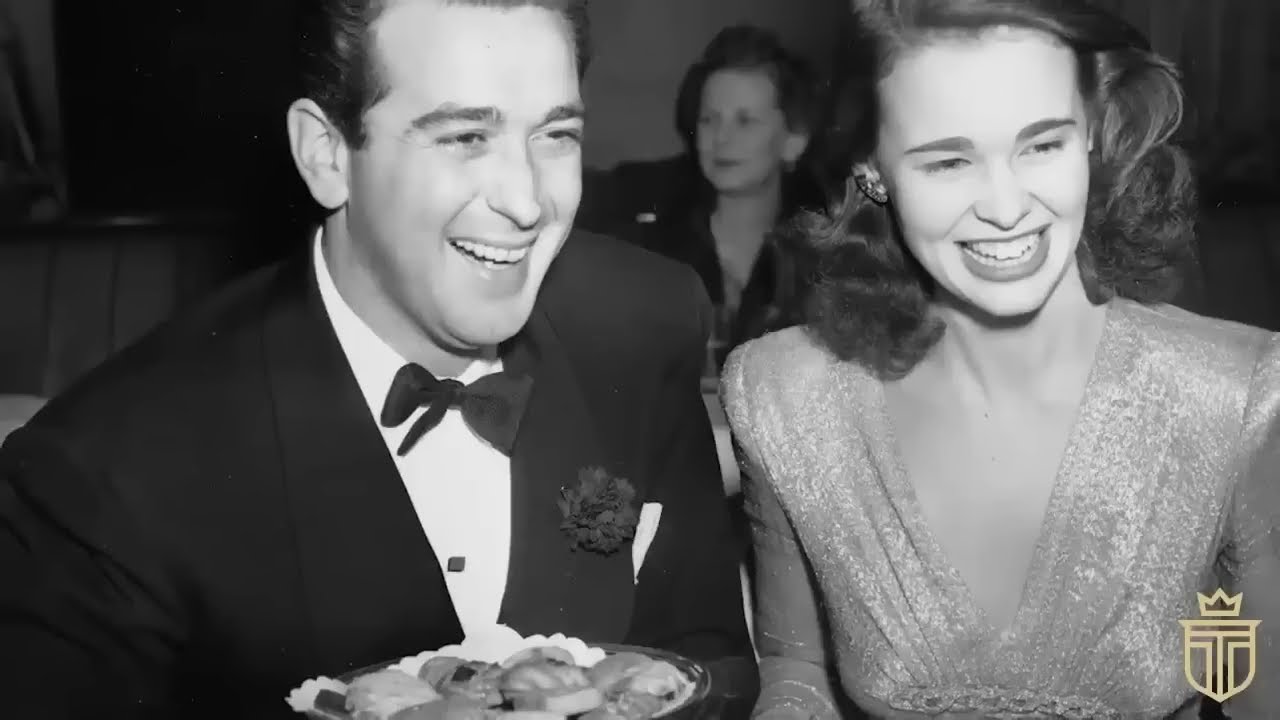
At seventeen, she agreed to marry Pasqual “Pat” DiCicco, a 33-year-old Hollywood agent with dubious connections, including alleged mafia ties through his cousin, Albert “Cappy” Broccoli. Pat, surrounded by speculation about the mysterious death of his previous wife, actress Thelma Todd, was not the knight Gloria had imagined. His abusive behavior emerged shortly after their marriage, culminating in acts of physical cruelty that Gloria painfully recounted in later years. Their marriage ended after four difficult years, with Gloria paying Pat a significant settlement.
Despite these challenges, Gloria’s spirit remained resilient. Shortly after her divorce, she found herself in the arms of Leopold Stokowski, the renowned English conductor known for his work on Disney’s “Fantasia” and previous romances with actress Greta Garbo. Despite the significant age difference and Stokowski’s controlling nature, Gloria married him at twenty-one, and they had two sons, Stan and Christopher. But the marriage was strained, marred by Stokowski’s domineering attitude and deception about his noble origins.
In her thirties, Gloria’s heart wandered again, this time toward the legendary Frank Sinatra. Their fleeting relationship was another example of her ongoing search for love amid a life where past traumas and public scrutiny cast long shadows. The relationship with Frank didn’t last long, and Gloria soon found herself married to Sidney Lumet, her third husband, just three weeks after their first meeting. During their marriage, Gloria made the decisive move to cut ties with Dodo after hearing her make anti-Semitic comments, as Sidney was Jewish. The marriage was far from happy; Sidney’s controlling nature suppressed her creative aspirations in acting and playwriting, leaving Gloria feeling stifled and dissatisfied. She ended the marriage after seven years.
During this period of personal turmoil, Gloria sought solace through an LSD therapy session, which led to a long-awaited meeting with her estranged mother, Gloria Morgan. The reunion was shocking and disappointing. Morgan, frail and suffering from a hysterical blindness, rejected her daughter’s attempt at reconciliation. From that uncomfortable visit until her mother’s death, they never discussed the painful topics of Gloria’s childhood or the famous custody trial.
Amid these personal trials at age thirty-nine, Gloria met Wyatt Cooper, the man who would become the love of her life. Despite his humble upbringing in Mississippi, Wyatt carved his own path as a screenwriter and magazine editor. Their connection was immediate and profound. While Gloria was experiencing these new joys, she received a painful reminder of her past—a letter from Dodo, which she instinctively burned. However, the arrival of another letter a week later brought tragic news: Dodo had died. The news made Gloria weep, carrying eternal regret for not reconciling with Dodo before her death.
Gloria and Wyatt’s marriage flourished, and they welcomed two children, Carter and Anderson. At the famous “Black and White Ball,” while pregnant with Anderson, Gloria felt a deep sense of family fulfillment. Wyatt’s presence brought the kind of paternal warmth she had missed during her fatherless upbringing. She celebrated his role as a father, acknowledging his wonderful influence on their children. This chapter, though interspersed with earlier difficulties, heralded the kind of stable family life Gloria had long yearned for.
Sadly, this period of contentment was short-lived, overshadowed by future sorrows yet to unfold. Wyatt Cooper’s untimely death in 1978 during heart surgery was a profound grief in Gloria’s life. He was only fifty, and his death coincided with Gloria’s rise as a fashion designer—a field she entered with her artistic touch, starting with a line of scarves featuring her drawings. This artistic endeavor evolved when she partnered with a clothing manufacturer to launch an innovative line of jeans designed for women. The jeans, form-fitting and bearing Gloria’s name on the back pocket and a swan logo on the front, were a massive hit. Her clever advertising campaigns leveraged her fame and the storied “Vanderbilt” name, propelling the brand toward spectacular commercial success.
Gloria was also known as one of Truman Capote’s “Swans,” a term he used for his circle of high-society women friends he had known since her twenties. However, their friendship faced turmoil after the posthumous publication of Capote’s unfinished novel “Answered Prayers,” in which Gloria was portrayed unflatteringly. In a scathing excerpt set in “La Côte Basque 1965,” she was depicted sitting at a nearby table, appearing aloof and disdainful. Capote’s portrayal even extended to mocking a slight stammer she had developed in childhood, a cruel reminder of her troubled custody trial.

In her memoirs, Gloria reflects on her complex relationship with Capote, acknowledging his intuitive and manipulative nature. She recounts an incident where Capote tried to persuade her into an affair with Bill Paley, arguing it would be beneficial for all parties involved. Paley’s wife was aware of his infidelities and supposedly would have found Gloria’s involvement less upsetting. However, Gloria refused the offer, maintaining her moral stance despite Capote’s persuasive tactics. Capote’s later comments about Gloria were harsh, describing her as a mean little girl who lied about her mother during the custody trial and was difficult with her family. These remarks confirmed a betrayal that deeply affected Gloria, leading her to cut ties with someone she once considered a close confidant.
Gloria Vanderbilt lived decades marked by both radiant joy and profound sorrow. Her first marriage was initially driven by youthful ambitions toward stardom—a dream that never materialized. Despite this early misstep, Gloria carved a path toward significant financial independence through her fashion ventures. Gloria Vanderbilt jeans turned into a multi-million-dollar enterprise, expanding to include skirts, jackets, coats, and perfumes. For the first time in her life, Gloria enjoyed self-made wealth, which she found more satisfying than her inherited fortune. “I don’t disparage inherited money, but money I’ve earned has a reality for me that inherited money doesn’t have,” she expressed in 1985.
However, 1988 brought another wave of tragedy. Carter, Gloria’s 23-year-old son, died after falling from the balcony of her fourteenth-floor apartment in New York. Gloria believed a psychotic reaction to the asthma medication he was taking drove him to his fatal decision. But his brother Anderson saw it as a deeper emotional struggle. Carter felt things too intensely. The horrifying moment unfolded as Gloria desperately reached out to grab her son, only to watch him slip away. This incident, as she later shared, was a deep wound that left her soul bare.
In the aftermath of this devastating loss, Gloria channeled her grief into writing “A Mother’s Story,” a book about the ordeal of losing Carter. She was openly willing to talk about her son, believing it kept his memory alive and vibrant, ensuring he would never be forgotten. However, her challenges were not over. Gloria soon discovered a deception from her inner circle—her lawyer and her psychiatrist. Two of her most trusted confidants had defrauded her of millions. Despite winning a lawsuit against them for $2 million, the compensation she received was minimal. To make matters worse, a hefty tax bill of over $3 million arrived, obligations her lawyer should have managed. This financial blow forced her to sell her beloved New York apartment and her Long Island home.
With her characteristic resilience, Gloria moved into an apartment owned by her son Anderson and rededicated herself to her artistic pursuits. She continued writing magazine articles, poetry, and memoirs, even venturing into a risqué novel titled “Obsession” at age eighty-five. By ninety, she had even joined social media via Instagram, quickly amassing over 100,000 followers and using the platform to showcase and sell her art, receiving tremendous support and inspiration from the community there.
In her final years, Gloria faced stomach cancer with the same grace and fortitude that had characterized her entire life. She chose to spend her last days at home, surrounded by her three sons, cherishing moments of laughter and reminiscence. Gloria Vanderbilt died on June 17, 2019, closing the page on a life that oscillated between the extremes of societal splendor and personal tragedy. From lavish European parties to the intense scrutiny of New York legal battles, Gloria’s life was an example of resilience, creativity, and the enduring power of family bonds. Her passing marked not only the end of the Vanderbilt legacy but also signaled the sunset of an era defined by immense wealth and profound social influence.
Doris Duke: The Last Heiress of a Tobacco Empire
While the term “Gilded Age” often evokes images of money barons counting their vast fortunes in the northeastern United States, the saga of the Duke family adds a compelling twist to this historical era. Rising to the top with a tobacco empire that rivaled the fortunes of the most famous tycoons, the Duke family not only matched the wealth of their contemporaries but sometimes surpassed it, expanding beyond tobacco into textiles and electric power to build a legacy of influence and immense wealth.
As the decades passed, the Duke legacy’s vastness became concentrated in a single figure: Doris Duke. As the last heiress of this storied dynasty, Doris inherited not only a vast fortune but also the complexities and responsibilities of that wealth. Her life—marked by luxury, philanthropy, and public scrutiny—paints a vivid picture of a woman who carried the weight of a glorious past while navigating the currents of American society.
Doris Duke, once dubbed the richest girl in the world, saw an empire built on golden tobacco leaves, a legacy she inherited from her industrious father, James Buchanan Duke. As the winds of North Carolina blew across vast tobacco fields, Doris inherited a fortune that was not merely financial but a legacy of a storied past reflecting her ancestors’ ingenuity. Born into wealth, her fate was sealed by her father’s death, which left her a massive inheritance of $100 million at the age of twelve—equivalent to $1.8 billion today. Her mother’s death in 1962 further swelled her coffers, adding a staggering $250 million, or $2.5 billion today, to her growing fortune. This legacy grew under her stewardship to exceed $5.3 billion by the time she breathed her last in 1993.
But Doris was not just a passive heiress. She was a seasoned expert in her field. Her strategic acumen led her to double her inheritance through smart investments in corporate giants like General Motors, managed by a team of brilliant financial minds. However, it wasn’t just stocks and bonds that captivated Doris. Her passion for the arts and architecture reflected a spirit yearning for beauty and expression. Her homes were her sanctuaries, each a symbol of her diverse interests and luxurious lifestyle.
Duke Farms, her primary residence, spanned 2,700 acres in New Jersey. It was more than a home; it was a lush paradise showcasing her passion for horticulture within the Duke Gardens, a place where nature’s splendor was preserved and displayed. The allure of exotic locales drew her to build Shangri-La, a magnificent oceanfront estate in Honolulu. Here, Doris indulged her fascination with Islamic culture, crafting a residence that was both a home and a museum. Its halls were adorned with intricate mosaics and artifacts whispering tales from distant lands. Summers found her in Newport, Rhode Island, at Rough Point, a lavish mansion where the echoes of the Gilded Age resonated in its opulent halls, where Atlantic breezes mixed with the scent of fresh flowers from her meticulously tended gardens.
Her life in Manhattan included two residences—a penthouse apartment with panoramic views from its expansive terrace and a functional space dedicated to the meticulous management of her empire. In Beverly Hills, Falcon Lair added a touch of silver screen glamour to her collection, once owned by Rudolph Valentino. Her collections of art and jewelry were legendary, her taste impeccable. Masterpieces by Picasso and Van Gogh shared space with intricate Islamic artifacts and luxurious Southeast Asian furniture, creating a panorama of global culture and history. Wine flowed like nectar in her homes, with over 2,000 rare bottles collected, each telling a story of vine and vintage. Her jewelry, which sparkled at Christie’s auctions long after her passing, fetched sums that spoke to their breathtaking allure.
From her earliest days, Doris was under pressure to preserve a vast dynasty of unimaginable wealth, a burden that would be difficult for any child. Born under the glittering skyline of New York City on November 22, 1912, Doris Duke entered a world shimmering with wealth and promise. The only daughter of James Buchanan Duke, the tobacco and hydroelectric power tycoon, and his second wife, Nanaline Holt Inman, she was surrounded by privilege from infancy. The media, fascinated by her luxurious beginnings, quickly dubbed her the richest baby in the world. The Duke family fortune, deeply rooted in the success of the American Tobacco Company and Duke Energy, shielded young Doris from want, positioning her as the heiress to an enviable empire.
Her childhood playground was Duke Farms, that majestic 2,000-acre estate in New Jersey, where the seeds of her future as a guardian of nature and beauty were planted amid vast gardens and tranquil, luxurious retreats. However, her father’s untimely death in 1925, when Doris was just twelve, made her responsible for a fortune rivaling the treasuries of entire nations. This inheritance was not merely financial; it came laden with the expectations of others and the world’s watchful eyes tracking her every move with precision. The ensuing legal battles over her father’s estate thrust her into the harsh spotlight of public scrutiny.
Despite these trials, Doris’s education was as elite as her social standing, making her multilingual with fluency in French and a cultured personality with refined tastes in the arts and aesthetics. This intellectual and cultural preparation was complemented by training under Estelle Liebling in New York City, where she honed her singing talents—a pursuit that would deepen her lifelong support for the arts. Doris’s life was a canvas of exploration and expression. Her artistic endeavors flourished during her youth, blossoming into significant philanthropic contributions, particularly in the performing arts, echoing her father’s legacy. Before his death, he established the Duke Endowment with a massive grant of $40 million, which later led to the renaming of Trinity College to Duke University.
In 1934, at twenty-one, Doris received the first installment of her inheritance. She established Independent Aid, setting a precedent for what would become over $400 million in donations throughout her lifetime, often given anonymously to causes as diverse as her interests. Her marriage to James Cromwell in 1935 expanded her world further. Their honeymoon was a grand tour around the world. During these extensive travels, especially in the Middle East and Asia, Doris developed a deep appreciation for Islamic art—a passion that manifested in her creation of Shangri-La, a haven in Honolulu dedicated to Islamic culture and arts. Her life, rich with cultural exchanges such as her friendship with the Kahana Mokua family in Hawaii, demonstrated her openness and curiosity.
Doris Duke’s journey into horticulture began in earnest in 1958 at Duke Farms, her father’s estate. At forty-six, inspired by the grandeur of the du Pont family’s Longwood Gardens, she embarked on crafting a series of interconnected gardens. Each was a gateway to a different world—a country, an era, or a theme—celebrating the diversity and richness of garden traditions worldwide. But Doris Duke’s life was a rich mosaic of interests extending far beyond gardens. In the mid-twentieth century, her support for the arts flourished remarkably. She amassed a vast collection of Islamic and Southeast Asian art, including ceramics, textiles, and paintings, later displayed in her Honolulu home under the auspices of the Doris Duke Foundation for Islamic Art. Her engagement with the arts was deeply personal and varied. Doris studied jazz piano and composition in the vibrant jazz rooms of New York and explored modern dance with the legendary Martha Graham. These experiences enriched her understanding of the arts and her commitment to their patronage.
In medical research, Doris directed her wealth toward initiatives aimed at transforming healthcare, driven by the potential for groundbreaking clinical research. She contributed significantly to hospitals and research institutions, her legacy preserved through the Doris Duke Charitable Foundation. However, her personal life was a whirlwind far from the tranquil pastures and charitable causes she supported with dedication. Her marriage to James H.R. Cromwell, strained by political turmoil and the tragic loss of their infant daughter Arden in 1940, ended by 1943. Her next marital venture led to Porfirio Rubirosa in 1947, a charming and notorious Dominican diplomat. But like a fleeting melody, this union ended quickly, dissolving after just one year.
Beyond these marriages, Doris’s romantic life branched out over the decades with connections to cultural icons such as surfer Duke Kahanamoku, actor Errol Flynn, and jazz maestro Joe Castro. Each relationship added new layers to her mystique, fueling the public’s fascination with her life beyond her wealth. The 1960s brought not only glamour but also controversy, particularly with the mysterious death of her friend and decorator Eduardo Tirella in 1966. Under a cloud of suspicion, the accident at her Newport estate, with Doris at the wheel, was ruled accidental—a verdict whispered to have been influenced by Doris’s power. The echoes of this event rippled through a series of legal entanglements that seemed to mark much of Doris’s later life. From suing her mother at thirteen for control of her vast inheritance to a reputation for litigiousness that saw her involved in over 40 lawsuits, her life was a series of battles fought inside and outside courtrooms.
One of the most controversial cases was her sudden decision to adopt Chandi Heffner and then disinherit her, leading to an extended legal saga over her multi-billion-dollar estate after her death in 1993. In the autumn of her life, additional controversy emerged over her mental state and decisions regarding her wealth, particularly her choice of her butler, Bernard Lafferty, as executor of her will—a move that sparked disputes over potential undue influence.
Doris Duke breathed her last on October 28, 1993, in her grand Beverly Hills mansion, marking the end of an era. Her death, attributed to worsening pulmonary edema leading to cardiac arrest, seemed a natural conclusion to a life filled with wealth and influence. However, whispers of controversy over her final moments and the future of her vast legacy soon overshadowed that tranquility. Matters grew more complicated when Richard H. Koe, a court-appointed investigator, revealed findings suggesting an unsettling end for Duke. Claims emerged alleging that her physician, Dr. Charles Kivowitz, had hastened her death with an overdose of morphine. These serious accusations were bolstered by statements from Tammy Payette, Duke’s private nurse, who affirmed in court documents that a lethal dose had been deliberately administered.
This revelation cast a shadow over Doris Duke’s final days, bringing a storm of scrutiny upon the medical care she received. As details of her will emerged, the drama intensified. In an unexpected twist, Duke bequeathed control of her $1.3 billion fortune to her butler, Bernard Lafferty, who had been close to her for six years. This decision stunned many, especially as it bypassed Chandi Heffner, a woman Duke had adopted in 1988. The will ignited a fierce legal confrontation, attracting numerous claimants and leading to a protracted court battle that ended in 1996 with a settlement favoring the creation of the Doris Duke Charitable Foundation to manage her estate.
Amid the legal turmoil, the enduring elements of Duke’s legacy remain her immense contributions to culture and heritage preservation. Her deep passion for diverse cultures is evident in her extensive collection of Islamic and Southeast Asian art, now preserved at Shangri-La, her former Honolulu residence, reimagined as a museum celebrating Islamic art and design. Furthermore, Duke’s environmental vision shines at Duke Farms, her vast New Jersey estate. True to her wishes, the property has transformed into a beacon of environmental stewardship, offering education and recreation to the public. Thus, despite the shadows cast over her controversial final years, Doris Duke’s influence endures, woven through the cultural and environmental projects she supported. Her legacy, marked by dedication to the arts, historical preservation, and environmental conservation, continues to resonate, affirming her significant role in shaping the American cultural and philanthropic landscape.
Barbara Hutton: The Poor Little Rich Girl
On a cold November evening in 1930, as the nation struggled under the weight of the Great Depression, New York’s elite gathered at the Ritz-Carlton Hotel to celebrate the eighteenth birthday of Barbara Hutton, heiress to the Woolworth department store fortune. Upon arrival, guests—from the most famous families of the era, including the Astors, Vanderbilts, Whitneys, and Rockefellers—were greeted by the renowned French entertainer Maurice Chevalier, dressed amusingly as Santa Claus. The grand ballroom inside resembled a fantasy winter wonderland, adorned with lavish decorations and a sea of flowers that alone cost $50,000, equivalent to about $1 million today. The atmosphere pulsed with the melodies of four orchestras, the echoes of champagne corks filling the air as the night wore on. With 2,000 bottles of champagne served by a staff of 200 waiters, the celebration didn’t dim as midnight approached. Instead, the party escalated with the serving of 1,000 seven-course dinners. As the night stretched into the early hours, 1,000 breakfasts were served to those who had danced through the night.
The pièce de résistance of the evening was the party favors. Each guest received a small jewelry box filled with unmounted diamonds, emeralds, and rubies—a lavish gesture that left the crowd astonished by the hostess’s generosity. Barbara Hutton crowned this celebration, said to have cost $60,000, or over $1 million today, as the radiant centerpiece of the evening. Dressed in a stunning gown, she embodied the role of the “poor little rich girl,” a title that would cling to her throughout her turbulent life. That night at the Ritz-Carlton was not merely an extravagant party. It marked Barbara Hutton’s entrance into the world of the elite and the spotlight. As one guest observed with melancholy, it was the moment Bobbie transformed into Barbara Hutton, the debutante, the belle of the ball, the society girl of the Western world. Little did they know that this glittering debut foreshadowed a tragic life of glamour and sorrow, an eternal quest for happiness amid the dazzling and often cruel world of the wealthy and famous.
Barbara Hutton, a symbol of wealth since childhood, found herself at the heart of a whirlwind of fortune and scrutiny from the age of twelve. With the death of her grandmother, Jennie Creighton Woolworth, in 1924, Barbara was left a massive inheritance rivaling the stories of fairy-tale princesses: $26 million, a sum worth nearly $500 million today. Furthermore, her mother’s estate provided an additional $2.1 million in stocks. Managed by her father, Franklin Laws Hutton, this trust grew to $42 million by the time Barbara turned twenty-one, making her one of the richest women in the world during an era marked by the Great Depression’s harsh realities.

Her father, Franklin, a titan of finance and co-founder of the famous E.F. Hutton & Co., was masterful in his field. His financial maneuvers, particularly his wise decision to exit investments before the 1929 stock market crash, significantly protected and multiplied Barbara’s inheritance. But while Franklin navigated financial storms with intelligence, his personal life simmered with scandal. The mysterious death of Barbara’s mother, Edna Woolworth, in 1917—believed to be suicide due to Franklin’s infidelities—left young Barbara to discover her mother’s lifeless body, an image that haunted her for life. In the wake of her mother’s death, Franklin’s subsequent marriage to Irene Bodie deepened Barbara’s emotional isolation. Viewed as an opportunistic stepmother, Irene ensured Barbara’s upbringing was shuffled between various relatives, often left in the care of nannies rather than family.
Despite these early traumas, Barbara’s debut into high society was spectacular by any measure. The coming-out party was legendary. Her personal life unfolded as a carefully choreographed ballet of extravagance and luxury. She owned opulent estates worldwide, from the Japanese-inspired Sumel’n palace in Mexico to the royal Sidi Hosni palace in Tangier. Each home was not just a residence but a testament to her wealth and refined taste for the exotic and beautiful. Her love of luxury extended beyond real estate. Hutton was known for her stunning jewelry collection, including the famous Vladimir tiara. Her wardrobe was a showcase of haute couture by legends such as Cristóbal Balenciaga and Oleg Cassini. Cassini, commissioned by Cary Grant, tried to manage the turbulent waters of their marriage through elegance.
Socially, Barbara was a magnet for prominent gatherings. Her New York debut was particularly noteworthy for its extravagance. Despite the allure of this wealth, it was not without its critics, especially given the harsh economic climate of the Great Depression. Her presence and lifestyle made her a constant target of media fascination and public criticism. By 1934, Barbara’s life inspired both films and songs, capturing the public’s imagination and cementing her status as a cultural icon, though often viewed through a lens of disdain and envy. This public narrative portrayed her as a poor little rich girl, a title that underscored the complex interplay of wealth, privilege, and personal hardship that defined her life’s trajectory.
Barbara Hutton ended her life effectively bankrupt, alone, and isolated. To better understand how someone could go from a million-dollar debutante party to abject poverty, we must rewind to her uniquely difficult youth. Born into opulence on November 14, 1912, in New York City, Barbara Woolworth Hutton was the only child of Edna Woolworth of the retail empire and Franklin Laws Hutton, a founder of the E.F. Hutton investment firm, making her the immediate heiress to one of America’s largest fortunes. However, the wealth that defined her birthright would also shape a life marred by emotional turmoil. Barbara’s upbringing was steeped in material riches but plagued by emotional neglect. Her father, Franklin, notorious for his infidelities, was a distant figure, while her mother, Edna, suffering from loneliness, sought solace in an affair with Budd Boulware, the future uncle of Jacqueline Kennedy. This chaotic family environment left Barbara profoundly isolated, starving for affection her fractured family could not provide.
Tragedy struck brutally when, at the tender age of five, Barbara discovered her mother’s lifeless body—an image that haunted her for decades. Officially, Edna’s death was attributed to complications from mastoiditis, but whispers of suicide persisted, with some suggesting the family may have influenced city officials to avoid deeper investigation. Following the trauma of this loss, Barbara’s subsequent childhood was marked by constant shuffling between guardians as she moved from one relative’s home to another. She spent long periods at her maternal grandparents’ lavish 60-room mansion on Long Island, a place where material extravagance was abundant but emotional warmth was scarce. Her grandmother, Jennie Creighton Woolworth, was consumed by dementia, and her loving grandfather, Frank Woolworth, was ill. He called her “Princess” affectionately, but his declining health meant he couldn’t provide the stable affection she desperately needed.
After her grandfather’s death in 1919, Barbara’s father moved her around frequently, each transition further eroding her sense of stability. Described by those who knew her as a dreamy, imaginative, and lonely child, Barbara harbored complex feelings toward her father, intertwining threads of fear and a yearning for his approval. During these formative years, Barbara’s cousin Jimmy Donahue was a kindred spirit, also knowing the cruelty of wealth paired with familial neglect. This bond, formed through shared experience, became a rare constant in her early life. Barbara’s education reflected her social standing, attending prestigious schools like Miss Hewitt’s and Miss Porter’s School for Girls. However, the luxury of her educational background did little to heal the deep wounds left by her troubled upbringing.
Barbara Hutton’s quest for love was both storied and painful, beginning with her first marriage to Prince Alexis Mdivani in 1933. Barbara first met Alexis Mdivani through a meeting arranged by his sister, Rousadana, known as Roussie. The Mdivani family were social climbers, known for pursuing marriages with wealthy individuals who flaunted their fortunes in high society. Roussie arranged a meeting for her brother with Barbara under the guise of attending social events, exploiting Barbara’s vulnerability and immense wealth. Their first meeting led to a scandalous affair while Alexis was still married to his first wife, Louise Van Alen. This relationship culminated in a hasty marriage with Barbara after Alexis’s quick divorce from Louise. Thus, the Woolworth heiress, at age twenty, married the purported Georgian prince in a grand ceremony in Paris. She dazzled in a white dress with prominent shoulders and a long veil, hoping for a fairy-tale ending. Reality was far from that.
Mdivani, known for his series of marriages, began spending Hutton’s vast fortune on a lavish home, polo ponies, expensive clothes, and men’s jewelry. Their marriage ended in March 1935, less than two full years after exchanging vows. But her divorce from Mdivani did not deter Hutton from continuing her quest for marriage. In May 1935, she married Count Kurt Heinrich Eberhard Erdmann Georg von Haugwitz-Hardenberg-Reventlow. This union brought her only child, Lance Reventlow, into the world in 1936. However, like her first marriage, this one collapsed by 1941.
Barbara Hutton’s third marriage was to the charming Hollywood icon, Cary Grant, just one year later in 1942. The couple’s marriage received extensive media coverage, partly due to Hutton’s immense wealth as a Woolworth heiress and Grant’s fame as one of Hollywood’s leading stars. Initially, their marriage was marked by frequent social events and public appearances, reflecting their prominent status. They were known as “Cash and Cary,” a name playing on Hutton’s wealth and Grant’s screen persona, though Grant was independently wealthy and didn’t need Hutton’s financial support. The relationship began to deteriorate when Hutton felt she was living in the shadow of Grant’s career. Despite the glamour of their lives, she later stated he was more interested in advancing his stardom, which she considered a primary reason for their separation. The marriage couldn’t withstand these internal and external pressures, leading to an amicable divorce without financial claims against each other.
Continuing her search for marital happiness, Hutton married Prince Igor Troubetzkoy in 1947, but this marriage also ended in divorce by 1951. Her fifth marriage in 1953 to the Dominican diplomat Porfirio Rubirosa was notably short, ending after just 53 days. Then in 1955, Hutton’s marriage to German tennis star Baron Gottfried von Cramm surprised society, given his sexual orientation and previous imprisonment for activities that were then illegal. This marriage also ended in 1959, further complicating her turbulent romantic life. Her final marital attempt was with Prince Pierre Raymond Doan Vinh Na Champassak, an adopted member of the former royal family of Laos, in 1964. This last experiment in marriage concluded in 1966, closing the chapter on Hutton’s marriages. Her numerous marriages, each ending in disappointment, painted a picture of a woman relentlessly searching for stability and happiness that eluded her. Her romantic pursuits, along with her immense wealth, made her a perennial subject of media curiosity and public sympathy. Despite her efforts, lasting love remained elusive, and her final years were marked by loneliness and financial difficulties.
Barbara Hutton, once one of the richest women in the world, saw her fortune dissipate under the weight of extravagant spending and financial mismanagement, especially between the 1940s and 1960s. By then, her properties around the world and her constant travels to exotic locales were hallmarks of a lifestyle that significantly contributed to her financial ruin. Her tumultuous personal life, punctuated by seven marriages, also heavily impacted her financial decisions. Many of her husbands were accused of draining her wealth, with costly divorce settlements further depleting her assets. For instance, her first husband, Prince Alexis Mdivani, received a settlement of $2 million during their marriage. Another costly union with Count Kurt Haugwitz-Reventlow reportedly cost her an additional $1.5 million. These financial drains, coupled with her lavish gifts to her husbands, gradually eroded her vast resources.
Hutton’s spending wasn’t limited to her marital affairs. She frequently made impulsive purchases, including expensive jewelry and artwork, which continued to strain her finances. Her lack of financial acumen and reliance on others to manage her estate made her vulnerable to exploitation. Moreover, as she entered her sixties and seventies, Hutton’s life was characterized by darker themes as she faced severe health issues and struggles with addiction—a battle that began around the birth of her son Lance in her twenties but worsened with age. Her health problems were compounded by her addiction to barbiturates, particularly Seconal, which she used to control her anxiety and stress. Her substance abuse, often dangerously mixed with alcohol, led to numerous near-fatal overdoses and even comas.
In her final years, Hutton’s physical health deteriorated significantly. She became nearly blind and suffered a hip injury causing chronic pain. Her mental health also declined, marked by erratic behavior, mood swings, and paranoia. Hutton became increasingly reclusive, spending most of her days bedridden, dependent on her staff for care. The tragic death of her only son, Lance Reventlow, in a plane crash in 1972 pushed her into deep despair, further increasing her isolation and depression. She withdrew further from the social world that had defined her identity, moving into a posh Beverly Hills hotel to live out her remaining years in seclusion. Her health, both physical and mental, declined sharply during this period. She struggled with acute anorexia and a debilitating hip injury that left her bedridden, while her failing eyesight increased her disconnection from the world around her.
Financial ruin accompanied her physical decline. Despite her unstable financial situation, she continued her pattern of giving, often to strangers who offered her attention, further draining her resources. By the time of her death, she was said to have only $3,500—about $15,000 today. To be fair, this figure is widely disputed by those close to her, yet it symbolizes her dramatic fall from immense wealth. Hutton’s life ended quietly on May 11, 1979, from a heart attack in her hotel suite at age 66. Her death was a poignant end to a life marked by dazzling wealth and profound personal tragedy. The public, which had watched her rise and fall with great interest over the decades, reacted to her death with a mixture of shock and sympathy.
Barbara Hutton’s funeral was as quiet as her final years were lonely. It was held in the Woolworth family mausoleum at Woodlawn Cemetery in the Bronx, New York, where she was laid to rest among her relatives. Only a close circle of family and friends attended the ceremony—a quiet gathering far removed from the lavish social parties she once hosted. This solemn gathering served as a reflective tribute to a woman whose life was a complex mixture of extreme isolation and public fascination.
Bunny Mellon: The Last True Heiress of Old Money
Imagine deciding to spend a holiday exploring the beautiful museums of the United States capital, Washington, D.C. There, you stop at the National Gallery of Art, that iconic neoclassical edifice whose walls are adorned with a magnificent collection of Impressionist paintings. The rich, vibrant colors of Monet’s gardens contrast sharply with the somber, contemplative blues of Van Gogh’s night scenes. Nearby, the bold, stark lines of modernist sculptures catch your attention, their abstract forms casting dramatic shadows on the polished floors. As you wander through the echoing galleries, immersed in the rich colors of Impressionist paintings and the stark lines of modernist sculptures, you might realize a subtle and profound truth. The art surrounding you is steeped in the legacy of Rachel “Bunny” Mellon.
Bunny Mellon, born Rachel Lambert into the wealth of the Listerine mouthwash fortune, not only inherited a legacy but also became associated with even greater status through her marriage to Paul Mellon, heir to one of America’s wealthiest banking families. This fusion of wealth and taste created an artistic patronage that was as quiet as it was influential, shaping not just galleries but the very landscape of American cultural heritage. Bunny Mellon was a dazzling figure in American high society, flaunting wealth that made even the most jaded rich stop in awe. With a net worth once estimated at a staggering $1 billion, her financial empire was built on a combination of inheritance and smart investments in Listerine, the mouthwash invented by her grandfather. But it was her marriage to Paul Mellon, heir to the Mellon banking empire, that finally cemented her place at the top of the elite.
Mellon’s life was a masterclass in luxury. Her Virginia farm, Oak Spring Farm, spanned 4,000 acres of pure extravagance, complete with gardens bearing her personal touch. These were not just ordinary green spaces but vast canvases of horticultural artistry showcasing her love for landscape design. Add to that her 27-acre gem in Antigua, which she put on the market for $14.5 million. Located within the exclusive Mill Reef Club, the property was as much a status symbol as it was a testament to her taste for acquiring the most elite real estate. Her jewelry collection was legendary, featuring sparkling creations from Cartier and Verdura. These were not mere trinkets but dazzling examples of her refined taste and financial capability.
Despite her immense wealth and luxurious lifestyle, Bunny Mellon was not a traditional socialite. She was known for her extreme privacy, shunning the spotlight in favor of her private passions. Her elegance and simplicity were her trademarks, focusing on gardening and art rather than the false glitter of society parties. Her greatest achievement was redesigning the White House Rose Garden during the Kennedy administration, a contribution that earned her recognition in circles that value true talent over fame. But how did a shy artist born into wealth become associated with one of America’s most storied banking dynasties?
Rachel Lambert Bunny Mellon was born on August 9, 1910, in Princeton, New Jersey, into a life of exceptional privilege. Her lineage traces back to Gerard Barnes Lambert, the pivotal figure who transformed his father’s invention of Listerine into an iconic brand, and her grandfather, Jordan Wheat Lambert, who originally created Listerine as a surgical antiseptic. The Lambert family’s wealth and influence, already firmly established by the time of Bunny’s birth, were the foundation for her upbringing and future pursuits in horticulture, art, and philanthropy. Bunny’s childhood was spent in an environment filled with the trappings of wealth and the cultural elements that define the American elite. Her home in Princeton was not just a residence but a showcase of her family’s status, complete with expansive gardens hinting at Bunny’s future passion. Her mother, Rachel Lowe, was instrumental in nurturing Bunny’s appreciation for beauty and design from a young age, influences that deeply shaped her aesthetic sense and her later career in garden and interior design.
However, despite the extravagance surrounding her, Bunny’s early life was not without personal trials. Her parents’ marriage suffered under the weight of her father’s work commitments, which often kept him away from home, and it was not a harmonious relationship. Bunny, a naturally shy and reserved child, found solace in the quieter corners of her life, developing a rich inner world nourished by her observations of the art and culture her family cherished. Her education was carefully coordinated to match her family’s elite status, with periods of study at prestigious institutions like Miss Fine’s School in Princeton and Foxcroft School in Middleburg, Virginia, along with private tutors who enriched her knowledge of the arts and literature, especially French culture. Her intellectual growth was particularly marked by frequent trips to France with her mother, which introduced her to European garden traditions that later reflected in her own garden designs.
Her parents’ divorce in 1933 and subsequent remarriages added further complications to Bunny’s life, but it was also a period marked by significant personal growth. These changes in her family dynamics didn’t greatly affect her growing interest in the arts and nature; if anything, they fueled her drive to carve out a distinctive path blending her love for natural beauty with her cultural leanings. As Bunny matured into womanhood, her reserved nature and the elegance instilled in her from childhood blended seamlessly with her emerging talents in garden design and the arts.
On a crisp autumn day, November 25, 1932, Rachel Lambert, later known to the world as Bunny Mellon, walked down the aisle of Trinity Church in Princeton, New Jersey, to marry Stacy Barcroft Lloyd Jr. Stacy came from the influential Lloyd family of Ardmore, Pennsylvania, prominent members of Philadelphia’s historic elite. As a businessman, horse breeder, and yachting enthusiast, Stacy aligned with Bunny in their shared interests in high society and equestrian arts. Despite their shared interests, their marriage did not last, ending in divorce in 1948. During their marriage, Bunny and Stacy had two children. Their son, Stacy Barcroft Lloyd III, carved a path for himself as a researcher of antiquities. Their daughter, Eliza Winn Lloyd, pursued her creative passion as an artist. Tragically, Eliza’s promising journey ended early when she died in 2008 from complications of severe injuries sustained in a horrific accident in 2000, when a truck struck her in Manhattan, leaving her with brain damage and paralysis.
During the turbulent years of World War II, Stacy Lloyd Jr. began a covert career with the Office of Strategic Services (OSS), the predecessor to the Central Intelligence Agency (CIA). His wartime efforts were deployed across Europe within the Morale Operations branch, specializing in psychological tactics designed to undermine enemy morale. During this intense period, Lloyd shared housing with another OSS agent, Paul Mellon, who would later emerge not just as a fellow war veteran but as a pivotal figure in Lloyd’s personal life. After Stacy’s separation from Bunny, her marriage to her wartime companion, Paul Mellon, on May 1, 1948, marked a new chapter in Bunny’s eventful life, linking her path with one of America’s most famous families.
Paul Mellon was no stranger to fame and status. As the son of Andrew W. Mellon, the renowned financier and three-term U.S. Secretary of the Treasury, he grew up surrounded by wealth and cultural heritage. As a passionate art collector, Paul found a kindred spirit in Bunny. Their marriage produced a dynamic alliance focused on art collecting, philanthropy, and their shared love of horse breeding. The Mellons meticulously assembled an exceptional art collection focusing on masterpieces of eighteenth and nineteenth-century European art. This remarkable collection, comprising over a thousand pieces, underscored their deep dedication to the arts. It featured works by some of history’s most revered artists. Among the highlights was Georges Seurat’s “The Lighthouse at Honfleur,” a vibrant symbol of Seurat’s unique pointillist technique, and Claude Monet’s “Woman with a Parasol,” capturing the light and fleeting moments of Impressionist beauty. Additionally, Paul Cézanne’s “Boy in a Red Vest” and Mary Cassatt’s “Little Girl in a Blue Armchair” embodied the Mellons’ appreciation for Impressionist and Post-Impressionist movements, enriching their prestigious collection’s diversity.
Beyond French masterpieces, the Mellons also cherished significant British and American works, reflecting their eclectic taste across different artistic traditions. Their collection included George Stubbs’ “White Poodle in a Boat,” exemplifying Stubbs’ meticulous depiction of animals, and George Bellows’ “New York,” offering a dynamic portrayal of early twentieth-century American life. Winslow Homer’s “Dinner Horn” depicted a serene scene from rural American life. This interest in British art was particularly pronounced, leading to the formation of a magnificent collection of British artworks. These works, along with other acquisitions, significantly enriched the Mellon collection at the Virginia Museum of Fine Arts, ensuring the Mellons’ legacy in the art world continued.
Known for their keen eye and passionate support of the arts, their philanthropic endeavors included significant donations to prestigious institutions. Among these, the National Gallery of Art in Washington, D.C., benefited greatly. This gallery, originally founded thanks to the generosity of Paul’s father, Andrew Mellon, was further enriched by their contributions. Furthermore, their legacy in the arts was cemented through the establishment of the Yale Center for British Art, highlighting their dedication to cultural enrichment. Beyond paintings and sculptures, the Mellons were also avid breeders of thoroughbred racehorses. Their greatest success came with their horse Sea Hero, which won the Kentucky Derby in 1993. This achievement highlighted their dedication to preserving the equestrian traditions they held passionately.
Bunny was particularly renowned for her expertise in horticulture. Despite lacking formal training, she became a distinguished figure in the gardening world. Her self-taught journey in gardening, through extensive reading and practical experience, began at Oak Spring, her family’s estate in Princeton, where she observed the work of the Olmsted family’s gardeners. Specifically, her designs were influenced by famous French gardeners such as André Le Nôtre and Jean-Baptiste de La Quintinie, whose philosophies she admired and incorporated into her own work. Bunny Mellon’s skill also extended to landscaping the Mellon family estates, including the French-style gardens at Oak Spring Farm. Her expertise even led to a significant role during the Kennedy administration. In 1961, at the request of President John F. Kennedy, she undertook the redesign of the White House Rose Garden. Her vision transformed the garden into a space more suitable for public ceremonies, incorporating American plant species and enhancing its aesthetic and functional appeal.
Her contributions continued beyond the Kennedy era. After President Kennedy’s assassination, Lady Bird Johnson asked her to continue her work on the White House grounds, which included the East Garden. Her efforts, in collaboration with Irvin Williams, helped introduce magnolia trees to the garden—an endeavor requiring creative maneuvering to overcome bureaucratic obstacles. Rachel Mellon’s landscape design legacy also includes work on Jacqueline Kennedy’s post-White House residences, the John F. Kennedy Presidential Library, and River Farm, the headquarters of the American Horticultural Society. Her international influence reached France, where she contributed to landscaping projects for prominent figures like Hubert de Givenchy and participated in restoring historic gardens at Versailles.
Together, Paul and Rachel Mellon’s lives were a testament to their love of the arts, respect for tradition, and commitment to philanthropy, leaving behind a legacy that continues to inspire and influence. The Mellons were known for their immense generosity, preferring quiet, unannounced giving—a style that became a hallmark of their shared journey and an approach they maintained throughout their lives. After her husband Paul’s death on February 2, 1999, in Upperville, Virginia, at age 91, Bunny Mellon maintained their legacy of giving.
In her final years, Rachel Lambert “Bunny” Mellon was known for her reclusive nature and significant influence in American high society as much as for her philanthropic efforts. Despite personal sorrows that marked her later life, including her daughter Eliza’s tragic accident in 2000 and subsequent death in 2008, Bunny maintained a strong physical constitution. She continued swimming regularly and tending her gardens, though she gradually withdrew from public view as her health declined. Controversy also touched Bunny’s final years, particularly through her association with U.S. Senator John Edwards during his 2008 presidential campaign. Bunny, drawn to Edwards for his charm reminiscent of John F. Kennedy, donated over $3.5 million to his campaign. However, it was later revealed that some of these funds were diverted to conceal Edwards’ extramarital affair and the resulting pregnancy. This misuse of her contributions left Bunny deeply frustrated, as she had expected the funds to be used for campaign purposes only.
Despite these challenges, Bunny continued to oversee her vast properties and magnificent collections of art and decorative objects. In 2014, a few months before her death, Bunny chose to offer a large portion of her collection for sale at auction through Sotheby’s, realizing around $159 million. These proceeds were directed to the Gerard B. Lambert Foundation, established in honor of her father, underscoring her continued commitment to philanthropy. As Bunny’s life drew to a close, her health declined due to cancer and macular degeneration, hindering her beloved gardening activities. Yet she remained active, adapting her lifestyle to manage her physical limitations while maintaining her mental clarity. Bunny Mellon died at age 103 on March 17, 2014. She spent her final days at her beloved Oak Spring Farms, largely out of the public eye. Even in her seclusion, Bunny remained a captivating figure, admired not only for her social connections, including the Kennedy family, but for her enduring contributions to the worlds of art and gardening. Her life, marked by opulence and the shadows of personal tragedy, continues to inspire curiosity and admiration.
The Dollar Princesses: A Transatlantic Legacy
Have you ever wondered how American heiresses who married European aristocrats shaped history and society? These transatlantic alliances have captured our imagination since the Gilded Age to the modern era. They are stories of love, wealth, and social status, but they hold even greater significance. These unions represent the rise of remarkable women, political legacies, and the changing dynamics of love and ambition. Welcome to the world of the “Dollar Princesses” and British aristocrats, where love, wealth, and social standing intertwine.
The Gilded Age of the 1870s was a transformative period in American history. It was a time of remarkable economic growth and prosperity in the aftermath of the Civil War. The United States embarked on a journey of reconstruction and expansion, with industries like railroads, steel, and oil flourishing. The accumulation of wealth during this era had a significant impact on reshaping American society. However, like two sides of a coin, the Gilded Age had its hidden complexities. While some individuals amassed vast fortunes through aggressive business practices, earning the label of robber barons, the wealth gap between the elite and the rest of society widened, leading to widespread economic disparities.
Surprisingly, this era also opened new opportunities for women. As the economy expanded, more women entered the workforce, taking on roles in factories, offices, and shops. Some ventured into entrepreneurship, while others pursued professional careers in medicine and law. The Gilded Age was marked by change and complexity, especially regarding gender roles. As women’s incomes increased, so did their financial influence. They began investing and saving, significantly altering their financial roles. One notable woman who did this was Hetty Green, the Witch of Wall Street. She made a name for herself as an investor and amassed a fortune exceeding $100 million, primarily through investments in railroads and businesses. Hetty Green’s success showcased the changing landscape of women’s financial empowerment.
During the Gilded Age in 1872, a sophisticated social scene developed. Wealthy American families sought social status by emulating European nobility. Their pursuit involved participating in social circles consisting of lavish parties and events that allowed them to showcase their wealth, status, and connections. During this transformative period, women significantly influenced the social landscape. They didn’t just attend major events; they organized and hosted them, curating guest lists. This allowed them to exercise their power and improve their social standing, highlighting their importance in that era.
In 1874, Jennie Jerome emerged as an iconic figure of the Gilded Age. As a brilliant and wealthy American, she boldly moved to London, quickly becoming a prominent figure within social circles. Her marriage to Lord Randolph Churchill, a British aristocrat, attracted global attention. This historic union not only challenged prevailing gender norms but also left an indelible mark on history. Jennie Jerome’s marriage to Lord Randolph Churchill transcended mere social climbing. It was a pioneering endeavor marked by her advocacy for women’s rights and her promotion of American interests within the British aristocracy. She navigated her new status with grace and intelligence, becoming not just a society figure but a catalyst for change in a world still grappling with rigid gender roles.
By 1879, American ambitions had shifted. The nation’s elite became fascinated with European titles to legitimize their wealth and status. Wealthy American women began marrying European nobles, while others sought to acquire these titles for themselves or their descendants. The pursuit of European titles symbolized a desire for acceptance within the European aristocracy, revealing a sense of insecurity among the American elite about their place in the world. The marriage of Frances Ellen Work and James Roche, 3rd Baron Fermoy, in 1880 exemplified the transatlantic alliances of the Gilded Age. Frances Ellen Work, a wealthy American heiress from luxurious New York, married James Roche, who represented the British aristocracy. The union between Frances Work and the Roche family was not a simple business transaction. It had significant implications for both parties. Frances Work possessed financial acumen and used her wealth to help her husband’s struggling estate. The Roche family had suffered from debt for generations, and Frances Work’s fortune was crucial in saving the estate from financial collapse. Her involvement preserved the family’s legacy and proved the practical and sustainable nature of such marriages.
In 1882, the phenomenon of “money for titles” gained significant popularity. This practice involved American heiresses marrying British nobles to help struggling British aristocrats overcome financial difficulties caused by industrialization and declining agricultural profitability. At the same time, American women sought ways to enhance their social standing and gain acceptance in European aristocratic circles. These unions were mutually beneficial by nature. British nobles gained the desired financial stability, while American women ascended to prestigious titles and high social status. These alliances embodied the practical exchange of wealth and status, reflecting the evolving dynamics of the Gilded Age.
The media played a pivotal role in shaping perceptions of transatlantic alliances during the 1880s. These marriages were considered significant events symbolizing the growth of U.S. wealth and influence. Women like Frances Work recognized the power of the press and strategically leveraged its influence to advance their interests. These marriages were newsworthy not only for their financial implications but also for their social and cultural significance. American heiresses who married British nobles became subjects of fascination, with the public closely watching their lives and decisions. Frances Work and her contemporaries recognized the appeal of this public curiosity and skillfully used the media to advance their agendas.
By 1889, transatlantic alliances had ushered in a new era of social mobility for American families. Women who married British nobles gained access to the upper echelons of high society. Within these privileged circles, they mingled with other influential figures, fostering networks that extended their influence beyond their original social standing. Moreover, women skillfully leveraged their newly acquired titles to advance their business interests and personal philanthropic endeavors. A notable example was Consuelo Vanderbilt, daughter of William Henry Vanderbilt, one of America’s richest men. In 1895, her marriage to the Duke of Marlborough granted her the title of Duchess of Marlborough, propelling her to the highest levels of global society. Consuelo Vanderbilt leveraged her social standing to advocate for American culture and values, using her vast wealth to support various charitable causes, including the arts and education.
In 1892, the London social season emerged as a prominent event in the lives of the wealthy and elite. This period, typically running from May to July, served as an annual gathering of the distinguished, characterized by a schedule filled with lavish events such as debutante balls, banquets, and races. The London social season was not merely a series of social gatherings but a meticulously choreographed dance of high society. During the London social season, women played significant roles by organizing and hosting events while adhering to strict rules of etiquette and dress. They were expected to embody refinement and grace, with their primary goal being to find suitable husbands for young women of their social class. The pressure to secure such marriages was intense, as families held significant influence. Marriage became a strategic project where young women balanced societal expectations with personal desires.
In 1895, the transatlantic scene witnessed a surge in financial rescues due to America’s increasing wealth. This helped British nobles face financial difficulties resulting from industrialization and decreased agricultural profits. They found solace in the form of American heiresses. These women from across the Atlantic sought ways to climb the social ladder and gain acceptance within the European aristocracy. A symbiotic relationship emerged where American heiresses married British aristocrats in exchange for prestigious titles and the associated social prestige. The financial stability provided by these unions was a lifeline for British nobles, while American women found the social status they so desperately desired.
However, by 1897, not all transatlantic alliances were successful or harmonious. Some marriages descended into public disputes and ultimately ended in divorce. In such cases, women often bore the brunt of societal judgment, unfairly shouldering the blame for the dissolution of the marriage. A stark example of a scandalous divorce was the turbulent separation of Consuelo Vanderbilt and the Duke of Marlborough. Consuelo, an American heiress, entered into marriage with the Duke in 1895. Their union was fraught with unhappiness from the start, ultimately leading to Consuelo’s decision to seek a divorce in 1906. The divorce proceedings received extensive media coverage, and Consuelo Vanderbilt was under the harsh glare of public scrutiny. Critics questioned her choice and criticized her for ending the marriage. She remained steadfast in her determination to live her life on her own terms and refused to conform to the expectations set by others.
By 1899, the phenomenon of transatlantic alliances had heralded radical societal changes on both sides of the ocean. These marriages played a pivotal role in dismantling old social barriers, fostering understanding between American and British cultures, and cultivating a sense of shared identity. Furthermore, they accelerated shifts in women’s roles and societal expectations. American women who married British nobles often emerged as more independent and boldly expressive figures compared to their British counterparts. They were not afraid to pursue careers and engage in public life, paving new paths for women in society.
In 1900, the world witnessed one of the most famous transatlantic alliances of the twentieth century: the marriage of Consuelo Vanderbilt to the Duke of Marlborough. This lavish union brought together an American heiress and a British nobleman in a grand ceremony that captivated the media and public alike. But behind all the glitter and charm, Consuelo Vanderbilt’s marriage was far from happy. Despite her noble title, she was trapped in a troubled relationship from the start. Matters escalated to the point that in 1906, she took a bold step, highly unusual for her era. She filed for divorce. What made it even more striking was that she spoke openly about the mistreatment she suffered from her husband. It was a courageous move that defied the conventions of her time. In an era when such statements were considered shameful, Consuelo Vanderbilt’s public declarations broke the silence surrounding domestic violence and the predicaments of women trapped in unhappy marriages. Her courage in shedding light on these issues not only brought attention to her plight but also paved the way for greater awareness of the challenges faced by women in similar circumstances.
By 1905, transatlantic alliances were beginning to yield political fruits. A notable example was Winston Churchill, who became Prime Minister of the United Kingdom during World War II. He was the son of American heiress Jennie Jerome, and his upbringing and connections on both sides of the Atlantic played a pivotal role in shaping his political career. Women who entered into marriages with British nobles also embarked on a journey toward political circles. For instance, Consuelo Vanderbilt leveraged her new status to become a strong advocate for women’s suffrage, championing gender equality. She used her connections to promote American interests in the United Kingdom, paving the way for women to participate in politics and actively advocate for their rights.
By 1910, the fashion for transatlantic alliances began to fade. The rise of the suffrage movement, which granted women the freedom to pursue social status and influence beyond marriage, contributed to this shift. Women no longer depended on marriage as their sole means of achieving social standing. Furthermore, nationalism swept through the United States and Europe in the early twentieth century. People grew prouder of their national identities, and the allure of marrying foreigners began to diminish. The world was changing, and the focus shifted from international unions to a renewed sense of unity and national pride.
The outbreak of World War I in 1914 had a profound impact on transatlantic alliances. The war changed social priorities as the world grappled with this devastating conflict. During this turbulent time, the idea of marrying foreigners became less attractive. People were preoccupied with the demands of the war effort, and the prospect of international marriage lost its luster. World War I also represented a period of transformation for women. They took on new social roles, working in factories, volunteering in hospitals, and even serving in the military. These experiences broadened societal views on women’s capabilities, leading to a shift away from viewing them merely as commodities to be bought and sold in international marriages.
The aftermath of World War I brought about a radical shift in the economic landscape, reshaping the dynamics of transatlantic alliances. The war took a heavy toll on the European economy, leaving many British nobles in severe financial distress. Consequently, American heiresses began to view British nobles as less attractive marriage prospects. The financial security and social status they once provided were no longer guaranteed as before, leading to a decline in such marriages.
Moving into the 1950s, the legacy of the “Dollar Princesses” continued to captivate the public imagination. These women, as symbols of the American Dream, embodied the growing wealth and influence of the United States. They challenged traditional social norms, paving the way toward greater gender equality. Their journeys from American wealth to British aristocracy embodied the evolving social roles and aspirations of women. As we entered the twenty-first century, the concept of “Dollar Princesses” found its place in popular culture. Books, films, and television series delved into their stories, highlighting the complexities of these marriages. Notable examples included Edith Wharton’s novel “The Buccaneers,” the 1949 film “The Heiress,” and the 2000 film “The Golden Bowl,” all exploring the lives of American heiresses who married into the British aristocracy. Television series like “Downton Abbey” and “The Crown” also featured characters embodying the spirit of the Dollar Princesses, offering insights into their challenges and motivations. While these portrayals in popular culture often placed Dollar Princesses in a critical light, highlighting materialism and opportunism, they also revealed the nuanced nature of their choices and the societal pressures that shaped their decisions.
In the modern era, from 2010 to 2023, we have seen contemporary examples of Dollar Princesses who married relatively less wealthy British nobles. These marriages attracted significant media attention and public scrutiny. Notable examples include the marriage of Kimberly Guilfoyle, an American attorney and former Fox News host, to Donald Trump Jr., son of former U.S. President Donald Trump. Meghan Markle, an American actress, entered into marriage with Prince Harry, Duke of Sussex, bringing her unique background to the British royal family. Amal Clooney, a British-Lebanese lawyer and human rights activist, married George Clooney, the prominent American actor and filmmaker. These marriages sparked debates about the motivations behind such unions and their societal implications.
As of 2023, modern perspectives on transatlantic alliances are multifaceted and complex. Some view them as symbols of a globalizing world, fostering cultural exchange and international cooperation. However, others view these connections as cultural imperialism, raising concerns about preserving cultural identities and potential economic consequences for both the United States and the United Kingdom. Critics argue that transatlantic alliances may lead to a loss of cultural identity and a drain of financial resources as wealth and assets move across borders. Conversely, proponents argue that such alliances can foster cultural understanding and economic cooperation, improve international relations, and contribute positively to the broader global landscape.
As we conclude this fascinating journey exploring the world of complex transatlantic alliances, it becomes clear that these partnerships have had a lasting impact on history, culture, and gender relations. From the Gilded Age to the present day, American heiresses and British aristocrats have linked their fates, shaping society in unexpected ways. But the story doesn’t end here. It continues to evolve every day. The legacy of these alliances lives on, sparking dialogues about love, ambition, and the intricate interplay of wealth and status.