In the winter of 1971, Diana Vreeland was fired from Vogue magazine. She was seventy years old, and for nearly a decade she had been the most powerful editor-in-chief in American fashion. She had coined the word “youthquake,” put Twiggy, Mick Jagger, and the Beatles into a fashion magazine, sent photographers to Morocco and Japan, and championed blue jeans, the bikini, and thong sandals before the industry was ready for any of them. Under her command, Vogue had become the defining cultural document of the 1960s.
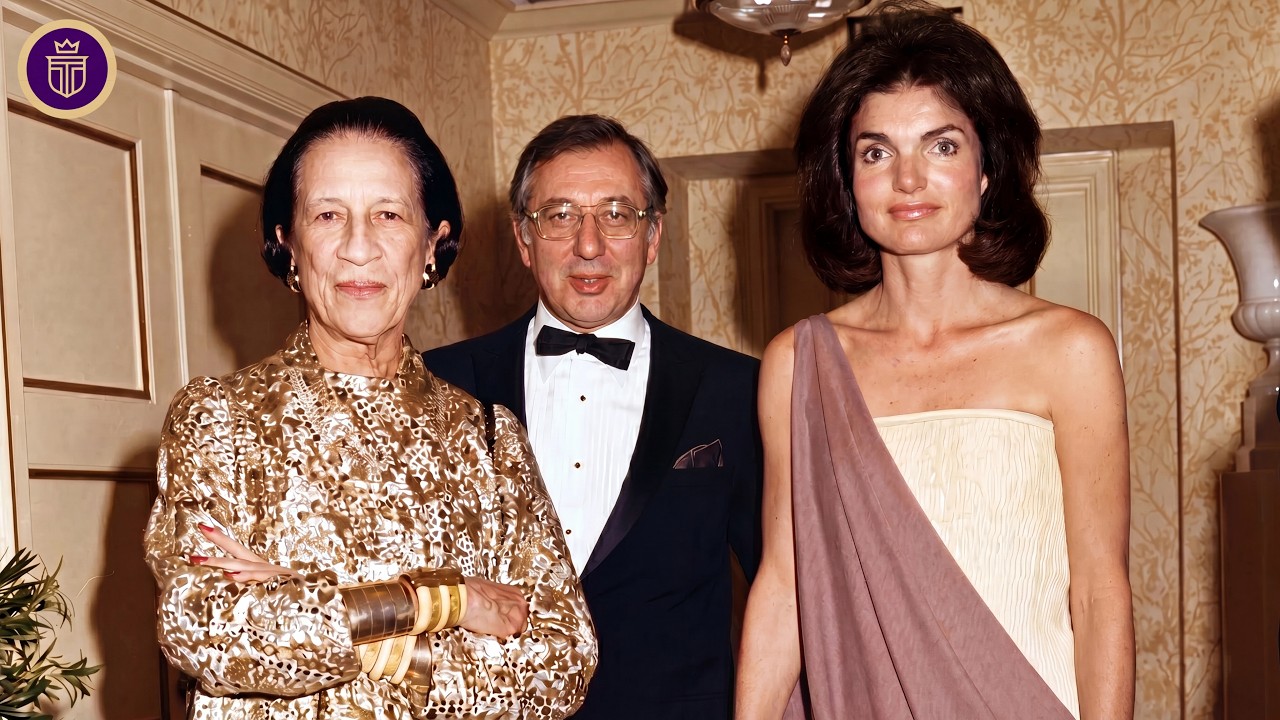
She was replaced by Grace Mirabella, her own former assistant for nine years, a woman who represented everything Vreeland did not. Where Vreeland offered fantasy, exuberance, and invention, Mirabella offered practical, wearable clothes, and the readers responded. Circulation tripled. Vreeland was reportedly devastated.
Her husband Reed had died five years earlier, the decade she had defined was over, and the woman who had shaped fashion for thirty-five years found herself alone in Paris with no job, no institutional home, and no indication that the industry she had built had any further use for her. The question was whether she was finished. At the age of seventy-two, she walked into the Metropolitan Museum of Art, took over its underperforming Costume Institute, and built the greatest monument of her career in her eighties. She died in 1989 having given fashion something no magazine editor had ever given it: permanence.
She had been prepared for that reinvention by an unusual and sometimes brutal path. Born in Paris in 1903 to an American socialite descended from the brother of George Washington and a British stockbroker, Diana Dalziel grew up in a world of privilege. But her mother was openly cruel. She repeatedly called the young Diana “my ugly little monster,” a phrase that became a psychological touchstone for the rest of her life.
Diana was the plain daughter; her younger sister was the pretty one. The cruelty did not break her. It galvanized something fierce and defiant. The woman who would spend her life transforming the concept of beauty, celebrating imperfect noses and unconventional faces, was a woman whose mother had told her she was ugly.
The wound became the engine of the career. War drove the family from Paris to New York in 1914, and Diana was educated at the Brearley School, took ballet lessons from Michel Fokine, and performed in Anna Pavlova’s Gavotte at Carnegie Hall. The fanciful stories she later told about her youth, riding with Buffalo Bill and attending Ballets Russes performances, were often embellished, but the embellishment itself was characteristic. She understood that a truth improved was more interesting than a literal one, and she applied that principle to everything from her childhood memories to her magazine spreads.
“The first thing to do is to arrange to be born in Paris,” she would later say. “After that, everything follows quite naturally. ”
At twenty-one she married Thomas Reed Vreeland, a Yale-educated banker, in a ceremony at St. Thomas Church.
Reed was the great love of her life; when he died in 1966, she never remarried. By 1929 the couple had settled in London, where Diana ran a lingerie boutique near Berkeley Square whose clients included Wallis Simpson, and bought her clothes almost exclusively from Coco Chanel. In 1935, back in New York, she found her way into fashion through sheer presence. According to the widely told story, Carmel Snow, the formidable editor-in-chief of Harper’s Bazaar, spotted a striking woman dancing across the ballroom of the St.
Regis in a white lace Chanel dress with flowers in her hair, and offered her a job. The woman was Diana Vreeland. At Harper’s Bazaar she launched the legendary “Why Don’t You” column with advice like washing a blonde child’s hair in dead champagne and turning a child into an infanta for a fancy-dress party. The column ran for six years, made her reputation, and established the philosophy that would govern her entire career: fashion was not a practical matter of choosing garments but an imaginative act of self-creation.
She rose to become fashion editor and held the role for more than two decades. As photographer Richard Avedon, her collaborator for nearly forty years, later said, “She invented the fashion editor. Before her, it was society ladies who put hats on other society ladies. ” She was among the first editors to champion blue jeans, thong sandals, and the bikini.
“The bikini is the most important thing since the atom bomb,” she declared. She spotted Lauren Bacall before Hollywood did, putting the unknown model on the cover of Harper’s Bazaar in March 1943; soon Bacall was in Hollywood co-starring with Humphrey Bogart. She even served as a style advisor to Jacqueline Kennedy during the 1960 campaign. Despite her extraordinary contribution, Hearst paid her a meager $18,000 a year, with a single $1,000 raise over more than two decades.
When Carmel Snow retired in 1958, Vreeland was the obvious choice to succeed her. The institution chose instead Snow’s own niece, Nancy White. Vreeland was devastated, passed over after twenty-two years of building the magazine’s identity, replaced by family connection. The lesson she internalized was that talent and loyalty offered no protection against institutional politics.
She never again invested her identity in an institution’s willingness to reward her. The independence that characterized her later career, the willingness to spend beyond budget, the refusal to compromise her vision, was born of that betrayal. In 1962 she resigned from Harper’s Bazaar and joined Vogue, becoming editor-in-chief the following year. At the time, Vogue was not the cultural force it would become.
She made it into something unprecedented. In January 1965 she coined the term “youthquake” to describe the seismic impact of youth culture on fashion, a word that entered the Oxford English Dictionary. Her office had scarlet walls, leopard-print carpet, and a collage featuring the head of Marlon Brando and the foot of Rudolf Nureyev. She discovered the decade’s defining faces, making cult stars of Twiggy, Jean Shrimpton, Penelope Tree, and Veruschka.
She put rock stars into a fashion magazine and sent photographers around the world for elaborate shoots. The 1960s were the decade she was born to edit. “You can even see the approaching of a revolution in clothes,” she said. “You read everything in clothes.
That is why clothes are interesting. ”
Then, at the height of her powers, she was fired, reportedly told she was too expensive. She was seventy years old, and the fashion world seemed to be closing on her. But when Metropolitan Museum director Tom Hoving invited her to become a special consultant at the museum’s undervalued Costume Institute in 1972, she accepted.
She worked there for the next seventeen years, until her death. Academic curators bristled at her methods. She had no interest in chronology or the construction of garments, only mood and atmosphere. “She knows fashion and who wore it,” one official acknowledged, “but she does not know history.
” Her own staff often corrected her anachronisms. She did not care. “Never fear being vulgar,” she often said, “only boring. ”
Between 1973 and 1989 she curated fourteen landmark exhibitions, using lights, props, music, and theatrical staging to create immersive experiences.
Her first, The World of Balenciaga, was funded by the Spanish government and banks and was deemed a triumph. Subsequent exhibitions covered Hollywood design, American women of style, Russian costume, Vanity Fair, La Belle Époque, and Man and the Horse. The 1983 Yves Saint Laurent exhibition was the most controversial, honoring a living designer and prompting charges that the museum was being used for publicity. Vreeland pressed on, and the show was a sensation.
She pioneered corporate sponsorship to finance these productions, a contested practice the Met still uses today. More than anything, the exhibitions gave fashion permanence. Garments were placed under museum glass in the company of painting and sculpture. She also transformed the Met Gala.
The Costume Institute benefit, founded in 1948, was a low-key midnight supper with $50 tickets. Vreeland understood that the event needed to become news, not just charity. She selected spectacular, sometimes deliberately provocative themes, opened the doors to the press, and invited Andy Warhol, Mick and Bianca Jagger, Halston, David Bowie, Cher, and Jack Nicholson. She transformed a society dinner into a pop-culture phenomenon.
Today the Met Gala raises tens of millions of dollars in a single night and is the most watched fashion event on Earth. Anna Wintour, who took over leadership of the event in 1995, has acknowledged building on the model Vreeland created. Vreeland’s personal rituals were as fierce as her professional ones. She painted her apartment entirely in red, a space she once described as wanting to look like a garden, but a garden in hell.
She reportedly smoked around 120 cigarettes a day, dictated everything instead of typing a word, and had every garment in her closet ironed twice a day. She published Allure in 1980 and her autobiography, D. V. , in 1984, at the age of eighty.
Designers from Saint Laurent to Blahnik to Carolina Herrera credited her as a formative influence. Manolo Blahnik said she opened a magical world for him. “Diana was my mentor,” Herrera said. Diana Vreeland died of a heart attack on August 22, 1989, at the age of eighty-five.
She was fired, passed over, underpaid, and dismissed, and each time she responded not with bitterness but with invention. When Harper’s Bazaar passed her over, she moved to Vogue and made it the defining cultural document of the 1960s. When Vogue fired her, she moved to the Met and invented the modern fashion exhibition. She took the wound of a childhood spent being told she was ugly and converted it into a career that redefined what beauty could mean for the twentieth century.
“There is only one very good life,” she once said, “and that is the life you know you want, and you make it yourself. ” No one made it more completely.