To the American public in the 1950s, Mamie Eisenhower was the perfect symbol of domestic contentment, a first lady who made the color pink a national obsession. She smiled beside her war-hero husband, and together they seemed to embody the American dream itself. Behind the closed doors of the White House, however, and long before the Eisenhowers ever reached Washington, Mamie lived a different reality. The cheerful, devoted wife the public saw was a woman tormented by rumors of betrayal, crippled by physical illness, and trapped in an emotional isolation so deep that it repeatedly threatened to break her.
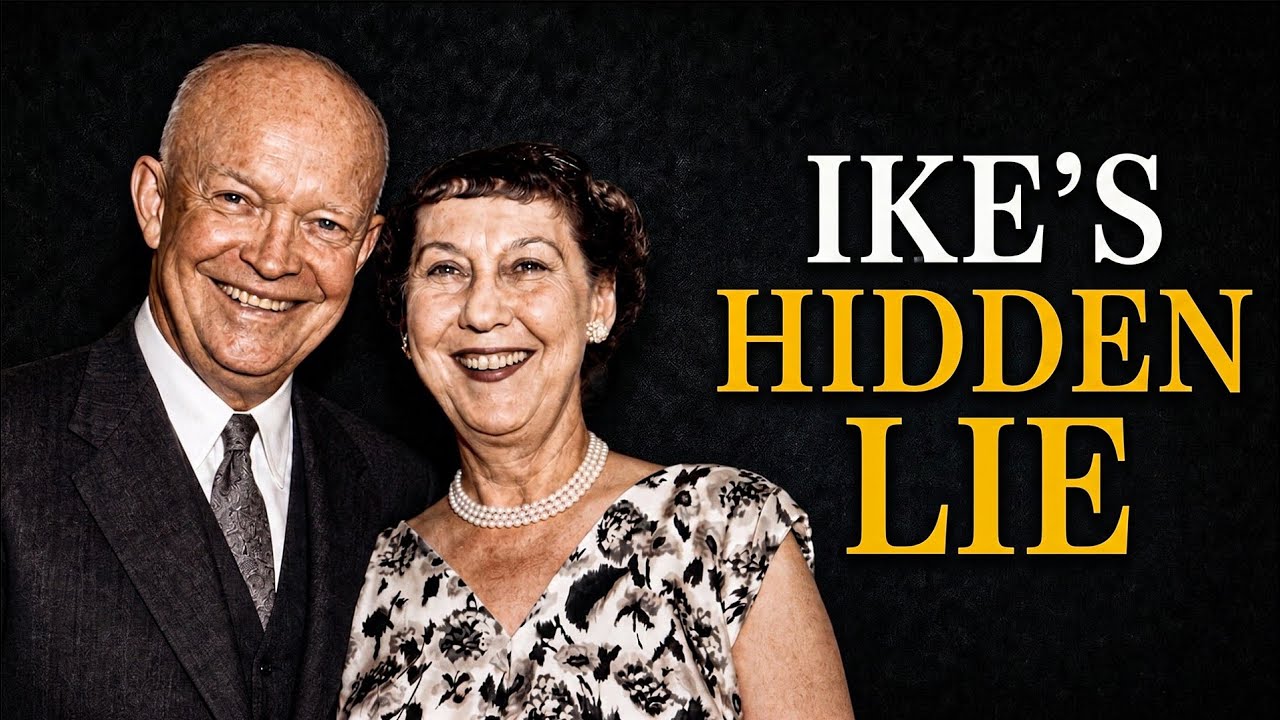
The polished fairy tale was, in truth, a carefully built façade. To understand the real Mamie Eisenhower, it is necessary to look past the pastel pinks and the ticker-tape parades and see what it cost a woman to be married to one of the most powerful men in history. Their marriage was built on genuine affection and mutual respect, but it was scarred by long absences, explosive tempers, and a shadow that haunted Mamie for the rest of her life. The hardest battles of Dwight Eisenhower’s career were not fought on the beaches of Normandy; they were fought by Mamie alone, in quiet rooms where she waited for a husband who belonged to the world.
The first great fracture in their union did not happen in Washington. It happened thousands of miles away, in the fog of the Second World War. In 1942, General Dwight D. Eisenhower was stationed in London, carrying the weight of the Allied war effort on his shoulders.
Back in Washington, Mamie did what thousands of military wives did: she waited. But for the wife of the Supreme Allied Commander, the wait was public, and it was agonizing. As months turned into years, a devastating rumor crossed the ocean. The general had grown close to Kay Summersby, a beautiful former British fashion model who had been assigned as his military driver.
She quickly became far more than a driver. She became Eisenhower’s closest confidant and constant companion in the bombed-out streets of England. They rode horses together through the countryside, dined together, and appeared inseparable. The whispers reached Mamie, plunging her into suffocating anxiety.
She suffered from insomnia, lost dangerous amounts of weight, and found herself entirely powerless, thousands of miles away, forced to read between the lines of her husband’s increasingly distant letters. While Eisenhower shaped the future of the free world, his wife was imprisoned in a silent hell of jealousy and fear. The rumors were so intense that years later President Harry Truman claimed he had personally seen a letter in which Eisenhower asked his military superiors for permission to divorce Mamie and marry Summersby. Historians continue to debate whether that letter ever existed, but the emotional damage to Mamie was undeniable and permanent.
When the war ended and Eisenhower returned a conquering hero, Mamie chose to take him back. But the ghost of Kay Summersby remained. Mamie demanded that the name never be spoken in her presence again, and she rebuilt the façade of her marriage brick by painful brick. She survived the war, but the scars changed her forever.
She guarded her heart fiercely, knowing that her husband’s loyalty could never be guaranteed again. If the war years were a trial by fire, the White House years were a pressure cooker. In 1953, Eisenhower was inaugurated as the thirty-fourth president. For Mamie, moving into the executive mansion was not a triumph; it was a loss of the small privacy she had managed to keep.
Almost immediately, a vicious new rumor began circulating among the Washington elite: the new first lady was secretly an alcoholic. People whispered about her unsteady gait at public events, watched her grab her husband’s arm to keep from falling in front of the press, and noted her frequent absences from morning engagements, claiming she was sleeping off hangovers. The truth was far more tragic. Mamie Eisenhower suffered from Ménière’s disease, a chronic inner-ear disorder that caused sudden vertigo, dizziness, ringing in the ears, and a complete loss of balance.
She was the most scrutinized woman in America, expected to host flawless state dinners and pose for magazine covers while the floor seemed to shift and drop beneath her feet. Adding to the physical torment was a precarious emotional tightrope. The president, publicly calm and reassuring, was privately known by his staff for a violent temper. Behind closed doors, the man who navigated the brinksmanship of the Cold War could fly into sudden rages over minor domestic issues.
Mamie, trained by decades of military life to accommodate the commanding officer, absorbed the brunt of his anger in silence. She became increasingly isolated, spending much of her time in her private bedroom issuing orders to the staff, and wrapping herself in her signature pink décor. Mamie pink was not just a fashion statement. It was a fortress, a mask hiding a woman who was physically sick, emotionally battered, and trying to hold her marriage together under the glare of the global spotlight.
Many later asked why Mamie did not simply leave. To ask that question is to misunderstand the era in which she lived, and to misunderstand the complicated nature of their bond. When Eisenhower suffered a massive heart attack in 1955 and later a stroke, it was Mamie who stood by his hospital bed like a sentinel. She controlled who was allowed to see him, fiercely guarding his health and his political image.
In his moments of greatest vulnerability, the power dynamic shifted. The former supreme commander needed her, and she did not falter. Their marriage was not a perfect television sitcom, nor was it purely a prison. It was a partnership rooted in the expectations of the early twentieth century.
Mamie believed in duty, believed in the institution of marriage, and despite wounds inflicted over the decades, she truly loved Dwight Eisenhower. She saw her endurance not as weakness, but as her final service to her husband and her country. When Eisenhower died in 1969, Mamie lived another decade as a respected national widow. She rarely spoke of their hard times.
She deliberately buried the bitter tears shed over the ghost of Kay Summersby, the humiliations of his temper, and the hidden dizzy spells masked by camera-ready smiles beneath the legacy of an American hero. Mamie Eisenhower dedicated her life to giving the American public the flawless first lady it wanted. Behind the pink dresses, the impeccable bangs, and the cheerful waves was a woman of iron will, a survivor who navigated a silent hell of isolation and heartbreak while standing on the world’s biggest stage.
She willingly paid the ultimate personal price for the perfect American dream, because she was the one who actually had to live it.