Babe Paley sat in her bedroom overlooking Fifth Avenue, wrapping her jewelry in tissue paper. She was sixty-two years old, dying of lung cancer, and still doing everything perfectly. The cards she tucked inside each parcel bore the names of the people who had not left her. Truman Capote, the writer who had once called her the most perfect person he had ever known, was not among them.
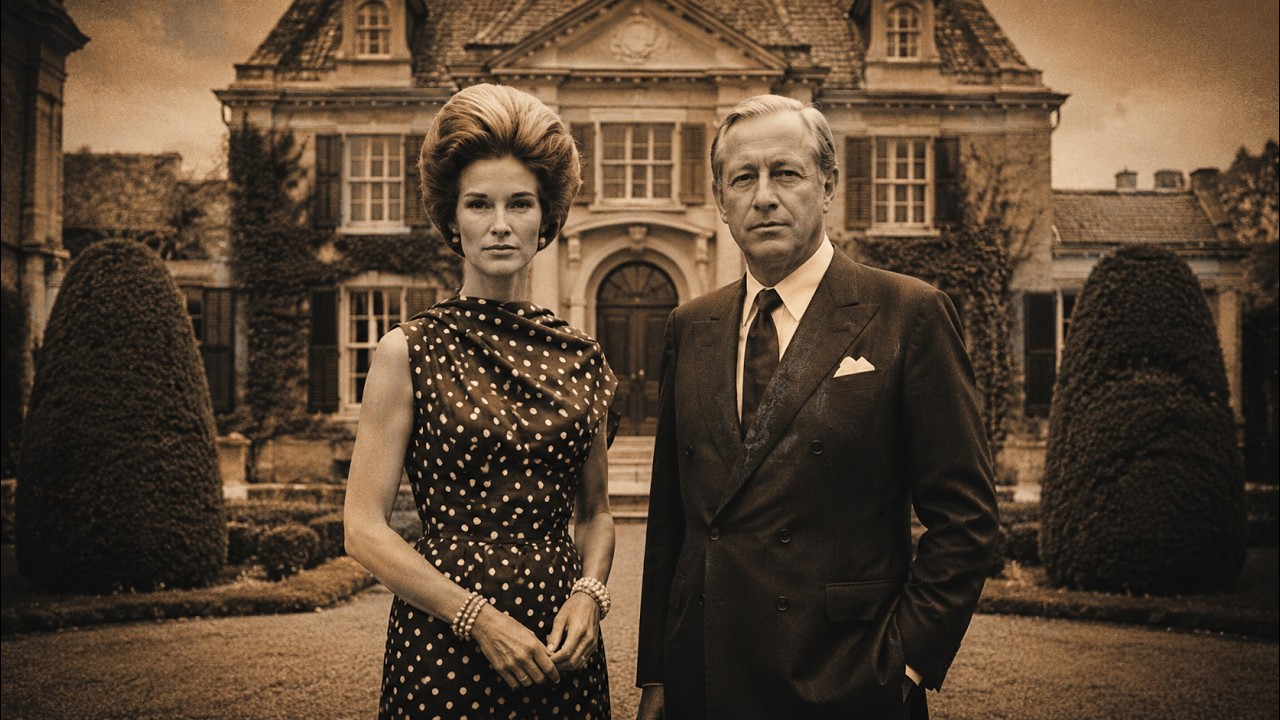
Barbara Cushing Paley had spent a lifetime being called perfect. She was the youngest daughter of Harvey Cushing, one of the most celebrated neurosurgeons in the world, a Pulitzer Prize winner who trained surgeons at Johns Hopkins, Harvard, and Yale. Her mother, Kate, had one wish for her three daughters: that they marry into the kind of money and position that would carry them beyond Boston into the highest rooms of New York and Washington. The lesson took.
The eldest sister, Minnie, married Vincent Astor. The middle sister, Betsy, married James Roosevelt, son of Franklin and Eleanor, and later the enormously wealthy John Hay Whitney. Barbara, called Babe simply because she was the baby, understood what the world expected of her. She was seventeen when a car accident outside Boston knocked out her front teeth and left her scarred.
Surgery restored her face, and when she came out, she was more beautiful than before. The reconstruction had given her cheekbones a finer line, a sharpness that photographs would love. She understood something then that she had not understood before. Beauty was not a gift.
It was a material. It could be shaped, repaired, maintained, deployed. By the late 1930s, she was working as a fashion editor at Vogue, learning the grammar of other people’s desires. In 1941, Time magazine named her the second best dressed woman in the world.
She tied a scarf to her handbag one afternoon, and within weeks women across the country were doing the same. She let her hair go gray instead of dying it, and that became a trend. She mixed a Cartier diamond with a cheap plastic bangle from a midtown drugstore, and it looked like genius. Her first marriage, to Stanley Grafton Mortimer Jr.
, grandson of a Standard Oil founder, lasted six years. He returned from the war changed, cruel, cold, and unpredictable. They had two children, the right address, and none of the things that sustain a marriage. She divorced him in 1946.
The settlement was forty thousand dollars. She had already met someone who needed exactly what she had been trained to provide. William S. Paley had built CBS into the most powerful media company in America, a man of prodigious appetites for art, influence, and beautiful women, with almost no patience for the social barriers that had kept his Jewish family out of the better clubs on Long Island.
Babe had what he needed: lineage, manner, and friendships with the families who controlled those clubs. He had what she had been raised to need: money of a scale she had not encountered before, an apartment at the St. Regis, an eighty-acre estate in Manhasset, houses in the Bahamas, a villa in Jamaica. They married on July 28, 1947.
She left Vogue the same week and never went back. She made their world. She decorated the apartment with Billy Baldwin. She transformed Kiluna Farm into something people remembered for the rest of their lives, hiring Russell Page to design the gardens, creating a small secret garden behind the azalea hedges near the pond where no camera ever followed her.
She archived the dinner menus so no guest was ever served the same meal twice. From the outside, it was the picture of everything her mother had wanted for her. From the inside, it was a beautiful prison. Bill Paley was not a woman lover.
He was a womanizer, his preferences running to blondes and models. Babe knew. She was a doctor’s daughter, trained in the observation of symptoms. She said nothing.
In the summer of 1955, a private plane belonging to William Paley carried a small group of friends toward the family cottage in Jamaica. The Selznicks had asked to bring along a friend. Bill thought the friend’s name was Truman, assumed it was President Truman. It was not President Truman.
It was a short, slightly built man in his early thirties. His name was Truman Capote, already one of the most talked about writers in the country. Babe looked at him. He looked at her.
They fell instantly in love. For twenty years, Truman Capote was the best thing in Babe Paley’s life. He called every morning. He appeared unannounced with flowers or gossip or both.
He made her laugh. She told him things she had never told anyone about Bill’s affairs, the humiliations she had swallowed, the gap between the life she appeared to live and the one she inhabited. He told her to look upon being Mrs. William S.
Paley as a job, the best job in the world. She accepted it. She was not happy. He was working.
He had been working since the early 1960s on a novel he called Answered Prayers, a reckoning with American society of a kind never written before. He had told Babe it would be magnificent. The women he called his Swans, Gloria Guinness, Slim Keith, C. Z.
Guest, Marella Agnelli, had given him their secrets and their trust. They were already on the page. In November 1966, Capote threw the Black and White Ball at the Plaza Hotel, five hundred guests, the most talked about document in New York society that year. The Paleys hosted a small dinner before it, Capote among the guests, as he almost always was.
Even then, in the middle of the champagne and masks, Capote was writing. In 1974, Babe Paley was fifty-eight years old and had smoked two packs of cigarettes a day for most of her adult life. The doctors gave her the diagnosis: lung cancer. She received the news directly, without visible collapse.
She began chemotherapy. The treatments made her hair fall out. She bought silk turbans, folded them around her head with the same care she gave everything, and went to dinner. Women across New York noticed the turbans and began wearing them.
She had turned dying into an accessory. Truman Capote had been telling anyone who would listen that Answered Prayers was nearly done. It was not nearly done. Under pressure from his publisher, he agreed to submit a single chapter to Esquire.
He chose one called La Côte Basque, 1965, named after the restaurant on West 55th Street where lunch was a kind of currency. The chapter was fiction, officially. The names had been changed. An advanced copy was sent to certain people mentioned in the text.
One of them was Ann Woodward, a former model and socialite who had shot and killed her husband in 1955 in circumstances a grand jury ruled accidental. Capote had told her story at dinner parties for years with a relish she found unbearable. Now it was in print. She took a handful of barbiturates and did not wake up.
Babe heard about Ann Woodward. She could not yet bring herself to believe the rumors about what was in the chapter, about her own marriage, her own most private disclosures. Truman had promised her, had it not been understood between them, that what she had told him was safe. When the November 1975 issue of Esquire arrived at the newsstands, she picked it up.
She read a sentence she recognized, then another, then a detail that could only have come from a single source. From her. She read it a second time, the way a doctor re-reads a result that does not match what she expected to find. There was no error.
The character of Sidney Dillon, the media executive whose infidelities were described with specific detail, was Bill Paley. The humiliation she had carried in private for years and disclosed to no one but Truman was now printed in a national magazine. She picked up the telephone and called Slim Keith. Have you seen Esquire?
Slim had read it. She told Babe that Ann was dead because of what Truman had written. She said that at least they were still alive. Babe’s response was very quiet.
Well, she said, I want to die, too. She did not speak to Truman Capote again, not that day, not the following week, not in the three years that remained of her life. Not one word. Capote tried to explain himself.
He wrote, telephoned, deployed the full arsenal of his charm and remorse. He said to anyone who would listen, What did they expect? I’m a writer. The other Swans cut him off as well.
The world that had made him possible closed around him like water closing over a stone. But Babe’s silence was the one that mattered most to him. She went on dying in the way dying continues, not all at once, but in the steady accumulation of small losses. Bill Paley remained her husband.
She never said what she felt about his behavior. In the last year of her life, she sat in the apartment at 820 Fifth Avenue, the Picasso still on the wall, and wrapped her jewelry in tissue paper, tucking a card into each parcel with a name written in her handwriting. She was distributing herself to the people who had not left her. Not to Truman.
On the morning of July 6, 1978, Barbara Cushing Paley died of lung cancer in the apartment at 820 Fifth Avenue. She was sixty-three years old. She had turned sixty-three the day before. The parcels were already wrapped.
The instructions for the jewelry, the funeral, the wine to be served at the reception, were filed in a system her household could follow without confusion. Her funeral was held at Christ Episcopal Church in Manhasset, the church nearest to Kiluna Farm. The wine was the wine she had selected herself. Truman Capote was not there.
He had not been invited. C. Z. Guest called to tell him Babe was gone, and that he was not invited to the funeral.
Capote had been carrying an unfinished piece he called Beautiful Babe. He had not been able to finish it. Answered Prayers was never finished. He spent the remaining six years of his life trying and failing to complete it, and when he died in August 1984 at the home of his friend Joanne Carson in Los Angeles, the manuscript was still incomplete.
The book that was going to be his masterpiece does not exist in the form he intended. The women he used outlasted the work he used them for. Bill Paley attended the funeral and wept openly. In 1985, Cosmopolitan magazine published a list of the ten most eligible bachelors in the country.
William S. Paley was on it. He was eighty-three years old. He died in October 1990 of kidney failure at eighty-nine.
His estate was valued at half a billion dollars. His art collection went to the Museum of Modern Art. The money went to his six children. He was buried beside Babe.
The man who had spent thirty years finding reasons to be somewhere other than where she was was placed, at the end, in the ground next to the woman whose patience had outlasted his faithlessness. Kiluna Farm burned and was demolished around 1990. The secret garden is gone. The turban is gone.
Everything she built and maintained with such extraordinary care has passed into the ordinary dissolution of things. What has not dissolved is the question she carried, the one she never answered out loud, whether she had ever truly been loved. She had given everything, her beauty, her name, her secrets, her silence, her thirty years.
And what she had gotten in return was a husband who used her, a friend who sold her, and a world that admired her enormously and knew her not at all.