The applause was still fading when Bumpy Johnson entered the room. The singer had finished his final number minutes earlier and now stood near the bar, surrounded by musicians, promoters, club owners, and men who liked being seen around successful people. Everybody knew his face. His records were selling.
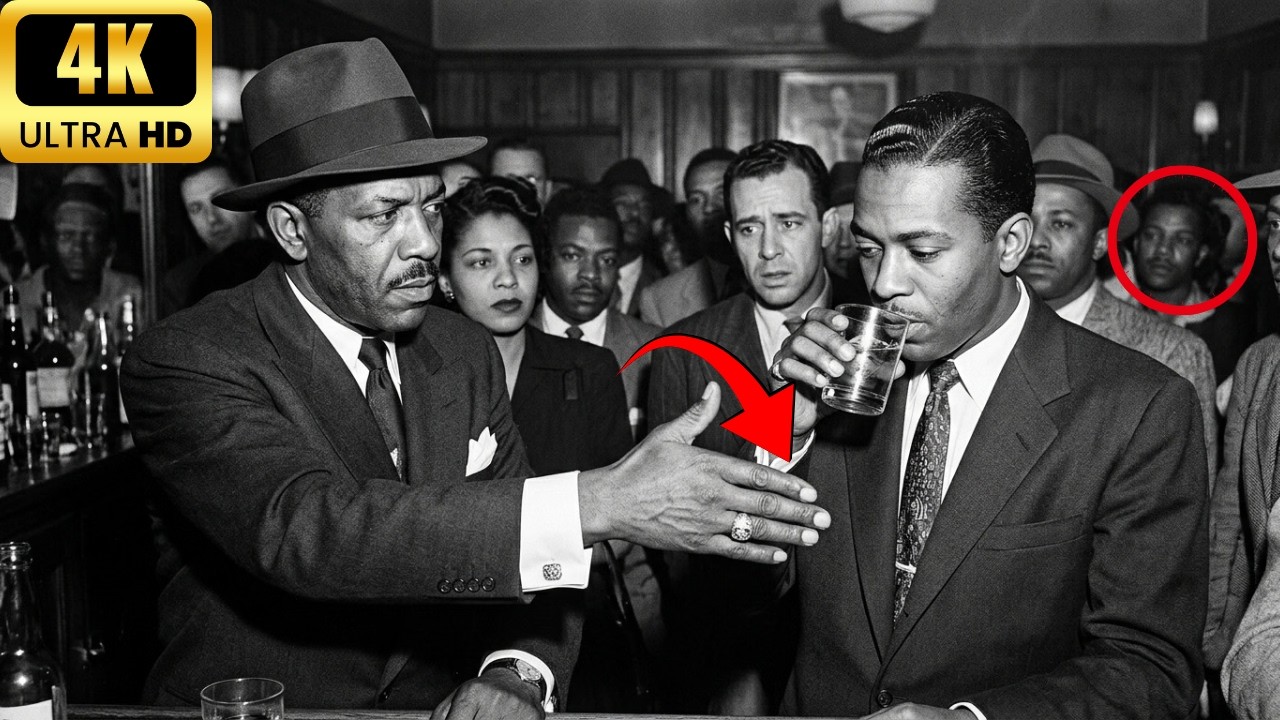
His name could fill a room. That night, he knew it. Bumpy moved through the crowd without hurry. Dark suit, fedora in one hand, expression calm.
People made space without being asked. He stopped several feet from the singer and offered his congratulations. Bumpy extended his hand. Simple, respectful, nothing more.
The singer looked down at it. For a second, everyone assumed he would take it. He did not. Instead, he lifted his drink, took a slow sip, then looked past Bumpy toward one of his friends.
A couple of men nearby smiled nervously. Nobody laughed. Bumpy’s hand remained there another second, long enough for everyone to understand the refusal was deliberate. Bumpy lowered his hand.
“No, that was all. ” The room had become quieter than the singer expected. The singer smiled, pleased with himself. Bumpy looked at him for a moment, not angrily, almost carefully, as if he were learning something.
The singer mistook the silence for defeat. Outside, Bumpy stepped into the Harlem night. His two men followed. One of them broke the silence.
“You really letting that go? He left your hand sitting there in front of everybody. ”
Bumpy stopped beneath a street lamp. “He wanted people laughing.
Did they laugh? ”
“No. ”
“Then what exactly did he win? ”
The singer, inside, was still enjoying himself.
He had moved to a private table, a bottle in front of him, two friends laughing. A young promoter joined them. The singer leaned back. “You see Johnson’s face?
Man thought everybody had to bow because he walked into the room. ”
One friend laughed. The promoter did not. The promoter stood.
“I just think you made your point. ” He left. An older club owner, standing at the bar, had seen everything. The bartender leaned toward him.
“Bad business. ” The owner said nothing. He did not need to. Bumpy’s men expected retaliation.
They waited through coffee for instructions that never came. No messages, no calls, no threats. Finally, one associate asked, “You’re really going home? ”
“Yes.
”
“And tomorrow? ”
“Tomorrow belongs to everybody who was in that room. ”
By morning, the handshake had become a story. Not because Bumpy told it, but because too many people had seen it.
A musician repeated it over breakfast. A bartender mentioned it after closing. A promoter heard it before noon. The details stayed simple: Bumpy offered his hand.
The singer refused it. Bumpy walked away. At a rehearsal room in Harlem, four musicians discussed it. One of them remembered when a musician called Charlie couldn’t get booked.
“Johnson made one call. ” That was the point. Bumpy’s name carried weight in rooms where contracts meant little and introductions meant everything. People remembered who had helped when there was no spotlight.
Across town, a club owner studied a calendar of upcoming acts. The singer’s name was written across one weekend. A promoter stood nearby. “You still want him?
”
“He fills seats for now. ”
“You worried about Bumpy? ”
The owner shook his head. “No.
I’m worried about everybody else. You know how many people in my room last night have known Johnson twenty years? How many musicians he helped? You think they all forgot because this kid got a record on the radio?
”
He drew a small line beneath the singer’s name. “Keep the weekend open. ”
By afternoon, the singer had heard the story was spreading. He liked that.
At first. His manager told him one promoter had called, but not for dates. “To know what happened. ” The singer insisted Johnson had gotten his feelings hurt.
The manager had been in the room. “He didn’t look hurt. ” The manager chose his words carefully. “And another man who needed everybody watching.
”
For the next two days, the singer treated the whole thing like a victory. He told the story everywhere. Each time he made himself sound a little bigger and Bumpy a little smaller. “I left his hand hanging.
” Most of the laughter came from men who depended on him and knew when they were expected to smile. At a private rehearsal, he told the story again. The musicians did not laugh. One closed his instrument case.
“I got somewhere to be. It’s about you still telling the story. ”
Later that afternoon, his manager arrived with a small stack of papers: a private party cancelled, another date moved, an appearance postponed, a club still considering. The singer stared.
“Because I didn’t shake one man’s hand? ”
“That’s not how they’re telling it. That you embarrassed a man who helped a lot of them before you were important enough to know their names. ”
When the singer insisted he had made himself, the manager nodded.
“You made the voice. Other people made the road. ”
The singer tried to convince himself it was Johnson. The manager shook his head.
“If it was Johnson, somebody would have called. You’d get a message, a warning, a demand. This is people making their own decisions. Now they’re deciding what kind of man you are.
”
That night, the singer arrived at another club expecting a full room. Certain faces were missing. A promoter who always came. Two club owners.
A radio man. A trumpet player he knew. The room was not empty. It was worse: selective.
People were present, but the people whose presence mattered most were not. By 10:30, a waiter delivered a note. A club owner across town wanted to postpone next month’s appearance. Fifteen minutes later, another note: a private appearance had been reconsidered.
“How many? ” the singer asked. His manager knew what he meant. “Four.
”
Across Harlem, Bumpy sat at a back table in a small restaurant. A promoter approached. The singer was asking who was cutting his dates, and everybody thought Bumpy was behind it. “Are you?
” the promoter asked. “No. ”
“Then why’d you move his booking? ”
“Didn’t want the trouble.
”
Bumpy’s expression stayed neutral. “Then maybe you should figure that out before blaming me. ” The man studied him and believed Bumpy had not called a single person. That scared him more than any denial.
By the end of the week, the singer stopped laughing. The telephone in his manager’s office used to ring all morning. Now it sat quiet for long stretches. Nobody insulted him.
Nobody shouted. Nobody said Bumpy Johnson’s name. They simply became unavailable. The singer could argue with an enemy, threaten a manager, demand more money.
But how did a man fight people who simply stopped calling? When the phone finally rang, it was another postponement. “They gave the night to somebody else. ” It did not matter who.
Somebody else was always available. His empty calendar was teaching him what his fame had concealed: he was replaceable. On an evening at another small club, his manager placed two envelopes on the table. One payment, one cancellation.
The singer asked how many now. “Seven. ” In one week. He knocked a chair backward.
“This is him. ”
“Show me,” the manager said. “One call. One threat.
One man who says Johnson told him not to hire you. ” There was none. “Nobody’s saying it. ”
Finally, the singer started asking direct questions.
“Did Johnson tell you not to book me? ” No. “Did somebody threaten you? ” No.
“Did anybody say I’m blacklisted? ” No. He phoned an older club owner who had known Bumpy for years. “Tell me the truth.
You dropping my dates because of him? ”
“No. Because I watched how you handled yourself. You think this is about Johnson’s hand?
It ain’t. It’s about what you thought refusing it would prove. ”
Two days later, the singer called his manager. “Find Johnson.
”
The meeting happened quietly. No club, no crowd, no audience. Just Bumpy Johnson sitting at a back table in a Harlem restaurant when the singer walked in alone. A week earlier, he would have arrived with friends.
Tonight, none of that. The singer sat. “My dates. My bookings.
People won’t return calls. What do you want? ”
“Nothing,” Bumpy said. “You expect me to believe all this happened by itself?
”
“No. I expect you to understand you helped it happen. You think people stopped calling because you wouldn’t shake my hand? They stopped calling because of what you were trying to prove when you refused it.
You wanted everybody watching. You wanted them to see you make somebody smaller. The problem is they saw you instead. ”
The singer sat with his hands folded on the table, no performance left in them.
“What am I supposed to do? ”
“That depends. Whether you want your career back. ”
“Of course I do.
”
“That ain’t what I asked. You want the applause back? You want the rooms, the people introducing you, the musicians taking your calls, the club owners putting your name on their doors? Then start treating those people like they matter before you need something from them.
”
The singer asked if Bumpy wanted an apology. “Not from me. Apologize where it matters. ” To the musicians, the promoters, the manager he had embarrassed, the men whose loyalty he assumed, the people who had opened doors and then been treated like scenery once the spotlight belonged to him.
Bumpy stood and started toward the door. “That’s all it ever was. ”
The singer rose. “Johnson.
”
Bumpy stopped. The singer extended his hand. This time there was no audience, no laughter, no advantage. Just a man offering respect because he finally understood what refusing it had cost.
Bumpy took the hand. One firm shake. Nothing more. Then he walked out.
The singer’s career did not return overnight. Some doors stayed closed. Some promoters never called again. But others watched what he did next.
He became quieter, more careful, less interested in humiliating people who could not answer him. Slowly, a few musicians returned. Then a club. Then another booking.
Not because Bumpy Johnson ordered Harlem to forgive him, but because the singer finally stopped acting like respect was something other people owed him. Years later, when men told the story, they remembered the refused handshake. But that was never the part that mattered most. The important part came afterward.
One man tried to prove his importance by denying respect. The other never demanded it back. And the whole city learned which man had actually understood its value.