The most controversial rebel general of the Civil War was not a fire-eating secessionist. James Longstreet was born on January 8, 1821, in the rural Edgefield District of South Carolina, the son of a Dutch-descended planter. When his father died, young James was only twelve, and the family moved first to Augusta, Georgia, and then to Alabama, where his uncle, Augustus Baldwin Longstreet, a prominent judge and writer, took charge of his education. From that uncle, James absorbed discipline and intellect, traits that would later define his military career.
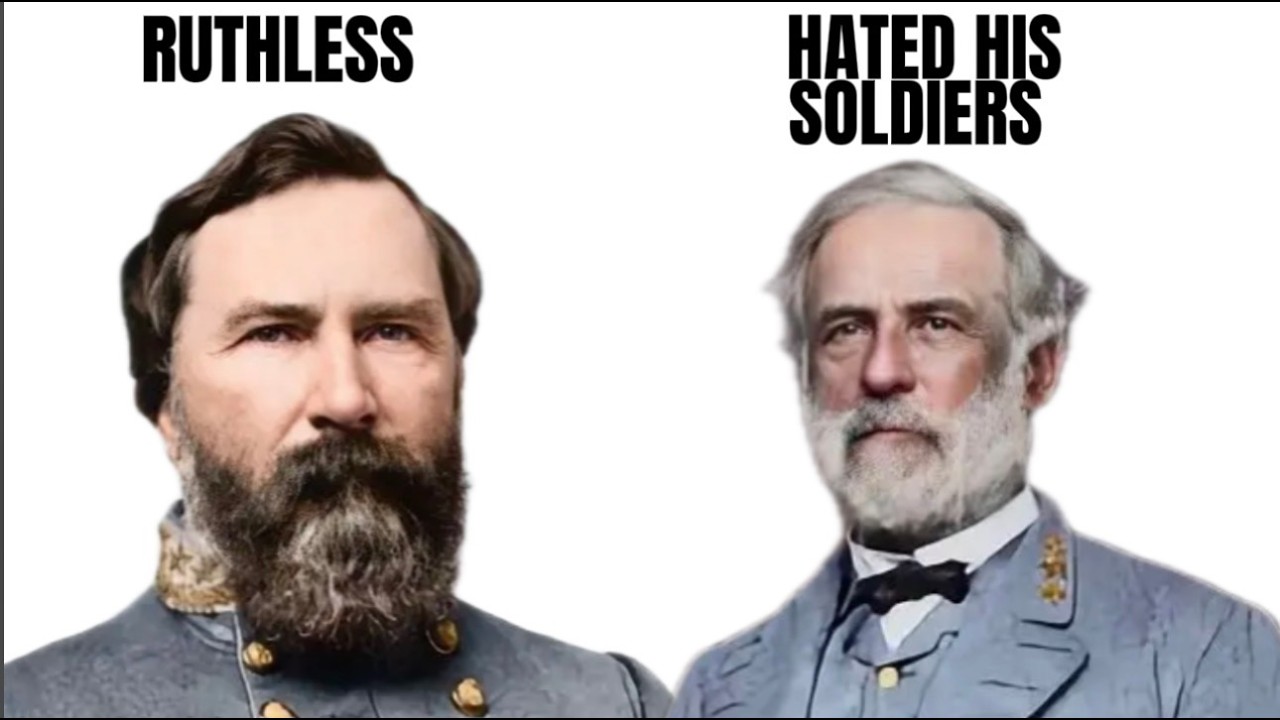
Longstreet entered West Point in 1838 and graduated in 1842, ranked 54th out of 56. His academic record was unremarkable, but his classmates included Ulysses S. Grant and William Tecumseh Sherman, men who would one day face him across the bloodiest battlefields America had ever known. At the academy, friends twisted his Dutch heritage into the nickname Pete, and he became known for his quiet demeanor, his fondness for poker, and a dry wit.
After graduation, he served in the Mexican-American War under Zachary Taylor and Winfield Scott. At the Battle of Chapultepec in 1847, he charged up the hill carrying the American flag, was shot through the thigh, and handed the colors to a young lieutenant named George Pickett, the same Pickett whose name would later become bound to one of the war’s greatest disasters. His bravery earned him brevet promotions, and by the war’s end he was a major. When South Carolina seceded in December 1860 and other states followed, Longstreet faced a wrenching choice.
He had voted against disunion in Alabama. He was not a secessionist firebrand. But blood ties won out. In June 1861, he resigned his U.
S. Army commission, traveled to Richmond, and offered his sword to the Confederacy. President Jefferson Davis, who knew him from the old army, appointed him a brigadier general. Longstreet arrived in time for the war’s opening act.
At the First Battle of Bull Run on July 21, 1861, Union forces under Irvin McDowell aimed to crush the rebellion quickly. Longstreet commanded a brigade on the left flank, repelling repeated Union assaults. The day ended in a rout of the Federals, shattering Northern hopes of a short war. Union General McDowell later admitted that the Confederates’ resilience had terrified him, and Longstreet’s brigade was part of that unyielding line.
Promoted to major general in October 1861, Longstreet joined the Army of Northern Virginia under Joseph E. Johnston. When Johnston was wounded at Seven Pines in May 1862, Robert E. Lee took command, and a legendary partnership began.
Lee called Longstreet his old warhorse and relied on him for the heavy lifting. During the Seven Days Battles that summer, Longstreet led massive counterattacks that drove George McClellan’s Army of the Potomac away from Richmond. At Gaines’ Mill, his division smashed through Union lines, the aggression rattling the cautious McClellan and forcing his retreat. At Second Manassas in August 1862, Longstreet emerged as a force of nature.
Lee split his army, sending Stonewall Jackson on a flanking march while Longstreet held the right. Jackson drew John Pope’s Union forces into a trap, and on August 30, Longstreet unleashed a devastating counterattack with 28,000 men, the largest assault of the war. It crumpled Pope’s left flank, sending the Federals reeling. Pope later wrote that the sight of Longstreet’s columns advancing was appalling, a wave of gray that seemed unstoppable.
Antietam followed in September, the bloodiest single day in American history. Lee’s army, outnumbered two to one, dug in along Antietam Creek. Longstreet commanded the center and right, holding against furious Union assaults. At the sunken road later called Bloody Lane, his troops mowed down waves of bluecoats until the ditch was filled with the dead.
When the line finally broke, Longstreet personally rallied his men, even manning a cannon himself. McClellan hesitated to press his advantage, later citing Longstreet’s stubborn defense as the reason. The battle ended in a tactical draw, but it gave Lincoln the opening to issue the Emancipation Proclamation. Fredericksburg in December 1862 showcased Longstreet’s mastery of defense.
Positioned on Marye’s Heights, his corps fortified the position with stone walls and artillery. Ambrose Burnside’s Union army charged across open ground, wave after wave cut down by concentrated fire. Longstreet’s men inflicted over 12,000 casualties while suffering fewer than 5,000. Burnside was shattered.
One Union soldier recalled the rebel lines as a sheet of flame, with Longstreet orchestrating it all. This battle cemented his reputation as the Confederacy’s premier defensive tactician. Yet even as victories mounted, cracks appeared. Longstreet chafed under Lee’s aggressive style, at times preferring calculated risks over bold strokes.
That tension simmered until Gettysburg in July 1863, the war’s pivotal clash. Lee invaded Pennsylvania seeking a decisive win to force peace. On July 1, fighting erupted, and by evening the armies converged. Longstreet’s corps arrived late on July 2 after a grueling march.
He urged Lee to maneuver around the Union left flank, forcing George Meade’s Army of the Potomac to attack on ground of Lee’s choosing, but Lee insisted on assaulting the entrenched Federals. Longstreet launched attacks on the Union left at Little Round Top and the Peach Orchard. His men nearly broke through, the fighting leaving the field strewn with bodies. Meade later admitted it was the closest the Union came to collapse.
That night, Longstreet again pleaded with Lee to withdraw and reposition, warning that attacking the Union center would be suicide. Lee overruled him, ordering the infamous Pickett’s Charge on July 3. Longstreet reluctantly oversaw the assault. Fifteen thousand Confederates advanced across a mile of open field into withering fire.
It was a catastrophe. Half were cut down, including Pickett’s division. Longstreet watched, later writing that his heart was heavy and that he felt the charge was unnecessary. The failure marked the high water mark of the Confederacy.
Lee retreated, his army mauled. Lee himself took responsibility, saying it was all his fault. But the whispers began, fueled by jealousy from generals like Jubal Early. Longstreet’s reputation as a traitor in gray started here, even though at the time he remained Lee’s most trusted subordinate.
Detached to the Western Theater in September 1863, Longstreet reinforced Braxton Bragg’s Army of Tennessee at Chickamauga. Arriving just in time, he led a breakthrough on September 20, smashing through a gap in the Union line created by a mistaken order from William Rosecrans. His attack routed half the Federal army, forcing them back to Chattanooga. It was the Confederacy’s last major victory in the West, and Rosecrans was relieved of command.
Grant, now in charge, later reflected that Longstreet was the hardest fighter they faced. But Bragg squandered the win, besieging Chattanooga instead of pursuing. Longstreet urged an assault, but Bragg dithered, allowing Grant to reinforce. In November, Longstreet was sent to Knoxville to divert Union forces.
His siege failed, and he withdrew as Grant broke the Chattanooga lines at Missionary Ridge. Returning east in 1864, Longstreet rejoined Lee for the Wilderness Campaign. At the Battle of the Wilderness on May 6, he led a flank attack that nearly captured Grant, but was severely wounded, shot through the neck by his own men in a friendly fire incident eerily similar to Jackson’s death. Paralyzed in his right arm, he spent months recovering but returned for the Siege of Petersburg.
When the war ground to its end, Longstreet stood with Lee at Appomattox on April 9, 1865. When Lee pondered fighting on, Longstreet advised surrender: the game was up. Post-war, Longstreet returned to New Orleans, entering business as a cotton factor. But here the real controversy ignited.
Unlike many ex-Confederates who clung to bitterness, Longstreet embraced reconciliation. He joined the Republican Party, supported Grant’s presidency, and advocated for black civil rights during Reconstruction. In 1867, he wrote a letter urging Southerners to accept defeat and work with the North. This branded him a scalawag, a Southern traitor in the eyes of many.
When Grant became president in 1869, he appointed Longstreet Surveyor of Customs in New Orleans, later Minister to Turkey and U. S. Marshal. Violence followed.
In 1874, as commander of Louisiana’s military, including black troops, he fought white supremacists in the Battle of Liberty Place, defending the Reconstruction government. Defeated and wounded, he barely escaped. Longstreet’s criticisms of Lee further alienated him. In memoirs and articles, he argued that Lee’s offensives at Gettysburg were flawed and advocated defensive warfare as the South’s best strategy.
Lost Cause proponents like Jubal Early and Jefferson Davis vilified him, fabricating stories of his Gettysburg treason, claiming he delayed attacks on July 2 and caused the defeat. Records debunked the lies, but the damage stuck. For decades, Longstreet was the scapegoat, his statues absent from Southern battlefields while Lee’s proliferated. Yet his military genius endured.
Union generals like Grant praised him. In his memoirs, Grant called Longstreet a most estimable man and one of the ablest Confederates. Even Sherman, his old classmate, respected him. Longstreet’s tactics anticipated modern warfare, emphasizing entrenchments, artillery concentration, and logistics.
At Fredericksburg and Chickamauga, he demonstrated how defense could bleed an attacker dry, lessons echoed in the trenches of World War I. Personal tragedy marked his later years. A fire in 1889 destroyed his Georgia home, including irreplaceable papers. His first wife died in 1890 after 42 years of marriage.
In 1897, at the age of 76, he married 34-year-old Helen Dorch, a fiery suffragette who defended his legacy fiercely. Longstreet died on January 2, 1904, from pneumonia complicated by old wounds. Blind in one eye and hard of hearing, he had converted to Catholicism late in life, finding solace in faith. Historians have since rehabilitated Longstreet, painting him as a pragmatic visionary ahead of his time.
The Lost Cause myth has crumbled, revealing how politics distorted history. In 1998, a statue finally rose at Gettysburg honoring the man who tried to avert disaster. Union leaders feared him for good reason. His battles cost them dearly in blood and morale.
But his true controversy lay in his post-war choices: a Southerner who chose unity over division, progress over nostalgia.