By the morning of March 21, 1882, Wyatt Earp was a wanted murderer. The night before, he had been a deputy U. S. marshal sworn to enforce federal law across Cochise County, Arizona Territory.
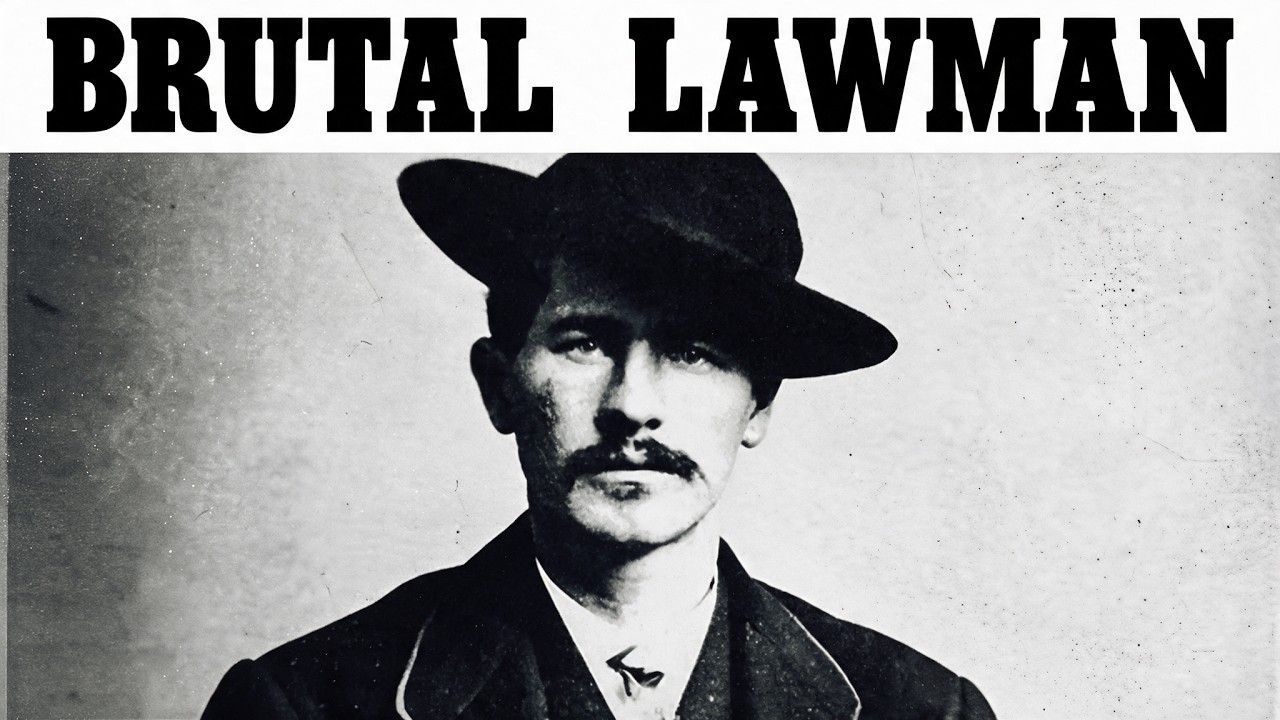
In a railyard outside Tucson in the dark, he killed a former deputy named Frank Stilwell with a shotgun at close range, and a Pima County grand jury indicted him for it the next morning. He was never tried. No jury ever heard the case, and the reason has almost nothing to do with the gunfight everyone remembers him for. Stilwell was a Cochise County deputy sheriff who drifted into the outlaw crowd, and Earp believed he had helped murder his younger brother Morgan two days earlier.
Warrants went out for Earp and four of the men riding with him. He did not turn himself in. He picked up more guns, kept the same handful of riders close, and spent the next month combing the deserts and mountain passes of Cochise County for the rest of the men on his list. Three more of them were dead by the time he finished.
He spent no day in an Arizona courtroom and no night in an Arizona jail cell answering for a killing he admitted to late in his own life. He rode out of the territory instead, and the legal system that had already put his name on a murder indictment never laid a hand on him again. The killings are the part everyone remembers, and they are the least interesting thing in the record. What the record shows is a legal system that failed the same family twice through entirely ordinary means, a federal officer who then went around it, and a much quieter machinery of favors, friendships, and political calculation that made sure he never had to answer for going around it.
That machinery started running years before Tombstone, in a Kansas cattle town where Wyatt Earp met the man who would eventually talk a sitting governor out of sending his closest friend back to Arizona. Wyatt Berry Stapp Earp was born March 19, 1848, in Monmouth, Illinois, one of several sons of Nicholas Porter Earp. He grew up moving with his family across Iowa and later California, the kind of restless, work-following upbringing common to a lot of frontier households in that era. By the time he reached adulthood, he had tried buffalo hunting and railroad work before settling almost by accident into law enforcement.
In the middle of the 1870s, Wyatt Earp worked as an assistant city marshal in Dodge City, Kansas, a railhead cattle town so rough it earned the nickname the wickedest little city in America. A young lawman named Bat Masterson worked the same streets, first as a special policeman and later as Ford County’s elected sheriff. The two men, both in their twenties, patrolled Dodge together, backed each other up in the saloons and gambling halls, and built the kind of friendship that survives a change of address. In 1879, both left Dodge City behind.
Wyatt headed for a new silver boom town in Arizona Territory. Bat drifted west toward Colorado. That friendship would matter enormously three years later, in a courthouse neither man had any reason yet to think about. The Arizona town Wyatt was heading for owed its existence to a prospector named Ed Schieffelin.
In the summer of 1877, Schieffelin was scouting for the army out of Camp Huachuca, hunting for ore on the side, despite soldiers warning him that the only stone he’d find out in that Apache country was his own tombstone. He found a rich vein of silver anyway, on a stretch of high desert called Goose Flats, and registered it as the Tombstone claim, a wry nod to the warning. When the town that grew up around the strike was officially surveyed in March 1879, it took the same name. Lots on the brand-new Allen Street sold for five dollars apiece.
Within a few years, the mines around Tombstone had pulled somewhere between forty and eighty-five million dollars in silver bullion out of the ground, and the town’s population had exploded from a hundred people to somewhere between seven thousand and sixteen thousand, depending on whose count you believe. It had more than a hundred saloons, an opera house, an ice house, and gambling halls running around the clock. Tombstone also had almost no functioning system for keeping the peace once the money and the outlaws showed up at the same time. Federal authority covered the whole territory on paper, but a deputy U.
S. marshal patrolling the desert between Tombstone and the Mexican border was often the only law within a hundred miles. Virgil Earp got to Tombstone in 1879 and eventually took the job of city marshal, along with a commission as deputy U. S.
marshal for the surrounding county. His younger brothers Wyatt and Morgan followed him out, working faro tables in the gambling halls that lined Allen Street, and picking up deputy appointments under Virgil whenever the town needed more badges patrolling it. A Georgia-trained dentist turned professional gambler named John Henry Doc Holliday had thrown in with Wyatt years earlier, back in that same Dodge City stretch, and he came along to Tombstone too. Holliday had left a dental practice in Atlanta after being diagnosed with the tuberculosis that would eventually kill him, hoping the dry southwestern climate might slow the disease.
It didn’t stop him from becoming one of the more feared gamblers and gunmen on the frontier. On the other side of the growing conflict sat the outlaw cowboy gang. They weren’t a rumor, and they weren’t a single gang under one boss. They ran an active smuggling and rustling operation, moving stolen cattle across the border from Mexican ranches into Arizona Territory, and several of the same names kept turning up in connection with stagecoach robberies along the roads leading out of Tombstone, where shipments of mail and silver bullion made an obvious target.
The Clanton family and the McLaury brothers anchored a good part of that network. Men like William Curly Bill Brocius and Johnny Ringo moved through it as well, sometimes coordinating with the Clantons, sometimes working on their own. Local law enforcement under Sheriff Johnny Behan had a spotty record at best of bringing any of them to account, which is why so many Tombstone residents, the Earps included, saw the federal marshal’s office as the only law with any real teeth. And to men making a living off stolen cattle, three armed Earp brothers and a gambler with Doc Holliday’s reputation, all wearing badges, were a direct threat to business.
Wyatt already had personal history with Curly Bill Brocius by the time that conflict boiled over. In October 1880, as a deputy sheriff for the county, Wyatt was on the street the night Tombstone’s first town marshal, Fred White, tried to disarm a drunken Brocius during a bout of gunfire on Allen Street. Brocius handed over his pistol barrel first. When White grabbed the barrel, the gun discharged, hitting White in the groin.
Wyatt, believing Brocius was still armed and dangerous in the confusion, pistol-whipped him unconscious and arrested him on the spot. White lingered for two days before dying of the wound. But before he died, he gave testimony that the shooting had been an accident, and a Tucson judge ultimately cleared Brocius of any crime. Wyatt had arrested the man once and watched a Tucson judge let him go.
Two years later, he claimed to have shot him dead out in the desert. The friction between the Earps and the Cowboys built through most of 1881, fed partly by a botched stagecoach robbery near Benson that spring in which the driver Bud Philpot was killed, and which Ike Clanton later claimed the Earps and Doc Holliday had privately bragged to him about helping plan. True or not, the claim poisoned an already hostile relationship, and by late October the two sides were trading threats openly on Tombstone streets. On the night of October 25, 1881, barely twenty-four hours before the gunfight, Ike Clanton was drinking heavily in a Tombstone saloon when Doc Holliday confronted him directly and accused him of lying about the Benson robbery story.
Virgil Earp stepped between them and threatened to arrest both if they didn’t stop. Wyatt walked Holliday back to his boarding house to sleep it off, then went home to bed. Clanton spent much of that night still awake and still making threats around town. By the next afternoon, both sides had convinced themselves the other was about to strike first.
Part of what made that friction so personal ran through Cochise County Sheriff Johnny Behan. When the new county was carved out of Pima County in February 1881, Behan reportedly promised Wyatt the under-sheriff post if Wyatt stepped aside and let him run unopposed for the sheriff’s job. Wyatt agreed. Behan won the office and then gave the under-sheriff appointment to someone else entirely.
On top of the broken political promise, Wyatt had also, by most accounts, ended up keeping company with Josephine Marcus, a young woman who’d previously been involved with Behan. By the time the two men were dealing with each other professionally in October 1881, they had every personal reason to distrust one another, and it showed in how the day of the gunfight actually unfolded. It came to a head on October 26, 1881. Virgil Earp had word that a group of cowboys, including Ike and Billy Clanton and Tom and Frank McLaury, were carrying guns in town in violation of a city ordinance and had gathered near the O.
K. Corral livery stable on Fremont Street. Sheriff Behan went ahead of the party and told them he had already disarmed the cowboys. He hadn’t.
Virgil deputized Wyatt and Morgan on the spot, and the four lawmen, Doc Holliday included, walked into a narrow vacant lot beside C. S. Fly’s photography studio to finish the job Behan had claimed was already done. Some of the men on each side stood barely six feet apart.
Virgil called out, Throw up your hands, boys, I want your guns. Or some version of it, depending on the witness. The cowboys didn’t comply, and within a second or two gunfire became general. What followed took roughly thirty seconds and, by most later counts, around thirty shots.
Frank McLaury took a bullet to the stomach early and staggered into the street, still firing. Billy Clanton went down against a nearby building, wounded multiple times, and reportedly tried to keep firing even as he fell. Ike Clanton, unarmed, grabbed at Wyatt’s arm and begged him to stop. Wyatt shoved him off and told him the fight had already started, so he could join it or run.
Ike ran. Tom McLaury, who witnesses say was sheltering behind a horse, was hit by a shotgun blast from Holliday and staggered off before collapsing. When it was over, Billy Clanton and both McLaury brothers were dead. Virgil had taken a bullet through the leg.
Morgan had been shot through the shoulders. Doc Holliday was grazed on the hip. Wyatt Earp walked away without a scratch, which did plenty for his reputation later on, even though the record makes clear he wasn’t the one doing most of the fighting or the bleeding that day. Sheriff Behan approached Wyatt afterward and told him he’d have to place him under arrest.
Wyatt refused, telling Behan flatly that he’d been deceived. A line that captures exactly how little trust existed between Tombstone’s federal lawman and its elected county sheriff even before the killing started. Two days after the shooting, on October 28, a coroner’s inquest opened to examine the deaths of Billy Clanton and the two McLaury brothers. Ike Clanton, who’d run from the fight rather than draw, filed murder charges against all four lawmen, and Tombstone spent the next month watching the case play out in a courtroom instead of the street.
Judge Wells Spicer presided over a preliminary hearing that stretched across roughly thirty days of late October and November, hearing dozens of witnesses, including cowboy sympathizers who insisted Tom McLaury had been unarmed and that the Earps had fired first without justification. On November 16, Wyatt took the stand as the first defense witness and testified that Billy Clanton and Frank McLaury had drawn their pistols first. On November 19, Virgil, still too badly hurt to leave his bed at the Cosmopolitan Hotel, gave his testimony from there. On November 30, after weeks of conflicting accounts, Spicer issued his ruling.
He found that the Earps and Holliday had acted within their legal authority as officers of the law and declined to send any of them to trial. Plenty of people in Tombstone didn’t accept it. To the Earps’ supporters, Spicer’s ruling was the law working the way it was supposed to. To the cowboys and their sympathizers, it looked like a courtroom protecting its own, since Spicer, like the Earps, had ties to the town’s business and mining establishment.
That should have settled it. The court had spoken, and the law had cleared them. But the cowboys and their allies didn’t treat the ruling as the final word, and Tombstone’s underlying culture of settling disputes outside a courtroom when the courtroom didn’t deliver what you wanted was still very much alive. Threats against the Earps kept coming through December.
Two weeks after Spicer’s decision came down, someone also tried to kill Tombstone’s mayor, John Clum, the same man who published the Tombstone Epitaph, the town’s Republican-leaning newspaper, which had backed the Earps and their business allies throughout the hearing. Clum’s paper had spent months accusing Sheriff Behan and his circle of skimming roughly ten percent off the top of local tax collections, an allegation prominent enough at the time that it earned Behan’s faction the nickname the ten percent ring in print. Tombstone’s other paper, the Democratic-leaning Daily Nugget, ran the opposite line just as reliably, siding with Behan and the ranching interests around him. Almost nothing about the conflict between the Earps and the Cowboys played out in a neutral information environment.
Even the town’s two competing newspapers had already picked sides months before the first shot was fired at the O. K. Corral. The message coming out of that December 14 attack on Clum was hard to misread regardless of which paper you read.
The fight over the O. K. Corral wasn’t actually over. It had just moved to a different stage.
It reopened for real on the night of December 28, 1881. Virgil Earp was walking from the Oriental Saloon toward his room at the Cosmopolitan Hotel, where he and his wife Allie had been staying for safety, when three men with shotguns opened fire on him from the second story of a building under construction across Allen Street. Reports from that night counted five or six blasts. More than twenty buckshot pellets tore through the walls of the Crystal Palace Saloon and the Eagle Brewery behind him, shattering windows and narrowly missing bystanders inside those buildings.
Virgil took the worst of it in his left arm, which was shattered so badly it never fully worked again for the rest of his life. As doctors worked on him that night, he reportedly told Allie, Never mind. I’ve got one arm left to hug you with. A doctor saved Virgil’s arm from amputation, but not its function.
Whoever fired those shotguns was never identified in a courtroom. A hat found near where the shooters had stood was traced back to Ike Clanton. But when the case went in front of a judge, Clanton produced friends willing to swear he’d been somewhere else that night. Finn Clanton and a cowboy associate named Pony Deal were also suspected, and they got the same result.
In January 1882, Wyatt went to Judge William H. Stilwell, a local jurist, frustrated with Behan’s failure to control the cowboys, and secured arrest warrants for the men he believed responsible. The charges collapsed anyway, dismissed for lack of evidence once the alibi witnesses were heard in court. According to Wyatt’s own later account, Judge Stilwell told him afterward that he’d never clean up that crowd through the courts, and that next time he’d be better off leaving his prisoners out of it.
That is a sitting judge telling a federal officer, in as many words, that the courts in front of him were not going to get the job done. Wyatt Earp took it more literally than Judge Stilwell probably intended. With Virgil unable to work, Wyatt was appointed deputy U. S.
marshal for Cochise County in his place, which put him in charge of federal law enforcement across the exact stretch of desert where the men who’d shot his brother were still riding free. For close to three months, that arrangement held an uneasy peace. Virgil slowly recovered the limited use of what was left of his arm. The Earp family stayed close together, weary but functioning.
Then, on the night of March 18, 1882, that peace broke for good. That evening, Morgan Earp was playing billiards at Campbell and Hatch’s saloon in Tombstone, with Wyatt watching the game from a nearby table. The saloon’s rear door opened onto a dark alley, and its top half was glass. An assassin standing out in that alley, where he could see the table but not be seen, fired through the glass.
One shot hit Morgan and killed him within the hour, in a building full of witnesses who could describe the flash and the sound of the shot but never got a clear look at the man who fired it. A second round passed close enough over Wyatt’s head that it very nearly killed him too, close enough that some later accounts suggest the shooter may have been aiming for both brothers at once. The Earps believed, as they had after the ambush on Virgil, that they knew exactly who was responsible, men with the same names that kept surfacing after every attack on the family. But the testimony of a key witness who could have tied specific men to the shooting was ruled inadmissible in court on a technicality.
Once again, nobody was ever formally charged with the killing. Morgan was buried within days, and by every account his death hit Wyatt harder than anything that had happened at the O. K. Corral five months earlier.
He had now watched one brother maimed and another killed. And both times, the same legal system he wore a badge for had produced nothing more than dismissed charges and inadmissible testimony. Twice the cowboys had gone after the Earp brothers with ambush tactics, striking from cover in the dark. Twice the men responsible had walked away from Tombstone’s courts untouched, protected by alibi witnesses, technical rulings, or evidence that never made it in front of a jury.
Wyatt Earp had spent the past two months doing exactly what a federal lawman is supposed to do in that situation: identify suspects, secure warrants, bring cases in front of a judge. Both times, the system he worked inside had produced nothing but paperwork and dismissed charges. Somewhere in the days after his brother’s funeral, Wyatt Earp made the decision that would define the rest of his life. If the courts couldn’t or wouldn’t convict the men he held responsible, he would deal with them himself, under the cover of the same federal commission that had just failed to protect his own family.
Two days after Morgan’s murder, on March 20, Wyatt decided the safest thing left to do for what remained of his family was get Virgil out of Arizona entirely. He, his brothers Warren and James, Doc Holliday, and two other deputized men escorted Virgil and his wife Allie to the train depot in Tucson, putting the crippled ex-marshal on a westbound train to California, out of Arizona and out of danger for good. Virgil left Cochise County that night and never went back. At the station, word reached the group that Frank Stilwell and Ike Clanton were already there, apparently waiting for one more chance at the family before the train pulled out.
Once Virgil, Allie, and James were safely aboard and the train was moving, Wyatt and several of the others spotted two men near the tracks they believed were Clanton and Stilwell. They gave chase into the railyard in the dark, among idle box cars and freight sheds. Clanton got away in the confusion. Stilwell did not.
Wyatt Earp, by his own admission decades later, put a shotgun charge into Frank Stilwell on those tracks, standing over a man he’d spent weeks certain had helped murder his brother. The reaction from Pima County was almost immediate. On March 21, a grand jury in Tucson returned murder indictments against Wyatt Earp, Doc Holliday, Warren Earp, Sherman McMaster, and a posse man known as Turkey Creek Jack Johnson. Pima County Justice of the Peace Charles Meyer issued the warrants that same day.
A sitting deputy U. S. marshal, twenty-four hours after killing a man, was formally indicted for his murder by the exact legal system he’d sworn to serve. And back in Cochise County, Sheriff Johnny Behan, the same man Wyatt had clashed with since the broken under-sheriff promise and the O.
K. Corral hearing, now held a legitimate warrant to bring Wyatt Earp in. For the first time in the whole conflict, Behan had the stronger legal position, and he intended to use it. Wyatt reportedly agreed, at least initially, to turn himself in and answer the charge.
He never did. Instead, he and his riders turned back into Cochise County. What happened over the following weeks became known to history as the Earp Vendetta Ride. The posse that formed around Wyatt in those final days of March 1882 was small, and every man in it had his own reason to be there.
Warren Earp, the youngest of the brothers, rode to defend what was left of his family. Doc Holliday, dying by inches of tuberculosis and with nothing much left to lose, rode because he and Wyatt had been inseparable since Kansas. Sherman McMaster and Turkey Creek Jack Johnson were both old friends of the Earps from before Tombstone. Texas Jack Vermillion, a gambler with a reputation as a steady hand in a fight, and a man named Dan Tipton rounded out the group, along with a few others who joined and dropped off as the ride went on.
By this point, in the spring of 1882, leadership of the outlaw cowboy gang had effectively passed to Curly Bill Brocius, after the earlier death of Newman Old Man Clanton, the family patriarch, in an ambush the year before. That put the man Wyatt had once knocked unconscious and arrested in the Fred White shooting at the very top of his list. This was not a legal posse in the usual sense, even though it started with a real legal foundation. Wyatt secured formal authorization from U.
S. Marshal Crawley Dake to deputize a small group of men specifically to protect the Earp family and pursue the ambush suspects, reportedly paying each rider five dollars a day out of that federal authority. But the men Wyatt actually recruited were not uniformly clean lawmen. Sherman McMaster, in particular, had until recently run with the Cowboys himself, a former Texas Ranger who had once helped Curly Bill Brocius escape custody and who Tombstone authorities had separately suspected of stealing army mules and robbing a stagecoach.
Wyatt knew all of this and deputized him anyway, because McMaster’s insider knowledge of the gang’s movements and hideouts was worth more to the Vendetta Ride than his questionable record was worth against it. The line between lawman and outlaw had never been firm in a territory where a man could be a Texas Ranger, a cowboy, and a deputy U. S. marshal’s recruit inside a few years.
Wyatt still carried his federal marshal’s commission, and for part of the ride a specific warrant naming Curly Bill Brocius. But from this point on, the group operated well outside any court supervision, moving through the desert hunting men Wyatt had already decided were guilty, with no judge, no jury, and no trial anywhere in the plan. Two days after killing Frank Stilwell in the Tucson railyard, on March 22, Wyatt’s group found Florentino Cruz, a cowboy associate known as Indian Charlie, who was suspected of acting as a lookout during Morgan’s assassination. There was no arrest attempt, no reading of charges, no chance to answer questions in front of a judge.
Cruz was the second man to die on the ride in as many days. By this point, Cochise County Sheriff Johnny Behan had assembled a rival posse of his own, built around deputies Phineas Clanton and Johnny Ringo, along with roughly twenty other cowboys and local ranchers sympathetic to their side, riding under the authority of the very warrants naming Wyatt and the others for Stilwell’s killing. A Cochise County sheriff chasing a federal officer on a murder warrant had staffed his manhunt almost entirely with the same men Wyatt’s list had been built around in the first place. Behan’s posse held the stronger legal claim to be enforcing the law in Cochise County that week, and it never managed to catch up with the smaller, faster-moving Earp party, who knew the country better, traveled lighter, and had far more reason to keep moving.
At one point during the chase, the Vendetta riders even published a taunting letter in a Tombstone newspaper needling Behan and his men for failing to run them down. Two days after Cruz, on March 24, near a place called Iron Springs, Wyatt’s posse ran into a larger group of cowboys that included Curly Bill Brocius. A gunfight broke out at close range. Texas Jack Vermillion had his horse shot out from under him in the opening exchange and had to be pulled to safety by Doc Holliday under fire while trying to retrieve a rifle pinned beneath the fallen animal.
By Wyatt’s own account, given afterward and repeated for decades by his biographers, he killed Curly Bill Brocius in that exchange with a shotgun blast to the chest. This is one of the more genuinely disputed points in the entire story, and a channel built on the court record should say so plainly. Nobody was ever recovered from Iron Springs. No one outside the Earp party claimed to have witnessed the kill.
Brocius’s death rests entirely on Wyatt’s word, repeated consistently enough in the years afterward that most standard historical accounts do list him as the third man to die on the Vendetta Ride. But some cowboy sympathizers at the time, and some historians since, have argued Brocius simply survived that fight and quietly left the territory rather than test his luck with a coroner’s inquest. Either way, the fourth and final man counted among the ride’s dead, a cowboy named Johnny Barnes, was killed during roughly the same stretch of the campaign. Between Stilwell, Cruz, Brocius, and Barnes, the Earp Vendetta accounted for four deaths across less than a week.
Not one of them was preceded by an arrest, a hearing, or any attempt to charge the accused at all, which was the exact process Wyatt Earp had spent the previous two months trying and failing to use against these same men. By mid-April, after nearly three weeks in the saddle, living off whatever hospitality sympathetic ranchers were willing to offer, Wyatt’s posse stopped to rest at Henry Hooker’s Sierra Bonita Ranch, a large spread in the shadow of the Graham Mountains whose owner quietly sympathized with the Earp side of the conflict and was willing to feed and shelter them despite the legal risk of doing so. Behan’s posse eventually learned where the Earp party was resting, but by then several of Behan’s own riders had grown tired of a chase that kept going nowhere, and they simply abandoned him, thinning his numbers and effectively ending any real chance of catching the party in open country. Around this same stretch, the Vendetta riders also drove several of the remaining names off Wyatt’s original list clear out of Arizona, including Ike Clanton himself and a cowboy known as Pony Deal, clearing the last of the men connected to the ambushes on Virgil and Morgan without a single one of them ever seeing the inside of a courtroom.
Three weeks into the ride, Wyatt Earp had accomplished through raw pursuit everything the courts failed to deliver him over the previous five months. But the practical math hadn’t changed. He was still under indictment for first-degree murder in Pima County, and he knew exactly what kind of jury he’d be facing in Tucson if Cochise County’s own sheriff was the man leading the posse trying to deliver him there. Getting anything resembling a fair trial in that environment, by his own later assessment, simply wasn’t realistic.
So around April 15, 1882, the Vendetta riders gave up the fight inside Arizona Territory altogether and rode east through New Mexico Territory toward Colorado. Wyatt Earp never went back to Arizona to answer that indictment. He’d spent just over two years in the territory. The indictment stayed on the Pima County books for another forty-seven, and nobody there ever acted on it again.
Ike Clanton, the one man on Wyatt’s original list who was never caught, didn’t stay lucky forever. He and his brother Finn relocated their rustling operation north to the Springerville area of Arizona Territory, where local ranchers and a cattleman’s association eventually grew tired of the same pattern that had played out in Cochise County years earlier. In June 1887, five years after riding out ahead of Wyatt’s posse, Ike Clanton was shot and killed by a range detective and deputy while trying to flee an arrest for cattle rustling on a stretch of Eagle Creek in the White Mountains. The one man on Wyatt’s list who outlasted an unsanctioned killing spree was eventually killed in seconds by a properly deputized Arizona lawman years later and hundreds of miles away.
Arizona’s legal machinery did reach one of the men from Wyatt’s list in the end. What happened next is the part that shows how Wyatt Earp outran that indictment permanently, and the reason comes down entirely to who he knew. Doc Holliday reached Colorado near the end of April 1882, confident, according to reporters who spoke with him at the time, that neither he nor the rest of Wyatt’s posse would ever actually face prosecution, because arrangements had already been made with sympathetic parties back in Arizona. That confidence held for a few weeks.
Then, in the second week of May, at a theater in Pueblo, Colorado, a small bearded stranger named Perry Mallen approached Holliday and told him that Frank Stilwell’s brother was hunting him and wanted him dead. Holliday had no particular reason to doubt it, and he asked Mallen to point the man out. Mallen refused, and instead spun an increasingly strange story, falsely claiming that Holliday had once saved his own life back in Santa Fe, and that he only wanted to return the favor by watching Doc’s back. He even told Holliday, oddly, that if Doc ever gave him away, he’d kill him.
Holliday later said it was obvious from that very first conversation that Mallen had built the entire story out of newspaper reports about the Earp posse’s troubles, stories that had already spread through Utah Territory and across the Southwest by then. On May 15, 1882, that same Perry Mallen confronted Holliday on a Denver street, this time claiming to be a lawman, by some accounts a sheriff out of California, and holding two revolvers on him. With the help of a local deputy sheriff, Mallen took Holliday into custody right there on the street in front of witnesses. A Pueblo newspaper covering the arrest the following day described Mallen as having captured Holliday by catching him unaware and forcing him to raise his hands, and named the local deputy who assisted him.
It was a complete fabrication from start to finish, but it put Holliday into official Colorado custody at the exact moment that Pima County’s outstanding murder warrant on the Stilwell killing was still very much active back in Arizona. Word of the arrest reached Trinidad, Colorado, where Bat Masterson, Wyatt’s old friend and fellow lawman from their Dodge City days, was now serving as police chief. Masterson moved fast. He secured a writ of habeas corpus that got Holliday released from Mallen’s custody within hours, though Holliday was still kept under surveillance pending a hearing.
Masterson told reporters at the time that Holliday was, in his words, not as black as he’d been painted, that he was a United States officer, and that he was being persecuted and run down specifically so he could be delivered into the hands of the Arizona Cowboys who wanted him dead. Mallen’s fraud unraveled within days once local officials actually looked into his story, and he largely vanished from the historical record almost as suddenly as he’d appeared in it. But by then, the real fight over Holliday’s fate had already started, because Pima County Sheriff Bob Paul had traveled to Colorado to formally collect him and bring him back to Tucson to answer for Stilwell’s murder, arriving without the necessary paperwork and forced to wait in Denver while the proper extradition documents caught up with him. This is where Wyatt Earp’s political capital, built over years of friendships in half a dozen frontier towns, came into play.
And friendship wasn’t the only thing working in his favor. According to reporting from the time, a number of influential men connected to Arizona’s own business and mining establishment quietly made clear that dragging Doc Holliday back to Tucson for a trial was the last thing they wanted either, since a courtroom fight over the Vendetta Ride risked reopening every uncomfortable question about how the cowboys had been allowed to operate for so long, and about how far Wyatt’s federal posse had gone in response. Arizona’s own governor, Frederick Tritle, reportedly pursued the formal extradition paperwork only reluctantly, well aware that plenty of powerful people in his own territory preferred the whole affair go away. With Holliday’s extradition hearing bearing down, Wyatt turned again to Bat Masterson, asking him to do whatever it took to keep Holliday out of Arizona’s hands.
Masterson’s solution was direct and, by his own later account, a favor to Wyatt more than any fondness for Holliday, since the two men reportedly never got along. Masterson filed a fabricated charge against Holliday in Colorado, a minor swindling or bunko case with no substance behind it, so that Colorado’s own courts would have a competing legal claim on Holliday, one that could override Arizona’s extradition request. Governor Frederick Pitkin is the one person in this entire story with the clean legal authority to hand Wyatt Earp’s closest ally back to Arizona to face a murder charge, and he chose not to use it. Holliday’s extradition hearing was set for May 30, 1882.
Late on the evening of May 29, Masterson worked every connection he had to secure an audience with Governor Pitkin, enlisting the help of a Denver newspaper reporter with real political sway in the capital to get him through the door at that hour. By Masterson’s own account afterward, he laid out the case that Holliday’s life would be in genuine danger if he were sent back to Arizona, pointing to faulty legal language in Pima County’s extradition papers and to the freshly filed Colorado charge as grounds for holding Holliday exactly where he was. Pitkin was persuaded. He refused Arizona’s extradition request outright.
Instead of being sent back to Pima County to answer for Frank Stilwell’s murder, Doc Holliday was transferred to Pueblo, Colorado, to face the fabricated fraud charge Masterson had invented for exactly that purpose. That outcome was less unusual than it sounds, given the extradition law of the period. Inter-territorial extradition in 1882 ran almost entirely on a governor’s discretion once the paperwork was in front of him. There was no independent federal court standing between the request and the decision, no appeal process a rejected territory could easily pursue, and no real check on a governor who decided, for whatever mix of legal and political reasons, not to hand a man over.
That’s precisely the gap Masterson and Wyatt exploited. No loophole was buried in the fine print. They used the ordinary, wide-open discretion built into the system exactly as that discretion was designed to be used, for a purpose most people would never assume it existed to serve. The maneuver became well-known enough in Colorado legal circles that year that to holliday briefly entered the local vocabulary, a term for filing a false charge to block a more serious prosecution elsewhere.
Holliday made bail in Pueblo on June 1, 1882, and promptly traveled to Gunnison, where he reunited with Wyatt and Warren Earp, Dan Tipton, and Texas Jack Vermillion. The men who had been indicted for murder in Arizona were now functionally free men in another state entirely. Because Pitkin’s ruling on Holliday effectively closed the door on Arizona’s ability to reach any member of the Vendetta Ride through legal channels, Wyatt Earp never even had to make that same argument for himself. He simply stayed in Colorado and later moved through several other states and territories.
And Pima County’s murder indictment against him sat unanswered for the rest of his life. Not one of the men involved in the Vendetta Ride, Wyatt included, was ever tried for the killings of Frank Stilwell, Florentino Cruz, Curly Bill Brocius, or Johnny Barnes. Most of the riders simply scattered afterward. Sherman McMaster largely vanished from the historical record once the group split up in Colorado, with conflicting later reports placing his death anywhere from a shootout in the mid-1880s to Colorado in 1892.
Turkey Creek Jack Johnson drifted north through Colorado and Texas and reportedly died of tuberculosis in Salt Lake City in 1887, the same disease that would take Doc Holliday five months later. None of them, in the end, ever answered for Cochise County in a courtroom either. Doc Holliday didn’t get anywhere near as long a run. His tuberculosis, already shortening his life for years by the time of the Vendetta Ride, caught up with him in November 1887, in his bed at the Hotel Glenwood in Glenwood Springs, Colorado, the same state whose governor had once refused to send him back to face the Stilwell indictment.
He was thirty-six years old, and by most accounts the extradition fight in the spring and summer of 1882 was the last time in his life he was in any real danger of facing a courtroom over anything that had happened in Cochise County. Wyatt Earp lived a long life after Arizona, considerably longer than most men who’d survived that many gunfights. He and Josephine Marcus, whose earlier relationship with Johnny Behan had helped sour that rivalry in Tombstone, joined a gold rush to Eagle City, Idaho, where they held mining interests and ran a saloon. From there they moved to San Diego during a real estate boom, racing horses and running a gambling operation, then back up to San Francisco, where Wyatt’s reputation took its next serious hit for reasons that had nothing to do with Arizona at all.
On December 2, 1896, Wyatt Earp stepped into a boxing ring at San Francisco’s Mechanics Pavilion to referee a heavyweight bout between Bob Fitzsimmons and Tom Sharkey in front of roughly ten thousand paying fans. Fitzsimmons had dominated the fight for seven rounds when Sharkey suddenly went down in the eighth. Earp ruled it a low blow, disqualified Fitzsimmons, and awarded the fight to Sharkey, a decision that ignited a national scandal, with newspapers across the country accusing Earp of fixing the outcome. A cartoon that ran in the New York Herald days later depicted him handing Sharkey a bag of cash while holding a gun on Fitzsimmons.
That image followed Earp’s public reputation for the rest of his life more persistently than the Tombstone gunfight had fifteen years on. He never fully recovered his standing in California after that night. Wyatt and Josephine next followed the gold rush north to Nome, Alaska, in 1899, where Wyatt partnered with a man named Charlie Hoxie to open a two-story saloon called the Dexter, reportedly paying around fifteen hundred dollars for the liquor license. The Dexter turned into one of the most profitable establishments in Nome, netting them somewhere around eighty thousand dollars before they left Alaska, a fortune that didn’t last long given Josephine’s habit for gambling it away.
They ran another saloon afterward in Tonopah, Nevada, during that town’s own mining boom. By around 1911, Wyatt had settled into working a set of mining claims near Vidal, California, retiring with Josephine each summer to a rented cottage in Los Angeles. Those Los Angeles years brought him into contact with the earliest Hollywood western filmmakers and actors, several of whom he befriended and advised on frontier authenticity. Wyatt spent real effort in those final years trying to get his own story told the way he wanted it told.
But in his lifetime he appeared in only one released film, a brief and largely unremarked-upon part in the 1923 picture Wild Bill Hickok. He worked with a personal secretary named John Flood on a set of memoirs that received a poor reception and almost no commercial attention. He died on January 13, 1929, in Los Angeles at the age of eighty, having never stood trial for the murder charge a Pima County grand jury had filed against him forty-seven years earlier. He was buried at Hills of Eternity Memorial Park in Colma, California, in the Marcus family’s Jewish cemetery plot, alongside the woman who’d been at his side for most of those four decades.
The legend most people know didn’t take shape until two years after Wyatt was dead. In 1931, a writer named Stuart N. Lake published a biography called Wyatt Earp: Frontier Marshal, based partly on a series of interviews Lake had conducted with Earp near the very end of his life. Lake first serialized the story in four parts in the Saturday Evening Post before the full book came out that October, and it became a national bestseller almost immediately, praised by the New York Times and the Saturday Review as an authentic piece of frontier history.
Wyatt himself, and later Josephine after his death, tried hard to control what the book said about him, reportedly threatening legal action to keep Lake from even mentioning that Wyatt had been married before Josephine. When the book finally appeared, neither of Wyatt’s other wives was mentioned at all. Over the following decades, Lake’s version became the direct basis for at least three major motion pictures, including a 1939 film starring Randolph Scott and John Ford’s 1946 classic My Darling Clementine, and it later inspired a popular ABC television series that ran from the mid-1950s into the early 1960s starring Hugh O’Brian, which made Wyatt Earp a household name for an entire generation of Americans who’d never heard of Tombstone, Cochise County, or Pima County’s unanswered murder indictment. Lake later admitted that many of the quotations he’d attributed to Wyatt Earp in that book were invented outright, dramatic flourishes rather than anything Wyatt had said.
Historians today treat the biography as largely fictionalized, closer to historical fiction than to a factual account. But by the time that reassessment caught up with it decades later, the legend had already done its work for the better part of a century, turning a man who fled one territory under indictment for murder into the clean-cut, uncomplicated hero of the American frontier that most people still picture when they hear his name. That is the gap this story closes on. The Wyatt Earp who survived into film and television is the gunfighter who cleaned up Tombstone and walked away from the O.
K. Corral without a scratch. In the court record, he is a federal lawman indicted for first-degree murder who evaded that charge not because a jury heard the evidence and found him innocent, but because he had the right friends in the right offices at exactly the right moment. A judge in Arizona all but told him outright that the courts couldn’t handle men like the Cowboys.
A grand jury in Tucson indicted him anyway when he tried to handle it himself outside any courtroom at all. And a governor in a state where he had never lived a single day before 1882 made sure that indictment never got the chance to matter, on the word of a police chief who owed Wyatt Earp a favor from a cattle town a thousand miles away. The system in this story worked the way institutions tend to work when the favors run in the right direction and a friendship reaches into a governor’s office at the right hour of the night. By any reasonable reading of the law on the books in March 1882, Wyatt Earp should have stood trial for killing Frank Stilwell.
Instead, the machinery decided quietly and repeatedly that men like him didn’t have to answer for what men without his connections would have hanged for. Johnny Ringo, who rode in Behan’s posse that spring, was found dead under an oak tree in Turkey Creek Canyon four months later. And nobody was ever charged for that one either.