In January 1986, a woman was buried in Redhill Cemetery in Surrey. Her plot was marked only by a small plastic tag, the kind used when no one has claimed a body or paid for anything more permanent. No headstone bore her name. The only mourners were a handful of nurses from the hospital where she had spent the last 45 years of her life.
Her name was Nerissa Bowes-Lyon. She was 66 years old. She was the niece of the Queen Mother, the first cousin of Queen Elizabeth II, and a direct descendant of one of the oldest aristocratic dynasties in Britain.
According to Burke's Peerage, the official record of the British aristocracy, she had been dead for over 20 years before she actually died.
The Bowes-Lyon name meant Glamis Castle, royal weddings, proximity to the crown, and six centuries of unbroken lineage. It meant the Queen Mother's smile and a family woven into the fabric of the monarchy itself. What it did not mean, as far as the public knew, was a ward in a psychiatric hospital in Surrey.
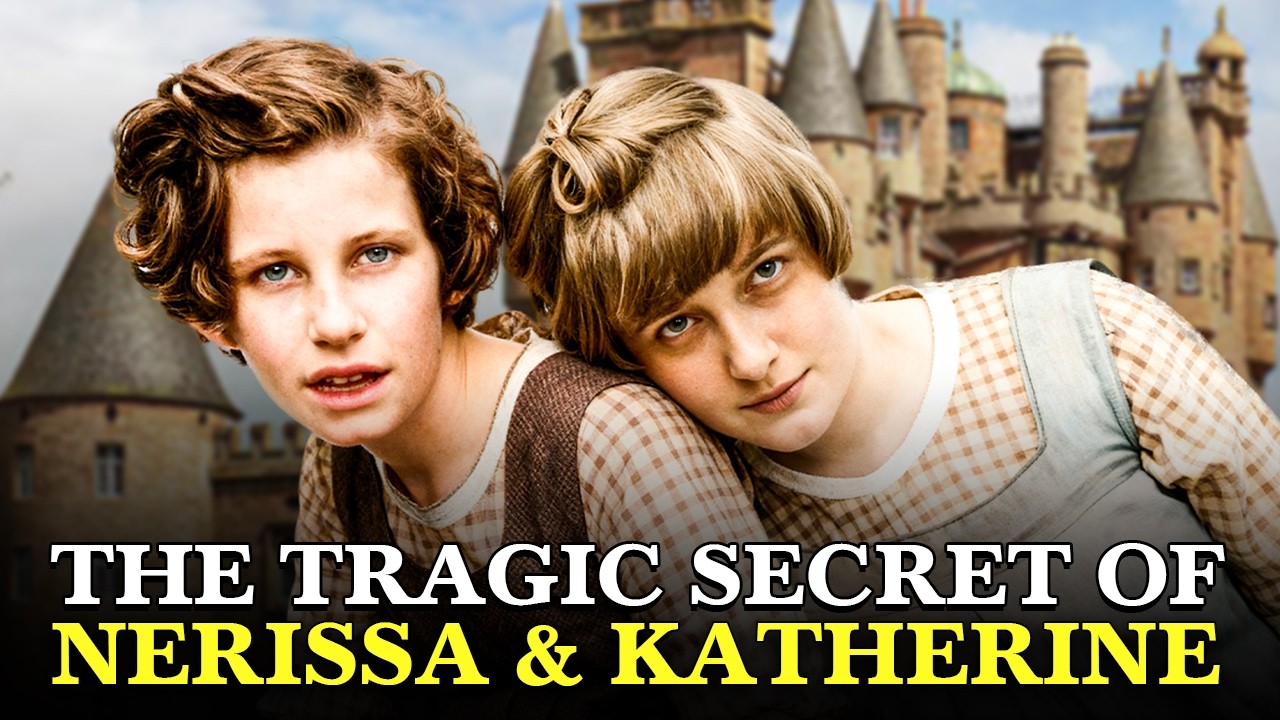
This is the story of Nerissa and Katherine Bowes-Lyon, two sisters born into royalty, hidden inside an institution, and erased from the aristocratic record while they were still alive. It spans nearly 80 years and a question the Bowes-Lyons have never answered.
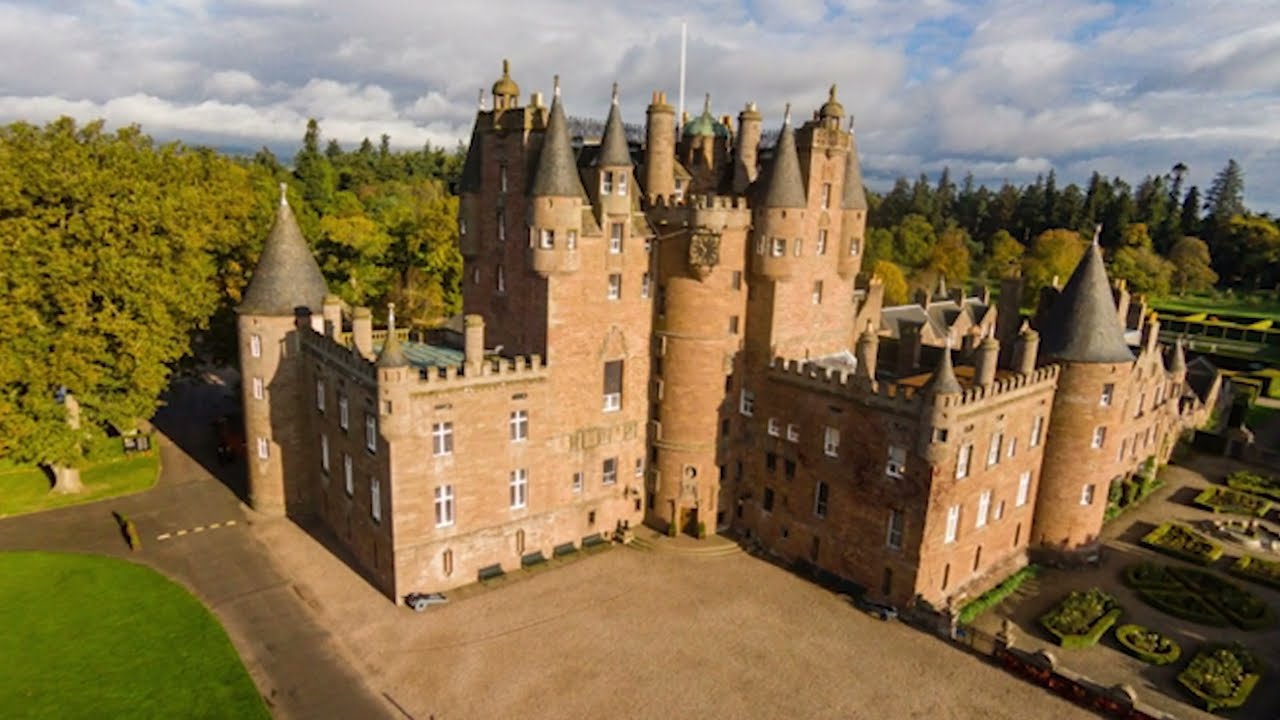
To understand how two daughters of one of Britain's most prominent families vanished from the record, you have to go back to the name itself. The Bowes-Lyons were the family of Glamis Castle in Angus, Scotland, one of the oldest continuously inhabited houses in Britain. The Lyon line had held it since the 14th century.
The Earldom of Strathmore and Kinghorne was created in 1677. By the early 20th century, the Strathmores divided their life between Glamis, St. Paul's Waldenbury in Hertfordshire, and a London presence befitting their rank.
What transformed them from prominent to extraordinary was a single marriage. In April 1923, Lady Elizabeth Bowes-Lyon, the youngest daughter of the 14th Earl, married Prince Albert, Duke of York, the second son of King George V. When Edward VIII abdicated in December 1936, Albert became King George VI and Elizabeth became Queen Consort.
After the King's death in 1952, she became the Queen Mother, one of the most recognized and publicly beloved figures in 20th century Britain. That marriage drew the entire Bowes-Lyon family into the orbit of the crown. With that proximity came a new and unforgiving kind of visibility.
John Herbert Bowes-Lyon was born in 1886, the second son of the 14th Earl. He was Lady Elizabeth's older brother. Educated at Eton and New College, Oxford, he worked as a stockbroker in the City of London and served during the First World War.
In 1914, he married Fenella Hepburn-Stuart-Forbes-Trefusis, daughter of the 21st Baron Clinton. Together, John and Fenella had five daughters. One died in infancy. The surviving four were Anne, born in 1917, Nerissa, born in 1919, Diana, born in 1923, and Katherine, born in 1926.
Anne would go on to marry Viscount Anson. Diana would live a long and relatively private life. On paper, the family looked like any upper-class household of the period.
But two of those daughters would never enter that world. Nerissa and Katherine were both born with severe developmental disabilities. Neither learned to speak. Neither could live independently.
In the world of the Bowes-Lyons, in the world adjacent to the crown, Nerissa and Katherine could not be presented, could not be married, could not sit at dinner, could not attend a christening or a wedding. They could not perform the social functions that justified a daughter's place in an aristocratic family.
This was a period in which eugenics was not a fringe movement but a mainstream intellectual current. The idea that certain families carried better or worse blood was establishment orthodoxy. A family that stood adjacent to the royal bloodline had particular reason to be anxious about any suggestion of hereditary weakness.
John Herbert Bowes-Lyon died of pneumonia at Glamis Castle in February 1930. He was 43 years old. His death left Fenella alone with the children, including two daughters whose needs were severe, lifelong, and beyond anything a single widowed mother of that era was equipped to manage without institutional support.
The disability was not confined to John and Fenella's daughters. Fenella's sister, Harriet, had married into the Fane family, and three of Harriet's daughters, Idonea, Rosemary, and Ethelred, also had severe learning disabilities. The pattern on the maternal line was unmistakable.
That solution came in 1941, in the middle of wartime. Nerissa and Katherine Bowes-Lyon were placed in the Royal Earlswood Hospital in Redhill, Surrey. Nerissa was 22 years old. Katherine was 15.
On the same day, their three Fane cousins, Idonea, Rosemary, and Ethelred, were also admitted. Five women from the same extended family entered the same institution on the same date. That is not a medical emergency unfolding in stages. That is a family decision executed in a single coordinated act.
Royal Earlswood had been founded in 1855 as the first purpose-built institution in Britain for people with learning disabilities. By the 1940s, it had become a long-stay institution where the initial language of care had hardened into a regime of containment.
Once Nerissa and Katherine entered Royal Earlswood in 1941, they never came out. They never returned to family life. They never appeared in family photographs, family events, or the public narrative of the Bowes-Lyon dynasty.
The wider family continued. The Queen Mother's public life grew ever more prominent. The Bowes-Lyon name appeared in all the contexts where it had always appeared. The machinery of aristocratic life presented a coherent, legible family to the world and absorbed the inconvenient parts into silence.
Then, in 1963, the silence was formalized in the most chilling way a family can erase someone who is still alive. Burke's Peerage, the authoritative reference book of the British aristocracy, listed Nerissa and Katherine Bowes-Lyon as dead. Specific death years were printed. The entry was false.
Both women were alive. Nerissa was 44 years old, living in a ward at Royal Earlswood. Katherine was 37 in the same institution.
Burke's later said that such information was supplied by families and was not normally questioned. The aristocratic record trusted the aristocracy to tell the truth about itself. Someone, the family has never confirmed who, told Burke's that two living women were dead.
For 23 years after that false entry appeared, the world carried on as if Nerissa and Katherine Bowes-Lyon did not exist. Genealogists cited it. Historians relied on it. The silence around the sisters was not merely familial. It was institutional.
Inside Royal Earlswood, two women who were supposed to be dead carried on living. The wards were functional but impersonal. Beds were arranged in rows. Personal possessions were minimal. The days were structured around meals, medication, washing, and the management of large numbers of residents.
The world outside arrived mainly through the radio and later through the television set. Former staff recalled that when the royal family appeared on screen during the Queen's Christmas broadcast, Katherine would respond. She would stand. She would curtsy or salute toward the figures on the screen.
She could not speak. She had never been educated in the way that children of her class were educated. But she knew the family. She was watching her own relatives from inside a ward in Surrey and answering them in the only language available to her.
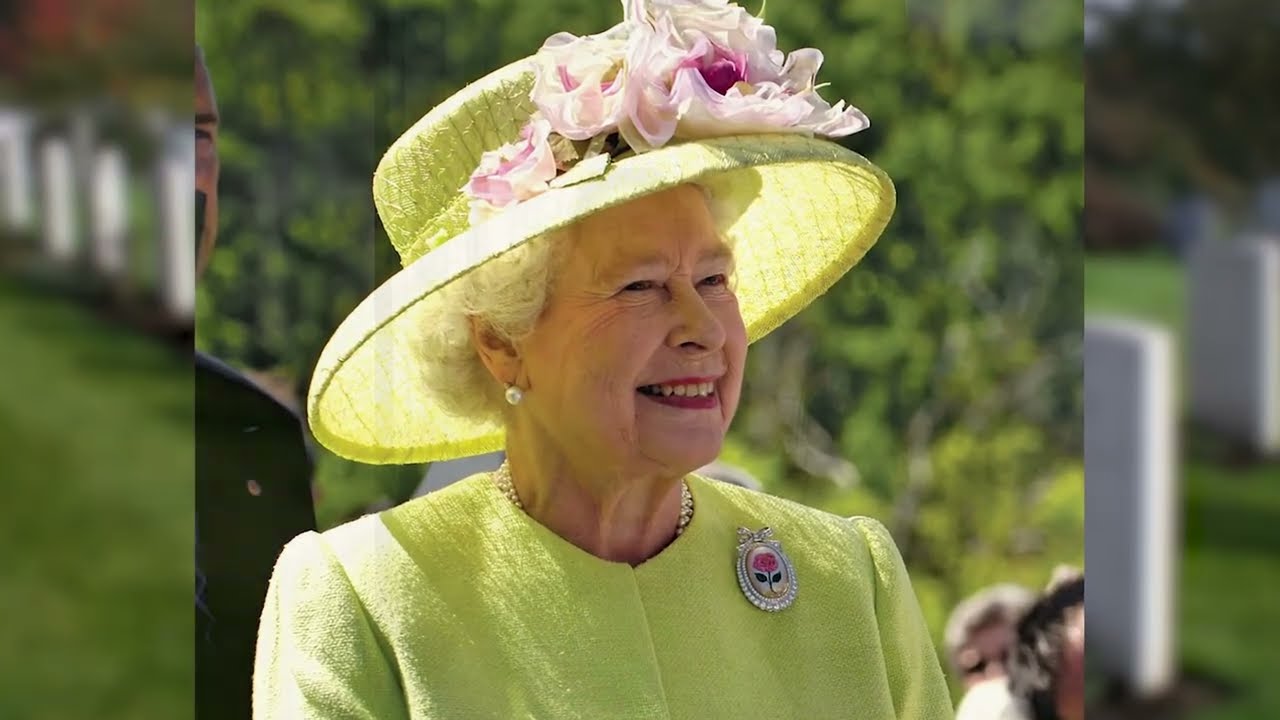
The Queen Mother was, by this time, one of the most beloved public figures in Britain. Her nieces were watching her on a hospital television. Unvisited or under-visited. Unlisted in the family record. Officially dead in the only book that mattered to the world they had been born into.
Whether the Queen Mother knew the full extent of what had happened is a question the story cannot definitively answer. Buckingham Palace, when the scandal eventually broke, declined to comment and called it a matter for the Bowes-Lyon family.
The false record stood for over two decades without correction from any quarter of that family. The silence was not a single act committed in a moment of panic. It was a sustained position maintained across years and across generations.
The years accumulated inside Earlswood. Nerissa was admitted in 1941 during the Second World War. She was still there when the war ended in 1945. She was still there when the National Health Service was created in 1948. She was still there when Princess Elizabeth married Philip Mountbatten in 1947.
Katherine was there, too, watching, perhaps, from a ward in Surrey, curtsying to her cousin on a screen. They were there through the Suez crisis, through the cultural revolution of the 1960s, through the Falklands War. The outside world changed around them in ways they could not access.
After the scandal became public, family defenders insisted that Fenella had visited the sisters during her lifetime. Former staff offered a starkly different account. They recalled no record of family visits, no guest logs bearing the Bowes-Lyon name, no birthday gifts arriving on the ward.
The essential facts remain unchanged. The visits, if they occurred, did not restore the sisters to family life. They did not correct the false death entries in Burke's Peerage.
Nerissa Bowes-Lyon died on the 6th of January, 1986. She was 66 years old. She had spent 45 years inside Royal Earlswood Hospital.
There was no announcement. No obituary appeared in The Times or The Daily Telegraph. Nobody told the press. Nobody corrected Burke's.
Her funeral was not attended by the Bowes-Lyon family in any visible or recorded way. Only a small number of hospital staff were present. The people who had cared for her daily came to say goodbye.
Nerissa was buried in Redhill Cemetery. Her grave was marked not with a headstone bearing the Bowes-Lyon name, but with a simple plastic tag. A woman descended from the Lyon line of Glamis Castle, niece of the Queen Mother, first cousin of Queen Elizabeth II, buried under a piece of plastic in a municipal cemetery in Surrey.
The discovery came the following year. In April 1987, journalists investigating the Bowes-Lyon family found the two women listed as dead were not both dead. Nerissa had died the previous year. But Katherine was alive.
She was 60 years old. She was still inside Royal Earlswood Hospital, still in the institution she had entered at the age of 15. She had been there for 46 years, and the world had been told she was dead.
The press expanded the investigation and discovered that the story was larger than two sisters. The three Fane cousins had been admitted to the same institution on the same day in 1941 and had lived there in the same silence ever since. Five women from the same extended maternal family, one institution, one sustained, coordinated act of disappearance.
The story broke as a major royal scandal. The shock was the gap between the monarchy's public image of family warmth and the private machinery of aristocratic concealment operating just beneath that image.
Burke's Peerage confirmed that such biographical information was supplied by families and was accepted in good faith. Buckingham Palace declined to comment. Relatives of the Bowes-Lyon family denied that there had been a deliberate cover-up.
Critics read the episode as proof of an aristocratic and royal instinct to protect the bloodline's image at the expense of its most vulnerable members. A willingness to sacrifice real human beings to the maintenance of a family narrative that could not accommodate disability.
Katherine Bowes-Lyon outlived the scandal by decades. She outlived the institution itself. Royal Earlswood closed in 1997, part of the broader national movement away from long-stay hospitals. The building that had contained Katherine for more than 50 years was eventually converted into residential flats.
Katherine was moved to other residential care settings in Surrey, smaller and less institutional. She lived quietly there, out of public attention. Katherine Bowes-Lyon died on the 23rd of February 2014. She was 87 years old.
She had spent 73 years in institutional or residential care from the age of 15 to the age of 87. Her entire adult life had been lived inside settings chosen for her by others.
The cultural afterlife of the story has been substantial. In 2011, Channel 4 broadcast The Queen's Hidden Cousins, a documentary that drew on former staff testimony and institutional records. It emphasized the absence of family visits, the bleakness of institutional life, and the plastic grave marker.
Then, in November 2020, Netflix's The Crown dramatized the story in its fourth series. The episode, The Hereditary Principle, was built around a fictional narrative in which Princess Margaret discovers the cousins' existence and confronts the Queen Mother. The scene was powerful and widely discussed.
It was also fictional. There is no evidence that Princess Margaret ever visited Earlswood. The confrontation was invented. The emotional logic was real, but the events were not.
There was no confrontation. There was no reckoning. There was only the slow, quiet maintenance of a silence that lasted until someone outside the family decided to break it.
Neither Nerissa nor Katherine is alive. The three Fane cousins are gone. The wider Bowes-Lyon dynasty very much continues. Glamis Castle still stands in Angus, still open to the public as a heritage site.
The estate's own presentation of the family history emphasizes six and a half centuries of the Lyon line. The institutional scandal of 1987 does not feature in the castle's public narrative.
Nerissa's grave was eventually given a proper headstone, reportedly arranged after the media exposure of 1987 made the plastic marker untenable. Not because the family chose to honor her, but because the press had made the absence of honor impossible to sustain.
The Bowes-Lyons gave Britain one of the most beloved public figures of the 20th century. They also produced two daughters who were placed in an institution at 15 and 22, written out of the aristocratic record, and buried, one of them at least, under a plastic tag in a cemetery that no one from the family appeared to visit.
The castle still stands. The lineage still reads cleanly. But there is something about that grave marker in Surrey, small, temporary, anonymous, set against the immense symbolic weight of the Bowes-Lyon name, that refuses the tidiness of the family story.
It is not a lesson. It is just a life. Two lives. And the distance between what the family showed the world and what it left behind in Redhill is the space where this story lives, unresolved, unclosed, and still waiting for an answer that the Bowes-Lyons have never given.