The Donner Party departed from Independence, Missouri, on May 12, 1846, nearly a month later than the season demanded. The optimal window for a westward wagon journey was mid-April, when spring mud had dried, mountain passes remained open, and prairie grass had grown tall enough to feed the livestock. Starting late meant risking winter snows in the Sierra Nevada, a danger every emigrant understood. The Donner brothers, wealthy landowners, and their associate James Reed, an Irish immigrant, pressed on regardless.
The expedition stumbled almost immediately. On May 26, the party reached the Big Blue River, swollen by intense rains to twenty feet above its normal level. They spent days on the bank building rafts to ferry their wagons across. One member, Sarah Keyes, died of tuberculosis on May 29 while they waited.
The river eventually fell, and the group crossed without further loss, but the delay was an early installment of a pattern that would define the journey. Their provisions were dangerously thin from the start. The wagons carried only enough food for four months, roughly adequate for a smooth crossing but with no margin for error. Each person was allotted 150 pounds of flour and 75 pounds of meat, supplemented by rice, beans, and cornmeal.
By the end of June, the party reached Fort Laramie in Wyoming, more than a week behind schedule. At the fort, they received explicit warnings about the Hastings Cutoff, a supposed shortcut that promised to trim three hundred miles off the established trail. James Clyman, who had just traveled the route with its promoter, Lansford Hastings, told Reed directly that the path was nearly impossible to navigate on foot and wholly unsuited to covered wagons. He urged the Donners to stay on the main trail.
The advice was dismissed. Hastings himself was a man of considerable ambition and slender credentials. He had published a guidebook, The Emigrants’ Guide to Oregon and California, extolling the virtues of the shortcut that bore his name. The problem was that he had never actually traversed the route until after his book had already become famous.
He was one of only two men known to have attempted it, and neither had tested it with wagons. Hastings nevertheless proposed to escort a party of immigrants along his cutoff, sending a letter to the Donner Party inviting them to rendezvous with him at Fort Bridger. Because of their two-week delay, the Donners never actually met Hastings. The letter, written with supreme confidence, persuaded them to proceed without him, following an unverified trail into the wilderness without a guide.
Edward Bryant, a reporter with firsthand knowledge of the cutoff, understood its dangers. He knew the route was rugged, unproven, and likely perilous, and he worried specifically about the women and children in the expedition. Bryant wrote letters to the Donner Party, begging them to take the established trail. The letters never arrived.
Reed later accused Jim Bridger, owner of the trading post at Fort Bridger, of deliberately suppressing them. Bridger stood to profit handsomely when emigrants stopped at his establishment to buy supplies before attempting the cutoff, and he was one of its strongest advocates. Reaching the Wasatch Mountains beyond the Great Salt Lake, the party found a note from Hastings fastened to a wooden post. He wrote that the way ahead was treacherous and that he did not think it prudent to proceed, adding that he would meet them and lead them to a better route.
The group waited. Eight days passed, and Hastings did not appear. Reed and two companions rode out to find him. Reed located Hastings, but his companions became lost and were so hungry they nearly ate their own horses.
Hastings directed Reed to an alternate route through the mountains, which he guaranteed would be superior. It was not. The path was so choked with trees and obstructions that the wagons advanced at times only a mile and a half per day, against a typical pioneer average of fifteen. The days lost were irreplaceable.
The party was not a fixed group. Families joined along the way. At Fort Bridger in July they took on more immigrants, and in August, as the wagons labored through the Wasatch, the Graves Party attached itself to the expedition. With their arrival, the total reached eighty-seven people, placing severe strain on the already depleted provisions.
The desert around the Great Salt Lake punished them relentlessly. Wagons sank into deep sand. Water supplies vanished faster than expected under the heat. Weakened oxen collapsed and were abandoned to die, while others bolted and fled.
The loss of livestock became a recurring catastrophe. At Humboldt Sink, a dry lake bed in Nevada, local Native Americans made off with twenty-one of their cattle. Throughout the remainder of the journey, raids and shootings reduced their herds by nearly a hundred head. Without oxen, the party had no way to pull their wagons.
They abandoned vehicles and carried their possessions on their backs, losing at the same time their emergency food supply. Dissent had been present from the beginning. In July 1846, the wagon train split. The larger contingent took the conventional, safer path; the smaller group, the Donner party, chose the Hastings Cutoff.
As conditions worsened in the Wasatch, hostility turned toward James Reed, the man who had championed the route. On October 5, two wagons became entangled on the trail. John Snyder, driving one of them, began savagely beating his oxen. Reed ordered him to stop.
When Snyder persisted, Reed stabbed him in the abdomen. Snyder died of his wound. There was no legal authority on the trail and no prison to contain Reed. The group had to decide his punishment themselves.
Some argued for hanging; others pushed for banishment. Reed was sent away, exiled for killing a man over an ox. Two days later, a seventy-year-old member of the party became too weak to continue. In their mounting desperation, the group abandoned him to die alone.
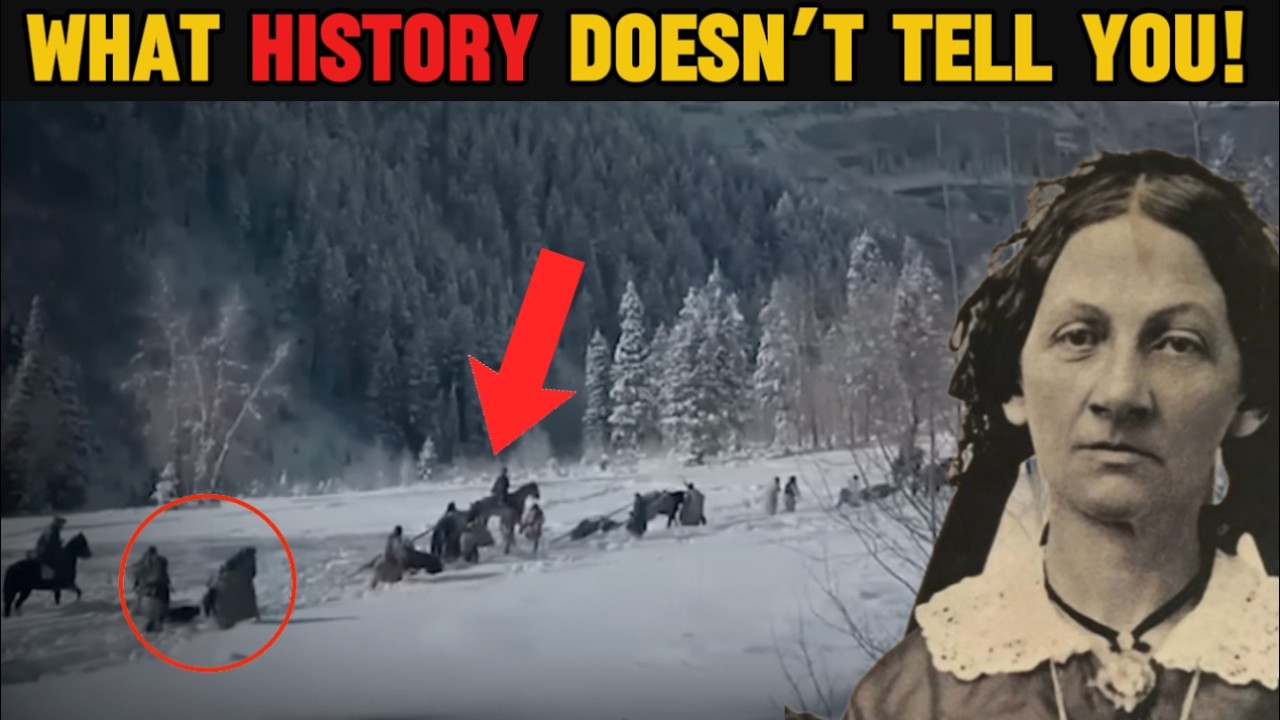
By October 1846, the Donner Party had technically reached California, making camp at Alder Creek in the Sierra Nevada, just beyond the state’s boundary. Their expectations had been that snow would not arrive until November. But it was already snowing in October. As they attempted to force a passage through the mountains, an early blizzard sealed them in, isolating the group for months.
When the last of the food ran out, the stranded pioneers did not turn immediately to the act that would make them infamous. They first boiled bones and animal hides. Then they ate leather, tree bark, and the oxhide roofing of their improvised shelters. Finally, in a last act of desperation, they consumed the bodies of those who had died.
Not everyone participated. Some chose starvation over that final resort. Of the eighty-seven people who entered the Wasatch Mountains, only forty-eight reached California alive, accompanied by three mules. The survivors emerged from the snow carrying the weight of the mountains and the choices that had led them there.
The question of which decision sealed their fate remains unanswered, whether it was the late departure, the ill-advised shortcut, the lost letters, or the early snow. The chain of errors was so consistent, so persistently avoidable, that the disaster appears less like bad luck than a tragedy built by human hands at every stage of the road west.