On June 25, 1876, a column of blue-coated cavalry emerged onto a ridge above the Little Bighorn River in Montana Territory. The men of the 7th Cavalry Regiment had ridden hard for days in pursuit of Lakota and Cheyenne bands that refused to confine themselves to reservations. Lieutenant Colonel George Armstrong Custer, thirty-six years old, his golden hair tucked beneath a buckskin coat, had divided his roughly six hundred troopers into three battalions. He pushed five companies, about 210 men, northward along the river bluffs.
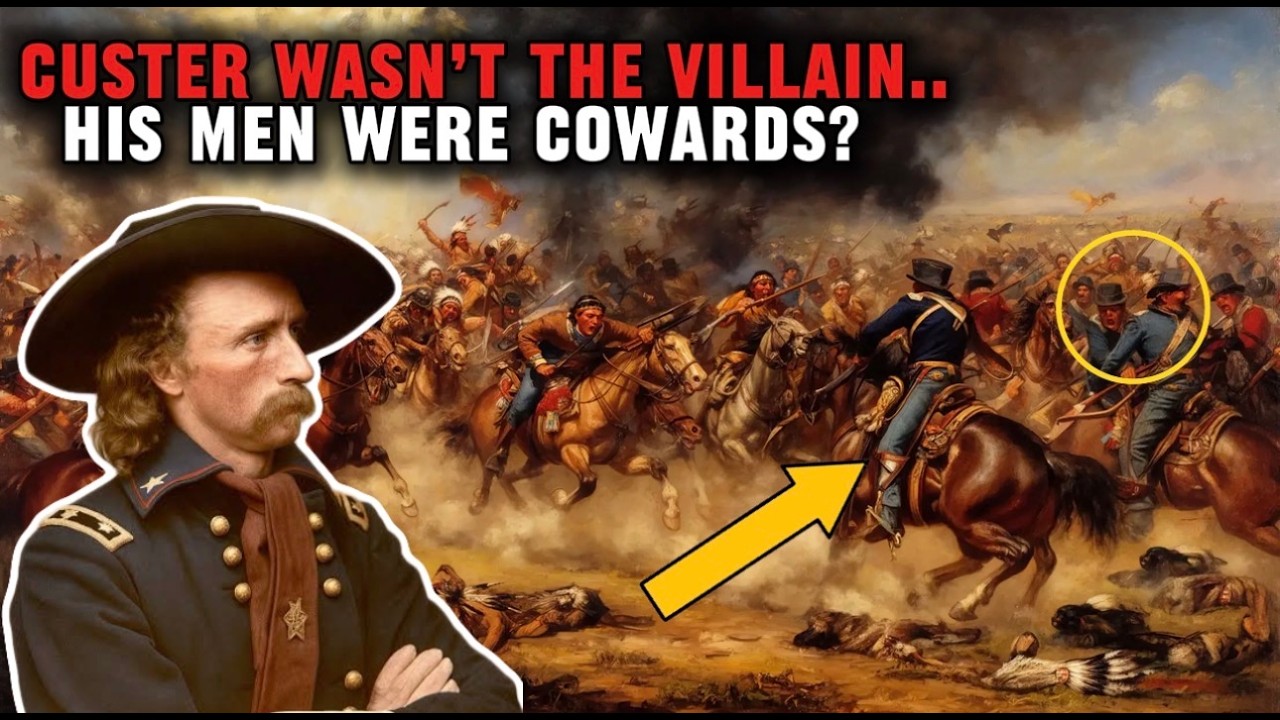
Ahead of them spread a village far larger than anything they had anticipated, a camp of thousands with warriors under leaders like Sitting Bull and Crazy Horse massing by the minute. Custer’s men did not turn back. Outnumbered by perhaps five to one, they dismounted and fought their way through a storm of arrows and gunfire toward the high ground that would come to be known as Last Stand Hill. By day’s end, Custer and every man under his immediate command lay dead.
Historians have debated the decision for nearly a century and a half: why did veteran soldiers ride into annihilation when retreat was still an option, and why did they follow a commander whose ambition had overrun his judgment? The roots of the slaughter reached back more than a decade. American expansion westward had become a steamroller by the 1870s. Miners poured into the Black Hills after gold was discovered there, territory sacred to the Lakota and protected by treaty.
The government, having emerged from Reconstruction, pressed tribes onto reservations. Those who refused were labeled hostiles. When the Great Sioux War broke out in 1876, General Philip Sheridan orchestrated a coordinated invasion. Three columns marched from different directions to corner the roaming bands and force them into submission.
Custer was a natural instrument for that campaign. At West Point, he graduated near the bottom of his class, but the Civil War had made him a legend. He rose to brevet major general before he was twenty-six through a series of bold cavalry charges at Gettysburg and Appomattox. After the war he was reduced in rank to lieutenant colonel and posted to the plains, where he rebuilt his reputation.
At the Washita River in 1868 he attacked a Cheyenne village in winter, killing women and children along with warriors. The victory made him famous and controversial. He later went absent without leave to visit his wife, Libby, was court-martialed, and suspended from the army, but his charisma never faded. Troopers called him Autie.
He wrote for magazines in fringed buckskins and carried himself like a man whose luck would hold forever. The 7th Cavalry was not an elite unit in the summer of 1876. Many of its men were recent immigrants from Irish and German neighborhoods, farm boys who had never fired a weapon in anger. Pay was thirteen dollars a month, the food was hardtack and salt pork, and desertion ran as high as thirty percent in some years.
Discipline was brutal. Officers punished infractions by tying men to wagon wheels or forcing them to straddle the wooden horse until their legs bled. Command descended without question from the top. In the frontier army, obedience was not a choice; it was the basis of survival.
Custer could have fought more carefully. His brigade commander, General Alfred Terry, had instructed a cautious advance in conjunction with other columns. But Custer feared the village would scatter before he could strike. He reportedly told his officers that they were about to have the biggest Indian fight ever.
His men had reason to believe him. Many had served with him in the Civil War and watched his recklessness pay off again and again. Private Charles Windolph, a German immigrant who survived the battle, later recalled that the troopers thought Custer could lick anything because he always had before. Unit loyalty carried them as well.
Regiments were knit tightly by ethnicity and history, Irish in one company, Germans in another. A man who abandoned his comrades was a coward in the ranks. The penalty for cowardice on campaign could be death by firing squad, and the pressure to stand with brothers in arms outweighed any impulse to flee. Tactic reinforced the instinct.
Cavalry doctrine of the era prized shock and speed. The 7th carried Springfield carbines and Colt revolvers, weapons supposedly superior to the bows and old muskets of the warriors. Many troopers believed they had an overwhelming advantage. They were wrong.
Many Lakota and Cheyenne fighters carried Winchester repeaters, modern rifles traded from posts along the frontier. Custer dismissed warnings. His Crow and Arikara scouts knew the country and the enemy. They advised patience, and told him the village held far more warriors than he seemed willing to believe.
He rejected their counsel, telling them he did not need their advice. The fatal division of forces came next. Custer detached Major Marcus Reno with a battalion to strike the southern end of the village. Captain Frederick Benteen received orders to follow with the pack train carrying ammunition.
Custer led his five companies north, perhaps intending to seize the women and children as leverage, hoping to repeat the easy victory at Washita. Instead, he rode into a column of warriors emerging from the camp. Reno’s charge collapsed quickly. Heavy fire forced his troops to retreat to a defensible bluff across the river.
Benteen circled wide and did not reach the battlefield in time to influence the fight. Custer’s men crested the ridge and saw that the ground around them had erupted with warriors. Estimates placed the number of fighters at two thousand or more, many of them drawn by visions from Sitting Bull’s Sun Dance the previous month. The troopers dismounted and formed skirmish lines.
The horses were held in the rear while the men fired volleys at the closing circle. But ammunition ran low, and the pack mules carrying the reserve supply were with Benteen, hours away. Arrows dropped from all directions. Bullets cracked through the ranks.
Men fell in clusters. Some shot themselves rather than face capture. Custer was wounded in the chest and the temple and went down fighting with his revolver in hand. His two brothers, Tom and Boston, and his nephew Autie Reed died with him.
The warriors later told of circling the hill like hawks around a wounded deer, cutting the soldiers off from any retreat. There was no escape. The casualties were staggering. All 268 men under Custer’s immediate command were killed.
The battlefield was stripped of weapons and clothing, and many bodies bore mutilations carried out not simply as cruelty but as ritual warfare and vengeance for lost kin. Reno and Benteen, with the survivors of their battalions, held the bluff until the next day. When the warriors finally withdrew, reinforcements found the valley littered with the dead. Libbie Custer spent the rest of her life defending her husband’s memory.
Widowed at thirty-four, she wrote books portraying him as a martyred hero who died fighting for civilization. Her campaign succeeded in fixing the name of the Last Stand in American history, but the military also learned from the disaster. Later campaigns used larger columns, better scouting, and Gatling guns, weapons Custer himself had rejected as cumbersome. The victory emboldened the native nations only briefly.
The Battle of the Little Bighorn bought them months rather than years. By 1877 resistance collapsed. Sitting Bull fled to Canada. Crazy Horse surrendered and was bayoneted while in military custody.
Critics have called Custer reckless, a man whose ego cost more than two hundred fifty lives. Defenders note that he operated under faulty intelligence and ambiguous orders, riding at full speed to prevent the village from escaping. The historian Evan Connell captured the consensus when he wrote that Custer was not suicidal but supremely confident, fatally so. He trusted his luck, his cavalry, and the invincibility of the frontier army.
His men followed not only a commander but an ideal of duty and glory, and they paid for that faith with their lives on a sun-baked hill above the Little Bighorn.