By the time the sun rose over the Montana grasslands, George Armstrong Custer had already made the decision that would define Little Bighorn. He did not yet know it. Neither did the cavalrymen riding behind him. But somewhere beyond the ridges and cottonwoods along the Little Bighorn River, thousands of Lakota and Northern Cheyenne waited inside a village unlike anything most American officers had imagined.
And within days, the nation would receive news so shocking that it would blur the line between battlefield reality and legend. Most Americans know Little Bighorn through a familiar image: Custer standing defiantly on a hill, surrounded, outnumbered, fighting to the last beneath a western sky. It is among the most enduring scenes in American memory, yet that image conceals something important. The most revealing story of Little Bighorn may not be how the battle was fought.
It may be what happened after the shooting stopped, and why Americans remembered it the way they did. In the summer of 1876, the Northern Plains stood at the center of a widening national crisis. The federal government had ordered Lakota and Northern Cheyenne groups onto reservations, but the order collided with a deeper conflict already unfolding across the West. Gold discoveries in the Black Hills intensified pressure on lands protected under earlier treaties.
To many Americans moving westward, the region represented opportunity and expansion. To many Native families, it represented homeland, identity, and sacred ground. That disagreement did not remain political for long. It became military.
By June, thousands of Native people had gathered along the Little Bighorn River, known to many Lakota as the Greasy Grass. This was not merely a military camp; it was a living community of families, lodges, children, horses, elders, and warriors, one of the largest Native encampments ever assembled on the northern plains. But approaching cavalry officers often interpreted such places through a military lens. Among them stood Lieutenant Colonel George Armstrong Custer.
Even before Little Bighorn, Custer carried an unusual reputation. The Civil War had transformed him into a national figure while still a young man. Admirers saw daring and speed. Critics saw a commander whose confidence occasionally outran caution.
Both interpretations followed him west, and on June 25, 1876, those qualities shaped events with extraordinary consequences. Custer faced uncertainty from the beginning. His scouts warned that the village appeared immense, larger than expected, potentially far larger. But uncertainty often pressures commanders toward difficult choices, and Custer feared something as much as defeat: delay.
He believed waiting might allow the village to disperse. So he divided the 7th Cavalry. On paper, the movement followed familiar doctrine. Major Marcus Reno would strike the southern end.
Captain Frederick Benteen would maneuver elsewhere. Custer himself led five companies northward. The plan depended upon speed, coordination, and accurate assumptions, and almost immediately, those assumptions began to fail. The battlefield Custer expected did not exist.
Reno crossed first. At first, the attack appeared manageable. Then resistance surged. Lakota and Cheyenne fighters moved rapidly across ground they understood intimately.
Reno’s men faced growing pressure and withdrew toward defensive high ground. That withdrawal changed something larger. Instead of coordinated cavalry pressure, separation now defined the battlefield. Benteen later joined Reno.
Meanwhile, somewhere north of the village, Custer continued moving. There, uncertainty deepened. Historians still debate individual moments, routes, timelines, and exact positions, but not the outcome. Custer’s command encountered concentrated resistance and became isolated.
The battle later called Custer’s Last Stand may have lasted less than an hour. When it ended, every man under Custer’s immediate command had fallen. Approximately 210 officers and troopers lay scattered across ridges and ravines, among them brothers, immigrants, scouts, musicians, and veterans whose stories rarely entered national legend. This is where Little Bighorn becomes more complicated than memory often allows.
Battles do not emerge from empty ground; they carry history with them. Many Native families on the Greasy Grass remembered earlier violence: Sand Creek, Washita, broken agreements, forced movement, loss. The battle did not create those memories. It awakened them.
And when the fighting ended, emotion did not end with it. While Reno and Benteen remained under pressure nearby, another scene unfolded across the battlefield. Women and relatives moved onto portions of the ground where cavalrymen had fallen. For later-arriving soldiers, what they encountered became unforgettable.
For eastern newspapers, it became explosive. Two days later, army columns under Alfred Terry and John Gibbon reached the field. The June heat had already transformed the landscape. Bodies remained where they had fallen, weathered by exposure, difficult to identify, scattered across coulees and hillsides.
One officer later described the battlefield as a scene of grave and unsettling devastation. The burial details worked quickly, not carelessly, but urgently. The ground proved difficult. Tools were limited.
The possibility of renewed danger remained. Men scraped shallow graves beside comrades and covered bodies where they lay. Then the reports began spreading east. Many soldiers described extensive postmortem alteration among portions of the dead, and for generations, those accounts shaped public understanding of Little Bighorn.
Newspapers seized upon the details. Headlines emphasized shock, outrage, retribution. The defeat became more than a military disaster. It became a moral drama.
Custer himself transformed almost immediately into a martyr and a symbol. Paintings elevated the final stand. Popular memory simplified the catastrophe into heroic sacrifice. But history rarely survives intact inside headlines.
Over time, the ground itself began complicating the story. Burials in 1876 were hurried. Later reburials attempted greater order. Custer’s remains eventually traveled to West Point.
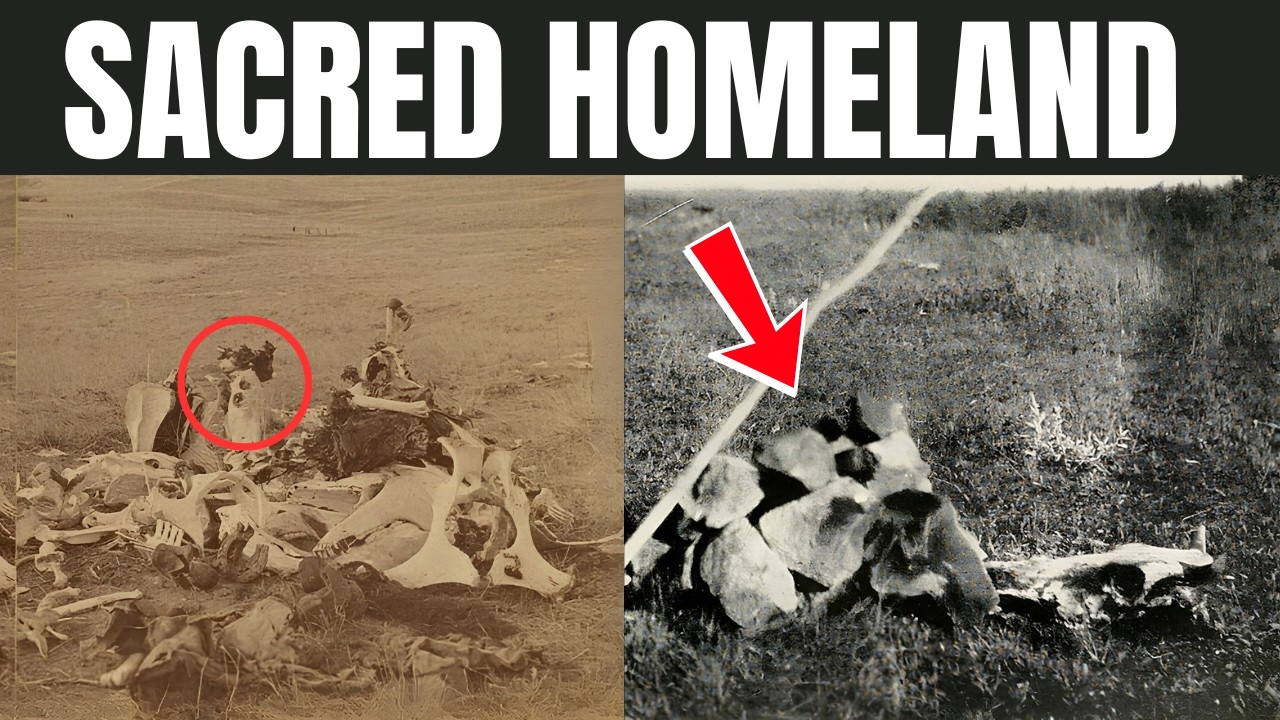
Other officers were returned east. Enlisted soldiers were consolidated beneath the monument stone. Yet Little Bighorn refused final silence. Erosion exposed forgotten remains.
Bones surfaced years later. The battlefield kept returning unfinished history. By the 1980s, archaeology entered the conversation, and science asked questions that memory alone could not answer. Professional excavations recovered overlooked remains and battlefield evidence long missed during nineteenth-century reburials.
The discoveries confirmed parts of older testimony. Some skeletal remains displayed battle injuries and physical trauma consistent with historical accounts. But the bones revealed something else as well, something quieter and perhaps more human. These cavalrymen had already endured hard lives before reaching Little Bighorn: compressed vertebrae, healed fractures, arthritic joints, damaged teeth.
Years of riding and military labor had reshaped their bodies. The romantic image of untouched young cavalry charging toward destiny began to weaken beneath forensic examination. The bones suggested worn men carrying accumulated hardship long before the battle claimed them. One shorter cavalryman, likely between thirty and thirty-five years old, carried evidence of spinal degeneration and an older skull fracture, yet he also possessed unusual dental fillings for the era.
Another set of remains likely belonged to farrier Vincent Charley, a Swiss immigrant and horseshoer whose skeleton revealed healed injuries and a probable battle wound near the hip. Science returned individuality to men that history had often reduced to symbols. And it complicated another long-held assumption. Archaeology confirmed that some bodily alteration occurred, but interpretation mattered.
For decades, popular narratives treated the subject almost entirely through outrage. Native testimony and modern scholarship widened the discussion. Among Lakota and Cheyenne participants, some bodily alterations reflected grief, revenge, spiritual belief, and cultural meaning regarding victory and the afterlife. That context does not erase violence, nor does it diminish suffering.
But it explains something earlier generations often ignored. Warfare on the plains operated within cultural systems many outsiders neither understood nor attempted to understand. That distinction matters because history loses credibility when explanation is mistaken for justification. This is also where memory becomes a battlefield.
For generations, Americans inherited a simplified story: heroic cavalry, ruthless enemies, noble defeat. Yet the actual history resists such clean divisions. The battle grew from treaty disputes, territorial pressure, competing beliefs about land and sovereignty, and frontier violence that rarely belonged to one side alone. Some Americans viewed Custer as reckless.
Others saw courage under impossible circumstances. Some regarded Native victory as justified resistance. Others mourned it as a national tragedy. The debate itself reveals something important: Little Bighorn never fit comfortably inside a single interpretation.
Today, the Montana grass moves gently across the battlefield. Visitors walk among monuments marking soldiers and Native warriors alike. The land appears peaceful now, but peaceful landscapes can conceal difficult histories. Little Bighorn still asks an uncomfortable question: not simply how Custer died, but how nations remember defeat.
Symbols simplify. History does the opposite. History restores complexity, and at Little Bighorn, complexity survives in testimony, archaeology, and the ground itself. The battle ended in June 1876.
The argument over what it meant never truly ended. Perhaps it never will. And maybe that is why Little Bighorn still matters, not because Americans need perfect heroes or perfect villains, but because honest history asks us to look beyond legend, toward people, toward choices, toward consequences. The cavalrymen who rode into the valley became more than casualties.
The Native families who defended the Greasy Grass became more than shadows in somebody else’s story. And the battlefield itself became something larger than defeat or victory alone, a reminder that history is rarely as simple as memory first makes it appear. The fighting ended on those Montana hills in 1876, but the questions left behind still echo beneath the wind.