In 1988, as Frances Lear prepared to launch her magazine, she was sixty-four years old and had never worked a day in publishing. The debut issue carried seventy-seven pages of advertising purchased by Cadillac, BMW, and Volvo. She marked the occasion with a party at the Rainbow Room, the same venue where, decades earlier, she had bought a ticket to dance as a young retail clerk living on a meager salary. Every publisher in New York knew where the money had come from.
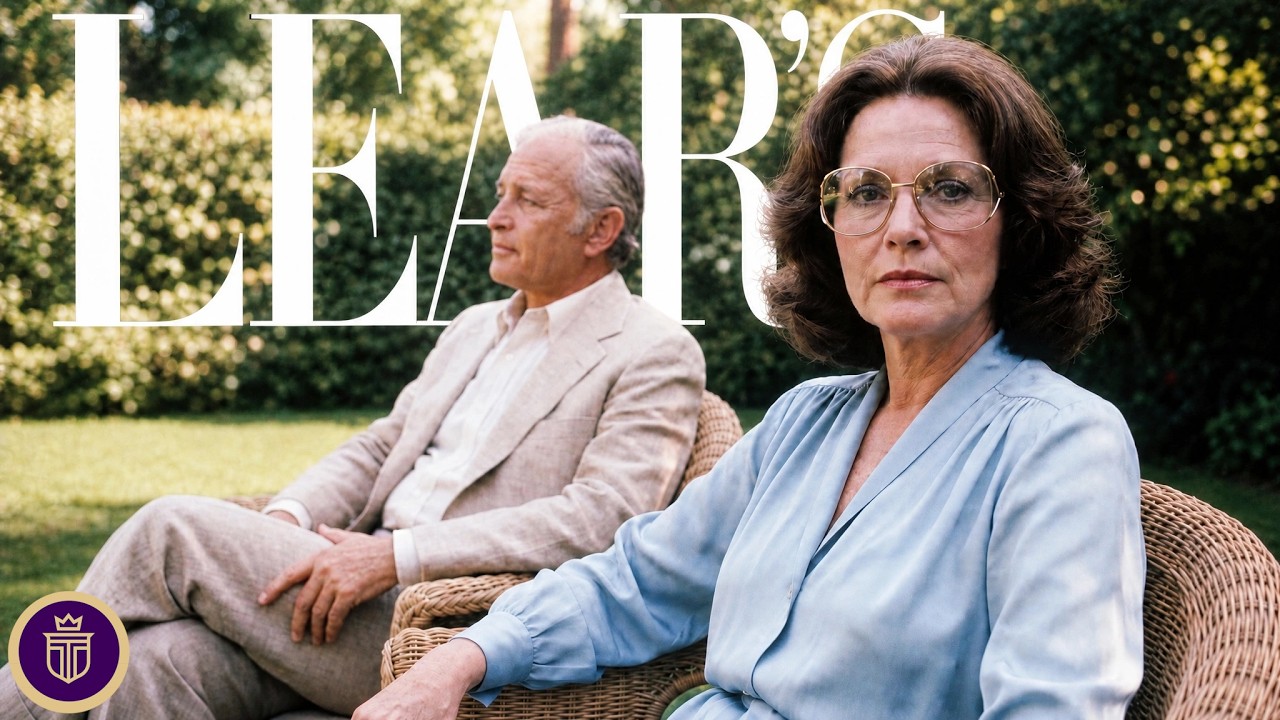
Three years before, she had ended a twenty-eight-year marriage to Norman Lear, the producer behind All in the Family, Maude, and The Jeffersons, walking away with a divorce settlement estimated at one hundred million dollars, among the largest ever recorded. She then founded a magazine for American women over forty, edited it for a reader she identified plainly as herself, and spent the next nine years discovering the cost of being her own market study. By March 1994, when the company closed in a single afternoon, roughly half a million women were reading it, and between twenty-five and thirty million dollars of the settlement had been spent on it. Born Evelyn in 1923 in Hudson, New York, in a home for wayward girls, she was the child of an unmarried mother, and no father was ever named in her records.
About fourteen months later, Herbert and Aline Loeb adopted her and renamed her Frances. The identity she would later defend fiercely, stamping it across the cover of a national magazine in possessive form, had been granted by strangers as a condition of her survival. Her adoptive mother, by Frances’s own adult account, was vain and deeply selfish, a woman whose attention operated as currency to be earned or lost. A child raised by such a parent learns to read the emotional climate of a room the way a sailor reads water, and that skill would later allow a woman with no publishing background to sit in a New York office and accurately describe what half a million strangers wanted to read about themselves.
When she was ten, Herbert Loeb took his own life. At twelve, she began enduring years of sexual abuse by her adoptive mother’s second husband. In her teens, she told a psychiatrist, but her mother sided with the man. Frances left home permanently.
She took away a brutal lesson: disclosure leads to abandonment, adults protect adults, and safety is something you secure alone. With no money, no guardian, and no completed education, she moved to New York, where her Massachusetts polish and taste could be converted into wages. Over the next fifteen years she drifted through secretarial jobs, retail positions at Bloomingdale’s and Lord & Taylor, publishing houses, agencies, and a stint as a photographer at the Copacabana, learning precisely the skills a magazine founder would one day need. Two early marriages ended before she turned thirty-three.
Then she met a writer from Hartford who would become the most influential television producer in America. She married Norman Lear in 1956 at thirty-three and moved to Los Angeles. Their marriage lasted twenty-eight years, long enough to be considered a career. While Norman created sitcoms that redefined what American families could watch, their home became one of Hollywood’s most prominent addresses.
Frances had opinions about scripts, politics, and what women were ready to hear, and she expressed them to a man writing the most controversial dialogue in the country. She was, in her own assessment, a woman in a city where women without youth, power, or stardom had no standing. By 1968 she had found politics and activism, working on Eugene McCarthy’s presidential campaign and with the National Organization for Women on equal-rights issues. When Maude premiered in 1972, with Bea Arthur playing a loud, liberal, four-times-married suburban woman who said what went unsaid at the dinner table, industry and press assumed the character was drawn from Norman’s wife.
Frances claimed it publicly and repeatedly. Norman declined for decades to confirm it. When his memoir finally appeared, he wrote that of all his characters, Maude was most like him. The dispute was never truly resolved.
What can be said is that a marriage in which one partner believed she had co-created part of the other’s masterpiece, and the other did not publicly agree, was one living in permanent debt. Frances described her dissolution inside that house in three words that no biographer has improved: she said she “became him. ” Her independent identity melted into his, and the family pronoun quietly stopped including her. Around age fifty, she was diagnosed with manic depression, now called bipolar disorder, after decades of episodes treated as mere mood.
There was a long history of alcoholism. She wrote openly about repeated suicide attempts, without the protective vagueness her class and generation would have allowed her. Her own summary of the resulting personality was stark: she was always strong and fragile at once, and she had to be strong because the fragility was always ready to take over. Leaving took fifteen years.
She was sixty-two in 1985 when she finally went. The settlement, estimated at one hundred million dollars or in some accounts as high as one hundred twelve million, reframed the American debate about a wife’s value. It was not a courtroom award. There was no trial, no jury.
It was a negotiated divorce settlement reached between two people and their lawyers. A judgment is something that happens to you, delivered by strangers in a public room. A settlement is something you negotiate yourself. The woman who entered that marriage with nothing and a history of being fired from secretarial jobs left it as one of the wealthiest independent women in America, accountable to no board, no trustees, no husband with veto power.
She arrived in New York on October 31, 1985, with a plan: a magazine for women over forty. She had been forming that idea, consciously or not, since her days as a clerk watching what retailers put in their windows. She looked at existing women’s magazines and objected to what they offered: models who were too young, too unrealistic, presenting a standard her generation could not meet. Beneath the aesthetic complaint was a market observation Madison Avenue had missed.
American women over forty controlled enormous discretionary spending. They bought cars, clothes, and cosmetics while every magazine on the rack ignored them or addressed them as former young people in decline. The plan was announced in November 1986. The magazine would launch bimonthly with an initial distribution base of 125,000 copies, a color page priced at $5,150, subscriptions at $15, and newsstand copies at $3.
Because she funded it entirely herself, the only approval required was her own. She had spent twenty-eight years seeing her judgments attributed to someone else and would not repeat that situation in her sixties. By the time the first issue appeared, she had committed $25 million of the settlement, a figure Time later placed at $30 million. The publishing industry’s response was not kind.
Coverage assumed a woman with no publishing experience had bought herself a magazine the way other divorcées bought horses. This condescension ignored her career history and the strategic purpose of self-financing: speed. A founder who pitches investors spends eighteen months explaining her readers to men who have never met them. Frances Lear announced her magazine in November 1986 and had it on newsstands by February 1988.
Academic criticism came from the opposite direction. In October 1988, Carolyn Wong argued in The Gerontologist that the magazine contributed to the social control of older women, reinforcing their marginal position and class divisions. The charge was that an issue celebrating wealthy, glamorous women over forty did not liberate anyone. Frances Lear’s answer, delivered over six years of editing, was that the alternative was invisibility.
Circulation rose steadily: from 370,000 to 453,000 in the first half of 1990, and to 503,000 by the end of 1993. Average reader age was 45. 3 years. The audience she had described from her own reflection existed exactly as she had predicted and was growing while she was mocked for imagining it.
The structural problem was never the readers. Lear’s was a single-title company competing for the same budgets as publishing groups that could bundle four or five magazines into one discounted offer. The gap between costs and advertising revenue was covered monthly by a woman spending her divorce settlement. Her response to the business-side deficit was to tighten control over the editorial side.
In May 1990, twenty-five of eighty-three editorial staff were laid off. In February 1992, Carol Decker was named publisher, and in March, Frances stepped down as editor-in-chief in favor of Carolyn Miller. She kept the title of founder, kept her monthly lunch meetings, and remained deeply involved. That same May, Knopf published her memoir, The Second Seduction.
She promoted it on Fresh Air and Charlie Rose, discussing a life most women of her generation and class buried with them. Kirkus called the book a brave but short-sighted autobiography, an assessment she could have written herself. Insight was never her method. Instinct was.
Two years later, that same instinct dismantled the magazine between a morning meeting and four o’clock in the afternoon. Carolyn Miller left in early 1994. On March 10, Frances Lear gathered the staff and told them the magazine was finished. They were required to leave the building by four that afternoon.
Final paychecks would arrive by mail; benefits would end; she would not disclose whether there would be severance. The April issue, carrying a cover story on Tipper Gore, was the last printed. One senior editor said everyone agreed they were glad it was over, that it had been truly strange. The executive editor offered the other truth in the same moment: many felt they had done their best work at that magazine.
Public explanations invoked the recession and a difficult advertising market. The New York Times examined each and rejected them all, concluding that when she lost interest, she stopped it. That judgment transferred the cause of failure from the market to the founder herself. Asked about the cost, she said she wanted to tell people it had cost her nothing, that she had spent money on a magazine, and there is a difference.
Asked about selling, she said she would rather die than see her name on a magazine telling women they must be twenty-three and sexy. She had thirty months left. Within months of the closing, she founded a television company and put $500,000 into a ninety-minute instructional video about money management called Control Your Money. Then the illness that ended everything arrived.
She fought breast cancer for two years and died at seventy-three in her Manhattan home on September 30, 1996. A second book, Frances Lear’s Guide to Work and Family in the 21st Century, was completed but never published. Norman Lear, who had spent decades refusing to confirm his wife’s role in his work, said after her death that she had flair, taste, and elegance, that she was a unique character from the day they met until the day the world said goodbye to her. Her money still works under her name.
The Frances Lear Foundation received its IRS determination in 1999. In 2024, it distributed roughly $794,500 across about forty grants, with her daughters and son-in-law on the board and her younger daughter Maggie as president. The woman born Evelyn in a home for wayward girls, whose biological parents appeared in no record, now has her name printed correctly, belonging to no one but her, on grant letters mailed every year, three decades after her death.