On April 25, 1875, near Eagle Pass, Texas, Private Pompey Factor wiped the sweat from his eyes and saw dozens of Comanche warriors sweeping down upon him and his three fellow soldiers. The four men knew the coming minutes would decide everything, and the odds were heavily against them. Factor, Sergeant John Ward, and trumpeter Isaac Payne were Seminole scouts attached to the Buffalo Soldiers, and with them was their commanding officer, Lieutenant John Lapham Bullis, a respected Civil War veteran. All were experienced fighters who had spent the previous year in the vicious Red River War.
The Seminole scouts came from a unique heritage. Their ancestors were escaped slaves who had assimilated into the Seminole tribe in the American Southeast, a people who had fought both Southern slavers and the United States government. After the Trail of Tears forced them to Oklahoma, many mixed-race Seminoles, weary of racial tensions and attacks from the Kiowa and Comanche, migrated to northern Mexico at the invitation of the Mexican government. They spent nearly two decades surviving in the harsh borderlands while under constant attack before returning north after the Civil War to enlist as scouts for the US Army.
They furnished their own horses, wore a mix of blue army jackets and native dress, and were renowned as unmatched trackers capable of covering incredible distances on half rations. On this day, Bullis, Ward, Factor, and Payne had been pursuing a Comanche raiding party attempting to move stolen horses across the Rio Grande. The soldiers dismounted, crept to within 75 yards, and opened fire, keeping up a steady assault for about 45 minutes. They killed three warriors and wounded another.
At first, the Comanche believed they faced a much larger force, but once they realized the attackers were only four scouts, they responded with a withering fire from Winchester lever-action rifles. Roughly 30 minutes into the fight, a bullet shattered Sergeant Ward’s rifle stock. The Comanche then mounted a charge. The scouts decided to retreat to their horses and ride for safety, a common practice on the Texas frontier where neither side saw merit in last stands.
Factor, Ward, and Payne quickly mounted, but Lieutenant Bullis’s horse, driven into a frenzy by the chaos, spun in tight circles and refused to let him into the saddle. Bullis had also taken a flesh wound to his lower right leg, leaving him significantly less mobile. As the attacking Comanche drew nearer, the three scouts spurred their horses away. But within moments, they agreed they could not leave Bullis to die, and all three wheeled around and charged headlong into an attacking force that outnumbered them roughly eight to one.
They reached Bullis only moments before the Comanche surrounded them. Since the scene only further frightened Bullis’s whirling horse, the three scouts emptied their rifles into the oncoming warriors while Bullis kept struggling to mount. Ward’s rifle was shot again, its stock shattered and firing mechanism ruined. The fight devolved into hand-to-hand combat, with Factor, Ward, and Payne clubbing and stabbing any warrior who rode within striking range while forming a loose perimeter around the struggling lieutenant.
They managed to drive the Comanche into a brief retreat, and for nearly two hours, the four men fought off charge after charge. Finally sensing an opening, the men made a desperate dash north, with the wounded Bullis riding behind one of the scouts. They fled toward Fort Clark, nearly 60 miles away, alternating between carrying Bullis and scanning the countryside for more attackers. All four arrived miraculously.
Bullis credited his men repeatedly and publicly with saving his hair. He immediately filed paperwork recommending all three for the Medal of Honor, and on May 28, 1875, Pompey Factor, Isaac Payne, and John Ward each received the award, becoming three of eighteen Buffalo Soldiers to earn the distinction. Bullis continued serving until 1898, retiring as a brigadier general. Factor moved to northern Mexico to farm before settling in Brackettville, Texas, where he died in 1928.
Payne also farmed in northern Mexico and died in 1904, his remains later returned to the Seminole Indian Scout Cemetery in Brackettville. Ward served a total of 24 years in the army before retiring to Brackettville, where he farmed until his death in 1911. Their story was only one of many desperate struggles between the army and the Comanche, but it stood as a testament to the courage of men who served a country that still refused to let them lead. In October 1871, about four years earlier, a very different chapter of that same war had unfolded in northern Texas.
A lone trooper of the 4th Cavalry, known to history only as Private Gregg, was fleeing from a terrifying Comanche warrior smeared in black war paint, the color of death, wearing a full-length headdress with brass hoops in his ears. Gregg wheeled his horse to face his pursuer, frozen by the sight. His fellow soldiers screamed at him to draw his weapon as they fired at the warrior, who rode in a zigzag pattern, keeping Gregg between himself and their bullets. As Gregg fumbled with his carbine and then threw it to the ground, the warrior closed in and fired a single shot.
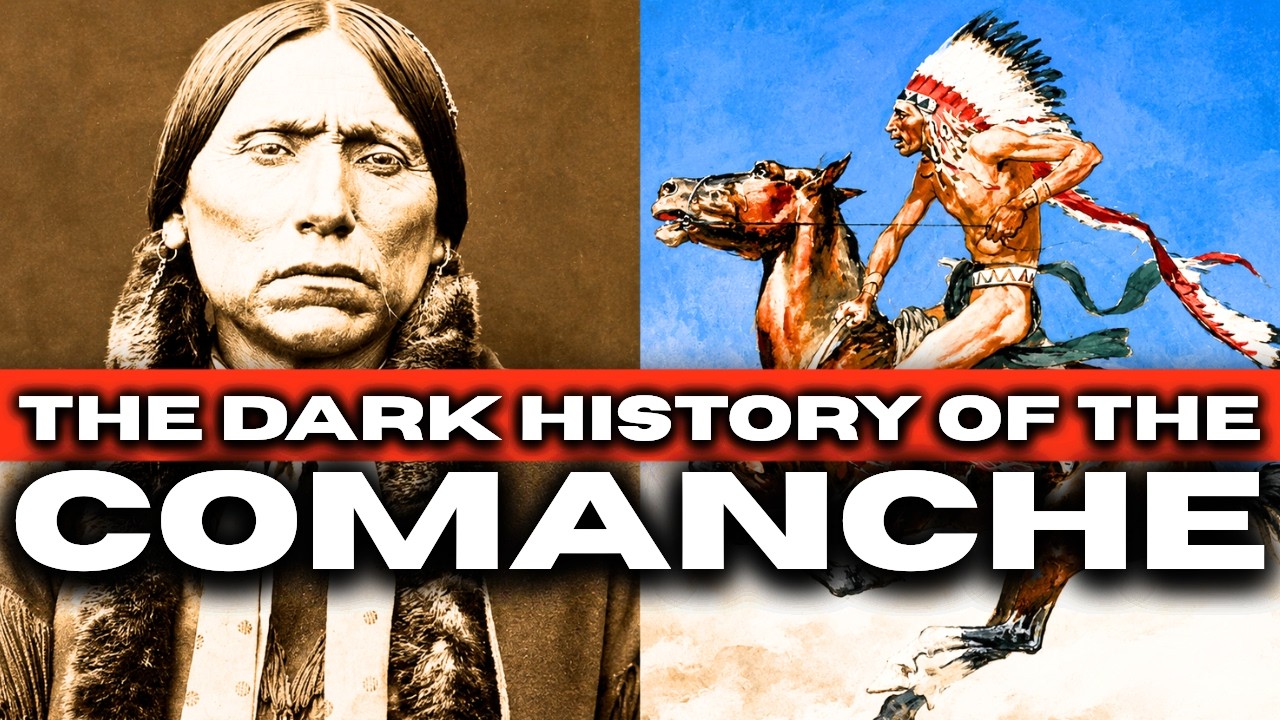
Gregg slumped dead from his horse. The warrior was Quanah Parker, the son of a legendary Comanche chief and a white mother, already known across the plains as one of the fiercest leaders of the Quahadi band. The ambush had begun the night before, when the Comanche had stampeded 70 of the army’s horses and mules from their camp, a camp whose fires had served as a beacon after the newly arrived Colonel Ranald Mackenzie violated a central rule of plains warfare. At dawn, Captain R.
G. Carter and Captain Charles Hiatt had led detachments to inspect the losses, spotted Comanche driving off more horses, and gave chase into Blanco Canyon, falling for a classic bait-and-ambush ruse. Carter later described the sight of dozens of warriors charging up the bluff as like an electric shock, with the blood seeming to congeal. The soldiers managed to form a firing line and scatter the attackers, but not before Quanah killed Private Gregg.
As the Comanche prepared to finish off the remaining soldiers, Mackenzie and his Tonkawa scouts arrived, and Quanah, seeking to protect his women and children, made a rare retreat. Mackenzie pursued the village for days through snow and cold, coming within a mile of the fugitives before deciding an attack would cost too much. He ordered a return to Fort Richardson. On the way back, Tonkawa scouts spotted two Comanche warriors in a ravine.
Mackenzie himself ventured in and took an arrow in the upper thigh. After his scouts killed the warriors, the field surgeon and a lieutenant decapitated the bodies, boiled the heads in cauldrons to preserve the skulls for scientific research, and later invited Carter to lunch, where he found the degloved heads instead of a meal. Mackenzie, in constant pain, returned to Fort Richardson empty-handed but more determined than ever. Three years later, on September 28, 1874, that determination reached its climax.
At 5 a. m. , Mackenzie’s 4th Cavalry descended a nearly vertical embankment into Palo Duro Canyon, where his Tonkawa scouts had located a massive village of Comanche, Kiowa, Cheyenne, and Arapaho. Mackenzie, born to a prominent naval family and a West Point graduate who had been wounded seven times in the Civil War, was known for his unrelenting pursuit.
His right hand was so mangled the Comanche called him Bad Hand. By 7 a. m. , the soldiers were within striking distance, still undetected until dogs began barking.
Mackenzie ordered a head-on charge, and his Tonkawa scouts, long-time enemies of the Comanche, struck terror into the fleeing villagers. By 9 a. m. , the fighting was over.
Roughly 60 defenders lay dead, but most of the Comanche escaped deeper into the canyon under Quanah Parker’s leadership. They escaped on foot. Mackenzie captured their entire herd of more than a thousand horses, far more than his 400 men could feed or take with them. Turning them loose would only let the Comanche recapture them.
Mackenzie issued a command that would haunt his legacy: he ordered over a thousand horses shot. For hours, nearly until sundown, the cavalry herded the animals into side ravines and annihilated them, with the gunfire and horse screams echoing through the canyon. Without their horses, the Comanche’s entire way of life was destroyed. Under Quanah’s leadership, they fled deeper into the canyon, but the brutal winter of 1874–1875 forced many to surrender at Fort Sill.
Quanah Parker led his band of final holdouts in during the summer of 1875. He would adapt to reservation life, becoming a successful businessman and a transitional figure who hosted Geronimo and Teddy Roosevelt at his Oklahoma home, Star House, before his death in 1911. Mackenzie rose to brigadier general by age 42, the youngest man to hold the rank, but his physical and mental decline became increasingly evident. By 1884 he was declared unfit to serve and forced into retirement, placed in an asylum on Staten Island, where he died in 1889 at age 48, his death listed as dementia.
His order to slaughter the horses at Palo Duro Canyon became the most indelible mark on his legacy, viewed by the Comanche as a great tragedy both physical and spiritual. Many claimed the hoofbeats and whinnies of the massacred herd could still be heard on quiet nights.