On November 21, 1934, Justice John Francis Carew ended the most sensational custody battle in American history, awarding 10-year-old Gloria Vanderbilt to her paternal aunt, Gertrude Vanderbilt Whitney, and branding her mother unfit in front of the entire country. But the ruling was even more devastating for the child than the public realized at the time. Alongside the shift in custody, the judge also ordered the removal of Emma Sullivan Kies, the beloved German-born nanny Gloria called Dodo, the only stable adult presence in a chaotic childhood defined by constant movement and loss. The trial, which ran from October 1 to November 21, 1934, in a packed Manhattan courtroom, pitted two vastly different worlds against one another.
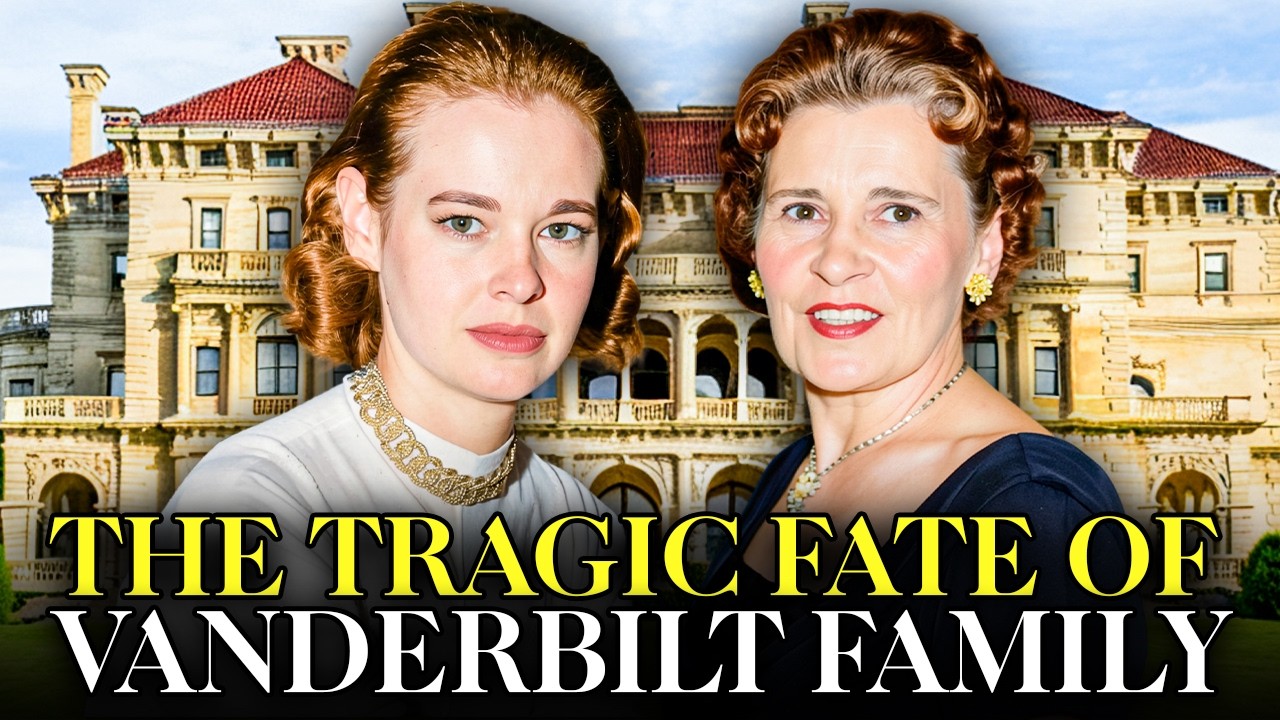
On one side was Gloria Morgan Vanderbilt, the glamorous 30-year-old widow, moving through a world of Parisian salons, European royalty, and late-night parties. On the other was Gertrude, the formidable sculptor and founder of the Whitney Museum of American Art, representing old New York respectability, order, and institutional power. More than 100 reporters packed the gallery daily as the women attacked each other through testimony involving alleged lovers, a disputed same-sex relationship with Lady Milford Haven, and detailed accounts of a mother’s absences and glittering social life. The child’s father, Reginald Claypoole Vanderbilt, had died in 1925 when Gloria was only 18 months old, leaving behind a fractured fortune, enormous debt, and a trust that would become the engine of the family’s destruction.
The estate worth millions was tied up in legal instruments requiring judges and accountants to manage it. Gloria’s mother received an annual allowance from the trust, but when Gertrude informed the court the child was living under her roof in 1932, that income was slashed from $48,000 a year to just $9,000, effectively crippling the young widow’s entire way of life. The fracture began quietly in June 1932, when 8-year-old Gloria had her tonsils removed in New York. Gertrude suggested the girl recuperate at her Long Island estate in Old Westbury, and the family doctor later recommended the child remain there through the school year.
Gloria’s mother agreed from Europe, unaware that she was allowing her daughter to build a daily life centered around another woman’s household. By the time custody was formally contested, Gertrude was able to argue that the child’s stability depended on staying where she had already put down roots. What followed was the weaponization of that very stability. Witnesses described the mother’s expensive lifestyle, her late returns, her evenings out while her daughter slept, and the servants who effectively raised the child.
The French maid Marie Caillot delivered the most damaging accusation, alleging an intimate relationship between Gloria Morgan and Nada Mountbatten, the Marchioness of Milford Haven. The charge was denied, portions of testimony were sealed, and the courtroom was closed for certain sessions. The secrecy only intensified public fascination with the lurid proceedings. Through it all, the 10-year-old at the center of the case was kept close but voiceless.
The press had dubbed her the “poor little rich girl,” a nickname she would never escape. In late October, with the trial at its most intense, Justice Carew decided to question the child privately. The courtroom was cleared, and the adults were sent into the corridor. Behind the closed door, Gloria began to cry, and then to wail.
Her mother stood outside listening, unable to do anything. Decades later, Anderson Cooper would summarize what happened in that room with a painful bluntness: the judge not only took his mother from her mother, but also dismissed the nanny she loved most. After the ruling, Gloria was taken to Old Westbury to live with Gertrude, attending private schools and surrounded by the advantages of old American wealth. But the loss of Dodo carved a hollow into her that no amount of structure could fill.
Gloria Morgan was granted limited visitation on weekends and portions of school holidays, but the relationship between mother and daughter never recovered. The public verdict had given the child a story about her mother that no weekend visit could undo. Gertrude died in 1942, when Gloria was 17. Gloria immediately began living her life on her own terms, starting with an elopement with Pasquale DiCicco, a Hollywood agent ten years her senior.
That marriage ended within four years. At 21, she married conductor Leopold Stokowski, 42 years her senior, with whom she had two sons. That marriage ended too, as did her four-year marriage to film director Sidney Lumet. She found her closest partnership in writer Wyatt Emory Cooper, who gave her two more sons, Carter and Anderson, before dying during open-heart surgery in 1978.
The pattern of loss was relentless. On July 23, 1988, Gloria witnessed her 23-year-old son Carter climb over the wall of her Manhattan penthouse terrace and jump to his death. Gloria was 64 years old. Anderson Cooper, then 21, would later describe the family’s grief as a defining force in his life.
The trial-era cruelty of the “poor little rich girl” label did not diminish with age; it deepened, as the girl it described grew into a woman whose losses became structural rather than incidental. But Gloria did not disappear. In the late 1970s, she built her own fortune by putting her name on a line of designer jeans, becoming one of the most successful branded fashion ventures of the era. It was a pointed response to a childhood in which her value had been measured only through allowances and guardianship papers controlled by others.
She had been treated as a trust asset; she grew up and made herself worth something on her own terms. Then came the moment the entire story had been moving toward. When Gloria finally came into full control of the trust that had fueled the custody war, she made a deliberate decision. She cut off her mother’s annual allowance.
The sum, reported by the press in 1946, was $21,000 a year. Gloria ended it. The coverage was blunt: the daughter had told her mother, in effect, to find work. Contemporary reports noted that Gloria Morgan had resorted to selling her jewelry, including a ring, to support herself.
Gloria Morgan Vanderbilt never recovered from the combination of public shame and financial reduction. She lived with her twin sister, Thelma, in increasingly reduced circumstances, and died of cancer on February 13, 1965, at age 60. Thelma survived her by five years, dying in 1970. The woman who had once moved through European drawing rooms as a glamorous young widow was remembered by the public as the mother who lost.
The story did not stay buried. Barbara Goldsmith’s 1980 book, “Little Gloria… Happy at Last,” reconstructed the case from court transcripts and interviews, and NBC adapted it into an Emmy-nominated miniseries in 1982. In 2016, HBO’s documentary “Nothing Left Unsaid” gave the elderly Gloria a chance to discuss her childhood with her own son as interviewer. Cooper and Katherine Howe later published “Vanderbilt: The Rise and Fall of an American Dynasty” in 2021, placing the custody battle within the family’s long decline from Gilded Age power.
Gloria Vanderbilt was still working near the end of her life, painting and writing and refusing to let the name be the final word. She died on June 17, 2019, at age 95 in her Manhattan home. She had turned a childhood spent as a courtroom exhibit into a long life of reinvention. But the trial never entirely released its hold.
The child who had been marched past reporters and made to answer questions no child should face carried the courtroom inside her for the rest of her life. Her son Anderson Cooper remains the most visible interpreter of that family history, spending much of his professional career making sense of what the Vanderbilt name cost the people who carried it.