In the early spring of 1864, Confederate officers began to speak a name that carried a new kind of dread. For three years, Robert E. Lee had faced a procession of Union generals—McClellan, Burnside, Hooker, Meade—and had found ways to survive them all. But Ulysses S.
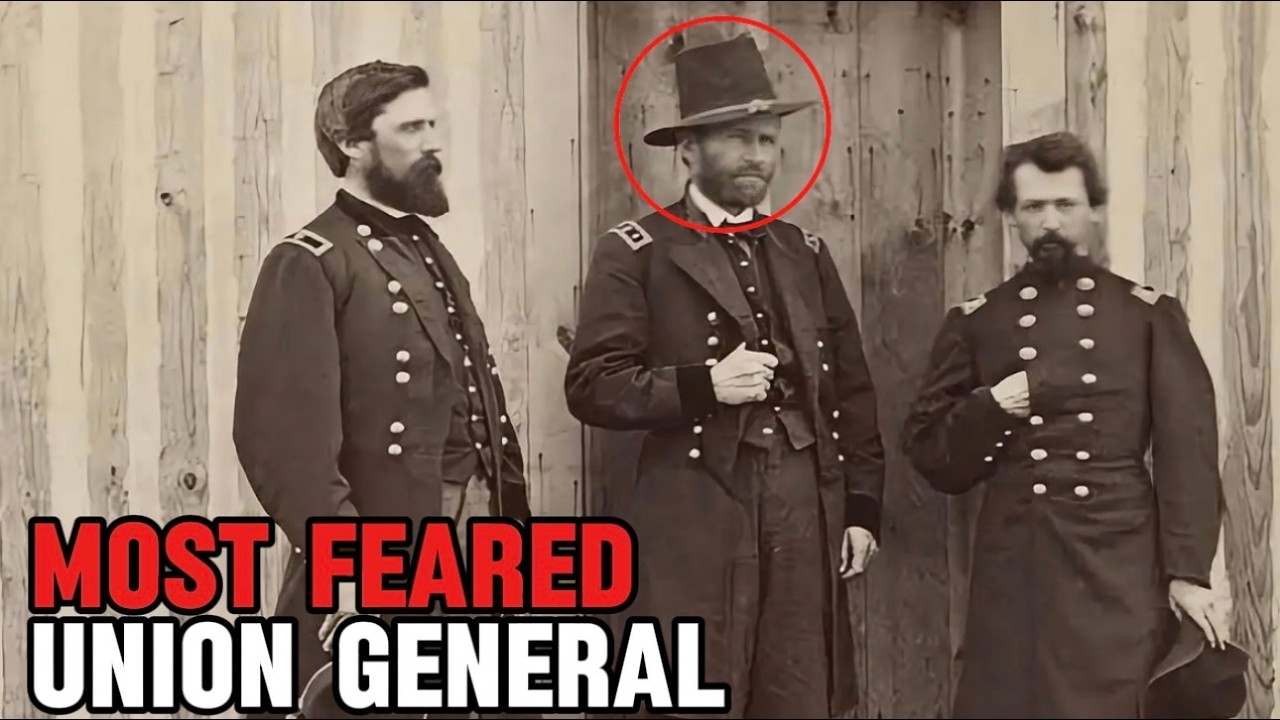
Grant was different. Not more brilliant, not flashier, but something more dangerous. He was willing to fight a kind of war the Confederacy could not survive, and he refused to be the kind of man they had learned to exploit. The origins of that reputation lay far from the great Virginia battlefields, in a dusty corner of Missouri in the summer of 1861.
The war was barely three months old, and Grant was nobody. A forty-year-old former army captain who had resigned his commission years earlier, drifted through a string of failed businesses, and ended up clerking in his father’s leather goods store in Galena, Illinois. He had no wealth, no political connections, no reputation. Just a West Point education and quiet determination.
When volunteers were called for, Grant walked into a recruiting office and was made colonel of the 21st Illinois Infantry. His early assignment sent him into Missouri to hunt Confederate irregulars. He later wrote about one march toward a rebel force under a Colonel Thomas Harris, near the town of Florida, twenty-five miles from his position. As his regiment approached a hill overlooking the enemy camp, his heart pounded harder with every step.
He wrote that he would have given anything to turn back to Illinois, but he lacked the moral courage to stop. When his men finally crested the hill, the camp was empty. Harris had slipped away days earlier. In that moment, something fundamental changed.
Grant wrote that it struck him at once that Harris had been just as afraid of him as he had been of Harris. He never forgot the lesson. From that day until the end of the war, he never felt that paralyzing fear again. He understood that fear was universal, and the side that refused to let it dictate action would be the side that won.
The lesson took full shape in February 1862 at Fort Donelson on the Cumberland River in Tennessee. Grant led a combined army-navy force against the fort, a key defensive position guarding the heart of the Confederacy. Trapped and outgunned, Confederate commander General Simon Buckner, an old friend from Grant’s West Point years, sent a note asking for terms. Grant’s reply was blunt: no terms except unconditional and immediate surrender.
The North crowned him “Unconditional Surrender Grant. ” Twelve thousand Confederate soldiers laid down their arms, the largest surrender in American history to that point. For the first time, the South sensed that this general did not play by the old rules. Victory came at cost.
In April 1862, Grant’s army was caught flat-footed at Shiloh Church in Tennessee. Confederate General Albert Sidney Johnston launched a savage dawn attack, driving Union troops almost to the Tennessee River. Thousands fell on the first day, and Grant narrowly escaped capture. Critics in Washington howled for his head, calling him reckless and accusing him of drinking again.
Grant ignored the noise. Through the night, he repositioned his lines, brought up reinforcements under General Don Carlos Buell, and counterattacked at first light. By the end of the second day, a near defeat had become a decisive victory. Shiloh was the bloodiest battle the continent had ever seen, with over 23,000 casualties.
Grant learned something else. The war would not be won in one glorious engagement. It would be a grinding struggle of will against will. By the summer of 1862, Grant had set his sights on Vicksburg, Mississippi.
Perched on high bluffs above the Mississippi River, the city controlled the entire waterway. If the Union took it, the Confederacy would be split in two. Previous attempts had failed miserably. It seemed impregnable.
What Grant did next stunned everyone. Instead of a direct assault or a slow approach from the north, he marched his army south through Louisiana swamps, crossed the river below Vicksburg under Confederate guns, and cut loose from his supply lines. For seventeen days in May 1863, Grant’s army lived off the land, marching over two hundred miles, fighting and winning five separate battles against two Confederate armies. They captured Jackson, the state capital, then turned west to trap Vicksburg.
On May 18th, the siege began. For forty-seven days, his men dug trenches, fired artillery, and slowly squeezed the life out of the city. Civilians huddled in caves; soldiers ate mule meat and rats. On July 4th, 1863, the same day Lee retreated from Gettysburg, Vicksburg surrendered.
Thirty thousand Confederate troops laid down their arms. The Mississippi River now belonged to the Union from source to sea. Lincoln called it the most important event of the war. Confederate General Joseph E.
Johnston, who had tried and failed to relieve the city, later described Grant’s strategy with grim simplicity: hammer continuously with superior numbers until the enemy yields. In the East, meanwhile, the Army of the Potomac had stumbled from one bloody stalemate to another. McClellan hesitated with the largest army on the continent. Hooker was outmaneuvered at Chancellorsville.
Meade let Lee slip away after Gettysburg. Lincoln was desperate for a general who would fight. In March 1864, he found one. Grant was promoted to lieutenant general, a rank previously held only by George Washington, and placed in command of all Union armies.
For the first time, the North had one strategist directing the entire war effort. His orders were clear: destroy the Confederate armies, not just capture cities, through relentless, coordinated pressure on every front. Confederate officers began trading worried letters. General Richard Ewell, who had known Grant at West Point and in Mexico, said plainly that there was one West Pointer in Missouri, little known, whom he hoped the Northern people would not find out: Sam Grant.
He feared Grant more than any officer he had yet heard of. Grant was not a man of genius, Ewell said, but he was clear-headed, quick, and daring. James Longstreet, Lee’s old warhorse and Grant’s former friend and distant relative by marriage, warned Lee’s staff that Grant would fight them every day and every hour until the end of the war. Longstreet knew Grant.
He knew the quiet resolve, the refusal to quit. Grant proved them right almost immediately. In May 1864, he crossed the Rapidan River with over 100,000 men and slammed straight into Lee’s Army of Northern Virginia. The Wilderness, Spotsylvania, North Anna, Cold Harbor.
Battle after battle, week after bloody week. The casualty count was horrific: over 50,000 Union soldiers in six weeks. Northern newspapers screamed “Butcher Grant. ” Politicians called for his removal.
Even some of his own officers wondered if he had lost his mind. Grant never blinked. After Cold Harbor, where thousands fell in a single morning, he did not retreat across the James River as previous commanders would have. He slipped his army across under cover of darkness and marched south toward Petersburg, threatening Richmond from below and cutting Lee’s supply lines.
Lee understood what he was facing. This was not the cautious dance he had played with McClellan or Hooker. Grant understood the mathematics of the war. The North could replace its losses.
The South could not. Every day he kept the pressure on, every mile he advanced, every Confederate killed or captured, brought the Confederacy closer to collapse. Lee’s army was being ground down in a relentless campaign that left no time to rest, no time to regroup. Grant coordinated with Sherman in Georgia, with Sheridan in the Shenandoah, with naval forces on the coast.
The entire Union war machine was pulling in the same direction for the first time. By the winter of 1864–65, Lee’s army was starving in the trenches around Petersburg. In April 1865, when Lee attempted one last desperate breakout, Grant’s cavalry and infantry closed the net at Appomattox Courthouse. On April 9th, Lee rode out under a flag of truce.
The two men, old acquaintances from the Mexican War, exchanged quiet words in a small parlor. Lee surrendered the Army of Northern Virginia. The war in the East was effectively over. Years later, people would ask why Confederate generals had feared Grant so much.
It was not because he was smarter than Lee in every tactical maneuver. Lee was a defensive genius. It was not because Grant never made mistakes. He did.
But Grant understood something the others did not. The war was no longer about capturing this city or holding that line. It was about breaking the enemy’s will to fight. It was about logistics, supply lines, railroads, factories, and the cold arithmetic of manpower.
It was about refusing to let the enemy rest. He applied total war, not out of cruelty, but out of necessity. He coordinated armies across a thousand miles so the Confederacy could never shift forces to meet a single threat. And he never let fear, public opinion, or political pressure stop him from pressing the fight.
The Confederates had faced brave men and clever men. They had never faced a man who simply would not stop. A man who had learned, on that empty Missouri hill in 1861, that the enemy was just as afraid as he was, and who had decided from that moment on to make the fear work in his favor. That was Ulysses S.
Grant. Not the hero of romantic legend, not the butcher of newspaper headlines. Just a clear-eyed, stubborn, relentless commander who understood that victory belonged to the side willing to endure the longest.
And in the end, the Confederacy could not endure him.