Amy Wiedner was sixteen years old, a junior at Howe High School on the south side of Indianapolis, when she was raped and murdered in her own home on November 13, 1989. It took twenty-three years for her killer to be identified, and eleven more for the case to fully close through a guilty plea. The man who finally confessed had been in and out of her family’s house for years. He sat with them at the funeral.
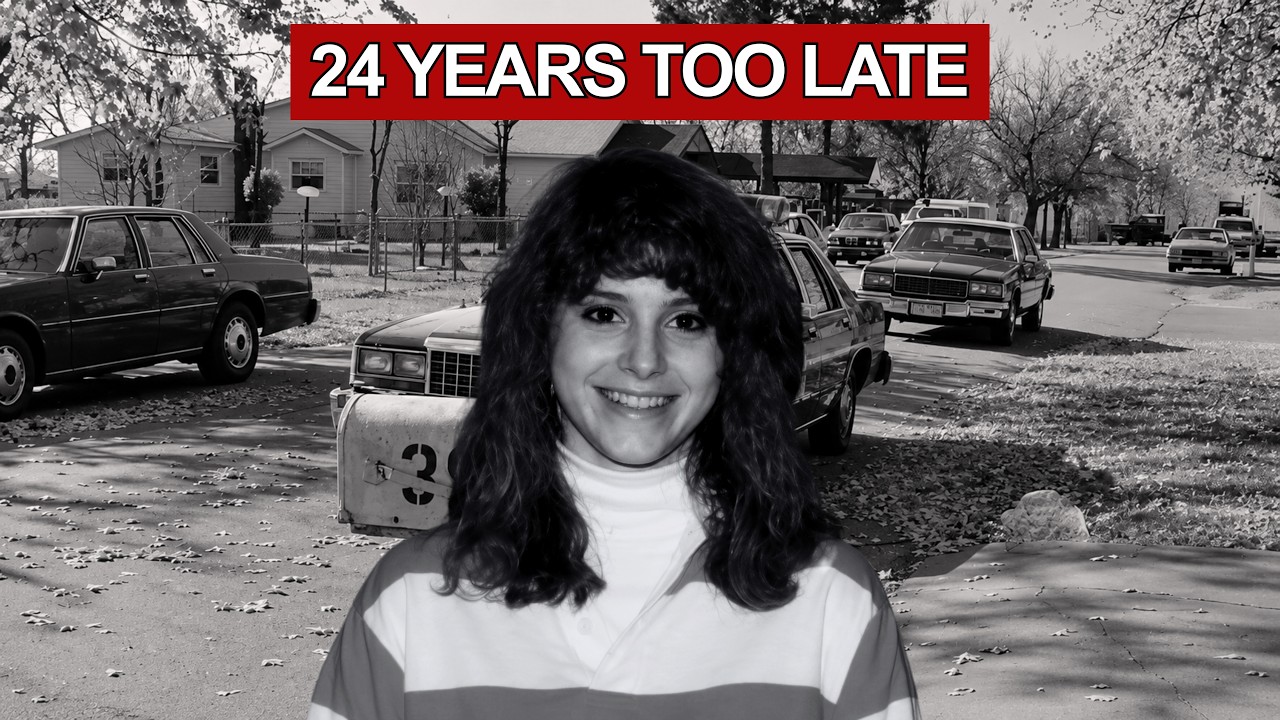
And his name had sat in police files for nearly a decade before anyone acted on it. Amy was not an ordinary teenager. She was a straight-A student, a member of the French club and math club, a clarinet player in the school band, and a wrestling cheerleader. Her mother Gloria described her as the kind of daughter who understood a situation without needing it explained.
Gloria worked full-time, raising four children alone on the south side of Indianapolis. When she left for work, Amy took over. Dinner, the younger children, the housework, it all got done without anyone asking. In 1987, at age fourteen, Amy became pregnant.
For five and a half months, she hid the pregnancy from everyone, wearing loose clothing and attending classes as if nothing had changed. No one noticed, not her mother, not her teachers, not her friends. Finally, she went to her mother and said what she had been too afraid to say. On October 25, 1987, Amy gave birth to a daughter named Emilie.
Six days later, she was back at school, caught up on her missed work, and kept going. Her grades did not drop; they improved. Gloria later adopted Emilie, making her both granddaughter and daughter. On the morning of November 13, 1989, a Monday, Amy stayed home from school with a sore throat.
Gloria checked on her before leaving for work and asked if she wanted Emilie taken to a babysitter. Amy said no, leave her here with me. So Gloria drove off, and at around 9:30 a. m.
she began calling the house. There was no answer. She called again and got nothing. She asked a neighbor to go knock on the door.
When the neighbor called back, something in her voice told Gloria everything before she said a word. Gloria drove home, opened the front door, and entered a house that was unaccountably quiet. At the bottom of the stairs stood Emilie, two years old, not crying, not calling out, just standing and looking at her grandmother with eyes that had already seen something no child should ever witness. Gloria carried the child to safety, then went upstairs.
On the wall of Amy’s bedroom, pressed clearly in Amy’s own blood, was a full, clean palm print. The officers cut out the entire section of drywall and kept it as evidence. It would sit in storage for the next twenty-two years. The bedroom told the story of a violent struggle.
Amy had sustained twenty-nine separate injuries, including cuts to her head, evidence of sexual assault, and signs of strangulation. The cause of death was bleeding to death alone in her bedroom while her two-year-old daughter moved around in the floor below. Amy had not gone quietly. She had fought.
The killer had been in the house with her daughter. He had seen the child, heard her, or at least had the chance to. He chose to leave her alive. Gloria would carry that question for the rest of her life.
Not just who, but why. The scene told investigators several things quickly. The back door was unlocked, common in that street and that neighborhood. A valuable stereo component was missing from the room of Amy’s older brother John Paul, known as J.
P. Money Amy had been collecting for the school band uniform fund was gone from the kitchen. This pointed to someone who had been inside the house before, someone who knew the layout, knew where things were kept, and knew the Monday morning routine when Gloria left for work. He had chosen a school day because the house was supposed to be empty.
He was wrong about that, and Amy paid for his mistake with her life. Investigators worked through the obvious names. Tony Abercrombie, identified as Emilie’s biological father, was questioned and cleared by multiple witnesses. J.
P. was investigated and cleared. Then there was Troy Jackson, who lived directly behind the Wiedeners and was known for knowledge of the specific stereo equipment stolen. He left work for nearly an hour on the morning of the murder and returned breathless.
In the days that followed, he reportedly mentioned blood on the walls, a detail not released to the public. His hands showed no bruising consistent with a fight. Hair samples did not match. He passed a polygraph.
Every lead around him went nowhere, and the investigation stalled. At Amy’s funeral, investigators stood in the back, watching. They documented faces, collected names, and studied who came. They took the guest register, with the handwriting of everyone who attended.
The killer was in that room. Maybe he said he was sorry. He signed his name in that book. The book went into the file, then into a box, onto a shelf, and waited.
The case went cold, as cases do. In 2002, Lieutenant Roger Spurgeon took over the cold case unit for the Indianapolis police, with about 800 unsolved cases on his desk. Amy Wiedener’s was one file among 800. A man who lived across the street called the tip line, claiming Amy visited him in dreams and that he was in love with her.
His DNA was checked and did not match. In 2003, Spurgeon’s team re-interviewed Tony Abercrombie as part of a fresh look at the case. He gave them a list of names of people who knew the family, knew the house, and knew the rhythm of life in that home. One name on that list was Rodney Dink, a friend of J.
P. ‘s, a regular presence who had come through that back door so many times no one thought twice about it. The name went into the file, into a 2003 interview record, and stayed there. Spurgeon later said candidly that Dink was one of dozens of names that surfaced during the re-investigation, and that with one person working 800 open cases, some threads simply were not followed as they should have been.
In 2003, nine years before the case was finally solved, the killer’s name was written in the police file, available to anyone who opened the folder and read deeply enough. No one did. In 2011, a friend of Amy’s created a memorial Facebook page. A cold case detective assigned to the file wanted to look at the page but did not know how to print from Facebook.
He walked across the hall and asked the unofficial tech expert in the office, Detective Sergeant William Carter. Carter had spent years in the city’s nuisance unit, handling quality-of-life violations, hoarding, underage drinking, noise complaints. He had never worked a murder case. He had no official connection to Amy Wiedner.
His only job was to print out a page. He printed it. Then he looked at the photo at the top. Amy Wiedner, sixteen, holding Emilie, smiling.
Carter had grown up near that neighborhood. Amy could have been his age. He picked up the sixty-five-page case file. No one asked him to.
No supervisor assigned him. He took the file home, sat at his own desk, and started at the beginning. The first problem emerged immediately. The entire 1989 investigation was on paper, printed and handwritten, nothing searchable, nothing cross-referenced.
Carter digitized everything, every name, every address, every neighbor canvassed that November morning. What became clear almost at once was that dozens of J. P. ‘s friends, people who spent regular time in that house, had never been formally interviewed, never provided DNA samples, never been cleared or eliminated.
Not because they were suspects, but simply because no one had reached out to them in 1989. Twenty-two years of foundational work left undone. Carter began making calls. One went to a woman named Joy Haney, who had lived directly across the street in 1989 and moved away years before.
Carter tracked her down using the original census records. She gave him names, most of them already in the file. Then, at the end of the conversation, she mentioned another name, Rodney Dink. Not an accusation, just someone who was around and talked to her.
He was one of J. P. ‘s friends. Carter wrote the name down and felt something shift, because the name was already in the file.
It had been sitting in Tony Abercrombie’s 2003 statement for nine years. Two separate sources, no prompting, same name, no connection between them, and no one had ever called him. Carter ran Dink’s information. He was forty years old, divorced, had a son, lived with his mother on the east side of Indianapolis, and worked at a local auto body shop.
No arrest warrant, no reason on paper for anyone to have picked him out. Carter drove to the house. Dink was not home. His mother answered the door.
Carter left his card, routine questions about an old case, no pressure. Dink called back the same day, calm, cooperative, said of course he would sit and talk. They set a time and date. Carter arrived on time.
Rodney Dink was gone. Not just out, but disappeared. His mother had not seen him in days. He quit his job.
He emptied his bank account. He abandoned everything without telling anyone where he was going. Carter pulled Dink’s full arrest record. A 1991 assault charge, a 1997 theft charge.
Both arrests had produced fingerprints. Carter took the 1997 print to the latent print section with one specific goal, to eliminate Dink and move on. Standard procedure, crossing another name off the list. Later that day, forensics called back.
The bloody palm print from Amy Wiedner’s bedroom wall, cut from the drywall in November 1989 and kept in storage for twenty-two years, matched Rodney Dink’s 1997 arrest print. A complete match. No ambiguity. Carter called Gloria.
He told her they had identified a suspect, someone connected to the family. He did not give her the name over the phone. Gloria’s response was not relief. She asked one question.
Is it someone we know? The silence that followed was its own answer. Dink had not gone far. He had rented a car and was still somewhere in Indianapolis.
But a rental car in 2012 meant OnStar, the built-in vehicle tracking system. Police used it to locate him. When officers found him leaving a friend’s house on the east side, he looked up and saw them coming. Before anyone said a word, his first words were, I didn’t do it.
No confusion, no questions, just denial. He pulled out a knife and cut his wrist before officers could reach him. He was taken to Wishard Hospital and restrained to a hospital bed. The interrogations began there.
Over two days, Dink talked on camera. His story shifted in ways the investigators carefully noted. He acknowledged watching the Wiedener house in the weeks before the crime. He knew about the band money Amy was collecting.
He knew about J. P. ‘s stereo equipment. He deliberately chose a Monday morning, a school day, with Gloria at work.
The house was supposed to be empty. He said he checked in at school first, then slipped out between classes, walked to the house, and came in through the unlocked back door. He was in J. P.
‘s room stealing the stereo when Amy came around the corner. He told investigators, I didn’t know she was there. At different points, he introduced a second person into his account, someone he called Bucky or Buck or maybe not Buck. He was not sure.
The details changed with each telling. Eventually Dink stopped composing the story. He looked across the table and quietly asked, Can I just say it was me? Can I just say I did everything?
J. P. Wiedener, the brother whose room Rodney was stealing from when Amy appeared, the boy who considered Rodney a friend, received the news in silence. Then he said the thing that would define the emotional character of this entire case.
He was at the funeral with us. How do you commit this murder, and two days later sit with us in mourning? That is exactly what Rodney Dink did. He killed Amy on Monday.
He walked into the funeral home the same week. He stood among the people whose lives he had just destroyed. He told them he was sorry. He signed his name in the guest register.
That register went into the file, into the box, onto the shelf, and remained there for twenty-two years, next to his name from the 2003 police interview. Charges were filed in July 2012. In June 2013, shortly before trial, Rodney Dink pleaded guilty to the murder and rape of Amy Wiedner. He was sentenced to sixty-five years in prison, not eligible for release until his seventies.
He was eighteen years old when he killed her. During the investigation following Dink’s arrest, investigators learned something about his personal history no one had known. His son, Dylan Dink, was already imprisoned, serving a twenty-year sentence for killing his mother, Mary McNeary, Rodney’s ex-wife. Dylan was sixteen at the time of that crime, one year younger than Rodney had been when he killed Amy.
A father and son, both convicted killers, both in the prison system at the same time for crimes committed decades apart. Gloria spent weeks preparing herself for anger. She braced for the rage she assumed would flood through her the first time she stood in the same room with the man who took her daughter. When they brought Rodney Dink into the courtroom, she felt something she had not expected.
She described it later, standing quietly outside the court. She said, I thought I would see a monster, but the person I saw was Rodney. That sentence captured the entire case. He was not a stranger who appeared from somewhere unknown and vanished back into it.
He was Rodney, familiar and present, the kind of person you let in through the back door without thinking twice, because thinking twice about someone you already know feels like an insult. That familiarity was the access point. Not the unlocked door, but the trust. Emilie Wiedner, the little girl who stood at the bottom of the stairs at age two and looked at her grandmother, grew up carrying that history.
Gloria adopted her legally not long after Amy’s death. Emilie graduated from Purdue University with honors. Judy George, who taught French to both Amy and Emilie, told her at graduation that she knew Amy would have been proud. Emilie moved to California the year after graduation, saying she could not fully become who she was supposed to be while still in Indiana, that the place, the date, and the unanswered question that had shaped her entire life made it impossible to move forward in that same space.
Eventually Gloria changed the layout of Amy’s bedroom. The room where Amy died became a place where grandchildren slept when they visited. Only one thing remained, a hat hanging on the door. Everything else was replaced.
Gloria said, Amy is not in that room anymore. Amy is inside me. Detective Sergeant Bill Carter, the nuisance officer who was supposed to print a Facebook page and return to his desk, still maintains the Find a Grave memorial page for Amy Wiedner. He created it himself.
He updates it. A man with no official assignment to the case decided, on his own time, to care about it anyway. Because of one decision made on a quiet afternoon in 2011, a family received the answer they had waited twenty-two years to hear.