Most people remember Princess Margaret as the golden girl of the British monarchy—the beautiful younger sister of the Queen, once the most photographed woman in the country. But behind the glitter stood a woman who was given almost everything life could offer, and who spent the next forty years letting it slip away piece by piece. She was born during a storm at Glamis Castle in Scotland on August 21, 1930, the second daughter of Prince Albert, Duke of York, and Elizabeth Bowes Lyon. She was the first member of the British royal family born on Scottish soil in more than 300 years.
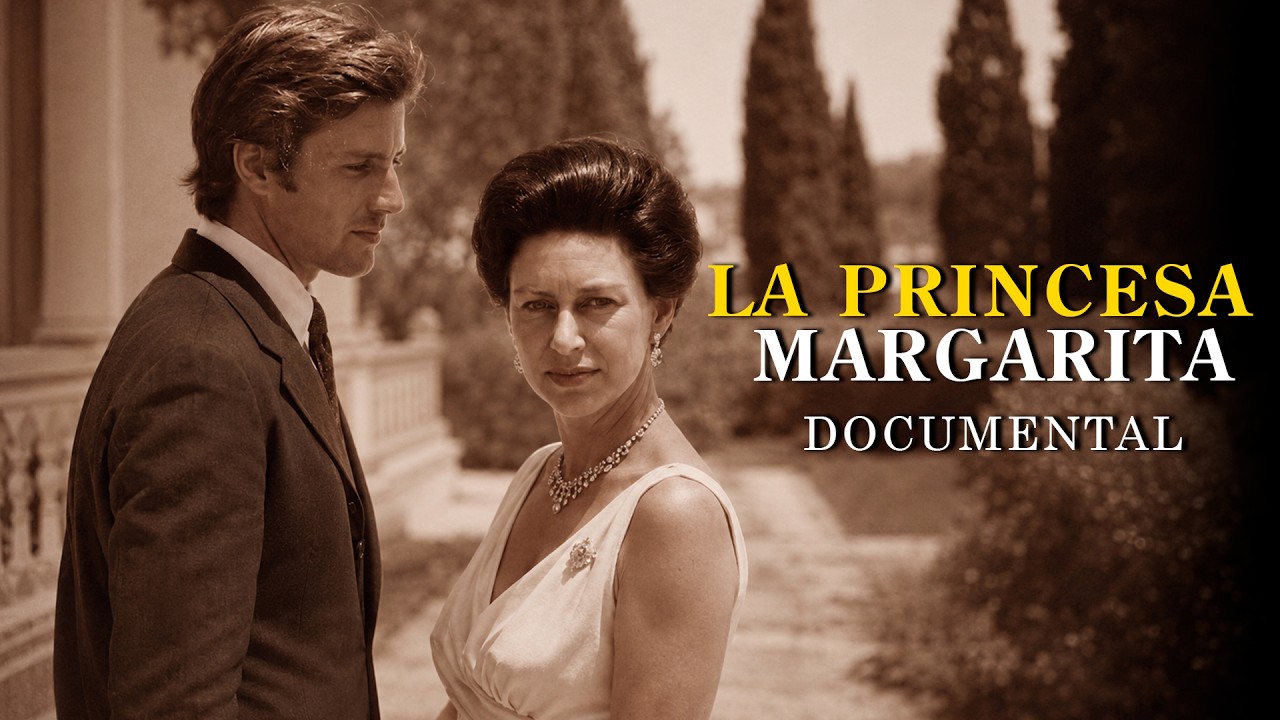
Her sister Elizabeth, born four years earlier, was serious and dutiful. Margaret was the lively one, the mimic, the performer—able to make everyone laugh and soften their father’s temper. At birth, Margaret was fourth in line to the throne. Her uncle was the heir, and her father was merely the second son—the spare that history was not expected to need.
The family lived a comfortable, orderly life at 145 Piccadilly and Royal Lodge in Windsor Great Park. That life lasted six years. In January 1936, King George V died, and Margaret’s uncle ascended the throne as King Edward VIII. He was handsome, modern, and deeply in love with Wallis Simpson, an American divorcee the establishment could not accept.
In December 1936, he abdicated to marry her—the first British monarch to do so. The crown fell without warning onto the shoulders of Margaret’s shy, stammering father, who became King George VI. In a single evening, the quiet York household became the center of the monarchy. Elizabeth, aged ten, became heir to the throne, and Margaret, aged six, rose from fourth to second in line.
She reportedly asked her sister what this meant for her. It was the question of her entire life, asked at age six and never satisfactorily answered. The family moved into Buckingham Palace, which the girls found more like a museum than a home. During World War II, the princesses were sent to Windsor Castle, where they spent the war years performing small pantomimes to keep up morale.
The roles were already set: Elizabeth was the one who would inherit the earth, and Margaret was the one who would inherit the spotlight—and little else. By her twenty-first birthday, Margaret was the most photographed woman in Britain, yet she was allowed to do almost nothing. Post-war Britain was gray and exhausted, and Margaret provided the sparkle the nation craved. She was small, with a porcelain complexion and vivid blue eyes, dressed by Norman Hartnell.
She sang, played the piano well enough to silence a room, and had a wit that could cut or charm. She led a dazzling social circle the press called the “Margaret Set”—young aristocrats and actors frequenting the chic spots of London. She smoked in public through a long cigarette holder that became part of her image. She danced until dawn and stayed out later than any royal woman before her.
When she toured the Caribbean in the mid-1950s, local musicians composed calypso songs in her honor. In another family, her talents might have led to a career on stage. Instead, they found outlets only in drawing rooms and nightclubs. In 1947, Elizabeth married Prince Philip and began her slow, serious training to become queen.
She had a husband, a role, and a purpose. Margaret had applause, clothes, and endless empty hours. The courtiers watched her nightclub habits with disapproval, seeing her freedom as a threat to the dignity they were meant to protect. What Margaret wanted most was to love and be loved on her own terms.
In that emptiness, quietly, a man entered her life—a man sixteen years older, who worked for her father and was married to someone else. His name was Peter Townsend. Townsend was a Royal Air Force officer of the highest caliber, a fighter pilot in the Battle of Britain who had faced German attacks in the summer of 1940. He was tall, calm, handsome, and kind.
In 1944, he joined the royal household as equerry to King George VI. He was, by all accounts, a genuinely good man—and, when he entered Margaret’s life, a married man with two small children. Margaret was fourteen when he first came to court; he was thirty. During the long royal tour of South Africa in 1947, when Margaret was sixteen, a bond formed between them.
Townsend was steady where the young men of the Margaret Set were superficial, and he treated her as a person rather than a trophy. His own marriage was crumbling under the pressure of royal service. When King George VI died in February 1952, Townsend was one of the few people who shared Margaret’s private world of grief. The princess and the quiet pilot were united by a loss no one else could fully understand.
What had been affection deepened into something neither could any longer deny. He proposed, and she accepted. In June 1953, at the coronation of Queen Elizabeth II in Westminster Abbey, Margaret performed a small, intimate act. She reached out and removed a piece of lint from Townsend’s uniform.
Photographers saw it, and within days, the story the palace had worked hard to keep secret was on front pages around the world: the Queen’s sister was in love with a divorced commoner sixteen years her senior. The reaction was immediate and cold. The establishment moved quickly to contain the crisis. Townsend was removed from his post and sent to Brussels as air attaché—a banishment disguised as a routine transfer.
The decision came from the highest levels, including the Queen’s private secretary Sir Alan Lascelles, who considered the relationship a disaster for the monarchy. Prime Minister Winston Churchill’s government spoke with one voice: the princess must wait, and the pilot must go. Behind it all was the memory of the abdication. Less than twenty years earlier, Margaret’s uncle had thrown away his crown for love of a divorced woman.
The establishment was terrified of a second scandal of the same kind. Under the Royal Marriages Act of 1772, Margaret could not marry without the sovereign’s consent until she turned twenty-five. The government advised waiting until then. So they waited, kept apart for two years.
Townsend stayed in Brussels; Margaret continued her public duties, smiling at cameras, while the whole country followed her heartbreak like a serial drama. She was the most watched woman in the world—not for her sparkle, but for her longing. She had committed no fault. She had fallen in love with a good man, and for that, she was managed, postponed, and scrutinized by the most powerful institutions in the land.
August 21, 1955 finally came. Margaret turned twenty-five and was, in theory, free to marry without the Queen’s consent. Townsend returned from Brussels, and the country held its breath, convinced the fairy tale would finally have its happy ending. But the trap was disguised as an open door.
The law contained a second part. At twenty-five, Margaret no longer needed the Queen’s personal consent, but Parliament and the Commonwealth parliaments could object. The government made brutally clear what would happen if she proceeded. To marry a divorced man against the teachings of the Church of which her sister was head, Margaret would have to renounce her rights to the throne, give up her royal title and official status, likely leave the country, and lose her income.
She received £6,000 a year from the civil list. Parliament had also allocated an additional £15,000 a year—payable only in the event of what the agreement euphemistically called a “suitable marriage. ” Marrying a divorced pilot would not be considered suitable. She would lose the £15,000 and be stripped of the rest, left to live on a retired group captain’s modest pension.
A woman who had never bought her own groceries or paid rent was now being asked to give up the throne, her title, her homeland, and her wealth all at once for love. The Church stood firmly behind the government. Archbishop of Canterbury Geoffrey Fisher insisted that marriage was indissoluble and that a divorced person could not remarry while the first spouse still lived. Even Prime Minister Anthony Eden, himself a divorced and remarried man, could not or would not clear the path.
For weeks that autumn, Margaret suffered terribly. She met with Townsend again; they discussed the impossible situation over and over. Journalists camped outside her door. Courtiers pressed her for the response they needed.
Slowly, painfully, the golden girl realized the truth: she was not free, and the price set by the crown was one she could not pay. On October 31, 1955, Margaret issued a public statement. She announced she had decided not to marry Group Captain Peter Townsend. She wrote that she was “mindful of the Church’s teaching that Christian marriage is indissoluble, and conscious of my duty to the Commonwealth, I have decided to put these considerations before any others.
” She was twenty-five years old. In those measured, dignified words, she surrendered the man she loved to the institution that had shaped her. The nation praised her sacrifice. The press celebrated her sense of duty and devotion to church and crown.
Townsend returned to Brussels, and in 1959 married a young Belgian woman named Marie Jamagne—who was, by an uncanny coincidence, about sixteen years younger than him and reportedly bore a striking resemblance to the princess he had lost. Margaret learned of his engagement shortly before she accepted a proposal of her own. The lesson she drew from all of it was not the noble one the newspapers sang about. It was a buried, unspoken lesson: duty runs in only one direction—it takes everything and gives nothing.
Something in her hardened, and something in her broke. The golden girl who had obeyed, who had sacrificed love for family, would spend the rest of her life, in one way or another, making the institution pay in silence. Five years after giving up the man she loved, Margaret married a man she barely knew in front of 300 million people. His name was Antony Armstrong-Jones.
He was a photographer—not the velvet-glove type the palace was used to, but a clever, ambitious, unconventional young man who moved fluidly through the worlds of art, fashion, and theater. He was charming, sharp, and just dangerous enough to be interesting. The romance was fast and secret. Margaret met him at a dinner party in the late 1950s.
They slipped away from public view entirely, meeting at his studio by the river in an unfashionable part of London. In the autumn of 1959, just weeks after Peter Townsend wrote to her announcing his engagement, Margaret accepted Armstrong-Jones’s proposal. Those who knew her wondered how much of that acceptance was love and how much was wound. The wedding was unprecedented.
Held at Westminster Abbey on May 6, 1960, it was the first royal wedding broadcast live on television. Around 300 million people watched worldwide. Margaret wore a white silk organza dress designed by Norman Hartnell, and on her head she wore the Poltimore tiara—a great expanse of diamonds she had bought herself at public auction. It was not a family heirloom, but a crown she had chosen and paid for with her own money, as if to say this, at least, was hers.
For a time, the marriage appeared brilliantly successful. Armstrong-Jones was made Earl of Snowdon in 1961, and Margaret became Countess of Snowdon. They settled into a large apartment in Kensington Palace, Apartment 1A, renovated at public expense. They mixed with film stars, photographers, and artists, hosting clever, late, noisy parties.
For a few years, the Snowdons were the living image of modern grandeur. Their honeymoon set the tone. The couple sailed for six weeks in the Caribbean on the royal yacht Britannia. On that voyage, Margaret first looked out across the water toward the small island of Mustique, where a friend had promised her a plot of land.
Two children followed: David in November 1961, and Sarah in May 1964. Margaret adored them and was, by the accounts of those who knew her, a warmer and more devoted mother than her position required. But the marriage was built on a wound, and the wound never healed. Margaret married partly to prove she could still be loved; Armstrong-Jones married a princess partly for the glamour it conferred.
Two people marrying for those reasons set their feet on quicksand. Both were quick-witted, proud, sharp-tongued, and easily bored. Both wanted to be the most interesting person in the room. Before long, both would go looking elsewhere for what they could not find in each other.
By the mid-1960s, the early glamour had faded, and the two restless, sharp-edged people underneath began to grate on each other. Snowdon, a man of immense energy and ambition, threw himself into his photography and projects, leaving Margaret alone in the palace for long stretches. Margaret, who had no real work, followed the schedule of a woman with nothing to fill her days—waking late, drinking through the afternoon, expecting her husband to dance to a princess’s tune. He did not.
What followed was not a quiet drifting apart but a war. Both took lovers, and neither made much effort to hide it. The documented affairs were fewer and sadder than the legend. There was a wine producer from Bordeaux named Anthony Barton, godfather to Margaret’s daughter.
There was Robin Douglas-Home, a nightclub pianist and nephew of a former prime minister, whose relationship with Margaret was brief—and who took his own life about eighteen months after it ended. Margaret was not the cause of his death, but the tragedy cast a long shadow. The press also linked her to figures like Mick Jagger, Peter Sellers, and David Niven—almost none of it ever proven, most of it ordinary gossip. But the rumors served their purpose, feeding a growing public image of Margaret as a woman of appetites and whims.
That image would cost her dearly when the mood of the country turned against her. Snowdon, by many accounts, developed a talent for wounding his wife secretly. He reportedly left her small notes to find around the apartment—lists of the things he hated about her, messages tucked between the pages of a book or left in a drawer where only she would see them. He would insult her in front of guests with a cutting remark, then smile as if nothing had happened.
Margaret repaid him in kind, wielding her royal rank as a weapon against the man who had once made her feel free. The drinking grew heavier. Margaret had always enjoyed a cigarette and a whisky, but the habit now hardened into a crutch. She smoked without stopping—up to sixty cigarettes a day by some accounts—and drank through long empty afternoons and longer nights.
Her famous gift for fun curdled into an unpredictable bitterness, warm one moment, corrosive the next. Her friends learned to read her moods with caution. The children grew up inside a home where their parents waged a slow, elegant, poisonous war. Margaret loved her children fiercely and gave them real warmth and fun, but they also grew up watching a marriage die centimeter by centimeter, learning early that public image and private truth are two very different things.
By the early 1970s, the marriage was over in every way but name. Margaret was now in her forties—deprived of the love she craved twice, once by the Church and once by her husband’s choices—and lonelier than ever. She needed a place to escape, a place where cameras and courtiers could not reach her. She had exactly that place, waiting thousands of miles away.
The island was called Mustique, in the Grenadines. In the late 1950s, it had been bought on a whim by an eccentric, charming aristocrat named Colin Tennant, later Lord Glenconner, one of Margaret’s oldest friends. He paid £45,000 for the entire island—a few hundred acres of undeveloped land with no roads, no harbor, and no electricity—and dreamed of turning it into a private paradise for the elite. As a wedding gift in 1960, Tennant gave Margaret a plot of land: ten acres on a rocky promontory at the southern end of the island.
She built a house there, named Les Jolies Eaux—”the beautiful waters. ” Designed by Oliver Messel, the theater designer who was also her husband’s uncle, it was completed in 1972. It was a single-story villa of light stone in a modern Georgian style, with five bedrooms, a large salon, two guest cottages, a curved terrace, and glass-paneled doors opening onto the views. Margaret loved it as she loved almost nothing else.
In a life spent inside official palaces, this small villa was truly hers. She said of it, in a phrase that summed up her situation: “It’s the only square inch of the world that belongs to me. ”
On Mustique, she could be, for a few weeks each year, the closest thing to an ordinary woman. She went bare-legged, cooked, swam, sunbathed, drank rum punch on the terrace, and stayed up late singing at the piano.
The island was private, the guests were friends, and the lenses of the London press were far away. She guarded it fiercely. There, in that rare place of freedom, a young man entered her life in the autumn of 1973. His name was Roddy Llewellyn.
He was a quiet, gentle garden and landscape designer, the son of Sir Harry Llewellyn, an Olympic showjumping gold medalist. He was seventeen years younger than Margaret—she was forty-three, he was twenty-five. By all accounts, he was not a schemer nor a fortune hunter, but a kind, amusing, somewhat lost young man who was genuinely tender with a lonely, unhappy woman who had almost forgotten what it meant for a man to be kind to her. They met not on the island but far away, in Scotland, at a lunch in the autumn of 1973, arranged by the ever-mischievous Colin Tennant.
A warm, unexpected affection grew between them. He began visiting her on Mustique as a guest at Les Jolies Eaux. Her friends noticed the change in her; the brittle sharpness softened, and her old warmth returned. Years later, it was said the Queen herself observed that Roddy Llewellyn had genuinely made her sister happy.
But Margaret was never allowed to be an ordinary woman with a private life. She was the Queen’s sister, a married royal conducting a relationship with a man a generation younger, on an island under the sun. The world she had fled was not going to leave her alone forever. In February 1976, a photograph was taken on Mustique.
It showed Princess Margaret and Roddy Llewellyn together in swimsuits on a beach. There was nothing salacious in it; by later standards it was almost innocent—a middle-aged woman and a younger man on a shore. But its meaning was unmistakable, and a British Sunday newspaper published it in full page. In an instant, the private world Margaret had fiercely protected was thrown wide open.
The effect was explosive. Here was proof, in a single image, of everything the rumors had whispered: the Queen’s sister, a married mother of two at forty-five, on a tropical island with a lover seventeen years her junior. The press had a name ready: her “young lover. ” The label stuck like tar.
Roddy, pursued by reporters, issued a public statement of apology expressing his respect and loyalty to the Queen and the royal family. But the damage was done. The world had changed since 1955. In the Britain of the Townsend years, the press had held back—at least initially—and the establishment had been able to steer the story.
By 1976, that world was gone. The tabloid press was hungrier, crueler, and richer. Telephoto lenses made privacy almost impossible. For the palace, it was a disaster on the level of public image.
The monarchy sold itself on dignity, on the idea that the royal family rose above the ordinary chaos of human desire. Here was the Queen’s sister displayed in the tabloids in a swimsuit with her young lover. The very crisis the courtiers had spent Margaret’s entire life trying to avoid was now unstoppable. The marriage, long dead in private, could not survive the scandal.
On March 19, 1976, Buckingham Palace issued an official statement: the Princess and the Earl of Snowdon had agreed to separate and live apart. The statement said the marriage had broken down irreparably. The most glittering marriage in Britain was over, ended in broad daylight amid a scandal. There was a bitter irony in how the collapse was received.
Snowdon, who had his own affairs for years, emerged from the wreckage with his reputation largely intact, portrayed by many as the deceived husband of a wayward wife. Margaret, who had endured his cruelty for the better part of a decade before finally finding happiness, was cast as the guilty party. The divorce was finalized in the summer of 1978—the first divorce of a senior British royal since 1901. Snowdon moved on quickly, remarrying before the end of the year.
Margaret, whom many accounts say never really wanted the divorce, never married again. But it was not the legal reality of the divorce that hurt her most; it was the public fury over its cost. By the late 1970s, Britain was a harsher, angrier, more skeptical country than the one of Margaret’s youth. The economy was suffering, ordinary people were struggling, and the sight of a divorced princess holidaying on a private Caribbean island with a young lover while drawing a generous salary from public funds was more than many were willing to tolerate.
The issue moved from gossip columns to the floor of Parliament itself. The numbers sharpened the anger. Margaret drew a civil list annuity paid by taxpayers, which rose over the years to an estimated £219,000 annually by the time of her death. She kept household staff.
She occupied a twenty-room apartment in Kensington Palace, furnished at public expense, and took long sunny holidays in Mustique. In the House of Commons, Labour MPs stood to denounce her in language that would once have been unthinkable. She was described as a royal parasite, an extravagant woman living off the state. The fiercest critic was a Scottish republican MP named William Hamilton, who famously called her a costly lady who lived off the state.
Margaret sat in her palace apartment and read her own name pronounced with contempt in the highest chamber in the land. The monarchy had always depended on the public believing the family deserved what it received. Margaret became, in those years, the living argument for the other side—the royal who seemed to take so much and give so little. She had lost Townsend to duty, Snowdon to mutual cruelty, and she would eventually lose Llewellyn as well, who drifted gently out of her romantic life and married a younger woman in the early 1980s, though they remained close as friends.
Now she lost the last thing that had sustained her: the warmth of popular affection. The golden girl was forty-seven, divorced, mocked, lonely, and increasingly unwell. The applause that had followed her since the war had finally turned to jeers. She spent two decades in silent defiance of the institution that had broken her heart, refusing to disappear, refusing to be put away on a shelf.
In that, she achieved a strange and bitter victory. But every such victory has a price, and the bills were now arriving all at once—in her body and in her soul. The instruments of her ruin were the ones she had carried with her all her life: the cigarette and the glass. Margaret had smoked since she was young, and by mid-life the habit had become a dependence.
She consumed up to sixty cigarettes a day in her worst periods, often through the long elegant holder that had once seemed so glamorous and now revealed its true nature as a sign of addiction. She drank steadily as well—whisky above all—through the long empty evenings and lonelier nights in Apartment 1A. Beneath it all lay a depression that never fully lifted. In the 1970s, around the collapse of her marriage, she suffered what those around her described as a nervous breakdown, treated for the darkness that had pursued her since the loss of Peter Townsend.
She had a first-rate mind with no real use for it, a warm heart with no safe place to give it, and years of being watched, judged, and finally mocked had worn her down. Her body began to send warnings. In the early 1980s, she was treated for a benign tumor. Then in January 1985, at fifty-four, she underwent surgery to remove part of her left lung.
The official account said the growth was not cancerous, but the significance of the surgery was impossible to ignore. Her own father, King George VI—another heavy smoker—had died of a lung-related illness at just fifty-six. Margaret was now walking her father’s path, cigarette in hand, toward the same end. She finally gave up smoking by 1991, but the damage was deeply rooted.
In January 1993, she was hospitalized with pneumonia. Her famous energy was fading. Her humor remained—as sharp as ever when she chose to use it—but it now flickered from a frailer, more tired woman. The friends of her youth were aging or dying.
The woman who had once been the most photographed in Britain retreated into her rooms, her routines, her shrinking world. Margaret spent her life being defined by others—by the family that drew her to its heart, then denied her the man she loved; by the Church that refused to bend; by the Parliament that grudged her every pound; by the press that raised her up and then cast her down. The one thing that remained entirely her own—the only square inch of choice no institution could wrench from her—was what she did to her own body. And year after year, she chose to punish it.
The strokes began in 1998. In February of that year, at her beloved villa on Mustique—the very place that had given her her last happiness—Margaret suffered a mild stroke. It was a warning, and fate did not treat her gently. In early 1999, again while on Mustique, she stepped into a bath and severely burned her feet in water that was far too hot.
The injury was serious, badly affecting her mobility, leaving her in constant pain, and confining her increasingly to a wheelchair. The last four years of her life read as a medical record of decline: a mild stroke on Mustique in 1998; burns to both feet in 1999 so severe she could barely walk afterward; a hospital admission in January 2001; inability to eat in March of that year; partial blindness and paralysis down one side of her body; two final public appearances in the second half of 2001, each frailer than the last; and then, on February 9, 2002, the end. Six different strokes in four short years, each stealing more of the woman who had once been the most brilliant in Britain. In 1950, she had been the most dazzling woman in the world—five feet of haute couture and diamonds and striking blue eyes.
In 2001, she was a frail figure in a wheelchair hidden behind large dark glasses, one side of her body paralyzed, her famous beauty faded. She made her last public appearances that year—at the 101st birthday celebration of her mother, Queen Elizabeth the Queen Mother, in August 2001, and at the 100th birthday of her aunt Princess Alice in December. In the photographs of those final outings, she was barely recognizable as the golden girl of half a century before. The end came in winter.
On the morning of February 9, 2002, Princess Margaret died in her sleep at King Edward VII’s Hospital in London, following a final stroke and associated heart problems. She was seventy-one. There was a bitter poignancy even in the date: she died just three days after the fiftieth anniversary of her father’s death—the king whose path she had been locked into, whose fatal habits she had shared to the end. In a final, quiet act of her own choosing, she asked to be cremated rather than buried in the usual royal manner.
Her ashes were placed beside her father in King George VI Memorial Chapel at Windsor. In a final cruel symmetry, the mother she left behind did not linger long. Queen Elizabeth the Queen Mother died just seven weeks later, on March 30, 2002, at the age of 101. The golden girl, given everything, went first, exhausted at seventy-one.
The mother went in the mourning of a whole nation at 101. Even in death, Margaret was the one who went too early—the one the crowds did not line up to farewell. Four years after her death, everything she had owned was moved into an auction house and sold to the highest bidder. In June 2006, Christie’s in London held a two-day sale of the late Princess Margaret’s private collection.
Her two children, David and Sarah, sold most of it to cover the heavy inheritance taxes on her estate. More than 800 lots were offered, and every one sold. The figures tell a story of their own. The sale raised a total of £13,658,728—far exceeding expectations.
A diamond rivière necklace once owned by Queen Mary fetched £993,600. The Poltimore tiara—the great diamond expanse Margaret had bought for herself at auction all those years before, the one she had worn at her wedding in Westminster Abbey in 1960—sold for £926,400 to a private buyer. It has not been seen in public since—the tiara she chose and paid for herself, the one thing in that wedding that was truly hers, disappearing into a stranger’s vault. Even the villa met the same fate.
Margaret had partially transferred ownership to her son David in 1996 to ease looming inheritance taxes. In 1999, he sold it to an American buyer for a reported £2. 4 million—a sale said to have pained Margaret deeply in her final years. Today, Les Jolies Eaux is rented to wealthy tourists for weeks at a time.
The princess’s private refuge has become a luxury rental property available to anyone who can pay. What did the woman who had everything really leave behind? Not the jewels that were sold, not the villa that was sold, not the throne that was never hers, not the man she loved and gave up, not the husband she married and lost, not even, in the end, the affection of the public that once adored her. She left two sons who loved her.
She left a reputation that has only grown more fascinating with time. And she left behind a question that will not go away, because her life poses it with a clarity matched by few others in the modern monarchy. She was given almost everything that can be given to a human being: royal birth, beauty, wealth, fame, and freedom. Yet she was denied the one thing she wanted—the right to love on her own terms.
First by the Church and the crown in 1955, and then, when she finally reached for happiness, by the cameras and the scandal they created. The world envied her every day of her life, while she lived in profound unhappiness for most of it. That is the emptiness at the heart of having everything.
And Margaret lived it more fully than almost anyone who ever wore a crown.