In late November 1942, the waters off Guadalcanal had become a nightly battleground. The Japanese military, desperate to supply its garrison on the island, relied on high-speed destroyer runs through the Solomon Islands. American forces called these missions the Tokyo Express. The Japanese called them high-speed transport runs, but for the men waiting in the darkness, they were simply a target.
On the night of November 30th, Lieutenant Roland West Holm throttled back the engines of PT 109 to little more than an idle. The three Packard marine engines, each capable of 1,500 horsepower, burbled quietly in the moonless void. Around him, four other PT boats drifted in similar silence, their crews scanning the black horizon for any sign of the enemy.
The intelligence report had been specific. A large Japanese reinforcement convoy, possibly as many as eight destroyers carrying troops and supplies, was expected. American coast watchers hidden in the jungle-covered hills had radioed the sighting hours earlier. The enemy formation was moving south at high speed, roughly 30 knots, and would arrive in the narrow waters of Tassafaronga within the hour.
The PT boats represented something new in naval warfare. They were small, fast, wooden-hulled vessels crewed by fewer than a dozen men, armed with torpedoes that could theoretically kill ships a thousand times their displacement. The Navy had commissioned them in desperation after Pearl Harbor. Motor torpedo boat squadrons were cheap to build, quick to train, and expendable in ways that cruisers and battleships could never be.
The crews had learned to shut down their engines and drift in the darkness, listening for the distinctive turbine whine of Japanese destroyers. They had learned to fire their torpedoes from ranges of less than a thousand yards, far closer than any destroyer captain would consider safe. Tonight would test whether those lessons translated into results.
To understand why PT boats were hunting destroyers, one must understand the desperation on both sides. Four months earlier, the First Marine Division had landed on Guadalcanal and seized an airfield near Lunga Point. They renamed it Henderson Field. Whoever controlled that airfield would control the air over the central Solomons, and whoever controlled the air would ultimately control the campaign.
The problem was supply. American control of Henderson Field meant any Japanese ships approaching during daylight would face attack by Marine dive bombers and fighters. Conversely, Japanese air power from Rabaul remained strong enough to threaten American supply convoys during the day. This tactical stalemate produced the Tokyo Express.
Japanese destroyers would race down the slot under cover of darkness, arriving off Guadalcanal after midnight. They would offload supplies and troops directly onto the beaches, then sprint back northward before dawn. The system was inefficient. Each ship could carry perhaps 30 to 50 tons of supplies when configured for transport missions. The drums frequently broke apart in the surf, spilling their contents into the sea.
But inefficient supply was better than no supply at all. The Tokyo Express runs continued with increasing frequency throughout September, October, and November of 1942. American attempts to intercept these runs with cruisers and destroyers had produced mixed results at best and catastrophic losses at worst. The naval battles of Cape Esperance, Savo Island, and the first night of the naval battle of Guadalcanal had demonstrated that American surface forces were not yet prepared to fight the Imperial Japanese Navy at night on anything approaching equal terms.
This is where the PT boats entered the equation, not as a preferred solution, but as an available one. Motor Torpedo Boat Squadron 3 had arrived at Tulagi in October of 1942 with 12 boats. They were Elco 80-foot boats built by the Electric Launch Company in Bayonne, New Jersey. Constructed of plywood over wooden frames and powered by three Packard engines, they could push speeds exceeding 40 knots in calm water.
Each boat carried four torpedoes, typically Mark 8 models with 500-pound warheads mounted in tubes on the forward deck. The Mark 8 torpedo ran on compressed air, leaving a visible wake of bubbles that experienced lookouts could spot even at night. The effective range was closer to 1,000 yards, which required PT boats to close to point-blank range before launching their weapons.
The boats themselves were fragile. A single 5-inch shell would pass through both sides of the hull without detonating, leaving massive holes that would flood the boat in minutes. The .50 caliber machine guns could damage a destroyer's superstructure or kill exposed crew members, but they could not penetrate armor or knock out gun turrets. In any sustained exchange of fire, the PT boat would lose.
PT boat tactics at Guadalcanal evolved through necessity rather than doctrine. The crews learned to operate with engines at idle, sometimes shutting down entirely to listen for enemy ships. They learned to use the shoreline as a backdrop, positioning themselves so enemy ships would be silhouetted against the slightly lighter sky near the horizon. They learned to fire torpedoes and immediately turn away at maximum speed.
Through October and most of November, PT boat attacks on the Tokyo Express had produced minimal results. Torpedoes missed their targets in the darkness. Boats were caught by searchlights and forced to retreat under fire. Communication problems meant boats would arrive at intercept positions too early or too late. The squadron's war diary recorded consistent patrol activity but few confirmed hits.
The crews understood their position in the naval hierarchy. They were not fleet units. Their primary value was presence, the knowledge that American forces were attempting to contest the Tokyo Express runs even when conventional surface units could not safely operate in the confined waters of Iron Bottom Sound after dark. But presence without results bred frustration.
November 30th would be different. The difference would not come from new equipment or revised doctrine. It would come from circumstance, from the specific tactical situation that would develop in the next hour, and from the decisions that individual boat commanders would make when faced with targets moving through their patrol area at high speed.
The sound reached PT 109 first as a distant rhythmic thrumming barely audible over the idle of the boat's own engines. West Holm raised his hand, signaling for complete silence. The enginemen immediately shut down all three Packards. In the sudden quiet, the sound became clearer: the high-pitched turbine whine of destroyer propulsion systems running at high speed.
The first visual contact came perhaps two minutes later. At least eight destroyers were running in column formation at high speed, perhaps 4,000 yards distant, moving at what appeared to be close to 30 knots, heading almost directly toward the PT boat's position.
West Holm made his decision quickly. The geometry was nearly perfect. The destroyers would pass within a thousand yards of his position if they maintained their current course and speed. At this range, and with the enemy's high speed, he would get exactly one shot. He ordered the enginemen to restart the engines but keep them at idle.
At approximately 1,200 yards, West Holm gave the order to fire. The torpedo tubes released compressed air with a sharp hiss, and the first Mark 8 dropped into the water with a heavy splash. Three seconds later, the second torpedo launched. Then the third. The fourth and final torpedo hung up briefly in its tube before the torpedo men managed to clear the obstruction and launch it manually.
West Holm immediately ordered full power. The three Packards roared to life and PT 109 surged forward, turning hard to starboard to put distance between the boat and the enemy destroyers. The other boats in the division were also firing now. Within perhaps 90 seconds, 15 or 16 torpedoes were running toward the Japanese formation.
The Japanese response was almost immediate. Searchlights snapped on, sweeping the water in search of attackers. Star shells burst overhead, bathing the scene in harsh magnesium light. Five-inch guns began firing, their muzzle flashes bright orange in the artificial illumination.
Then came the explosions. The first was a deep resonant boom that rolled across the water, followed seconds later by another, then a third. West Holm risked a glance over his shoulder and saw a column of fire rising from one of the destroyers. A fourth explosion lit up another ship in the column. The torpedoes were hitting.
The Japanese destroyer column had sailed directly into the PT boat's spread of torpedoes at high speed, giving their lookouts minimal time to spot the torpedo wakes and virtually no time to maneuver. At least four torpedoes had struck home, possibly more. The destroyer that took the first hit had been blown nearly in half.
The Japanese formation disintegrated into chaos. Destroyers scattered in all directions, their commanders uncertain where the attack had originated and how many attackers they faced. Two destroyers collided while maneuvering at high speed in darkness.
PT 109 and the other boats continued racing away at maximum speed, steering erratically, trailing smoke from their generators to confuse the Japanese gunners. After perhaps 10 minutes of this running fight, the PT boats had opened enough distance that the Japanese ceased fire and turned their attention to rescuing survivors from the sinking destroyers.
West Holm brought his boat around in a wide arc, maintaining a safe distance but keeping the enemy formation in sight. He could see at least two destroyers dead in the water, both clearly damaged. One was down by the bow. The other appeared to be listing heavily to port. The Tokyo Express had been stopped, at least for tonight.
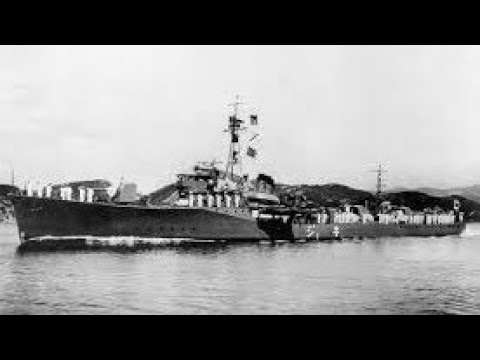
The return to Tulagi took nearly two hours. PT 109 had expended all four torpedoes and approximately 300 rounds of .50 caliber ammunition. The boat had sustained no damage and no casualties. Other boats in the division reported similar status, though PT 38 had taken a single 5-inch shell through her aft section that had fortunately failed to detonate, passing completely through the boat's plywood hull and exiting out the opposite side without striking anything vital.
The initial reports were confused and contradictory as after-action reports always are when compiled from observations made in darkness under combat conditions. What was not in dispute was that the PT boats had achieved their first significant success against the Tokyo Express. Multiple Japanese destroyers had been damaged or sunk. The supply run had been disrupted.
Japanese naval records captured after the war revealed the internal discussions that followed. The destroyer Takanami had sunk outright, taking down 197 of her crew. The destroyer Naganami had suffered severe damage to her bow and required three weeks of repairs at Truk before she could return to service. The destroyer Makinami had sustained moderate damage from a near miss that buckled hull plates and flooded two compartments. Total casualties exceeded 300 men killed or wounded.
The Japanese response came in multiple forms. Destroyer captains received instructions to approach Guadalcanal at reduced speeds when intelligence suggested PT boats might be operating in the area. They were ordered to deploy additional lookouts specifically tasked with watching for torpedo wakes and small craft. Some destroyers began carrying additional depth charges and small caliber guns specifically for use against PT boats.
More significantly, the Japanese Navy began experimenting with alternative supply methods. Fast cruisers replaced destroyers on some runs. Submarines were pressed into supply service, carrying critical items like medicine and ammunition in their torpedo rooms. Barges and small cargo vessels began making supply runs in larger numbers, accepting that many would be lost to air attack.
None of these adaptations solved the fundamental problem. Guadalcanal remained a logistics nightmare for the Japanese, a remote position at the end of an extended supply line that was under constant attack from multiple directions.
The American response to the November success was to expand PT boat operations as rapidly as available resources allowed. Motor Torpedo Boat Squadron 2 arrived at Tulagi in early December with an additional 12 boats. Squadron 6 followed in January of 1943. By February, more than 30 PT boats were operating in the Solomons.
Intelligence estimates compiled in January of 1943 indicated that the Tokyo Express runs were delivering approximately 40 percent less cargo per mission than they had in October, primarily because destroyers were spending more time evading suspected PT boat positions and less time actually unloading supplies.
The psychological effect on Japanese crews was also noted in captured documents and prisoner interrogations. Destroyer sailors who had once considered the fast runs to Guadalcanal as relatively routine missions now approached them with considerable apprehension, knowing that small boats might be waiting in the darkness with torpedoes.
The cost in American resources was minimal compared to the results achieved. Each PT boat cost approximately $200,000 to build, roughly one percent the cost of a Fletcher-class destroyer. The torpedoes they carried were expensive but still far cheaper than the naval gunfire and aerial bombardment that would otherwise be required to achieve similar damage to enemy warships.
The success of November 30th established a pattern that would repeat with variations throughout December of 1942 and into January of 1943. On the night of December 3rd, PT boats engaged another Japanese destroyer force off Cape Esperance. This time the results were less favorable. The destroyers had deployed additional lookouts and were proceeding at reduced speed with guns manned and ready. Two PT boats were damaged, one severely enough that it had to be towed back to Tulagi.
The engagement demonstrated that tactical success was never guaranteed. The Japanese were learning and adapting just as the Americans were. Each encounter provided lessons for both sides, a continuous cycle of innovation and counter-innovation that characterized naval warfare throughout the campaign.
But the statistical trend favored the Americans. Even when PT boat attacks failed to sink or damage enemy ships, they disrupted operations and forced the Japanese to expend time and resources on defensive measures. Destroyer captains had to choose between maintaining high speed and maintaining alertness for torpedo attack. They could not do both effectively.
On December 11th, PT boats achieved another significant success, damaging two destroyers with torpedo hits during a coordinated attack involving eight boats operating in three divisions. Three torpedoes struck home in rapid succession, leaving one destroyer dead in the water and another reduced to half speed with heavy flooding.
By late December, Japanese commanders were facing increasingly difficult decisions about resource allocation. Should they continue risking valuable destroyers and trained crews on supply missions? Should they accept higher losses in exchange for maintaining the garrison's combat effectiveness? Or should they begin planning for withdrawal?
The decision was postponed through December and into January as Tokyo sent additional reinforcements and ordered the garrison to hold at all costs. But the mathematical reality was becoming inescapable. The Tokyo Express could not deliver enough supplies to maintain a force of 30,000 men in combat readiness while simultaneously replacing losses from American attacks.
The Japanese troops on Guadalcanal were slowly starving. Their ammunition stockpiles were dwindling and their medical supplies were exhausted. Disease claimed more casualties than combat, with malaria, dysentery and malnutrition reducing entire units to ineffectiveness.
The PT boats had not created this situation alone. American control of Henderson Field and the Marine and Army aircraft operating from that field remained the primary factor strangling the Japanese garrison. But the PT boats had eliminated one of the few advantages the Japanese still possessed: the ability to resupply their forces at night using fast destroyers that could evade or defeat most American naval units.
By early February of 1943, the Japanese high command made the decision to evacuate Guadalcanal. The official terminology described it as a strategic withdrawal to more defensible positions, but the reality was simpler. The island could not be held.
The Tokyo Express conducted its final missions not as supply runs but as evacuation operations. Over three nights in early February, Japanese destroyers successfully evacuated approximately 11,000 men from Guadalcanal, leaving behind their dead, their equipment, and any pretense that the campaign had been anything other than a devastating defeat.
Lieutenant West Holm continued commanding PT 109 through January before being reassigned to staff duty in early February. He was replaced by a newly arrived officer, Lieutenant John Kennedy, who would achieve his own measure of fame commanding that same boat in August of 1943 when PT 109 was rammed and sunk by a Japanese destroyer in Blackett Strait.
The strategic significance of PT boat operations at Guadalcanal extended beyond the immediate tactical results. The boats had proven that small, inexpensive vessels operated by minimally trained crews could meaningfully affect naval operations when employed intelligently under favorable circumstances.
PT boat squadrons were expanded and deployed to theaters where their speed and torpedo armament could be effectively utilized. Production increased with over 500 PT boats built by the end of the war. The boats never became decisive weapons in the way that aircraft carriers or submarines were decisive. Their greatest contribution was cumulative rather than spectacular.
Of the roughly 30 PT boats that operated around Guadalcanal between October of 1942 and February of 1943, six were lost to enemy action or operational accidents. Forty-three crew members were killed and dozens more were wounded. Many more suffered from tropical diseases, exhaustion, and the accumulated psychological stress of repeated combat missions in fragile boats where a single enemy shell could prove fatal.
The claim that PT boats sank 38 transports in two weeks was hyperbole, a compression of multiple engagements over several months into a more dramatic narrative. The actual numbers were more modest. Perhaps six to eight destroyers were sunk or damaged severely enough to require major repairs during November and December of 1942, with several more sustaining minor damage.
But numbers alone do not capture the full significance of what occurred in those dark waters off Guadalcanal. Lieutenant West Holm and the other PT boat commanders confronted the Tokyo Express on the night of November 30th, 1942 with wooden boats and limited training and discovered that they could win.
That discovery changed how both sides approached the naval war in the Solomons. It demonstrated that technological sophistication and overwhelming force were not the only paths to victory. Sometimes success came from being in the right place at the right time with the courage to fire torpedoes at an enemy that could obliterate you with a single salvo, and the skill to escape into the darkness before that salvo arrived.