On August 27, 1979, seventy-nine-year-old Lord Louis Mountbatten took his family fishing from the harbor at Mullaghmore, a tiny village on the west coast of Ireland. He had launched the same boat from that harbor every summer for thirty years. The boat had not traveled more than a few hundred yards from shore when a bomb tore it apart. Mountbatten, cousin to Queen Elizabeth II, mentor to Prince Charles, and a celebrated war hero, was pulled from the water barely alive but died before reaching shore.
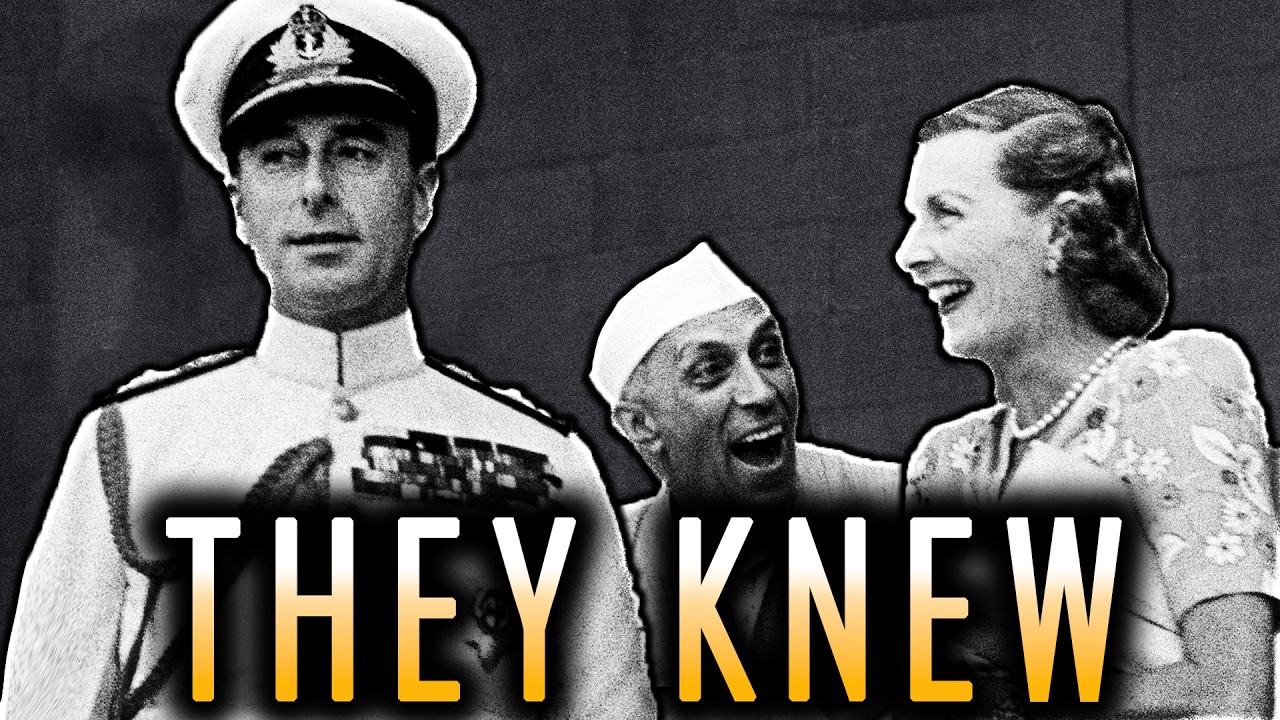
The IRA claimed responsibility, calling the bombing an execution. For decades, some have speculated that the IRA knew something else about Mountbatten, something the FBI had documented as early as 1944. That year, American intelligence opened a file on him, not because of his military command but because of his private life. Their conclusion was blunt: Mountbatten and his wife Edwina were persons of extremely low morals.
Some believe the IRA was aware of those files and that this knowledge influenced their decision to target him. To understand how a man with such a reputation became the most trusted figure in the British royal family, one must start at the beginning. He was born Prince Louis of Battenberg on June 25, 1900, at Frogmore House in Windsor. His family was royal, but only narrowly so, a branch of German nobility that had married into the British line through Queen Victoria.
The queen was his great-grandmother and godmother, and his godfather was his cousin, Tsar Nicholas II of Russia. As a child, he visited the Russian Imperial Court at St. Petersburg, where he fell in love with another cousin, Grand Duchess Maria, one of the tsar’s daughters. He kept her photograph by his bedside for the rest of his life, even after the Bolsheviks executed her entire family.
The family called him Dickie, a childhood nickname that stuck for seventy-nine years. His father, also named Prince Louis of Battenberg, had built a distinguished career in the Royal Navy and by 1914 had risen to First Sea Lord, the highest operational rank in the fleet. Then came the First World War, and suddenly everything German became suspect. Despite forty-six years of loyal service, the elder Battenberg was forced to resign, pushed out in disgrace because of his bloodline.
The family changed their name to Mountbatten. Young Dickie watched his father’s humiliation and made a vow: he would join the Royal Navy, rise higher than his father ever had, and restore the family name. In the early 1920s, Mountbatten faced a practical problem. He was ambitious and well connected but broke, earning only £310 a year as a naval lieutenant.
Then he met Edwina Ashley, granddaughter of Sir Ernest Cassel, a financier who had been the personal banker to King Edward VII. When Cassel died in 1921, he left a fortune of over £7 million, most of it to Edwina. Overnight, she became one of the wealthiest heiresses in England. Their marriage was, by all accounts, a practical match.
He had a title and no money; she had money and no status. They married on July 18, 1922, in a wedding attended by the Prince of Wales and King George V. Edwina’s wealth transformed their lives, but beneath the glamour, cracks formed almost immediately. Mountbatten was consumed by his career, and Edwina was restless and easily bored.
Within a few years, she filled the void with a series of high-profile affairs. Her first major lover was Lord Molyneux, an aristocrat from her social circle. She then moved on to Stephen Laddie Sanford, an American millionaire and polo champion, followed by Mike Ward, a London newspaper editor. Sometimes she juggled several at once.
On one occasion, the housekeeper at Brook House found five of Edwina’s lovers waiting in different rooms. By the time their second daughter was born in 1929, her affairs had reached legendary proportions. When Mountbatten discovered the truth, he was devastated and they discussed divorce, but a scandal would have been catastrophic for a man obsessed with image. Instead, they struck a deal: an open marriage held together by money, status, and convenience.
Mountbatten soon found his own consolation in Yola Letellier, the glamorous wife of a French newspaper publisher. Their affair lasted years. The great love of Edwina’s life arrived later: Harold Bunny Phillips, a tall, handsome lieutenant colonel in the Coldstream Guards, so beloved that even the Mountbatten daughters adored him. The four of them, Dickie, Edwina, Yola, and Bunny, even traveled together.
The arrangement worked until 1944, when Bunny announced his engagement to another woman. Edwina was shattered. While Edwina reeled from Bunny’s engagement, Mountbatten was already at war. In June 1939, he took command of HMS Kelly, a new destroyer.
Over the next fourteen months, the ship suffered £440,000 worth of damage, enough to build two new destroyers. A German mine tore off her stern, a collision caused more damage, and a torpedo nearly split her in half. In a single fourteen-month stretch, the Kelly spent only two weeks fit for duty. Within the Admiralty, Mountbatten earned the nickname Master of Disaster.
But his men loved him. In May 1941, the Kelly was deployed to the Mediterranean and attacked by dive bombers. A bomb struck the ship while she was turning at full speed, and she rolled over and sank within seconds. Half the crew went down with her, 130 men.
Mountbatten survived and gave a speech that became famous: We didn’t leave Kelly, he told the survivors. Kelly left us. His friend Noël Coward turned the story into the film In Which We Serve, and overnight, the Master of Disaster became a national hero. Churchill rewarded him.
In October 1941, Mountbatten became Chief of Combined Operations, in charge of planning commando raids against Nazi-occupied Europe. In August 1942, his plan for a raid on the French coast at Dieppe resulted in a massacre. Nearly 60 percent of the troops became casualties, with over 900 Canadians killed and another 2,000 captured. Mountbatten later claimed the disaster taught lessons that made D-Day possible, but Canadian veterans saw it differently.
Churchill, however, still believed in him. In 1943, he made Mountbatten Supreme Allied Commander of Southeast Asia. By 1947, the British Empire was dying, and nowhere was the end more painful than in India. After nearly two centuries of British rule, 400 million people wanted freedom, and Britain, exhausted from the war, had no choice.
In February 1947, King George VI sent Mountbatten to India as the last viceroy. His instructions: oversee the transition to independence by June 1948 and keep India united if possible. Mountbatten looked at the situation and decided that was too long. Hindu-Muslim riots were spreading, and cities were burning.
If he waited a year, he believed, there would be civil war. He also had a personal motive: the position of First Sea Lord, the job his father had been stripped of, was within reach, and every month in India kept him from it. Almost immediately, Edwina developed an intense bond with Jawaharlal Nehru, the Cambridge-educated leader of the Indian National Congress. They were seen together constantly, exchanged letters daily, and continued writing to each other until her death.
Whether it was a physical love affair, no one knows for certain. Mountbatten seemed unbothered and reportedly encouraged the friendship. Whatever the truth, he made his fateful decision: he moved the deadline forward by ten months, setting independence for August 1947. To draw the borders of the new nations, he brought in a British lawyer named Sir Cyril Radcliffe, a man who had never set foot in India.
Radcliffe was given five weeks to divide 400 million people, working from maps and census data, drawing lines through Punjab and Bengal. When he finished, Mountbatten kept the map secret, and the borders were not revealed until two days after independence. On August 15, 1947, India and Pakistan became independent nations. Celebrations erupted, and Mountbatten stood on a balcony in Delhi waving to cheering crowds.
But in Punjab and Bengal, the cheering turned to screaming. Fourteen million people suddenly found themselves on the wrong side of the border. Entire trains arrived at stations filled with corpses. Conservative estimates put the death toll at 200,000; realistic estimates ran from one to two million.
Years later, a journalist confronted Mountbatten, telling him he was held responsible for one million people lost. His answer: I couldn’t hold the country together. I had to hasten the process. The Kashmir dispute he left behind remains unresolved to this day.
India changed Edwina. During the chaos of partition, she threw herself into relief work, visiting refugee camps and holding dying children. For the first time in her life, she seemed to care about something beyond herself. When they returned to England, she became deeply involved in charity, working with the Red Cross and the St.
John Ambulance. The restless socialite had become a humanitarian. She and Mountbatten remained married, still living separate lives, but a mutual respect had formed. In February 1960, Edwina was in Borneo on an inspection tour.
She went to bed early one night and never woke up. The official cause was heart failure. She was buried at sea. Nehru wept when he heard the news.
Mountbatten was alone now, and he turned his attention to shaping the royal family. His nephew Philip was already married to the queen. Now he focused on Prince Charles, a lonely, sensitive young man struggling under the weight of expectation. Mountbatten became what Charles desperately needed: a confidant and mentor, someone who actually listened.
Charles called him the grandfather I never had. Mountbatten’s advice to the young prince was clear: sow your wild oats while you can, but when it’s time to marry, choose someone young and innocent, without baggage. By 1974, Mountbatten had a new plan: he wanted Charles to marry his own granddaughter, Amanda Knatchbull. But by 1979, there were people watching him.
Mountbatten had been coming to Mullaghmore for three decades, ever since he first saw Classiebawn Castle, a Victorian Gothic estate on a cliff overlooking the Atlantic. The village sits in County Sligo in the Republic of Ireland, just twelve miles from the border with Northern Ireland. By the 1970s, that border was a war zone. The Troubles were at their peak, and Mountbatten, a symbol of everything the IRA despised, was taking his summer holidays twelve miles from the front lines.
The warnings came from every direction. His own protection officer pleaded with him to stay away. Intelligence services spotted a car with Belfast plates parked near the harbor, the driver watching his boat through binoculars. The car had been used before to transport IRA weapons.
Mountbatten waved off the concerns. On the night of August 26, 1979, someone slipped down to the harbor and planted fifty pounds of gelignite aboard his boat, connected to a radio-controlled detonator. The next morning, Mountbatten took his family fishing for the last time. After his passing, tributes poured in.
But beneath the eulogies were whispers that had followed him for decades. In 2019, the FBI released files on Mountbatten under a Freedom of Information request. The dossier, compiled starting in 1944, described him and Edwina as persons of extremely low morals. There were also allegations, in an Irish magazine, connecting Mountbatten to a ring involving other establishment figures.
The most disturbing allegations centered on Kincora Boys Home in Belfast, a care facility for vulnerable children that became the center of one of the darkest scandals in Irish history. Former residents claimed they had been trafficked beyond the home, and some alleged they were taken to Classiebawn Castle. The Northern Ireland Historical Institutional Abuse Inquiry examined the allegations and dismissed them, concluding that the original sources gave no basis for connecting Mountbatten to Kincora. His private secretary for twenty years denied the allegations categorically.
Mountbatten was never charged, never tried, never convicted of anything. Some have speculated without evidence that the IRA knew of the rumors and factored them into their decision. What is certain is that the full truth about Lord Mountbatten may never be known.
The man who shaped kings and divided nations took his secrets to the grave.