In 1935, David “Dad” Carter was not a man who dreamed of fame. He was a tenant farmer in the dusty town of Lash, Texas, watching his family slip toward ruin. The Great Depression had already emptied the banks and broken the economy, but in Texas and Oklahoma, nature itself had turned hostile. Years of drought had turned the topsoil into fine powder, and when the wind blew, black blizzards rose thousands of feet into the air, blotting out the sun, suffocating livestock, and filling children’s lungs with deadly dust.
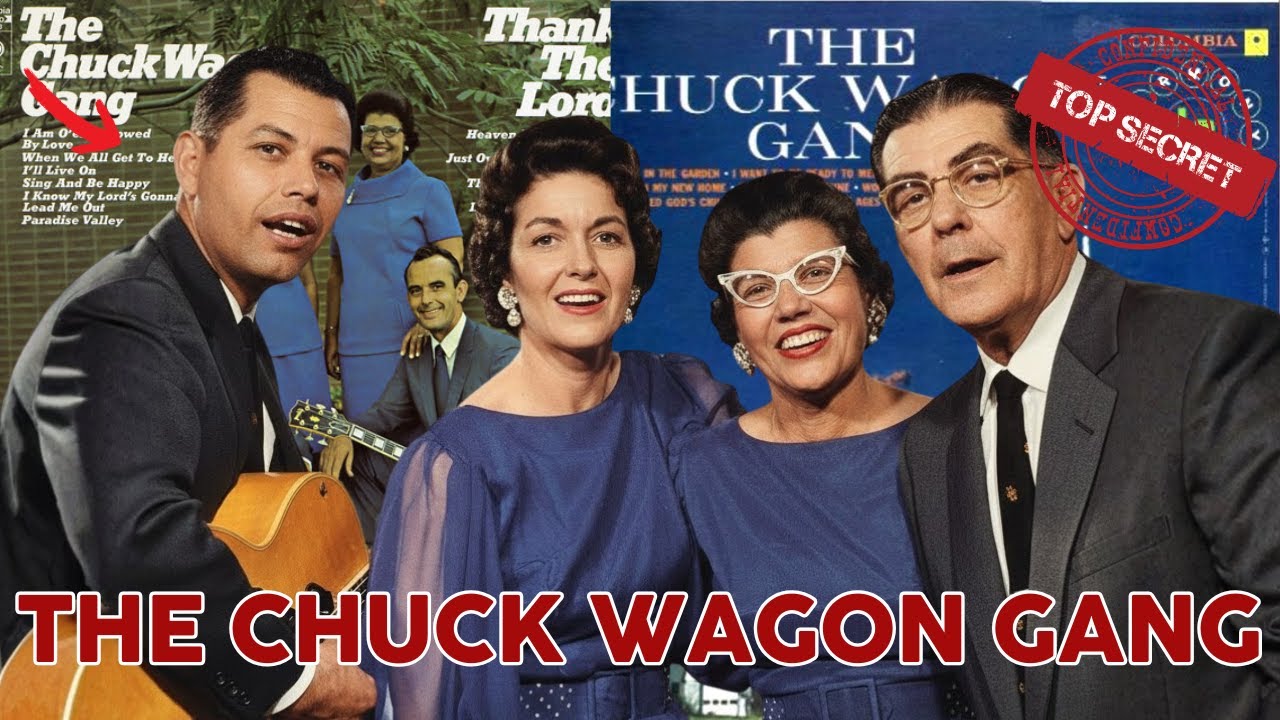
The cotton market had collapsed. Prices had fallen so low that the crops were not worth harvesting. Dad Carter, with a sick wife, a son named Jim, and two daughters, Rose and Anna, faced the terror every father of that generation dreaded: honest, backbreaking work was no longer enough to keep his family alive. But Dad Carter had one asset the bank could not seize and the dust could not bury.
He had a family that could sing. Music in the Carter home was not a hobby. It was as essential as the wood stove or the water pump. Dad had attended singing schools in the rural South, where traveling teachers showed ordinary farmers how to read music using shape notes, a democratic system that used triangles, circles, and squares to denote pitch.
It allowed people with little formal education to perform complex four-part harmonies. Dad himself had a high, clear tenor, and he taught his children to sing almost as soon as they could talk. In the evenings, with the day’s labor done and batteries for the radio too expensive, the Carters made their own entertainment. They sang the old hymns, songs of Zion that promised a land with no hunger and no dust.
In a moment of desperation that would change the course of American music, Dad Carter made a gamble. He put down the plow and picked up the microphone. In 1935, being a musician meant being a drifter, not a respectable career for a God-fearing family man. But hunger has a way of clarifying priorities.
He loaded his family into their dilapidated car, held together by wire and prayer, and drove to the local radio station in Lash, KFYO. They had no agent, no press kit, no matching outfits. They walked in wearing their everyday farm clothes, dusty and anxious, and asked for an audition. The station manager agreed, perhaps out of pity, perhaps because he needed to fill fifteen minutes of airtime.
They gathered around a single microphone, Jim struck a chord on his guitar, and they began to sing. The sound that came out was unlike the polished pop of the cities or the raucous hillbilly music of the bars. It was pure. It was disciplined.
The voices blended so perfectly that they could never be separated. Dad’s tenor floated on top, Rose’s soprano pierced the middle, Anna’s alto gave it warmth, and Jim’s guitar drove it all with a steady rhythm. They were hired on the spot. The pay was almost nothing, often just barter or a few dollars, but it gave them a foothold.
Dad Carter knew Lash was too small for their future. With determination bordering on recklessness, he moved the family to Fort Worth, aiming for WBAP, a powerful fifty-thousand-watt station that broadcast across the entire Southwest. The audition was high-stakes. The family was literally singing for their supper.
Once again, the Carter harmonies worked their magic, and station officials recognized they had found something special. But in the golden age of radio, talent alone was not enough. They needed a sponsor. The station had one waiting: Burrus Mills, a giant flour and feed company in Fort Worth.
The executives listened to the Carters and liked their wholesome family image, perfect for selling flour to mothers who baked biscuits. But they had a problem with the name. “The Carter Family” was already taken by the famous group from Virginia, and “Dad Carter’s Band” seemed too stiff. Burrus Mills wanted a brand that evoked the romance of the West and the rugged individualism of cowboys.
They looked at these farmers who had never herded a cow in their lives and named them the Chuck Wagon Gang. It was a marketing lie, plain and simple. The Carters were not cowboys. Their repertoire was almost entirely religious, old sacred hymns.
But Dad Carter, practical to the bone, did not argue. If Burrus Mills wanted them to be the Chuck Wagon Gang, they would be the Chuck Wagon Gang. If it put food on the table, they would call themselves anything. Each week, the Chuck Wagon Gang drove to the WBAP studios to sing in a morning broadcast sponsored by Burrus Best flour.
For fifteen minutes, the family sang over the airwaves, reaching millions of kitchens where women kneaded dough, barns where men milked cows, and sickrooms where the elderly lay bedridden. They became invisible guests at the breakfast table. Listeners felt they knew them. They knew the father’s steady presence, Rose’s high tones, Anna’s warmth, and Jim’s guitar.
Because they sang gospel songs about a land where we never grow old and about reunion in heaven, they offered a specific kind of therapy to a population exhausted by life. The Dust Bowl had stolen people’s hope in the physical world. The banks had failed them. The government was struggling.
The earth itself had betrayed them. In that vacuum of hope, the Chuck Wagon Gang offered a promise that a better world was waiting. They did not sing about how to get rich. They sang about how to endure.
The response was overwhelming. Letters poured into Burrus Mills by the thousands, many written in pencil on scraps of paper, begging for specific songs. The band became the biggest radio attraction in the region, selling more flour than the mills could produce. But radio was fleeting.
Once the notes faded into the ether, they were gone. Dad Carter knew that true security required permanence. They needed a recording contract. Art Satherley, an Englishman who worked as an artists and repertoire man for the American Record Corporation, was a legend in the music business.
He traveled the South with a mobile recording unit, hunting for talent like a prospector hunting for gold. In late 1936, he was in Texas and heard the Chuck Wagon Gang. He arranged a meeting and set up a recording session in a hotel room in San Antonio. The conditions were primitive.
There was no soundproofing, no multi-track recording, no auto-tune. Just one heavy ribbon microphone in the middle of the room. Satherley positioned the family around it, adjusting their distances to balance the volume. Rose, with her powerful voice, had to step back half a step.
Dad, with his softer, deeper voice, moved closer. They had to get it right on the first take. If someone coughed, or a car horn sounded outside the hotel window, or Jim hit a wrong note, the precious wax disc was ruined. They recorded twenty-two songs in that first session, songs like “The Sun Made Me Free” and “Echoes from the Burning Bush.
” When they listened back and heard their voices captured and preserved for the first time, it must have been overwhelming. They had immortalized the sound of their survival. Satherley was ecstatic. He knew he had captured something rare.
He signed them to Columbia Records, beginning a partnership that would last thirty-nine years, one of the longest continuous recording contracts in the history of the music industry. As 1936 turned into 1937, the Chuck Wagon Gang stood on the brink of a new life. They had survived hunger and escaped the dust. They had conquered Texas radio.
But they had no idea what awaited them. They thought they were just a local family band singing for a living. They did not realize that those wax discs recorded in that San Antonio hotel room were about to be shipped around the world. As the Great Depression gave way to the mechanical horror of World War II, those fragile recordings traveled far beyond the range of Texas radio towers, becoming a lifeline for a generation about to face its darkest hour.
The records did not just sell. They disappeared from the shelves. By the early 1940s, the Chuck Wagon Gang had become part of the sound of the homeland itself. Soldiers heading overseas carried their records, along with pictures of loved ones and Bibles.
Rose’s soprano singing “We Are Climbing Jacob’s Ladder” or “I’ll Fly Away” became barrack music, a tether to home, a reminder of Sunday mornings and fried chicken dinners left behind. In the terrifying silence before battle, those simple guitar rhythms and earnest harmonies offered comfort that the loud swing music of the era could not match. They offered a promise that death is not the end, a message that resonated deeply with young men facing their own mortality. Over the next two decades, the Chuck Wagon Gang became the most popular gospel group in the world.
At their peak in the 1950s, they were among Columbia’s biggest-selling artists, with tens of millions of records sold. Yet if you looked at them, you would never guess it. In an industry built on ego and excess, they remained stubbornly ordinary. They wore no rhinestone suits.
They had no elaborate hairstyles or makeup. They did not dance on stage. They traveled not in private planes or tour buses, but in station wagons, usually Packards or Chevrolets, crammed with instruments and luggage, driving all night to make the next date. They stayed in budget hotels and ate at roadside diners, often bringing sandwiches in the car to save money.
Dad Carter ran the group not as a musical act but as a strict family business. There were rules: no drinking, no smoking, no carousing, and certainly no vanity. He instilled in his children the belief that they were not stars. They were messengers.
The song was the real star. They were merely a vehicle for it. After a show, they stood by the stage and shook hands with everyone, signed every autograph, and listened to every story about a sick relative or a wayward son. They looked like their audience, dressed like them, and prayed like them.
Musically, they perfected a style that seemed deceptively simple but was impossible to imitate. It was called open harmony. Most quartets of the era sang in close harmony, with complex jazz-influenced chords where the voices were packed tightly together. The Chuck Wagon Gang took the opposite approach.
They spread their voices apart. Dad Carter’s tenor anchored the fundamental bass, while the women’s voices soared high, often singing a third or a fifth above the melody. This created a wide, ethereal sound that felt like a cathedral of air. The connective tissue was Jim Carter’s guitar.
He was not a flashy player. He never played solos. But he developed a style that was the heartbeat of the band. Using a thumb pick for the bass notes and his fingers for the upper strings, he created a driving rhythm that mimicked a steam train racing down the tracks.
Because the group refused to use drums, which Dad considered worldly and belonging to bars, Jim’s guitar had to serve as the rhythm section, the bass section, and the harmonic accompaniment all at once. He played with a hypnotic, wooden stiffness. If Jim slowed down, the band slowed down. If Jim speeded up, the band speeded up.
The 1950s, however, carried the first winds of change. Rock and roll had arrived. Elvis Presley, who had grown up listening to the Chuck Wagon Gang and loved gospel music, was tearing down the walls between the sacred and the secular. Within the gospel world itself, a revolution was brewing.
Quartet style was becoming slicker. Groups were wearing bright matching suits, performing choreographed moves, and using pianos and organs to create a bigger, louder sound. They were becoming entertainers. The Chuck Wagon Gang refused to change.
Dad Carter held his ground. For him, adding drums or electric instruments was like painting on a church wall. It was a matter of integrity. But to industry executives in Nashville watching the charts and trends, integrity looked like obsolescence.
Producers gently suggested adding a little echo, maybe a snare drum, perhaps a backing choir. The family politely declined. They knew their audience. The people buying their records wanted that purity, the sound of wooden church pews, not the sound of nightclubs.
But biology is a cruel master. You can freeze a musical style in amber, but you cannot freeze human beings. The members were aging. They had families of their own.
The grueling tour schedule, three hundred shows a year in a family car, was wearing down their bodies. On April 28, 1963, the lifeline snapped. David Parker “Dad” Carter died at the age of seventy-three. The man who had lifted a starving family out of the cotton fields, guided them through the Depression and the war, and served as their moral compass and business manager was gone.
His death shook the band to its core. It was not just the loss of a father. It was the loss of their identity. Dad had chosen the songs.
Dad had set the tempo. Dad had negotiated with the executives at Columbia. Without him, the family felt exposed. The industry assumed this was the end.
The press wrote respectful obituaries that seemed like a eulogy for the band itself. But they did not know Roy Carter. Roy, the youngest son, had been the bass singer for years. He was a quiet man, but he had his father’s toughness.
He looked at the contracts. He looked at the fans who were still writing letters. He looked at his siblings. He realized that the Chuck Wagon Gang was bigger than any one man.
It was an institution. Roy filled the void. He took over management. He made the hard decisions.
He decided they would keep singing. But he also knew they were walking into a storm. The 1960s were seething with change. The Beatles were on Ed Sullivan.
The civil rights movement was reshaping the South. The Vietnam War was tearing the country apart. In Nashville, a new machine was being built, one that valued polish over soul, youth over experience, and commercial viability over gospel purity. The “Nashville Sound” was taking over, creating a polished pop-country hybrid with no place for a family group relying on simple notes and a single acoustic guitar.
As the band returned to the road without Dad, they noticed a subtle shift. Crowds were still there, but they were older. Radio stations that used to play their songs every morning were changing formats. Reaching executives at Columbia became harder.
They were moved from the priority list to the heritage list. Roy resisted. He tried to balance the odds, keeping the acoustic sound but attempting to choose songs that felt a little more current. He pushed the family harder than ever, trying to prove they were still relevant.
But he was fighting the current. The tragedy of the Chuck Wagon Gang in the post-Dad Carter era was not a sudden collapse. It was a slow, painful erosion. They were like a master craftsman making fine old watches in the age of digital clocks.
The product was beautiful, but the world had stopped caring about time. By the early 1970s, Nashville had transformed from a quiet southern town into a glittering commercial capital. The industry had discovered that gospel music could be as profitable as any other genre if it was packaged correctly. Contemporary Christian music was born, loud and polished, sounding suspiciously like secular pop radio with different words.
In this neon-lit new world, the Chuck Wagon Gang looked like travelers from another century. They stood on stage in their modest clothes, four people around one microphone, accompanied by a single acoustic guitar, like a Model T at a Ferrari show. To the new kings of Nashville, they were an embarrassment. Too rural for pop charts, too traditional for the emerging Christian rock scene.
The tension finally snapped in the mid-1970s. For almost four decades, through the Depression, the war, Korea, and the civil rights movement, the Chuck Wagon Gang had been loyal soldiers for Columbia Records. The news came like a death sentence delivered by mail. The company quietly allowed their long-term contract to expire.
After nearly forty years with Columbia, the Chuck Wagon Gang suddenly had no record label. The psychological blow was immense. They had done nothing wrong. No drugs, no smashed hotel rooms, no lost voices.
They were let go, not because they had failed, but because the industry had passed them by. The quiet message from Nashville was clear: your time is over. But the Carter stubbornness, the same tenacity that made Dad Carter plow the earth in 1935, flared up again. Roy refused to surrender.
If Columbia did not want them, they would find another label. If the big halls would not book them, they would sing in high school gymnasiums. They signed with smaller independent labels. They kept the car gassed up.
They kept the guitar tuned. And yet, the wandering years had begun. The late 1970s and 1980s were a grueling test of endurance. The venues got smaller, the pay got lower, and, worst of all, the respect of their peers evaporated.
This was the age of the great erasure. As the gospel music industry organized itself into a sleek award-giving machine, the Chuck Wagon Gang was systematically ignored. The Gospel Music Association created the Dove Awards to honor excellence in the genre. Year after year, the band was overlooked.
They were not invited to perform on television programs. New stars did not mention them as influences. They were treated as if they were invisible. It was a strange ghostlike existence.
They were famous enough for elderly people to stop them in restaurants, weeping at the memory of “The Great Speckled Bird. ” Yet they were obscure enough that a twenty-five-year-old executive in Nashville would not even return their calls. The internal pressure on the band became immense. The original members were aging and had to step aside.
Rose Carter, the soaring soprano who had defined the band’s sound, eventually retired. Anna Carter, the warm alto, left. Jim Carter, the guitar engine, became too old to endure the rigors of the road. Roy Carter was left with the impossible task of replacing the irreplaceable.
He brought in new members, sometimes family, sometimes talented outsiders. But every time a face changed, the critics sharpened their knives. They whispered that it was not the real Chuck Wagon Gang. Roy was obsessed with quality control.
He drilled the new members relentlessly, forcing them to listen to the old records to recreate the phrasing and breathing of the original lineup. He was not running a band. He was overseeing a living museum, trying to preserve a certain frequency in the air. There were nights in the 1980s that must have broken Roy’s heart.
Imagine a rainy Tuesday night in a small Arkansas town. The band arrives at a ramshackle church. There are about fifty people in the pews, most over sixty. The sound system is terrible.
The roof is leaking. On the radio during the drive, Roy hears the polished voices of Amy Grant or Michael W. Smith selling millions of albums singing about the same Christ, but with a drum machine. It would have been so easy to give up.
But Roy remembered the promise. He remembered Dad Carter holding the car together in 1935. He remembered the soldiers’ letters in 1944. He realized something the Nashville executives never understood: the Chuck Wagon Gang did not belong to the music industry.
They belonged to the people. As long as there was a grandmother in a nursing home who needed to hear “I’ll Fly Away” to feel at peace, they had a job to do. But this constant struggle had a heavy price. The band members’ health deteriorated.
The financial pressure was constant. In the late 1980s, something strange happened. The culture began to shift. The gloss of the 1980s began to feel artificial.
People started craving authenticity again. A new generation of music historians and record collectors began rediscovering the old Columbia recordings. They listened to the Chuck Wagon Gang and did not hear an old-fashioned band. They heard timeless music, a purity lost in the digital age.
In 1998, a final, bittersweet recognition arrived. The Gospel Music Hall of Fame, after decades of neglect, finally honored the Chuck Wagon Gang. It was a moment of triumph, but it was surrounded by the shadows of loss. Dad Carter was long gone.
Jim, Rose, and Anna were gone or too frail to enjoy the vindication. Roy Carter stood on stage, an aging champion, accepting the honor on behalf of the departed. The applause was loud, but it could not erase the years of neglect. It was like giving a gold watch to a worker who had already been forced into retirement.
Yet the wagon kept rolling. When Roy Carter died, the flame flickered in the wind. With none of the original members remaining, the industry assumed this was finally the end. The obituary for the Chuck Wagon Gang had been written decades in advance, waiting for this decisive moment.
By every law of pop culture physics, the band should have stopped entirely. But they had forgotten something: the blood connection. Waiting in the wings was Shaye Smith, the granddaughter of Anna Carter, the original alto whose warm voice had anchored the band during the Dust Bowl. Shaye had inherited not only her grandmother’s features but the Carter musical ear.
She grew up in the back seats of cars, slept in guitar cases, and listened to the harmonies until they became part of her DNA. She understood that the Chuck Wagon Gang was not a commercial venture that could be closed like a failed hardware store. It was a trust. It was a responsibility.
The evidence still arrived in the mail, tender letters from elderly fans written in shaky handwriting, thanking the band for singing their loved ones into the next world. So Shaye Smith did the unthinkable. She restarted the engine, but she made a decisive strategic choice that defined the band’s modern era. She did not try to modernize.
Earlier incarnations of the band had tried to adapt in the 1980s and 1990s, adding a little reverb here, a bass guitar there, trying to catch up with contemporary Christian music. It had not worked. It only made them look like a cheap imitation of a modern band. Shaye chose the opposite path.
She went back to the roots. She became a musical archaeologist. She dug through the archives, pulled out the original 78 rpm recordings from 1936, and listened to how Dad Carter phrased the musical lines. She listened to the distinctive rhythm of Jim’s guitar.
She realized the magic was not in the songs themselves but in the unique way they were sung. It was about the open harmony. It was about the absence of vibrato. It was about unified breathing.
She trained the new members, a mix of family and carefully chosen professionals, like a drill sergeant. She told them to sing like it was a kitchen in 1935. She forced them to forget modern vocal tricks. Contemporary singers want to show off, to riff, to emote.
The Carter style was about submission. You submit your voice for the blend. You disappear inside the chord. It requires an almost monastic discipline.
When the new Chuck Wagon Gang hit the road in the 2000s, it was a shock to the system. They walked onto the stages with a single microphone and one acoustic guitar. They wore simple clothes. And when they opened their mouths, the sound that emerged was like a ghost, the same sound Art Satherley had recorded in that hotel room in San Antonio seventy years earlier.
The reaction was remarkable. For older fans, it was like seeing a loved one return from the dead. Tears flowed in the aisles. For younger audiences who discovered them at folk festivals or Americana shows, it was a revelation.
They were not hearing old music. They were hearing authentic music. In a world full of digitally modified sounds and electronic loops, the sound of four human beings singing in perfect harmony with a wooden box was radically new. But artistic triumph does not mean financial stability.
The reality of the Chuck Wagon Gang in the twenty-first century is a lesson in endurance. They are legendary, yes, but legends do not get discounts at gas stations. Classic gospel tours are a grueling journey through small churches, senior centers, and outdoor festivals, where the pay is often a freewill offering, literally a bucket passed through the congregation. Shaye Smith found herself running a global brand from her kitchen table.
She had to be the booking agent, tour manager, media relations officer, and alto singer. She had to deal with the strange duality of their lives, receiving a lifetime achievement award one week and worrying whether the truck’s transmission would hold up on the way to Kentucky the next. There is a scene that repeats itself in the modern era, simultaneously heartbreaking and heroic. The group arrives at a small rural church on a Wednesday night.
The pastor looks apologetic. He says he is sorry, they expected a bigger crowd, but it is a school night and raining. There are only thirty people in the pews. A modern pop star would cancel.
The group changes in the church nursery, tunes the guitar, and steps up to the single microphone, singing with the same enthusiasm, the same precision, the same joy, as if they were playing Carnegie Hall. Why? Because Shaye Smith knows that among those thirty, there is someone who needs it. Someone who is suffering.
Someone who remembers hearing this music sitting on their grandmother’s lap. For one hour, they need to return to a place where they felt safe. The band has also begun a series of recording projects designed not to chase charts but to document history. They released albums like “How We Were,” deliberately using vintage microphones and recording techniques to capture the ambience of the 1930s.
They collaborated with historians. They became the curators of their own museum. One of the most important moments of this revival came when they caught the attention of the Americana movement. Marty Stuart, the country music historian and star, recognized that the Chuck Wagon Gang was not just a gospel band but a foundational pillar of country music.
He invited them to perform on his show and spoke of them with reverence. He was a bridge between the two worlds that had rejected them. The Nashville establishment, which had cast them out in the 1970s for being too plain, now realized that plainness was exactly what the genre was missing. And the country music world, which had ignored them for being too religious, realized you cannot tell the story of the South without the church.
And yet, despite the critical respect, the band remains on the margins. They are the working class of the music world. They drive their own bus. They load their own equipment.
They sell their own CDs from suitcases after the show, shaking hands until the last person leaves. There is a profound humility in this kind of life. It is the antithesis of the celebrity culture that surrounds them. In a world where everyone wants to be an influencer, the Chuck Wagon Gang just wants to be a comforter.
They are not trying to go viral. They are trying to stay alive. With the digital age accelerating, bringing streaming services and social media, they faced a new challenge. How do you translate an analog soul into a digital world?
How do you tweet about a hymn written in 1890? The algorithms do not favor the Chuck Wagon Gang. They do not fit the curated playlists of country or trending Christian music. They are ghosts in the machine, floating in the data stream, waiting for curious souls to discover them.
In the end, the story of the Chuck Wagon Gang in the twenty-first century is a story of defiance. It is a refusal to vanish. It is a rejection of the idea that whatever is new is always best. By staying in place, by refusing to change, they became revolutionary.
In a world of constant noise and upheaval, they offer the radical act of continuity. They are the lighthouse keepers. The ships changed from sails to steam to nuclear power, but the light remains the same. As the band approaches its centenary, the question hangs in the air.
How long can they keep going? Shaye Smith is not immortal. The audience is not immortal. Cultural memory fades.
The struggle is no longer about success. It is about preserving a legacy. To understand what was lost, one must walk down Broadway in Nashville today, through a canyon of neon lights, where the air vibrates with a chaotic mix of dozens of bands covering Bon Jovi and Taylor Swift. In the Country Music Hall of Fame, you can see Elvis’s gold Cadillac and Taylor Swift’s guitar.
But if you search for the Chuck Wagon Gang in this neon system, you will find only silence. There are no statues of Dad Carter in public squares. No bars named after the Chuck Wagon Gang on the main street. For the average tourist, and even for many contemporary executives in the glass towers of Music Row, the band is a footnote.
This erasure was not an accident. It is the inevitable result of an industry that worships the new and disposes of the old with ruthless efficiency. The Chuck Wagon Gang committed the cardinal sin of the entertainment world. They refused to evolve.
They refused to chase trends. They stayed still while the world spun around them. And by doing so, they became invisible to the tastemakers. But invisibility does not mean nonexistence.
While Nashville celebrates, the Chuck Wagon Gang’s car is likely parked behind a small brick church in rural Alabama or a community center in Kentucky. They are setting up their single microphone. They are tuning that one acoustic guitar. And they are preparing to do what they have done since 1936.
They open their mouths and comfort broken hearts. The final image of the Chuck Wagon Gang is not a tombstone or a memorial plaque. It is a circle. It is the circle of family standing around that single microphone.
The faces change. The father becomes Roy. Roy becomes Shaye. The children become grandchildren.
But the circle remains unbroken. The guitar starts its steady rhythm. The voices rise. Four distinct strands woven into a single rope, strong enough to pull you out of the darkness.
Maybe the industry stopped listening. Maybe Nashville turned off the lights. But somewhere on a back road in America, the Chuck Wagon Gang is still singing. And as long as they sing, the circle holds.
The dust of 1935 has settled, but that song, that simple, beautiful, moving song, still echoes on, proving that fame is but a vapor and money but dust, while a harmonious family remains the closest thing we have to eternity.