Joseph Goebbels never stood before the judges at Nuremberg. When Nazi Germany collapsed in the spring of 1945, he remained in Berlin and died on May 1, just one day after Adolf Hitler. The Allies never had the chance to put on trial one of the most important figures of the Nazi state. Had Goebbels survived the Battle of Berlin and fallen into Allied hands, his fate would almost certainly have been execution.
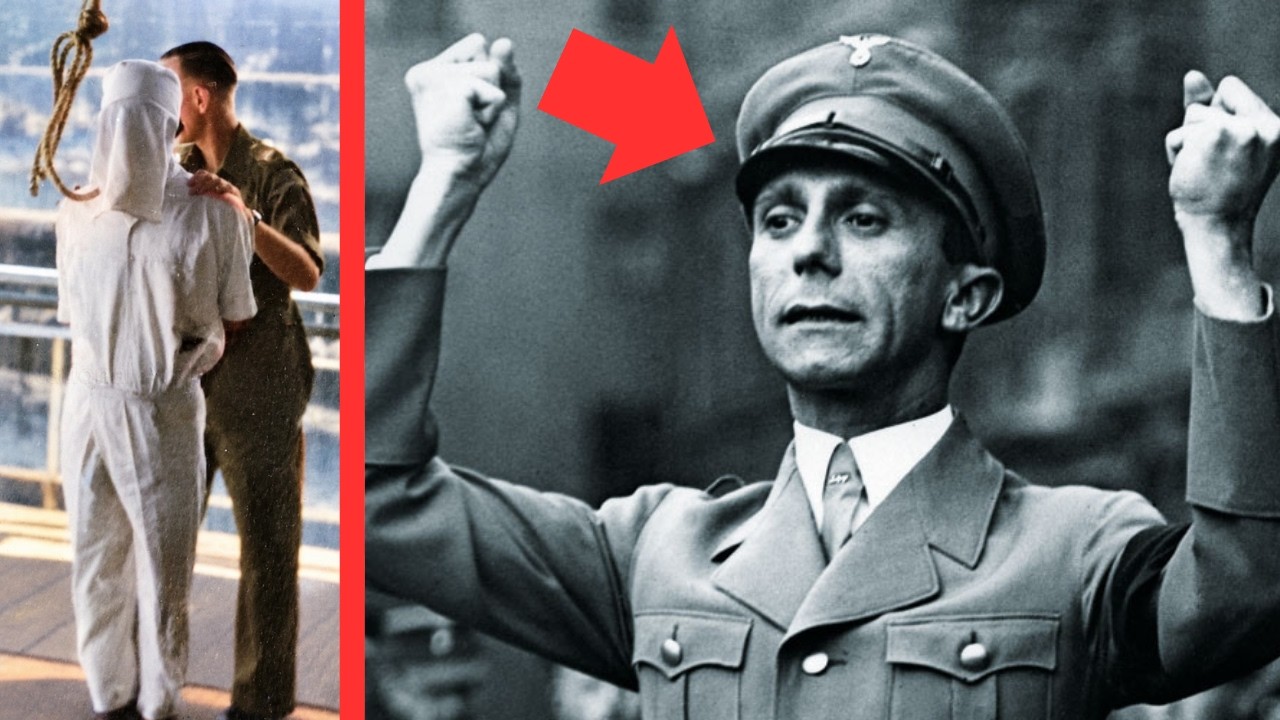
He would likely have been treated as one of the most significant Nazi prisoners captured. Although he never commanded armies and never personally ran a concentration camp, his position within Hitler’s government made him central to the regime. For more than twelve years he controlled much of Nazi Germany’s propaganda machine. He helped spread hatred, encouraged Germans to support Hitler’s wars, and defended the regime even as he knew that crimes of enormous scale were being committed.
Goebbels had been one of Hitler’s closest followers long before the war began. Born in 1897, he joined the Nazi Party in the 1920s and quickly revealed his talents as an orator and propagandist. Hitler recognized his abilities and appointed him Gauleiter, the party’s regional leader, in Berlin in 1926. Goebbels used newspapers, posters, speeches, and political rallies to promote Hitler and attack the Nazis’ opponents.
He became one of the most recognizable faces of the entire movement. After Hitler became chancellor of Germany in January 1933, Goebbels received a position of extraordinary power. He was made Reich Minister for Public Enlightenment and Propaganda. The title sounded harmless, but the reality was very different.
His ministry exercised enormous control over what Germans could read, hear, and see. Newspapers were controlled, radio broadcasting was carefully managed, and films were censored and used to promote Nazi ideas. Books the regime found unacceptable were removed, while writers, journalists, and artists faced censorship and persecution. Goebbels understood better than most Nazi leaders that controlling information was a powerful way to control the population.
He was also a fanatical antisemite. Nazi propaganda consistently portrayed Jewish people as dangerous enemies of Germany. Newspapers, films, posters, and speeches repeated stereotypes and conspiracy theories. This propaganda helped make persecution seem acceptable to parts of German society and helped pave the way for more violent measures.
Goebbels himself was deeply involved in that process. A particularly significant moment came in November 1938. After the killing of the German diplomat Ernst vom Rath in Paris, Nazi leaders encouraged a massive wave of violence against Jewish people across Germany and Austria. During what became known as Kristallnacht, synagogues were set on fire, shops were destroyed, and thousands of men were arrested.
Goebbels played an important role in inciting that violence. That alone would have made his activities a major subject for Allied prosecutors after the war. But the evidence against him became even more serious during World War II. Goebbels knew that the Jews of Europe were being systematically murdered.
This matters especially when considering what would have happened at trial. After the war, many Nazi officials tried to claim that they knew nothing or very little about the Holocaust. Goebbels would have found such a defense extremely difficult because he left behind extensive diaries. These diaries provide historians with remarkable evidence of what he knew and what he thought.
In March 1942, for example, Goebbels recorded information concerning the fate of Jews deported to occupied Poland. His diary made clear that he was aware of enormous numbers of people being killed. Rather than expressing horror, he treated the extermination of these people as part of the radical program the Nazi regime was carrying out. Such diary entries would have been devastating evidence in a courtroom.
Prosecutors would not simply have argued that Goebbels should have known what was happening. They could have used his own words and writings to prove that he did know. His influence also grew as Germany began losing the war. After the catastrophic German defeat at Stalingrad, Goebbels delivered one of the most famous speeches of the Nazi era.
On February 18, 1943, he appeared before a carefully chosen audience at the Berlin Sportpalast and demanded what he called total war. Germany was now facing an increasingly desperate military situation. Goebbels called for the complete mobilization of society for the conflict. He wanted greater sacrifice from the German population and the direction of more resources toward continuing the war.
By 1944, his power increased again. After the failed attempt to assassinate Hitler on July 20, 1944, Goebbels became Reich Plenipotentiary for Total War. He was given broader authority to mobilize Germany’s remaining manpower and resources. Even as Germany’s defeat became unavoidable, Goebbels continued to fight.
This would have made him one of the most important surviving Nazi leaders had he been captured in 1945. The best indication of what would have happened to him comes from the International Military Tribunal at Nuremberg. Beginning in November 1945, twenty-two major Nazi defendants were tried. Among them were Hermann Göring, Joachim von Ribbentrop, Wilhelm Keitel, Alfred Rosenberg, Hans Frank, Albert Speer, and Julius Streicher.
Twelve defendants were eventually sentenced to death, including Martin Bormann, Hitler’s personal secretary, who was tried in absentia. The comparison between Goebbels and Julius Streicher is particularly revealing. Streicher was one of Nazi Germany’s most notorious antisemitic propagandists. He published Der Stürmer, a newspaper filled with extreme attacks against Jewish people.
Importantly, Streicher was not convicted because he personally ran a concentration camp or ordered armies to carry out massacres. His significance for the Nuremberg prosecutors lay largely in his constant incitement against the Jewish people. The court convicted Streicher of crimes against humanity and sentenced him to death. He was hanged at Nuremberg on October 16, 1946.
That legal precedent would have been extremely dangerous for Goebbels. He was far more powerful within the Nazi state than Streicher had been. Streicher’s political influence had actually declined before World War II, while Goebbels remained close to Hitler until the regime’s final days. More importantly, Goebbels controlled an entire government ministry.
His influence extended over German newspapers, radio, film, publishing, and public information. Millions listened to his speeches. He was one of the principal public voices of the Nazi dictatorship. If Streicher could be condemned for his role in encouraging persecution, Goebbels would have faced an extremely serious case.
He would also have faced his diaries, speeches, and official records. It would not have been easy for him to portray himself as a minor government official simply following orders. He had spent years openly supporting Hitler and promoting Nazi ideology. Another striking factor would have increased his importance as a prisoner.
In Hitler’s political testament, written on April 29, 1945, Hitler appointed Goebbels as Reich Chancellor. Technically, then, Goebbels became head of the German government after Hitler died on April 30. His term as chancellor lasted only about a day, but it demonstrated how close he was to Hitler. Goebbels refused to leave Berlin.
During the final days of April 1945, he moved with his wife Magda and their six children into the bunker complex beneath the Reich Chancellery. Soviet forces were approaching, and the Third Reich was collapsing around them. Hitler died on April 30. The next day, Goebbels and his six children were killed inside the bunker.
Joseph and Magda died on May 1. Their bodies were brought out and burned, and then discovered by Soviet troops. His death meant that Goebbels was never interrogated or put on trial. If he had surrendered instead, he might well have become one of the most prominent defendants at Nuremberg.
The courtroom photographs seen today might have shown Goebbels sitting alongside Göring, Hess, Ribbentrop, Keitel, and the other senior figures of Hitler’s regime. No one can say with absolute certainty what verdict the judges would have reached. The Nuremberg court did not automatically execute every high-ranking Nazi official. Rudolf Hess, for example, was sentenced to life imprisonment.
Albert Speer received twenty years, and Admiral Karl Dönitz received ten. Others were acquitted entirely. Individual responsibility had to be proven. But Goebbels would have been in an exceptionally dangerous position.
He helped create and maintain Nazi Germany’s propaganda system. He encouraged persecution. He knew what was happening to the Jews of Europe. He continued to support Hitler’s policies until the final hours of the regime.
Most damaging of all, much of the evidence could have come directly from his own speeches and diaries. The fate of Julius Streicher provides the clearest indication of what would have happened. If Streicher’s incitement was enough for the court to convict him of crimes against humanity and send him to the gallows, it is difficult to imagine Goebbels escaping anything less.
Had Goebbels survived Berlin and been captured by the Allies, it is almost certain that he would have been taken to Nuremberg and executed.