In December 1809, the 394-ton brigantine HMS Boyd dropped anchor in the waters of Whangaroa Bay, on the northern coast of New Zealand. Aboard was Teara, the son of a Māori chief, returning home after nearly a year at sea on British vessels. His journey had taken him thousands of miles across the South Pacific, and now, at last, he could see the shoreline of his homeland. But Teara had not come home in peace.
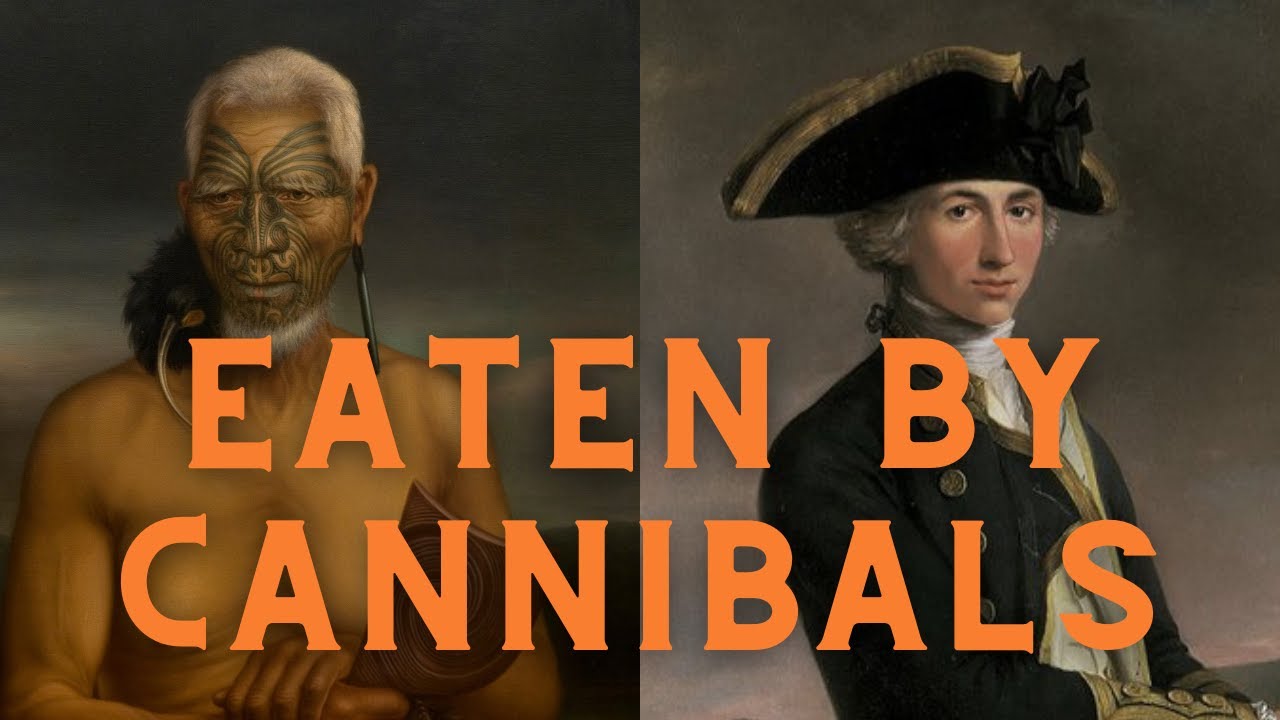
He had returned with a purpose: revenge. The Boyd had sailed from England carrying convicts to the penal colony of New South Wales, where prisoners provided free labor for the expanding British Empire. In October 1809, the ship left New South Wales bound for New Zealand, intending to return with a profitable cargo of kauri timber from the great trees that grew on the northern islands. Teara had intended the voyage to be uneventful, a simple ride home.
But from almost the moment the ship left port, he and Captain John Thompson had been at odds. Accounts of the dispute differ. One version holds that Teara refused to perform the menial duties expected of all aboard, considering such tasks beneath the dignity of a chief’s son. Another account claims that a disgruntled crew had thrown silverware overboard and blamed Teara for its disappearance.
Whatever the cause, Captain Thompson’s punishment was swift and brutal. On Thompson’s orders, Teara was tied to a capstan, deprived of food, and whipped with a cat-o’-nine-tails. British naval law allowed the captain to enforce discipline by any means he saw fit, but subjecting the son of a Māori chief to such treatment, with no thought for the political consequences, would prove a costly error. Before Teara was untied, he had vowed to exact revenge—not only on the captain but on virtually the entire crew.
In the weeks that followed, Teara feigned remorse. He obeyed Thompson’s orders dutifully and gradually gained the captain’s trust. He convinced Thompson that a detour to Whangaroa Bay would yield far more of the valuable kauri timber he sought. By agreeing to the detour, Thompson sealed the fate of everyone on board.
As the Boyd anchored in the bay, the crew took in the unfamiliar scenery: vibrant green treelines, chilly teal waters, and volcanic plugs jutting from the hills. While they gazed at the grandeur of his homeland, Teara seized his moment. He dove into the bay, the saltwater stinging the still-healing wounds on his back, and swam with all his might for the shore. Soon after reaching land, he disappeared into the dense forest.
Thompson and his crew waited, uncertain whether to abandon the detour and sail south with nothing, or wait in the hope that Teara would return with his people and make good on his promises of lumber and riches. For three days, the Boyd sat anchored in the harbor. Just as the crew grew exasperated and preparations to sail away began, a lookout spotted a Māori canoe approaching the vessel with overtures of peace. Through gestures and sign language, the Māori conveyed that they had come to lead the captain and a small party to the best trees in the area, located at the Kaeo River on the north side of the bay.
Eager to see the bounty he hoped to harvest, Captain Thompson agreed. He set off in one of the Boyd’s rowboats, accompanied by his chief officer and three other men, with the Māori guiding them toward the river. They expected their first glimpse of the giant kauri trees. They never saw their shipmates again.
As soon as the party was out of sight of the Boyd, Thompson, his officer, and the three men were bludgeoned to death by the Māori. Their bodies were taken to the village, butchered into pieces, roasted or consumed raw. The Māori warriors then stripped the dead Englishmen of their clothing and weapons and waited for nightfall. Under cover of darkness, several warriors donned the clothing of the dead and returned to the Boyd in disguise.
As they approached, other Māori canoes amassed just out of sight of the ship’s lookouts. The disguised warriors climbed aboard and swiftly killed the lookouts who greeted them in the darkness. At the signal, the war canoes swarmed the ship. Within minutes, the vast majority of the crew and passengers lay dead, strewn about the deck.
The Māori took five prisoners: passenger Ann Morley and her baby, Thomas Davis, a second mate whose name is unrecorded, and two-year-old Elizabeth Broughton. Meanwhile, five more people had managed to hide high in the rigging, avoiding the slaughter below. They clung to the masts and ropes, praying not to be seen, and remained there for the rest of the night. The next morning, they spotted another Māori canoe approaching.
At first terrified, they were startled to find that this canoe carried Chief Te Pahi, an imposing leader from a neighboring band, who had come with several of his men to trade. The curious sight of the brigantine drew their interest, and they climbed aboard. They found the five survivors, who were struggling to believe that Te Pahi and his men would help them. Terrified that the Whangaroa Māori would return at any moment, the survivors agreed to board the canoe and sneak away to shore.
But just as they reached the shore and sought places to hide, two Whangaroa canoes full of warriors paddled toward them at full speed. Unable to provide further assistance, Te Pahi sat and watched as his compatriots fell upon the fleeing party. All but one of the Boyd’s passengers on the beach were cut down within moments. The remaining passenger was dragged back to the village, where he saw the charred remains of his countrymen and joined the other prisoners.
The Māori canoes returned to the Boyd, towing the large vessel to the nearby mudflats on Motu Apo, or Red Island. Here, they could loot its valuable contents at their leisure. For several days, they ransacked the holds. Sacks of flour were cut open and spread in heaps upon the mud.
Barrels of salt pork and bottles of wine met similar fates. Tragedy struck when the Māori uncovered the ship’s cache of muskets, lead balls, and gunpowder. Unfamiliar with their usage, a Māori named Te Pio Pio Pio released the hammer on one of the muskets, creating a spark. A fire ignited the kegs of gunpowder, causing an explosion that killed Te Pio Pio and nine other Māori, including Te Arawa’s father, instantaneously.
The fire then spread to the reserves of whale oil, and over the next several hours the Boyd was consumed by fire, reduced to a skeleton. It was declared tapu, or prohibited, and no Māori ventured near it again. The three adult survivors of the attack were put to work as slaves, forced to perform heavy labor at the will of their captors. Thomas Davis and the unnamed first mate bore the brunt of the toil and abuse.
One day, the first mate collapsed while making fishing hooks. He was promptly killed with Māori war clubs, butchered, and eaten. Ann Morley and her baby, along with the two-year-old Elizabeth, were left unharmed physically but given little to no food, shelter, or clothing for three weeks. Every waking moment, they were uncertain if it might be their last.
Meanwhile, word of what had happened to the Boyd began to trickle from village to village. The news eventually reached the European settlements further south. At the Bay of Islands, Captain Alexander Berry, commander of the whaling ship City of Edinburgh, organized a rescue party with the intention of returning the captives alive by any means necessary. For days, the ship tore northward up the coast, pulling into conspicuous bays in search of Māori villages.
They quickly captured several members of the first village they found. This band of Māori, however, were the southern neighbors of the Whangaroa—the same band that had sought to help the survivors escape, though no one knew it at the time. Berry saw them as necessary collateral. The next day, the City of Edinburgh made its way into Whangaroa Bay.
The crew spotted the burned-out remains of the Boyd scuttled in the mudflats. They followed the Kaeo River and swept down upon the Whangaroa Māori, capturing several before retreating to the relative safety of their ship. With a sufficient number of hostages secured, Berry began hard-edged negotiations for the return of the survivors. He informed the captured Māori that he would kill them to the man and destroy their village should his countrymen not be returned.
The strong-arm tactic worked. The Māori were unwilling to lose the lives of their own to hold a few prisoners who required much and provided little. All four remaining members of the Boyd—Ann Morley, her infant daughter, Thomas Davis, and the toddler Elizabeth Broughton—were brought aboard the City of Edinburgh. Though emaciated and traumatized, they were otherwise unharmed.
But Berry was not yet satisfied with the terms of release. He informed the Māori that they would be brought back to New South Wales to stand trial for their crimes should they not return the Boyd’s journals and logs. This request, too, was promptly met. In a final attempt at retribution, Berry insisted that the chiefs he released be stripped of rank and political and military power.
This demand was agreed to, though even the captain knew it was unlikely to be upheld in practice. The City of Edinburgh departed Whangaroa Bay, never to return. The survivors’ ordeal was not yet over. The ship made its way to South America, stopping at Valparaíso, Chile, for repairs, and eventually traveling to Lima, Peru.
Here, Ann Morley passed away, and her daughter was placed in a Spanish home. The toddler Elizabeth Broughton was adopted by a wealthy Spanish couple unable to have children. Thomas Davis went to work for Captain Berry, ultimately meeting his end while drowning while exploring the Shoalhaven River with Berry in 1822. The reverberations of the December 1809 massacre continued.
In March 1810, sailors from the whaling ships Atlantic, Diana, Experiment, Perseverance, Specque, and New Zealander attacked the island of Motu Apo in Whangaroa Bay. The village they attacked, however, was again part of the same band that had attempted to help the survivors. Te Pahi, who had personally attempted to rescue the survivors, was wounded in the chest and neck during this attack. After fighting off the sailors, he organized his remaining warriors and recruited others from local bands to attack the Whangaroa around April 28, 1810.
The attack was ultimately repulsed, and Te Pahi was killed on the battlefield, the victim of a well-placed spear thrust. The inter-tribal conflicts that came to be known as the Musket Wars, which had begun in 1807, intensified after the Boyd massacre. The effects of European contact not only stoked political flames between Māori bands but supplied them with the means to ensure their enemies’ destruction. From 1807 until 1837, as many as three thousand battles were fought between Māori bands.
The conflict would see up to forty thousand Māori killed and thirty thousand placed into slavery or forced from their native lands.