John Jacob Astor arrived in America in the spring of 1784 with little more than a few flutes to sell and a butcher’s son’s determination to escape the rigid social order of his German village. By the time he died in 1848, he was the wealthiest man in the United States, and his family was well on its way to becoming American aristocracy. The fortune that funded the mansions, the balls, and the social dominance of later generations was built through a fur trade so violent and exploitative that it nearly wiped out entire species and devastated the indigenous communities who supplied the pelts. Born on July 17, 1763, in Waldorf, Germany, Astor spent four years in London learning English and business from his older brother George, who ran a musical instrument shop.
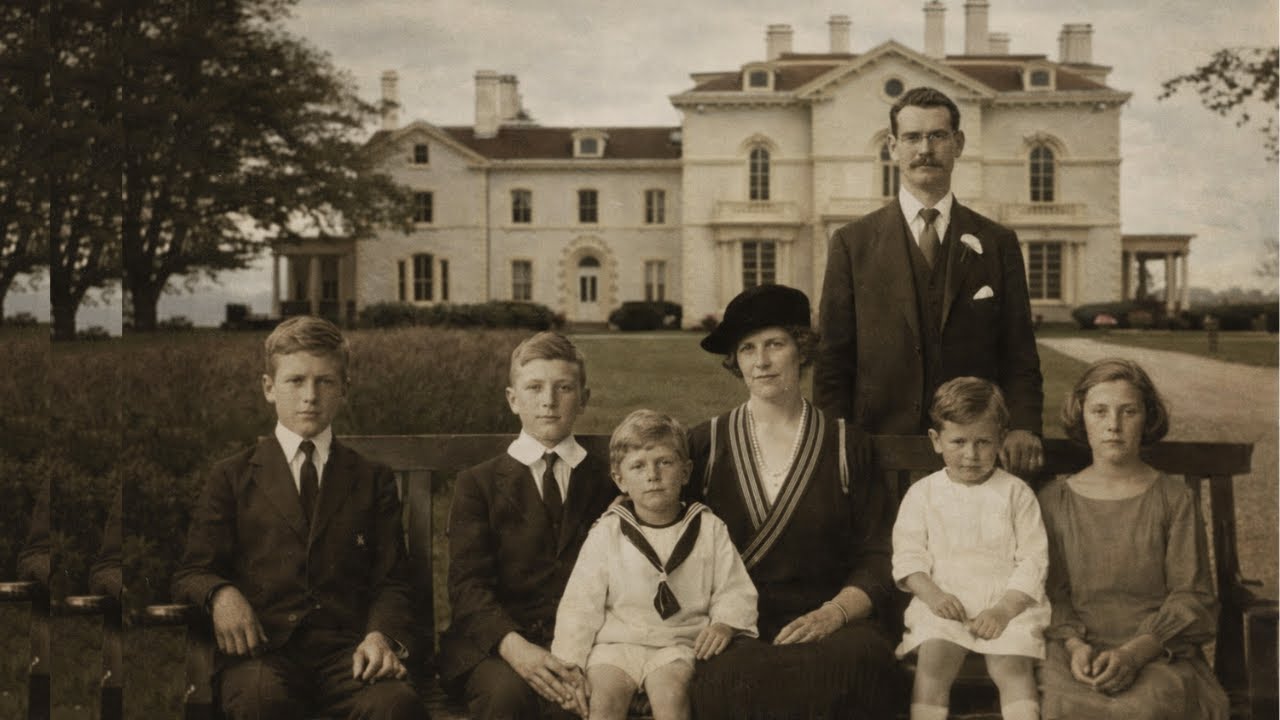
It was there that he learned about the North American fur trade. European demand for beaver pelts, used to make felt for fashionable hats, was enormous, and beavers in Europe had been hunted nearly to extinction. North America offered an apparently unlimited supply, and the indigenous peoples there had centuries of expertise in hunting and preparing pelts. Astor saw what others missed: the trade was inefficient, burdened with middlemen.
If he could buy furs directly from indigenous hunters, ship them himself, and sell straight to European hatmakers, he could multiply his profits beyond anything his competitors imagined. In 1783, at age twenty, he sailed for America. He sold the flutes, bought furs with the money, sold those furs at a small profit, and reinvested everything. Within six months, he was established as a fur buyer in New York City.
By 1800, he controlled roughly one-third of the American fur trade. The system he perfected was built on dependency. Traders had long exchanged European goods for furs at rates that dramatically favored the Europeans, but Astor made exploitation systematic. He established trading posts throughout the Great Lakes and the Pacific Northwest, including Fort Astoria at the mouth of the Columbia River, the westernmost American settlement when it was established in 1811.
His factors followed instructions that were cold and deliberate. They offered gifts, extended credit, and created obligations. Then they introduced alcohol, not casually but as policy. Whiskey became the primary medium of trade, costing fifty cents a gallon in New York and fetching ten times that value in furs.
Astor’s written instructions were explicit: be liberal with spirits to establish demand, then restrict supply to drive up prices. When some factors hesitated on moral grounds, he reminded them that they were in business to make profit, not to serve as missionaries. The results were devastating. Missionaries who visited Astor’s posts described whole villages incapacitated by drink, children starving while fathers traded everything for another bottle.
Debt was another tool. Factors extended credit in winter, to be repaid with furs in spring, but they controlled the accounting, and hunters were often told they still owed even after delivering a season’s worth of pelts. Communities that had been self-sufficient for centuries found themselves unable to feed their families, spending all their time hunting furs to pay debts they could never fully repay. The ecological damage was equally severe.
Beavers are a keystone species; their dams create wetlands that support enormous biodiversity. Region after region was trapped to near extinction, and the ecosystems collapsed with them. Contemporary accounts described rivers that had once been chains of beaver ponds reduced to dry stream beds. Astor did not care.
When one region was exhausted, he simply moved his operations. The Louisiana Purchase in 1803 opened vast new territory to exploit, and when the War of 1812 disrupted his trade, he sold supplies to both sides. His only loyalty was to profit. By 1820, he was the wealthiest person in the United States, worth an estimated twenty million dollars.
His American Fur Company controlled approximately seventy-five percent of the fur trade in the country. But Astor understood that the fur trade was dying. Not out of conscience, but because the beavers were running out and fashion was changing. Between 1825 and 1834, he systematically liquidated his fur empire.
Many competitors who refused to believe the trade would end were ruined when the market collapsed in the late 1830s. Astor had already moved his capital into something far more profitable: Manhattan real estate. He had been buying property since the 1790s, but now it became his primary focus. Instead of buying expensive land in the developed parts of the city, he bought cheap farmland on the outskirts, paying prices that seemed generous but were a fraction of what the land would be worth as the city expanded.
He held the land patiently, then sold it or, better yet, leased it, typically on ninety-nine-year leases. Tenants bore the costs of development while the Astors reaped the long-term benefits. When leases expired, everything built on the land reverted to the family at current market rates. By the 1840s, Astor was receiving approximately one million dollars a year in rental income.
At his death, he owned about one-fiftieth of all Manhattan real estate, including land that would become Times Square and large portions of the Upper East Side. The transformation of the family from fur traders to American aristocracy took only two or three generations. Astor’s son, William Backhouse Astor, never worked in the fur trade and added strategic philanthropy to the family strategy, donating to churches and hospitals and marrying into a respectable family. But the real transformation came with William Backhouse Astor Jr.
, who married Caroline Schermerhorn in 1853. Caroline understood that social position was not just about wealth but about who acknowledged you. Her famous list of four hundred acceptable families made exclusion the mark of power. If you questioned the Astors’ legitimacy, you simply weren’t on the list, and therefore your opinion did not matter.
Within twenty years, the Astors had established themselves as old money, despite the fact that John Jacob had arrived in America penniless just a few decades earlier. The human cost was staggering. The Chinook people near Fort Astoria numbered approximately twenty-two thousand in 1805 when Lewis and Clark encountered them. By 1850, after four decades of contact with Astor’s trade, fewer than three thousand remained, a population decline of roughly ninety percent.
Communities around the Great Lakes, among Astor’s primary suppliers, suffered similar devastation. Missionary accounts published in the 1840s described villages where every adult was dependent on liquor and children starved because their fathers spent all their time hunting furs that no longer existed, hunting for traders who had moved on. These communities were left with alcohol dependency, depleted game, shattered social structures, and debt they could never repay. The suffering was far from urban centers, and New York society chose not to see it.
By the time John Jacob Astor IV died on the Titanic in 1912, mourned as an American hero, the family’s brutal origins had been completely obscured. His personal fortune was estimated at eighty-seven million dollars, and the total family wealth probably exceeded three hundred million. The Astors built landmarks that still define New York City, and few people remember how the money was actually made. The pattern Astor established became the template for American plutocracy.
Cornelius Vanderbilt destroyed competitors through rate wars and corrupted politicians, yet his grandchildren married European aristocrats and built mansions that are now museums. John D. Rockefeller built Standard Oil through tactics so ruthless the federal government broke up the company as an illegal monopoly, yet the Rockefeller Foundation funds medical research and the family is associated with philanthropy. Andrew Carnegie made his fortune while his steel workers labored in dangerous conditions for poverty wages, yet he is remembered as a generous philanthropist whose libraries are in thousands of towns.
Within two or three generations, the dirty origins are forgotten. The Astor fortune, built through alcohol trading, debt manipulation, and the destruction of communities and ecosystems, became respectable old money within three generations. The family rose from a butcher’s son to the pinnacle of American society, and almost no one remembers what funded the rise.
Time and money, it seems, can launder anything.