By late autumn 1945, the prisoner-of-war camp on the windswept edge of North Yorkshire had changed. The German soldiers interned there were no longer defeated enemies in uniform so much as idle men waiting for a future none of them could picture. The war was over, but the camps remained full, and the fear that had once been about survival had become a quieter, sharper dread: what would happen to them now that there was no war to define them? Joseph lived that dread daily.
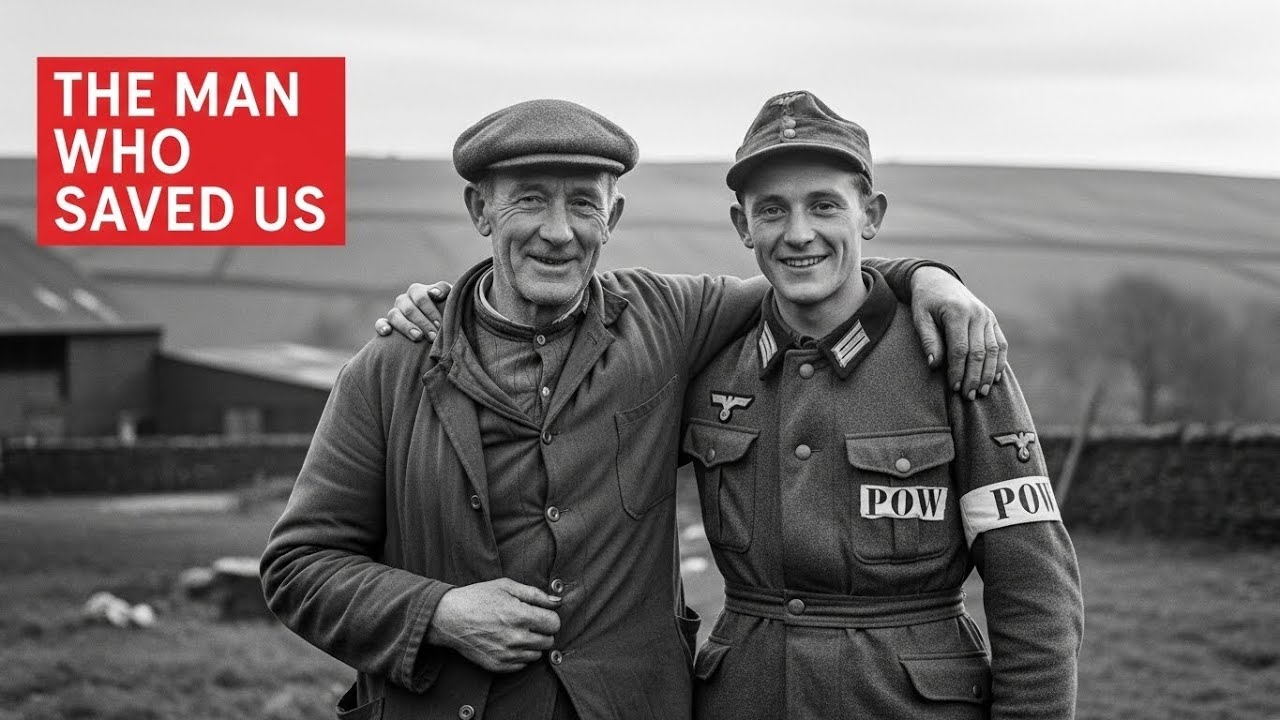
He was twenty-four years old, but his face looked far older, carrying the weight of everything he had seen since the Wehrmacht had swept him up and sent him to war. Every morning began the same way. The clatter of food containers, the British guards calling roll, the low murmur of anxious men speaking in dialects from every corner of shattered Germany. He stood in line with the others at Eden Camp, his stomach tight not from hunger but from the sickening knowledge that he had nowhere to go, no home to return to, and no reason to believe that would ever change.
The camp had lost its vitality since Germany’s surrender. The gardens where prisoners once grew vegetables had withered. The Red Cross still sent supplies, but the place felt hollow. Some men carved wooden figures with trembling hands.
Others simply sat, staring at walls, lost in thoughts of a homeland that no longer existed under any name they recognized. Not everyone surrendered to that despair. One morning, Dieter, a former Luftwaffe mechanic with scarred hands and restless energy, approached Joseph with an unexpected piece of information. There was a farmer, he said, looking for workers.
Not forced labor in the camp, but real work. Paid work. Joseph was skeptical. Who would hire them?
Dieter shrugged. A man named George Thorhill. He owned a large farm near Pickering, and he was desperate for help. The guards said he was different.
That word hung in the air like a promise too fragile to believe. In Joseph’s experience, different usually meant worse. But when Dieter volunteered for the work detail, Joseph followed, if only because sitting in the barracks felt like drowning slowly. The British had a program, desperate and practical in equal measure.
With so many of their own men scattered around the world or buried in foreign soil, farms across England were collapsing. Crops rotted in the fields. Livestock went untended. The Ministry of Agriculture issued a blunt directive: use prisoner labor or lose the harvest.
Most farmers accepted the arrangement reluctantly, treating the Germans as a necessary evil, doing minimal work under maximum supervision. No one expected a man like George Thorhill. Joseph met George for the first time on a Tuesday in late October. The farmer was fifty-eight years old, tall and lean from decades of hard labor, with hands like tanned leather and eyes that assessed without judging.
His farm, Thornhill Estate, sat on rolling hills outside Pickering, with stone walls and old barns that spoke of generations of stewardship. When the truck deposited six German prisoners at his gate, George studied them the way he might examine soil before planting. Joseph, still thin from years of inadequate rations, stood as straight as he could under that inspection. “Well then,” George said in his thick Yorkshire accent.
“I need workers, not prisoners. You work hard, you eat well, you get paid. You slack off, you go back to camp. Fair enough.
”
Joseph understood enough English to grasp the meaning. This was not the usual arrangement. Pay. The other prisoners exchanged glances, uncertain whether to believe it.
George noticed their confusion and tried again, slower this time. “You work. I pay money. Understand?
”
Joseph nodded slowly. Money meant something beyond camp rations. It meant dignity. It meant being something more than a captured enemy.
George handed him a pitchfork and gestured toward the barn. The stables needed cleaning. Could he do that? Joseph took the tool, its weight familiar and honest, and nodded.
“Good lad,” George said, and that casual approval struck Joseph more deeply than any insult ever had. They worked cautiously that first day, afraid of making mistakes. The barn was enormous, housing thirty dairy cows that demanded constant care. Joseph and another quiet prisoner named Franz cleaned the stalls while the others carried feed.
The work was hard, honest, and painfully familiar. No guards shouted. No one watched with rifles. George appeared periodically, checking progress and offering calm instruction.
At noon, George’s wife Margaret arrived carrying a basket that smelled of fresh bread and hot soup. The prisoners hesitated, their camp protocol insisting they eat apart from civilians. But Margaret was already ladling out bowls, distributing them with the same efficiency she used on her own family. The soup was rich with vegetables and barley, and Joseph took careful spoonfuls, warmth spreading through his body like hope returning to frozen ground.
Franz ate with tears silently running down his face. When they had finished, George gave them their first real direction. There was a north field needing plowing. “I think you can handle horses, can’t you?
” Joseph straightened. He had grown up on a farm outside Dresden before the war took everything. In halting English, he answered. He was good with horses.
Something changed in George’s expression, a flicker of respect crossing his weathered face. He extended his rough, calloused hand. Joseph stared at it, understanding the weight of the gesture. In camp, guards never shook prisoners’ hands.
He gripped it firmly. It was the first handshake of an equal he had received in years. Days turned into weeks, and the routine deepened into something neither side had expected. The prisoners came every day, working from dawn until dusk, and at the end of the week George paid them real British currency, enough to buy cigarettes and paper and small comforts that made camp life bearable.
More importantly, he treated them with respect. He learned their names, their skills, their histories before the war had reduced them to enemy soldiers. Dieter proved invaluable with machinery. When George’s old tractor broke down, Dieter spent an afternoon bringing it back to life with improvised parts and stubborn determination.
George watched, impressed, then handed Dieter tools from his personal collection, tools that had belonged to his own father. Dieter understood the implicit trust and treated them like sacred objects. Franz, who spoke almost no English, communicated through work. He had an instinct with animals, calming distressed cows and healing sick calves, moving through the barn as though born to it.
Margaret began teaching him English words for farm tasks, patient and kind when he struggled with pronunciation. She told him he had a natural gift, and though he did not understand all the words, her approval filled him with pride. Joseph became George’s right hand. He knew farming instinctively, understanding the rhythm of seasons and anticipating needs before they arose.
George began consulting him on decisions, crop rotation, drainage problems, equipment maintenance. The relationship shifted subtly, becoming less employer and employee, more a partnership built on mutual respect. One afternoon, working alongside each other in the north field, George spoke quietly. He had a son about Joseph’s age, he said.
William, killed at El Alamein in 1942. Joseph tightened his grip on the reins, thinking of the men he had killed or helped kill, wondering if one of them had been William Thorhill. He offered the only words he had. He was sorry.
George nodded, staring at the horizon. The war, he said, was a bloody waste. The best men died while old fools gave speeches. Then he added that Joseph reminded him of his son.
William had loved this land, understood it, would have taken over the farm. Joseph did not know what to say, feeling the comparison as both honor and burden. Finally he managed that he would try to work the way William would have wanted. George looked at him with bright eyes.
You already do, son. You already do. The weather turned brutal as November arrived. Rain swept across Yorkshire without pause, turning fields to mud and making every task twice as difficult.
Most farmers cut prisoner hours in the harsh conditions, but George increased them. The animals still needed care, drainage still needed managing. He fitted the men with proper rain gear, boots and leather coats that actually kept them dry. In camp, prisoners shivered in inadequate clothing.
At Thornhill Farm, they worked warm and dry. The other prisoners noticed. Men began volunteering for Thorhill work details, hoping for these coveted assignments. Camp commander Major Harold Sutton watched the phenomenon with mixed feelings.
During an inspection visit, he warned George that he was making the prisoners too comfortable; they were prisoners, not employees. George met his gaze steadily. They were workers on his land, he said, and he would treat them as he saw fit, unless the major was saying he could not run his own farm. Sutton backed down, but the warning was clear.
There were limits to acceptable conduct, lines not to be crossed. George kept crossing them anyway. When Joseph mentioned that his twenty-fifth birthday was approaching, George and Margaret surprised him with a small cake baked in their kitchen. The other prisoners sang in German, voices rising in the barn, and for a moment the place felt less like captivity and more like family.
Joseph stared at the cake, overwhelmed, and asked why. Why would they do this for him? George considered the question seriously. Because they worked hard and fairly, he said.
Because his son had died and these men were alive. He could be bitter or he could be humane, and he chose humane. That was his philosophy, simple and profound. Treat people as people, regardless of uniform or nationality, and see what happens.
What happened was transformation. The six prisoners working at Thornhill Farm became the most productive workers in the camp system. They volunteered for extra hours, worked through breaks, and took pride in the work. Other farmers asked George his secret, and he shrugged.
Pay them fairly, feed them well, treat them with respect. It was not complicated, except it was. Other farmers tried similar approaches and failed. The difference was George himself, his genuine respect, his willingness to see the individual behind the label of enemy.
When Dieter’s mother died in Germany and word reached the camp, George gave him a paid day off to grieve. When Franz injured his hand, Margaret bandaged it with care, applying ointment and clean wrappings with the tenderness of a mother. Christmas 1945 brought new tensions. The camp prepared for repatriation, the process of returning prisoners to a Germany that no longer bore any resemblance to the one they had left.
Lists were posted, names called. Joseph’s name was not on the first lists, but he knew his turn would come. The thought filled him with horror. Return to what?
Dresden was a pile of rubble. His family was scattered or dead. Germany was occupied, hungry, and broken beyond recognition. In mid-December, George summoned Joseph to the farm office, a small room crowded with agricultural records and family photographs.
Papers lay on the desk, official documents stamped with government seals. George explained the situation. Britain desperately needed workers. The government was considering programs allowing some prisoners to remain as civilian workers while they waited for formal immigration procedures.
The requirements were strict: a British citizen sponsor, guaranteed work, character references, living arrangements. George looked Joseph in the eye and said he was prepared to sponsor him, and Franz too, if they wanted. Legal work, fair wages, a future here. Joseph could not speak.
The offer was too large to absorb, salvation where he had expected only exile. Finally he managed to ask why. George smiled faintly. Because you saved this farm, he said.
Because you work the way William would have worked. Because sending you back to starve among the ruins when you could be productive here makes no sense. He paused, then said in a rough voice that Joseph had become like a son to him and Margaret, and they were not prepared to lose any more sons. The words hung in the air, carrying meaning beyond mere work.
Joseph felt something break inside him, the walls he had built for survival collapsing before the power of belonging. His voice breaking, he said he wanted to stay, to work for George, to remain here. George nodded with satisfaction. Then they would make it happen.
It would not be easy, the bureaucracy was a nightmare, but they would fight for it. The fight began immediately. George contacted lawyers, filed applications, wrote impassioned letters to the Ministry of Agriculture and the Home Office. He rallied other farmers who wanted to keep their best workers, forming an alliance to press for expanded retention programs.
Major Sutton, initially opposed, became an ally once he understood the economic necessity and the genuine bonds that had formed. Not everyone approved. In Pickering, tensions simmered in pubs and market squares. Some villagers saw the retention of prisoners as betrayal, coddling the enemy while British veterans suffered.
Harold Kemp, who had lost two sons in the war, confronted George outside the post office. You are harboring Germans, he said bitterly, after what they did, it was shameful. George faced him directly. Those young men did not start the war, he answered.
They worked hard, caused no trouble, and tried to rebuild their lives. If they could not show mercy now, what was the point of any of it? Kemp spat on the ground. The point was victory, not befriending Nazis.
George’s voice grew harder. They were not Nazis, he said. They were farmers and mechanics and honest men. And on his land, he decided who worked.
The confrontation reached the local newspaper. Headlines followed: Farmer Defends German Workers and Prisoner Retention Sparks Controversy. George gave interviews, speaking plainly about labor needs, individual merit, and the futility of eternal hatred. To one journalist he said they could either keep fighting a war that was already over, or build something better.
He chose to build. Public opinion shifted slowly. Letters to the editor reflected divided views, some praising George’s compassion and practical wisdom, others condemning him as naive or traitorous. But as the weeks passed and the prisoners continued working without incident, producing food that Britain desperately needed, opposition cooled.
Results were more convincing than speeches. By February 1946, bureaucratic approval came through. Joseph, Franz, and Dieter were officially permitted to remain as civilian workers under George’s sponsorship. They moved from the camp barracks into a converted barn on Thornhill property, a simple, comfortable dwelling they could call their own.
The transition from prisoners to employees felt momentous and natural at the same time, official recognition of what had already happened. The work continued through the seasons, spring planting, summer growth, autumn harvest. But the Germans now worked not as enemies performing forced labor but as men building their futures. George paid them fair wages, taught them the finer points of farming, and discussed long-term plans that included them.
When he became too old to farm, someone would have to carry on, and it might as well be them. Joseph learned more than farming. He mastered English, absorbed British customs, grew comfortable with the quiet rhythms of rural Yorkshire life. He attended village events, initially tense, then increasingly confident.
When elderly Mrs. Patterson needed her roof repaired, Joseph volunteered his weekends until the job was done. Gratitude broke barriers more effectively than any official policy. Margaret became the mother Joseph had lost.
She sewed his clothes, packed his lunches, scolded him when he worked too hard. When he fell ill with pneumonia during the harsh winter of 1947, she nursed him in the farmhouse, refusing to let him return to the barn until he was fully healed. You are family now, she said simply. Family looks after each other.
In 1948, Joseph met a British woman named Ann, a schoolteacher in Pickering who had lost her fiancé in the war. Their courtship was cautious, weighted with history and loss, but genuine. George and Margaret encouraged them, hosting dinners where Ann could see Joseph in his natural context, surrounded by the family that had adopted him. When Joseph asked for permission to marry, George gripped his shoulder firmly.
He did not need permission, he said. Joseph was a grown man. But he had his blessing. Definitely.
They married in 1949, a small ceremony that meant more than a personal union. It represented full integration, a German prisoner becoming a British husband, an enemy becoming a neighbor. George walked Joseph down the aisle, standing in for the father who had died in Hamburg. Joseph and Ann settled into a cottage on Thornhill land, raising children who would know both German stories and Yorkshire traditions, calling George Granddad with complete sincerity.
Franz also married, a widow from the village who appreciated his gentle nature and skill with animals. Dieter remained a bachelor, devoting himself to the farm and the machines he kept running year after year. In 1955, a BBC documentary crew visited Thornhill Farm, filming a series about postwar reconstruction. George was reluctant, grumbling that he needed no publicity, but agreed when Joseph convinced him the story might help other former prisoners still struggling to find acceptance.
The interview was simple and powerful. George, sitting in his parlor with Joseph beside him, explained his philosophy. He had needed workers, he said, and they had needed purpose. Both needed to heal.
It made sense to do it together. Asked whether he had been criticized for keeping Germans, he nodded. Some people never looked past the uniform, he said, but he had looked deeper and seen men worth saving, and they had saved him too. They saved the farm and saved him from the bitterness that would have eaten him alive.
Joseph spoke as well, his English now fluent though still touched by accent. George gave them more than jobs, he said. He gave them dignity when they had none, hope when they expected only exile, and family when they were orphans of war. They called him the man who saved them because that was exactly what he did.
He saw them as human when others saw only enemies. The documentary aired in spring 1956. Letters poured into the BBC and Thornhill Farm. Many came from other former prisoners scattered across Britain and Germany, telling similar stories of farmers who had risked trust and offered second chances when nations offered only rejection.
Some letters came from Germans still struggling in their shattered homeland, asking whether Britain still had room for men willing to work hard and gratefully. George answered every letter himself, connecting people, pressing government offices, and encouraging other farmers to consider employment programs. The documentary made him an unexpected spokesman for reconciliation, a role he accepted with the same practical determination he applied to farming. In 1960, the Queen honored George with an MBE for his services to agriculture and community integration.
He accepted the honor awkwardly, uncomfortable with ceremony, but pleased when Joseph, Franz, and Dieter attended the investiture, standing proudly while their benefactor received the recognition. They should have honored the Germans, George muttered afterward. They were the ones who did the work. But the work had been collaborative and the transformation mutual.
George provided the structure and opportunity; the Germans provided gratitude and effort. Together they built something none could have achieved alone. Thornhill Farm became not just productive but famous, a model of efficient agriculture and ethical labor practices studied by visitors and emulated by others. George Thorhill died in 1968 at the age of eighty-one, in the farmhouse where he was born.
Joseph held one hand, Margaret held the other, while Franz and Dieter stood at the foot of the bed. His final words were characteristic. Watch the north field drain, he said; it floods. Joseph promised they would, though tears made speech difficult.
The man who had saved them was gone, but his legacy remained rooted in the land, the family, and the lives he had changed. The funeral was extraordinary. German and British flags flew side by side. Former prisoners came from across England and Germany, now middle-aged men with families of their own, to honor the farmer who had chosen mercy over vengeance.
Joseph delivered the eulogy, speaking with the Yorkshire accent he had unconsciously adopted. George Thorhill took prisoners and turned them into workers, he said. He took workers and turned them into family. He took enemies and turned them into sons.
He never asked more than honest work and decency. In return, he gave everything: purpose, dignity, belonging, love. Joseph had been a prisoner of war, lost and empty. George made him a man again, gave him a home, and showed him that humanity survives even the worst we do to each other.
Everything Joseph was and had came from a Yorkshire farmer who saw possibility where others saw only problems. The farm passed to Joseph and Ann and their children, with provision for Franz and Dieter for the rest of their lives. Margaret remained at the farm until her death in 1975, surrounded by the extended family she had helped create. In 1985, Pickering erected a memorial in the town square, a simple plaque honoring George Thorhill and all the farmers who chose reconciliation over grievance.
By treating former enemies as future neighbors, the inscription read, they rebuilt not just farms but the foundations of peace. At the unveiling, Joseph, now sixty-four, stood among his children and grandchildren. When reporters asked him to summarize George’s impact, he thought carefully before answering that every day he woke up in Yorkshire, not buried under the ruins of Dresden. Every day he worked land he loved, fed a family he treasured, and lived free in a community that accepted him.
None of that would have happened without George Thorhill. He saved his life, yes, but more than that, he saved his humanity. That was what they meant when they called him the man who saved them. Today, Thornhill Farm still operates, run by Joseph and Ann’s grandson, who carries both German and British heritage in his name.
The farm thrives, a living testament to what grows when mercy is planted in bitter soil. School groups visit to learn about postwar reconstruction. Historians study it as a model of successful integration. Veterans, British and German, come to remember and reconcile.
In the farm parlor, under glass, George’s MBE medal sits beside the sponsorship documents for Joseph, Franz, and Dieter. Next to them is a photograph: George surrounded by the three Germans in a harvest field, all of them smiling, all clearly family despite the history that should have made that impossible. The greatest victory of that war, for those who lived through it, was never in the treaties signed or the territory claimed. It was embodied in a Yorkshire farmer’s decision to see human beings instead of enemies, in the prisoners’ willingness to trust instead of hate, and in a community’s gradual acceptance that former adversaries could become neighbors worth keeping.
It was in the daily choice to build rather than destroy, to include rather than exclude, to give chance after chance until people proved their worth. Through that choice, repeated in barns and fields across the English countryside, ordinary people accomplished what diplomats and generals could not. They turned orphans of history into a family, resentment into respect, and proved that the most powerful force in human rebuilding is not politics or propaganda. It is one person’s choice to save another when the world says they are not worth saving.
George Thorhill saved three German prisoners. But his legacy saved thousands more who heard the story and dared to believe that mercy was possible, that second chances existed, and that enemy was only a temporary label that kindness could erase. In that belief, in that practice, peace was built not from the top down but from the ground up.
One farm, one family, one soul at a time.