Just after midnight on August 31, 1997, a black Mercedes idled at a rear service entrance of the Ritz in Paris. Four people got in: a driver who had been drinking, a bodyguard in the front seat, and, in the back, a 42-year-old film producer and the most photographed woman in the world. Neither wore a seat belt. At 12:17 a.
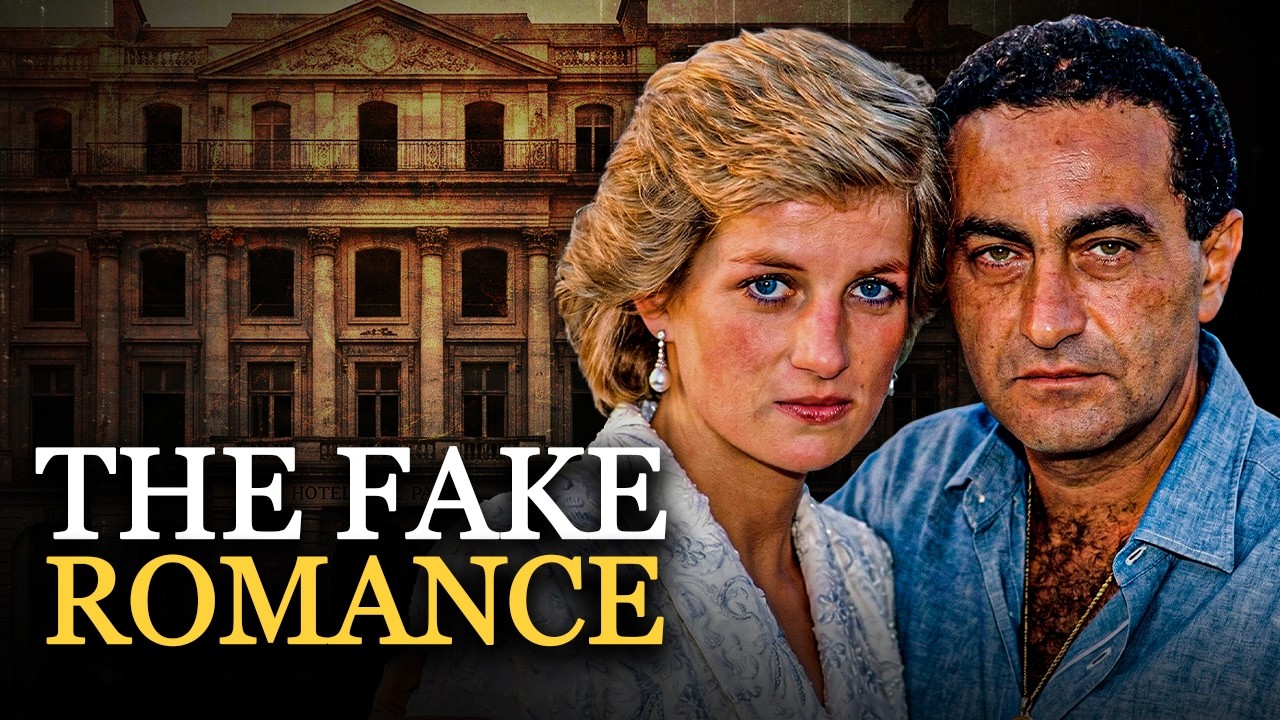
m. , the car pulled away, turned toward the Seine, and accelerated to shake the photographers chasing it on motorcycles. Six minutes later, it entered the underpass at the Pont de l’Alma at roughly 65 miles per hour, clipped a small white car, and struck the 13th concrete pillar head-on. Then there was no sound at all.
The world would remember the two in the back seat as a billionaire’s son and a princess in the last hours of a great romance. Behind that car was the Fayed name, one of the biggest fortunes in Britain, built by one of its most determined outsiders. But the photographs never showed how little of that world actually belonged to the man in the back seat, or how much he was carrying into the tunnel that no one would ever get to ask him about. This is the story of Dodi Fayed, heir to that name, a man who still could not make a major decision without his father’s shadow falling across it.
It is the story of what the cameras missed that summer: the promises he had made and not kept, the fortune that was never quite his, and the version of his death his father would spend the rest of his life trying to sell to the world. By the summer of 1997, the name Fayed meant a particular kind of wealth. It meant Harrods in Knightsbridge, the store where the royal family bought its Christmas puddings. It meant the Ritz in Paris, the hotel on the Place Vendôme that had housed kings and film stars for the better part of a century.
It meant private jets, villas, and a yacht in the Mediterranean. And it meant a father who owned all of it and had twice been refused the one thing his money could not buy him: a British passport. Mohamed Al Fayed had made himself one of the most visible businessmen in Britain as a permanent outsider, a man who possessed the country’s treasured institutions while the establishment that ran them kept the door politely shut. Dodi Fayed appeared to be the effortless heir to all of it.
He was a film producer, an international figure who moved between London, Los Angeles, and the South of France, and, in that final summer, the companion of the most photographed woman alive. The photographs told a story of a man who wanted for nothing. What they could not show was how little of the world around him actually belonged to him. The homes he lived in were mostly his father’s.
His lifestyle was supported by an allowance reported at roughly $100,000 a month. He could summon servants, cars, and security, and he could not, by most accounts of the people who knew him well, command the direction of his own life. He was born Emad El-Din Mohamed Abdel Mone’im Fayed in Alexandria on April 15, 1955. The name the world would use for him, Dodi, was a family diminutive that followed him into every headline.
His father Mohamed had been born in that same city in 1929, the son of a schoolteacher with an extraordinary appetite for more. In the mid-1950s, Mohamed moved in the orbit of the Saudi arms dealer and businessman Adnan Khashoggi, and it was there that he met Khashoggi’s sister Samira. They married. Dodi was their only child, and within a few years the marriage had come apart, with Mohamed taking custody of the boy.
What happened next was one of the great commercial reinventions of the 20th century. Shipping interests and Middle Eastern connections carried Mohamed to Britain, and in the 1980s he and his brothers took control of the House of Fraser Group, and with it, Harrods. A British government inquiry later concluded that the brothers had misrepresented the origins and scale of the wealth they used to buy it. They kept the business anyway.
That detail mattered, because reinvention was not simply something Mohamed did in a boardroom; it was the air his son grew up breathing. Reality in the Fayed household was not fixed. It could be improved, embellished, or replaced entirely if you applied enough money and enough force of personality to it. Mohamed loved his son.
He financed his world, protected him, employed him, and by every account adored him with an intensity that never faded. But the love came with a leash. People who worked around Dodi described a man who spoke with his father repeatedly through the day, every day. In his father’s presence, he grew quiet and deferential.
He postponed decisions, sometimes for hours, until he understood what Mohamed wanted. One acquaintance put it plainly: Dodi could travel a great distance in any direction, but only within a radius that his father, in the end, determined. A scene repeated itself across Dodi’s adult life. He would be entertaining friends, expansive and warm, and a message would arrive.
His father wanted him. The energy would change. The host would go quiet. Everything paused until Mohamed’s position was known.
To understand why a man surrounded by luxury lived in a state of emotional suspension, you have to understand the child. Though his parents separated when he was very young, his mother Samira built another life between Cairo, Paris, and Madrid. His father kept him, so his childhood was one of material abundance and emotional discontinuity: boarding school, servants, aircraft, and only intermittent contact with the mother he adored. As an adult, he called her constantly.
When she died of cancer in 1986, a former girlfriend described what happened to him afterward as a kind of collapse. The shape of the man was visible by then: someone who wanted more than anything to be chosen, to be selected, to be the one another person could not do without. That need appeared in the way he loved. Women, film projects, houses, extravagant gestures each offered a way to manufacture intimacy quickly, to build a feeling of closeness before a relationship had grown its own foundations.
His generosity was real, but it was also a form of architecture. He built settings, arranged for the world to feel a certain way, and invited people into it. He wanted a life that was his own, separate from his father’s shops and hotels, and he found it, or something like it, in film. In 1979 he established a company called Allied Stars, and over the following years his name became attached to pictures including Chariots of Fire, which won the Academy Award for Best Picture, and later FX, Hook, and The Scarlet Letter.
On a film set he was in his element and out of his depth at the same time. A production somewhere in the United States would see an ordinary working day, and parked at the edge of it sat Dodi’s world: a trailer appointed like a hotel suite, assistants and bodyguards standing in the heat, a private catered spread laid out for a man who was, at bottom, one line on the call sheet. He lived inside a perimeter that kept ordinary life at arm’s length. The pattern that would define his final summer had appeared once years earlier.
In 1986, the same year his mother died, Dodi married an American model named Suzanne Gregard. The courtship was fast, the setting lavish, the security intense. The marriage lasted a matter of months. It was the first clear instance of a habit that would repeat again and again: commitment accelerated through material arrangement, a wedding built like a film set before the emotional foundation underneath it had ever been tested.
By the mid-1990s, the world his father had built was at its height, made entirely of instruments of access. There was Harrods in Knightsbridge and the Ritz in Paris. There was the Villa Windsor in the Bois de Boulogne, the house where the abdicated King Edward VIII and Wallis Simpson had lived out their exile, which Mohamed had leased and restored. There was the family estate at Barrow Green Court.
And there was the yacht, the Jonikal, moving through the Mediterranean each summer. These were the machinery by which Mohamed brought the powerful into his orbit: politicians, celebrities, and, in July 1997, a former royal wife and her two young sons. The woman about to walk into that world had spent her entire adult life trying to escape a version of exactly this. Diana Frances Spencer had been born in Norfolk on July 1, 1961, into the English aristocracy, and she had married into its highest reaches and been slowly crushed by its machinery.
Her divorce from Charles, the Prince of Wales, had become final in August 1996. By the following summer she was, for the first time in her adult life, unattached to the institution that had made her famous, and she was in love with someone the public knew almost nothing about: a heart surgeon named Hasnat Khan. The relationship had begun around September 1995. What Diana wanted from Khan was the thing royal life had never once given her: a private life, emotional safety without performance, love that did not have to be conducted in front of cameras.
What Khan feared was that no ordinary life could survive the attention that followed her everywhere. Dodi Fayed offered almost the opposite proposition. Not a way to escape attention, but an entire private infrastructure built to absorb it: aircraft, boats, guards, hotel entrances designed to move famous people through crowds. His world was built for people who could not be invisible.
But there was another woman inside that world already, and a future already being planned. Before Diana entered the summer, Dodi had been involved with an American model named Kelly Fisher. Fisher later testified under oath that Dodi proposed on November 1, 1996, and that they intended to marry in August 1997. She had a ring.
She described meetings with members of the Fayed family, a celebration at the Beverly Hills Hotel, plans to furnish a shared home. In June 1997, a house on the Pacific Coast Highway in Malibu, worth roughly $7. 3 million, was purchased through a company connected to Dodi. Dodi and his representatives later disputed parts of her account, but the weight of the evidence supports the plain conclusion that Kelly Fisher reasonably believed she was engaged to be married, with a ring, a wedding date, and a house to support that belief.
On July 11, 1997, Diana and her sons William and Harry arrived in Saint-Tropez as Mohamed Al Fayed’s guests. The invitation offered something almost impossible to obtain anywhere else: a secure place where two royal boys could be boys, walled off from the crowds and the long lenses. Mohamed’s compound sat above the water, and offshore lay the family’s yacht. William and Harry, 14 and 12 that summer, tore across the bay on jet skis.
Diana sat in the sun. But the perimeter was not sealed. Paparazzi had followed the most famous woman on Earth to the Riviera and taken up positions in boats offshore. On July 14, Diana came down toward the water within range of the cameras and told the reporters that they would soon be very surprised by a decision she was weighing.
That same evening, Dodi Fayed flew in to join the party. A question enters the story that will never entirely leave it: Did Mohamed engineer the romance? What can be documented is that he unquestionably arranged everything: the holiday, the yacht, the residences, the aircraft, the security, and the presence of his son. He built the stage and lit it.
What no reliable source establishes is that he ordered his son to seduce a princess, or that Diana’s affection was anything other than her own. The setting was manufactured; the feelings inside it may have been entirely real. Both things can be true at once, and the space between them is where much of this story lives. Moving through the same wealthy enclave in the same weeks was Kelly Fisher.
By her account, she was also in the orbit of the Fayed boats and villas during this period, kept incompletely informed, while Dodi moved between the two women across a geography of separate tenders and neighboring anchorages. The distance between them was measured not in miles but in what each of them was being told. Aboard the yacht for Diana and her sons, Dodi arranged a private disco, an entire entertainment space conjured seemingly overnight. It is easy to read the gesture only as romance; it is more revealing read as method.
He transformed the environment, made experiences appear out of nothing, constructed the feeling of intimacy before the intimacy itself had time to form. Diana, by the accounts of those who saw them together, enjoyed herself. There was laughter, ease, physical comfort. Dodi offered warmth, generosity, and a security structure that could travel with her.
Yet some close to her noticed she was uncomfortable with the sheer scale of his gifts. What Dodi experienced as reassurance may have registered on the other side as obligation. At the end of July, Diana returned to the Mediterranean, and on July 31 she began another yacht holiday with Dodi. On August 4, a photographer with a long lens captured an image of the two of them kissing.
It was published on August 10. Before it, Dodi was one figure among several in Diana’s unsettled life after her divorce. After it, the public had done something the two of them had not necessarily done themselves: it had made them a couple. From that morning forward, every move either of them made would be read through the frame of a love story neither had publicly agreed to be inside.
For Dodi, the attention was intoxicating; for a man who had spent his whole life wanting validation independent of his father, being named the companion of the Princess of Wales may have felt at last like a rival. For Mohamed, the photograph delivered something the British establishment had withheld from him for decades: proximity, public and undeniable, to the royal world that had refused him a passport. For Hasnat Khan, it was the quiet end of something he had guarded with great care. And in Los Angeles, Kelly Fisher opened a newspaper and saw not only another woman, but an alternative version of a future she believed had already been promised to her.
By Fisher’s own account, she and Dodi were to be married on August 9, 1997. The photograph of Dodi and Diana kissing was published on the 10th. While one woman’s relationship became the most famous romance on earth, another woman believed her own wedding had just been quietly abandoned one day before it was to happen. On August 14, Fisher appeared in Los Angeles alongside attorney Gloria Allred and announced legal action.
She held up her engagement ring for the cameras. Her claim sought roughly $440,000. Among the details that emerged was a check for $200,000 drawn on an account that reportedly could not cover it. The lawsuit punctured the central illusion of Dodi’s life: the idea that his world was infinitely, effortlessly liquid.
A man surrounded by billions could still leave a single check to bounce. Access to a family fortune is not the same thing as control over one’s own money. Diana, through all of this, was not the passive object of a Fayed family drama. Her August was fragmented and full of her own purposes.
She traveled to Bosnia from August 8 through 10 for her campaign against landmines. She spent time in Greece roughly August 15 through 20. Her final yacht holiday with Dodi did not even begin until around August 21. She had humanitarian commitments, unresolved feelings about Hasnat Khan, two sons to think about, and her own private reasons for accepting Dodi’s company, reasons that did not obviously include a march toward the altar.
The two of them that August were moving on different clocks entirely. The press had compressed all ambiguity into two clean archetypes: Diana, radiant new love, Fisher, discarded fiancée. And somewhere inside the machinery, a private promise made to one woman was being quietly converted into something the world could deny had ever existed. On August 30, Diana and Dodi flew from Sardinia to Paris.
A traveling party stood on the tarmac, security drivers and photographers who had already learned the itinerary. From the first minute on French soil, the day was already the thing they had flown there to escape. They drove first toward the Villa Windsor and then on to the Ritz. It was later reported that the house was even being considered as a home for them.
At some point Dodi went to the Repossi shop or arranged for the jewelry to be collected. There is no reliable evidence that any formal proposal took place. The official investigation later reconstructed the ring’s purchase. Dodi first left the shop with little more than a catalog.
An associate returned afterward and did much of the selecting, narrowing the choice to a small number of pieces, including one from a Repossi collection with a name that would become unbearable in hindsight: Tell Me Yes. Dodi made a later selection. The investigation found no clear evidence that Diana had ever chosen the ring, seen the ring, or had its size taken for her hand. That evening’s plan had been dinner at a restaurant called Chez Benoît.
On the way there, with photographers already massing, Dodi changed his mind and ordered the cars back to the Ritz. They went into the hotel’s restaurant, L’Espadon. The other diners noticed them. It was the same problem they could not escape.
Within minutes, they got up, left their table untouched, retreated to the imperial suite upstairs, and ordered food sent up privately. The meal ordered to the suite was simple: sandwiches and the like. This was not a ceremonial final supper. Downstairs, another thread was tightening.
Henri Paul, the Ritz’s acting head of security, had gone off duty earlier in the evening. Now he came back to the hotel. Bartenders later reported serving him two measures of Ricard. Toxicology evidence gathered afterward became central to the official conclusion that he was impaired.
And then came the decision that undid everything. The couple wanted to spend the night at Dodi’s apartment across the city. Dodi took part in a plan to deceive the photographers. Decoy cars would leave from the grand entrance on the Place Vendôme, drawing the pack while the couple slipped out the back.
Trevor Rees-Jones, the bodyguard, later recalled that it was Dodi who directed the use of that third vehicle and who wanted Henri Paul to drive it. The professionals who might have slowed the whole thing down were split up and pointed in different directions. The plan was assembled in minutes in a hallway by a man whose lifelong gift was for making things appear quickly and whose lifelong weakness was for never quite thinking them all the way through. Leave the safety of the Ritz.
Choose Henri Paul to drive after he had been drinking. Separate the regular bodyguard team and their vehicle from the principal car. Choose a fast decoy departure over a slow protected one. No seat belts.
Each choice was small. Together, they formed a chain. After 12:15 a. m.
, Diana came out toward the waiting car. On the hotel footage, she made a small playful salute before she stepped inside. Dodi followed her in. Henri Paul was driving.
Trevor Rees-Jones sat in the front passenger seat. Dodi and Diana sat in the back. The official reconstruction concluded that neither Diana nor Dodi was wearing a seat belt, and only Rees-Jones may have been restrained. The official investigation found no defect of brakes, steering, carriage, or mechanism to explain the loss of control.
At roughly the crash, the Mercedes made glancing contact with a white Fiat Uno. The Fiat was never conclusively identified, and the official investigation found no evidence the car had been placed there as part of a plot. Then the car struck the 13th pillar almost head-on. Henri Paul and Dodi Fayed were killed, pronounced dead at the scene.
Trevor Rees-Jones survived, though his face and chest were catastrophically injured. Diana was alive and critically hurt. Dodi Fayed was 42 years old. He would never explain any of it.
The man whose entire method was to keep changing the plan had at last run out of plans to change. She was pronounced dead at the Pitié-Salpêtrière around 4 a. m. The paparazzi were not the sole cause of the crash.
Neither was Henri Paul acting in a vacuum. Speed, alcohol, pursuit, a chain of improvised security decisions, and two people in the back with no seat belts all converged in the same few seconds. Somewhere in the hours that followed, Mohamed Al Fayed was told that his eldest son was dead and that the Princess of Wales was gravely injured and then dead as well. The man who had controlled nearly every practical element of his son’s life could do nothing whatsoever about the one event that had just occurred.
Dodi Fayed was laid to rest on September 1, 1997. First at Brookwood Cemetery in Surrey, then later reinterred on the grounds of his father’s estate, so Mohamed could visit the grave without ever leaving his own land. Diana’s death set off one of the largest outpourings of public grief in modern memory. A nation halted for a funeral at Westminster Abbey, watched by hundreds of millions.
Behind Diana’s coffin came two boys, William, 15, and Harry, 12, made to perform their grief before the largest television audience the world had ever assembled. In Surrey, the Fayeds buried their own son in near silence. And then Mohamed turned his grief into a machine. He insisted that Dodi and Diana had been engaged, that Diana had been carrying Dodi’s child, and that the two of them had been murdered, assassinated by the British establishment, because the marriage of the mother of a future king to an Egyptian Muslim could not be allowed to happen.
Every one of these claims would be investigated. Every one rejected. Inside Harrods, Mohamed created a memorial to the couple, and later commissioned a bronze statue of Dodi and Diana dancing beneath the wings of a seabird, installed on the lower ground floor. He called it Innocent Victims.
Kelly Fisher all but vanished from the story. Trevor Rees-Jones lived, though his face had to be rebuilt across many operations, and his injuries took from him the one thing the world most wanted from him: a clear memory of the final seconds. He broke with the Fayed family and published an account that did not support Mohamed’s version of events. The French inquiry concluded the crash was caused by Henri Paul’s intoxication and excessive speed with no evidence of any plot.
In Britain, Operation Paget took Mohamed’s allegations seriously enough to examine each one in forensic detail. In 2008, after the longest and most expensive inquest in English legal history, a jury delivered its verdict: unlawful killing through the grossly negligent driving of Henri Paul and of the paparazzi who pursued the car. Not murder, not conspiracy. The murder theory outlived the inquest that dismissed it, though surveys continued to find large numbers of people who believed Diana had been killed rather than lost to an accident.
Above the tunnel at the Pont de l’Alma stood a gilded replica of the flame from the Statue of Liberty, placed there years before for reasons that had nothing to do with Diana. After that night it became an unofficial shrine. Mohamed Al Fayed held to his belief to the end. He sold Harrods in 2010 to Qatar’s sovereign wealth fund for a reported £1.
5 billion, sold Fulham Football Club three years later, and on August 30, 2023 died at age 94, one day short of the 26th anniversary of the crash. And after his death, a different portrait of Mohamed Al Fayed emerged. Beginning in 2023, dozens and then well over a hundred women came forward to accuse him of sexual assault, rape, and abuse carried out across decades, including at Harrods and the Ritz in Paris. Harrods, under its current ownership, apologized and established a compensation scheme.
The Metropolitan Police opened one of its largest and most complex investigations, focused not on Al Fayed, who was beyond prosecution, but on people who may have enabled him. The investigations remain active; the man who spent his final decades demanding justice for his son died without ever facing a charge. And Dodi himself remains exactly where he was left, suspended in the last summer of his life, 42 years old forever. He had no children, never explained the ring or the house in Malibu, never the explanation for what he believed the woman beside him had actually agreed to.
His film career survives in a handful of credits. His entire romantic history has been compressed in public memory into a few weeks on a boat. A name beside a more famous name in a tunnel at midnight. On the hotel footage, Diana raised her hand in a small playful salute before stepping into the car.
Dodi followed her in. Six minutes later, neither of them had a future left to explain.