On May 10, 1940, Nazi Germany invaded Belgium, shattering the country’s neutrality and overwhelming its defenses within weeks. By May 28, the Belgian army had surrendered, and the nation fell under Nazi occupation.
While many Belgians joined the resistance, others saw an opportunity in collaboration. Among them was Louie Kolar, a young, intelligent, and ambitious man devoted to the fascist cause.
Kolar was born on August 9, 1915, in the industrial town of Anne, in the French-speaking region of Wallonia. He grew up in the shadow of World War I, which had left deep scars on Belgium and shaped its turbulent interwar politics.
As Kolar reached adulthood, Belgium was struggling with the Great Depression. Economic crisis and fear of communism drove many toward radical ideas, including the Rex movement, founded in the early 1930s by Leon Degrelle.
Originally a Catholic publishing group called Christus Rex, the movement evolved into a political force combining religious traditionalism, nationalism, and authoritarianism. Rex called for moral regeneration, the defense of Catholic values, and the rejection of parliamentary democracy.
In 1936, Rex shocked the country by winning more than 11% of the national vote. But the movement grew increasingly fascist, openly sympathetic to Nazi Germany, and lost support from moderate Catholics and conservatives.
For Kolar, Rex offered purpose and ambition. He joined the movement and worked on propaganda and organizational tasks, helping to recruit new members and expand its influence. His devotion and administrative talent quickly made him stand out.
When the Nazis attacked Belgium in May 1940, the country collapsed within weeks. Under occupation, Degrelle reorganized Rex under Nazi supervision, and Kolar became one of his most trusted men.
Kolar soon gained responsibility for propaganda and internal coordination. He forged close ties with the German security apparatus, particularly the SD and the Gestapo. His ability to impose order impressed both the occupiers and Degrelle.
By 1943, as Degrelle left for the Eastern Front to fight with the Waffen SS, Kolar effectively took control of the civilian branch of Rex. Operating from offices in Brussels and Charleroi, he oversaw the movement’s collaboration with the Nazi administration.
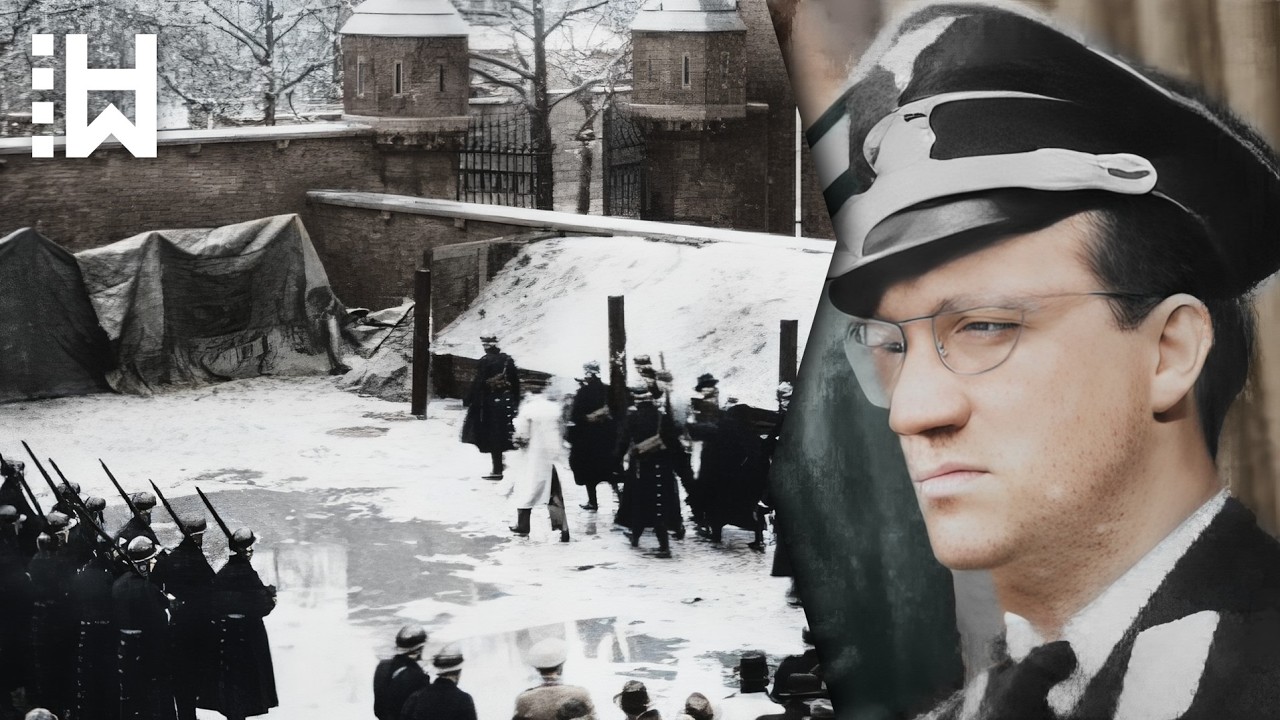
Rex militants under his supervision joined German police raids, arrested dissidents, and enforced occupation laws. Kolar’s brigade B, a paramilitary unit within Rex, became notorious for its violence and cooperation with German intelligence.
By 1944, as Allied troops advanced through France, the resistance intensified its operations inside Belgium. German authorities and collaborators responded with escalating brutality.
On August 17, 1944, members of the resistance ambushed and killed Oswald Englebin, the Rexist mayor of Charleroi, along with his wife and son. The murder enraged the Rexist leadership.
Within hours, Kolar and Victor Matthys, the acting national leader of Rex, ordered revenge. Rexist militiamen rounded up dozens of civilians in the nearby town of Courcelles, including teachers, shopkeepers, local officials, and even a priest.
Several people were shot that same evening. During the night, more civilians were taken from their homes and detained. At dawn on August 18, the remaining prisoners were lined up against a wall and executed by firing squad.
In total, 27 people were killed. Witnesses later testified that Kolar was present and took command of the operation. The massacre became one of the most infamous atrocities of the occupation.
When Allied forces entered Belgium in early September 1944, Rex collapsed. Degrelle fled to Germany, and Kolar and Matthys followed soon after.
After the liberation, Kolar and Matthys moved through Germany toward Switzerland. Denied entry at the Swiss border, they fled to the Austrian Alps. Matthys was captured soon after, but Kolar managed to escape.
Kolar was eventually found in February 1946 in the Austrian city of Innsbruck by Belgian intelligence agents. With him were 20 Belgian SS men and his wife.
By that time, Kolar had already been sentenced to death in absentia. He was wanted as the head of brigade B and as one of the principal organizers of the Courcelles massacre.

Kolar was also accused of orchestrating several assassinations during the occupation, including those of industrial leader Alexandre Galopin, former minister of justice François Bovesse, politician and university director Julien Yernaux, and Louis Braffort, president of the Brussels Bar Association.
Kolar was returned to Belgium under heavy guard and awaited trial before the Charleroi war council. Testimonies from former Rexists revealed the extent of his crimes.
One former Rexist, Jean Neuville, told the court that Kolar had ordered him to gather information on Belgian Freemasonry to identify targets for assassination. The investigation had led directly to the killing of Julien Yernaux.
When confronted, Kolar coolly replied that he had collected such information only for documentation purposes. He later admitted he had taken responsibility for certain reprisals, such as the Courcelles massacre.
He tried to minimize his authority, claiming he had merely advised the political department. Yet numerous witnesses testified that Kolar had exercised real command.
On March 1, 1946, he was sentenced to death for his role in the assassination of Yernaux. A second and much larger trial followed.
On May 21, 1946, in the Salle Concordia in Charleroi, Belgium opened its biggest war crimes trial. 97 defendants were charged with taking part in the Courcelles massacre. Leading the accused were Victor Matthys and Louie Kolar.
Kolar appeared thin and tense, wearing a long coat and steel spectacles. His prisoner number 55 was pinned to his chest. He adopted an evasive attitude, often rubbing his forehead and claiming to suffer from amnesia.
When asked about the events of August 17, 1944, he muttered, “It is absolutely impossible for me to remember anything.” When prosecutors accused him of drunkenness before the killings, he laughed and said, “I do not remember. I have only chaotic fragments of memory.”
When confronted with witnesses who saw him carrying petrol and setting houses on fire, he mocked them, replying, “I do not remember, but I recall there were at least 15 people with me, and I did everything myself, did I? What were the others doing then?”

His lawyer argued that Kolar had only been a secretary, following Matthys’s orders, and pleaded for mercy. But after two months of hearings and testimony from 147 witnesses, the verdict was clear.
On August 3, 1946, at 10:00 a.m., the Charleroi War Council sentenced both Matthys and Kolar to death by firing squad.
While awaiting execution, Kolar attempted suicide but survived. His mental state deteriorated, alternating between arrogance and despair. He spent his final months isolated in a small cell.
At dawn on November 10, 1947, the sentence was carried out in the courtyard of a military barracks in Charleroi. 27 Rexist collaborators were scheduled for execution that morning.
The 32-year-old Louie Kolar was placed in the first group set for 7:30 a.m. Though he begged for mercy, nothing could save him.
After smoking his last cigarette, he appeared pale and exhausted. Guards had to carry him to the post. Because of his former military status, the ceremony required that he be stripped of rank.
The insignia were torn from his coat, and the order was read aloud. A priest stood beside him, offering final absolution. Kolar wept quietly, praying as the priest made the sign of the cross.
A red cloth was pinned to his chest to mark the target. The officer in command raised a sword.
At exactly 7:36 a.m., the rifles fired. Kolar slumped forward but did not die immediately. His body trembled, and he was screaming in pain.
The priest stepped closer and gave him final absolution. Then a gendarmerie officer drew his pistol and fired a single bullet into Kolar’s head. The coup de grâce.