Mary Ellen Pleasant arrived in San Francisco in April 1852 as the Gold Rush was pulling fortune seekers from across the country into California. She had already lived a remarkable life, though much of her early history remains uncertain. She was believed to have been born into slavery on a Georgia plantation around 1814, though she would later claim she was born free in Philadelphia to a mother from Louisiana and a Hawaiian father. As a young girl she was separated from her family and, by roughly the age of ten to thirteen, found herself in Nantucket, Massachusetts, working as a domestic servant for a white family.
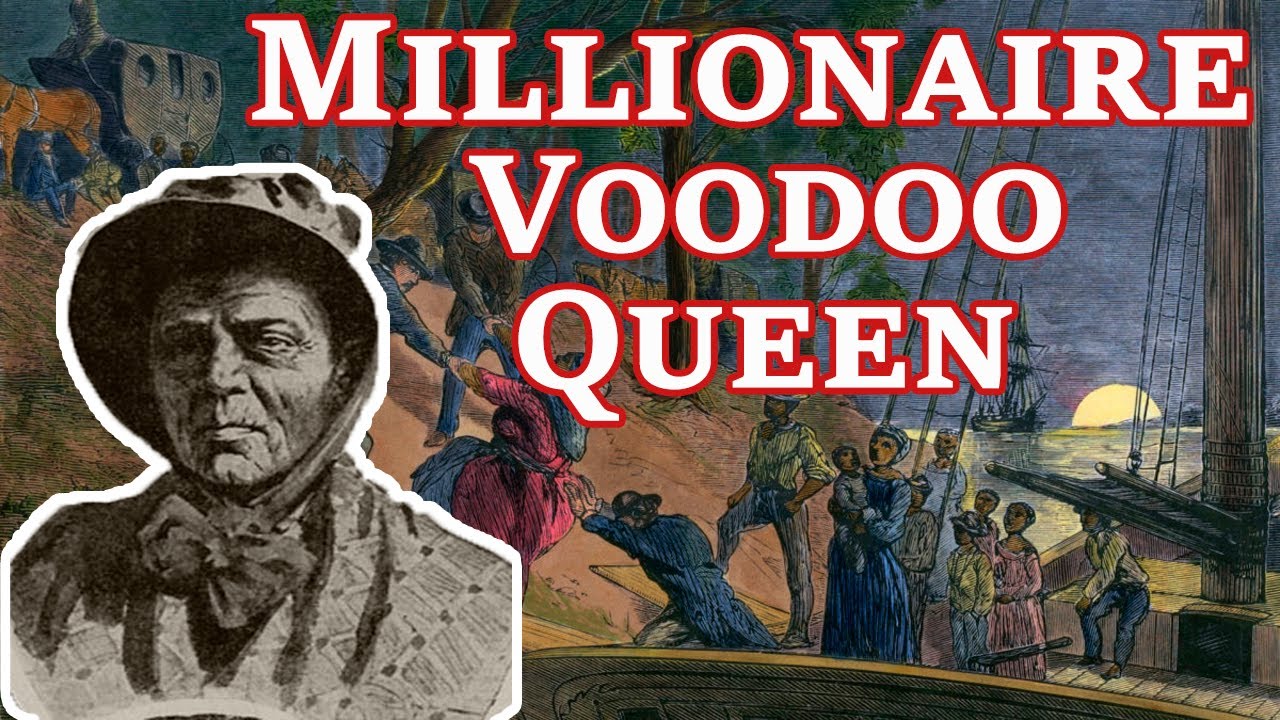
That household treated her well, taught her to read and write, and was deeply involved in the abolitionist movement. Through them she met many prominent abolitionists, and she discovered early that being treated as invisible could be turned into a powerful advantage. Pleasant married her first husband, James Smith, a wealthy merchant and flower contractor of white or mixed ancestry. He was a staunch abolitionist, and together they worked the Underground Railroad as slave stealers, hiding fugitives in safe houses and transporting them to the northern states or into Canada.
When Smith died in the 1840s, he left Pleasant a considerable inheritance and instructed her to continue the work. She did, and by 1848 she had entered a relationship with a man named John James Pleasant, whose last name she took, though no official record of a marriage survives. The rising suspicion of slavers eventually forced the couple to move to New Orleans, but word of California’s new free-state status and its potential fortunes soon reached them. In April 1852, Pleasant left New Orleans for San Francisco.
Because she was light-skinned, she passed as white in her new city and used her first husband’s surname when dealing with whites to reduce discrimination. She found work as a cook and domestic servant for some of the most important businessmen in San Francisco. To them she was invisible, and she made the most of that dismissiveness by eavesdropping on their conversations, gathering investment tips and gossip. She reportedly earned about five hundred dollars a month as a cook, and with that money, plus her inheritance, she invested in real estate, gold mines, and silver mines.
Soon she opened her own laundry business and expanded from there. She used her growing success to aid other former slaves, finding them employment and placing some in positions within wealthy white households. Only the black community knew her true identity. To them she was the Black City Hall, the woman who had brought the Underground Railroad to the West.
In 1857 she left San Francisco to support the abolitionist John Brown, sending him roughly thirty thousand dollars, money that helped finance his raid on the federal arsenal at Harpers Ferry. Brown hoped the raid would trigger a large armed slave revolt, but the plan failed, and on December 2, 1859, he was hanged for murder and treason. After his execution, a note found in his pocket read: “The axe is laid at the foot of the tree. When the first blow is struck there will be more money to help.
” It was signed with the initials MEP, for Mary Ellen Pleasant, but officials misread the letters and went looking for someone with the initials WEP. Pleasant was never suspected. She revealed the note’s origin only before her own death. By the 1860s, Pleasant owned boarding houses and a chain of thriving laundries, yet she remained deliberately humble, often disguising herself as a servant so she could be overlooked.
Around this time she met Thomas Bell, a young Scottish bank clerk who was already earning a good income trading mercury, known as quicksilver. Together they formed a decades-long business partnership that made both of them extremely wealthy. In 1865, after the end of the Civil War, Pleasant walked into the city directory and publicly changed her racial designation from white to black. It was a defiant act in a country still torn by racial tension, one that made her own life harder.
As she wrote in a memoir, her cause was freedom and equality for her people, and she would rather be a corpse than a coward. Her relationship with Bell remains uncertain, and sources differ on whether it was romantic. What is clear is that they invested heavily together, with Pleasant leading and Bell following her guidance. Because she had now registered as black, she worried that people would question how she had amassed her fortune, so she placed investments and properties in Bell’s name.
This made business dealings easier in an era when a woman, especially a black woman, faced enormous barriers. In 1866, Pleasant was forcibly removed from a city streetcar along with two other black women. She filed lawsuits against two streetcar companies for racial discrimination. One company agreed to allow African Americans to board; the other did not.
The case against the North Beach and Mission Railroad Company reached the state Supreme Court, and in the end Pleasant paved the way for the desegregation of San Francisco’s streetcars. Years later she would be recognized as the mother of civil rights in California. Her fortune continued to grow. Pleasant and Bell eventually held shares in laundries, dairies, restaurants, boarding houses, and even Wells Fargo Bank.
By 1875 they had amassed an estimated thirty million dollars, equivalent to roughly eight hundred and fifty million today. With that wealth Pleasant built a thirty-room Victorian mansion in the heart of San Francisco, worth about one hundred thousand dollars at the time and lavishly furnished. She lived there with Bell, his family, and staff, and she also bought other properties, including a thousand-acre ranch in the Sonoma Valley. But by the 1880s, San Francisco was becoming a more overtly racist city, and her success bred jealousy.
White residents grew hostile and dismissed her as Bell’s mistress and nothing more. Rumors spread that her boarding houses were brothels and that she held some otherworldly power over the wealthy white people around her. In 1883, Pleasant became entangled in the scandalous trial of Nevada senator William Sharon, who was accused of seducing and abandoning a young woman named Sarah Hill. The trial was reported daily across the nation.
Sharon’s lawyers claimed that Pleasant, a friend of Hill’s, had used dark forces to manipulate the young woman into entrapping the senator. Pleasant went along with the absurd story and brought a voodoo doll to court, declaring she would use her powers to cause his death. Soon after, Sharon died, and public suspicion turned against her. She came to be seen as an evil mythical figure, a voodoo queen, and the press began calling her by the racist nickname Mammy Pleasant.
She hated it. When a pastor addressed a letter to her by that name, she wrote back on his own paper that her name was Mrs. Mary E. Pleasant and that she would not waste her own paper on him.
In 1899, Thomas Bell died in her mansion, and the consequences were devastating. His widow, Teresa Bell, launched a full-page smear campaign in the San Francisco Chronicle under the headline “The Queen of the Voodoos,” portraying Pleasant as a monster who had used witchcraft and implying she had murdered him. Teresa and her son Fred sued Pleasant for control of the multi-million-dollar fortune. Pleasant’s reputation had already been damaged by allegations of brothels and voodoo practices, and some rumors even claimed she ate and stole babies.
Worse, many of her properties, including the mansion she had designed and built, were held in Bell’s name, making ownership difficult to prove. Lies were told about her in court, including claims that she had kept Bell a prisoner in the mansion and fed his children dog meat and stale bread. Pleasant presented evidence that she had designed and paid for the mansion’s construction, but she lost the legal battle, along with her reputation and most of her fortune. She was evicted from her own home and plunged into poverty, depending on the kindness of friends for a roof over her head.
Mary Ellen Pleasant died in 1904 at the age of eighty-nine. Despite everything she accomplished, she is not as well remembered as she ought to be, largely because her activities were secretive and controversial, and her life is surrounded by mystery. She wrote three autobiographies, each contradicting the others. On her deathbed, she asked that her gravestone read “A friend of John Brown.
” The inscription was added sixty years after her passing. Today, San Francisco has a day dedicated to her and a small park named in her honor near where her home once stood, though legend holds that her ghost still haunts it, throwing eucalyptus nuts at passersby at night.