Biddy Mason was born into slavery in Hancock County, Georgia, on August 15, 1818, though even the details of her birth cannot be confirmed. Named Bridget at birth, she became known as Biddy in her youth and carried that name for the rest of her life. Georgia was still a slave state, and would remain so for nearly fifty more years. In her youth, Biddy was separated from her parents and sold to a plantation owner named Robert Smithson.
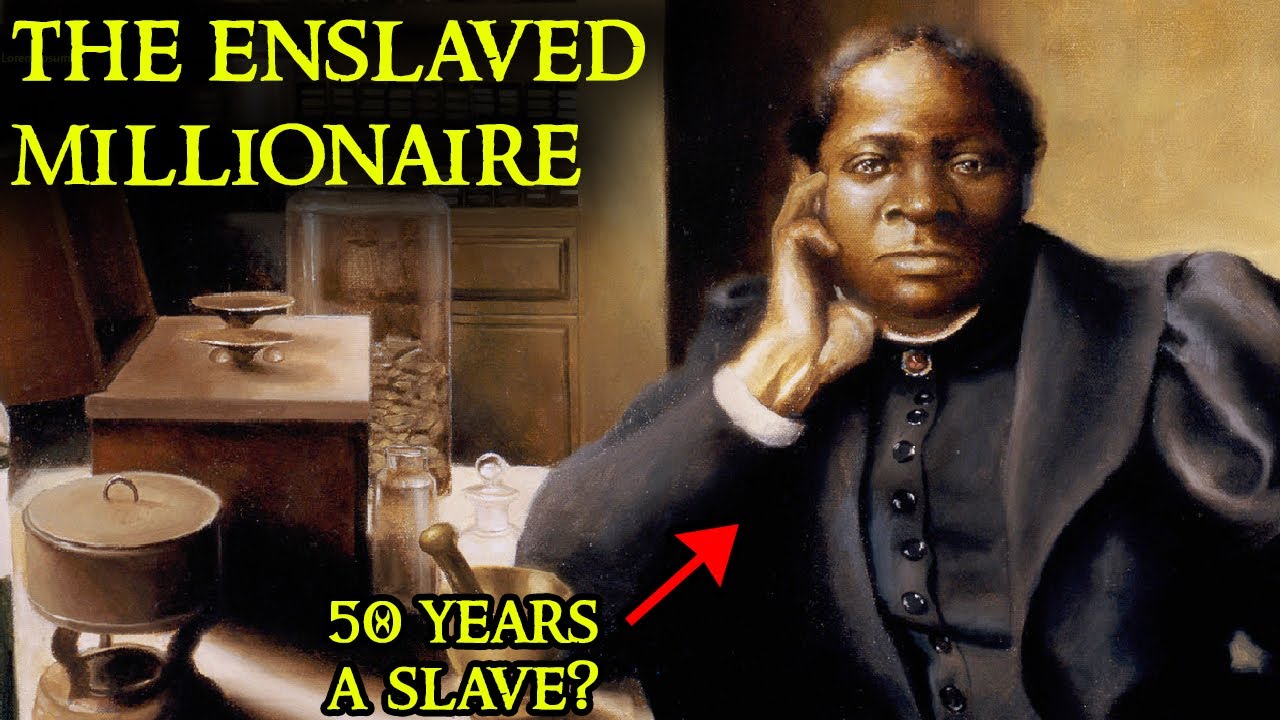
The years that followed were arduous, but they also gave her skills that would later prove invaluable. On Smithson’s plantation, she learned about agriculture and husbandry, absorbed the folk medicine traditions brought from Africa and passed down through generations, and trained in the skills of a midwife. In 1836, Biddy was either sold or given away as a wedding present to Robert and Rebecca Smith, a young couple who owned a plantation further west in Mississippi. She spent the next decade there and gave birth to three daughters: Ellen in 1838, and then two more daughters in 1844 and 1847, the latter named Harriet.
It has been speculated that Robert Smith fathered these children, but there is no definitive evidence to confirm that claim. In 1847, a group of Mormon missionaries arrived in Mississippi to convert locals to the Church of Jesus Christ of Latter-day Saints. The church, founded by Joseph Smith in New York in the 1820s after he claimed a series of divine revelations, had grown considerably and moved westward in search of an American Zion, establishing outposts in Illinois, Ohio, and Missouri. Its rise also provoked opposition, and in 1844, Joseph Smith was killed in a riot in Illinois.
His followers remained committed to the cause, and Mormon groups continued heading south and west. Not long after the missionaries reached Mississippi, Robert Smith converted to the LDS faith and decided to move to Utah, where church leaders under Joseph Smith’s successor, Brigham Young, had begun establishing a new frontier community in Salt Lake Valley. He took his family and slaves with him, including Biddy and her three daughters. The convoy crossed through Colorado in 1848 and arrived in Utah, where Biddy’s medical skills made her an integral member of the journey.
The Smiths settled at Cottonwood, not far from Salt Lake City. The LDS Church was not an abolitionist denomination; Brigham Young held a clear antipathy toward African Americans, and slavery was permitted in Salt Lake City and its surrounding settlements. Yet in 1851, a decision by Young opened the possibility of Biddy gaining her freedom. The United States had acquired vast territory from the Mexican-American War, land that included the region the Mexicans called Alta California, which quickly became the U.
S. state of California. Extensive gold seams had been discovered there in 1848, sparking a massive rush of prospectors and transforming the state rapidly. In 1850, California entered the Union as a free state.
Brigham Young wanted the LDS Church to have a presence there, and in 1851 he dispatched a mission southwest to San Bernardino, instructing those who went with their slaves that bringing enslaved people from Utah to California would effectively grant them their freedom under California law. When Robert Smith decided to join the mission with his family and slaves, it appeared that Biddy would soon be free. But Smith had other ideas. He did not set his slaves free upon arriving in California.
Many enslaved individuals like Biddy were entirely unaware that they were entitled to their freedom once they entered the state. In the early 1850s, California authorities were generally reluctant to prosecute slave owners who brought slaves in without freeing them. So Biddy and her daughters remained enslaved for several years. In 1855, one of Biddy’s daughters, Ellen, began seeing a free Black man named Charles Owens.
It was from Owens that Biddy learned California law had banned slavery and that she had the legal right to appeal against her and her daughters’ continued enslavement by Robert Smith. Owens helped her file a petition in the Los Angeles County Court. Biddy was not allowed to speak on her own behalf, but when Robert Smith failed to appear, the court ruled in line with California law and granted Biddy and her three daughters their freedom. The case was resolved in January 1856, when Biddy was around thirty-eight years old.
At that point, she took the surname Mason, which had been the middle name of a man in San Bernardino for whom she had worked and whom she respected. Biddy and her daughters went to live with the Owens family, and Ellen soon married Charles Owens. Biddy secured work as a nurse, putting her medical skills to good use, and she prospered as California was ravaged by a smallpox outbreak in the late 1850s and early 1860s. Her skills as a midwife were also in constant demand.
She lived frugally and saved her money, and by 1866 she had enough to buy a house on Spring Street in Los Angeles for two hundred and fifty dollars. The price was low because Spring Street was then on the periphery of the city, but as Los Angeles expanded, it became more central. In purchasing it, Biddy became one of the first Black women to own property in California. She continued buying cheap real estate on the edges of the city and selling it years later at a handsome profit as property values rose.
By the early 1880s, she had accumulated considerable wealth and began erecting commercial buildings, which she rented out as office space. By the late 1880s, the woman born into slavery in Georgia seventy years earlier had amassed a fortune estimated at about three hundred thousand dollars, equivalent to roughly ten million dollars today. Her activities extended beyond business. In 1872, she and her son-in-law Charles Owens co-founded the Los Angeles branch of the first African Methodist Episcopal Church, the first African-American church in the city.
The planning meetings were held in Mason’s home on Spring Street, and the land for the church was donated directly by her. She is also widely credited with playing a significant role in establishing the first elementary school in Los Angeles for African-American children, and she made considerable donations to local charities. She often visited jail inmates to see what could be done to provide them with legal aid. When severe floods struck Los Angeles in the 1880s and left thousands destitute, she opened accounts in her name at several grocery stores and paid for the shopping of flood victims for many weeks.
In her later years, she effectively turned her home into a mixture of an orphanage and a care home for the destitute, who visited her daily for relief. As her health declined, her grandson would bring visitors inside to meet her. Among the African-American community in Los Angeles, she became known as Grandma Mason. Biddy Mason died on January 15, 1891, at the age of seventy-three.
Despite her standing in her community, she was buried in an unmarked grave at Evergreen Cemetery in the Boyle Heights district. Nearly a century later, her contribution to early California history was recognized when a large tombstone was erected over her grave in 1988. A year later, the California Afro-American Museum held an exhibit honoring her life and declared November 16, 1989, Biddy Mason Day.
Today, Biddy Mason Memorial Park in Los Angeles is named in her honor, ensuring that her remarkable story would finally be brought to wider public awareness.