On July 15, 1862, United States soldiers marched through Apache Pass, a narrow gap between two mountain ranges in the Arizona desert. They had walked more than sixty miles in scorching heat, their canteens nearly empty. At the far end of the pass, they finally saw what they had been searching for: a spring of water hidden in the rocks, the only reliable water source for a hundred miles in any direction. From the hills above, five hundred Apache warriors watched silently.
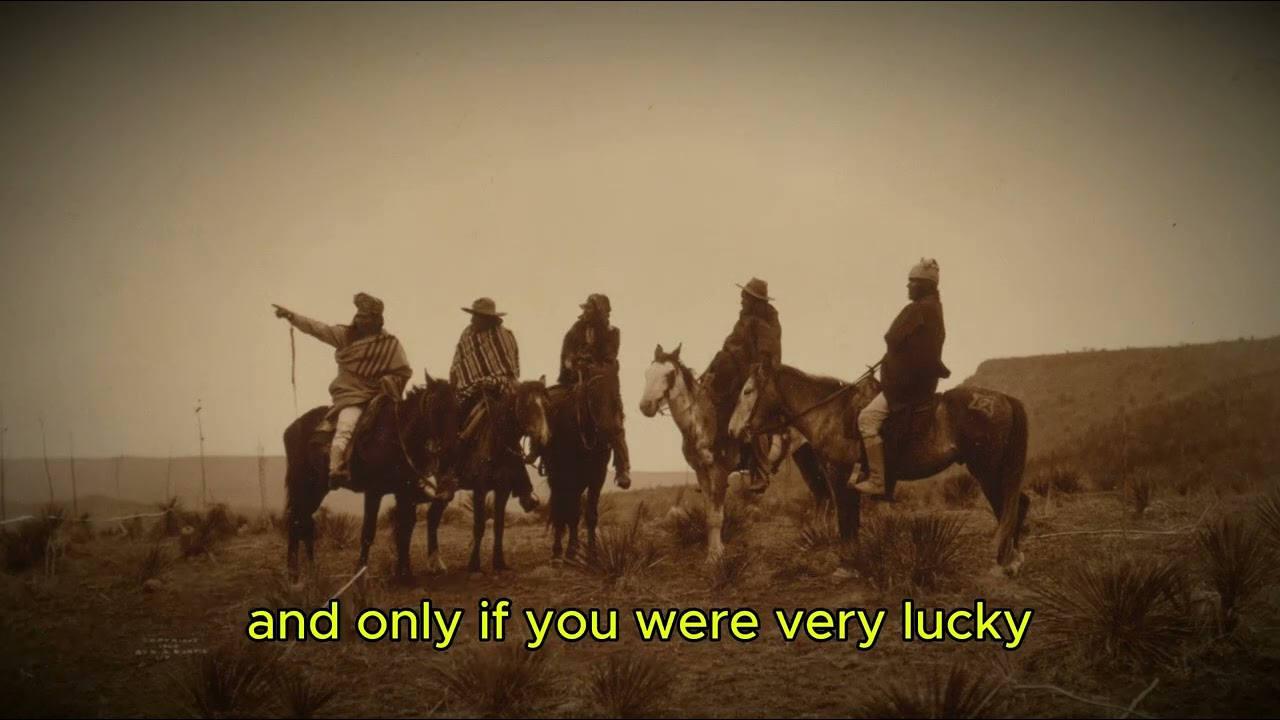
Among them were two leaders who had spent a year preparing for this moment, Cochise and Mangas Coloradas. They had fought their way to this place not with factories or arsenals, but with knowledge passed down through generations: the hidden springs, the secret trails, the signal fires, and warriors trained since childhood to move through the desert without being seen. To understand what happened in that pass, and why the United States Army spent the next twenty-four years pursuing a people who never numbered more than a few thousand, one must understand what the Apache were. They were not a single tribe.
Apache was a name covering a family of peoples, each with their own leaders and homelands. Cochise led the Chokonen Chiricahua in the country between the Dragoon Mountains and the Sierra Madre. Mangas Coloradas, nearing seventy, stood six feet tall with a chest like an old oak tree and led the Mimbreño. For centuries, the Apache had raided when the land could not feed them, taking what they needed from those who had more.
It was an ancient system that, until 1848, had worked well enough for the Apache to hold most of their land. Then came the Treaty of Guadalupe Hidalgo. Mexico ceded the northern half of its territory to the United States. Overnight, without consultation, the Apache became the problem of a new government.
Settlers followed, seeking silver and gold, building forts, mines, and stage lines, bringing cattle that ate the grass Apache horses depended on. For about ten years, the two sides managed an uneasy coexistence. Cochise, in the late 1850s, even allowed Butterfield stagecoaches to pass through Apache Pass, occasionally trading wood for flour and coffee. That fragile peace shattered on a February morning in 1861.
A rancher named John Ward returned to his home in Sonoita Valley to find his cattle stolen and his adopted son missing. He wrote to Fort Buchanan, blaming the Apache. The army sent Lieutenant George Bascom, a twenty-five-year-old West Point graduate who had been in Arizona only a few weeks and had never met an Apache. He knew nothing of the different tribal groups or that the boy had almost certainly been taken by a different band.
He knew only his orders: find the boy, get him back. Bascom rode to Apache Pass with fifty-four cavalrymen and sent word asking Cochise to talk. Cochise came in peace, bringing his wife, his brother, and two nephews, expecting the kind of negotiation they had had before: coffee, blankets, and quiet discussion. Instead, Bascom accused him of the theft, demanded the boy within ten days, and declared Cochise and his family prisoners.
According to accounts from the time, Cochise did not argue. He drew a knife, cut an opening in the back of the tent, and disappeared into the brush before the soldiers could react. His family remained inside. Over the following days, Cochise tried to negotiate, holding white hostages and offering to trade them for his family.
Bascom refused. In the end, six Apache men were hanged from oak trees near the pass. One of them was Cochise’s brother. The white hostages Cochise had taken were killed as well.
Historians still argue over who ordered what, but the important part was this: Cochise had come believing peace was still possible. He rode away knowing there was no turning back. In later years, he said that he had considered the Americans friends until that day. From that day forward, he would kill any American he found for as long as he lived.
He was thirty-six. The war he ignited would continue for ten years after his death. In the same year, in the Pinos Altos region of New Mexico, prospectors had found gold land belonging to the Mimbreño, land that belonged to Mangas Coloradas. He tried peaceful persuasion at first, entering their camps under a flag of truce, suggesting through an interpreter that there was better gold in Mexico.
The prospectors instead tied him to a tree and whipped him until he could barely stand, then released him laughing. An old man beaten, they thought, could not be a threat. They were wrong. Mangas Coloradas and Cochise, who were related through marriage, formed an alliance.
They agreed to merge their bands and drive every American from Apache land. By summer, they commanded between three hundred and five hundred warriors, a single force larger than the region had ever seen. Apache warriors trained from the age of four or five. Boys ran with their mouths full of water, learning to breath through the nose and endure thirst.
A youth had to survive four raids as an apprentice before he could speak in council. By age twenty, he could run seventy miles in a day, go a full day without water in July heat, and disappear behind a shrub no larger than a dinner plate. They maintained hidden caches of dried meat and water across their raiding trails. They knew every spring, every canyon, every rock tank in country where an ordinary white traveler could die of thirst a mile from water.
They had signal systems using smoke and mirrors decades before the army adopted the idea. Most importantly, they had a homeland. Every valley and height had a name and a history, and generations of ancestors had walked there. In the fall and winter of 1861, Cochise and Mangas Coloradas burned the land clean.
Stage stations fell. Farms were abandoned. The town of Tubac was reduced to ashes. Pinos Altos was so damaged that most prospectors packed up and left.
Travel between Tucson and the Rio Grande became possible only in heavily armed caravans. A detail almost no one remembers: while the Apache were driving Americans out of Arizona and New Mexico, the Civil War had just begun. Regular army posts were being emptied as soldiers were called east to fight each other. For months in 1861 and early 1862, there were almost no American troops in Apache country.
By the spring of 1862, the Apache had succeeded in pushing the invaders back and reclaiming their land. Then they heard of the wagons that shoot. A military column was moving east from California, nearly 1,800 soldiers under Brigadier General James Henry Carleton, marching to retake Tucson from a small Confederate garrison and continue to New Mexico. His supply train included two twelve-pound mountain howitzers pulled by mule teams.
Neither Cochise nor Mangas Coloradas had ever seen a howitzer. No living Apache had. Through their scouts and signal systems, the Apache tracked the column. Its route east had to pass through Apache Pass, the only reliable water between Tucson and the Rio Grande.
Cochise and Mangas Coloradas took five hundred warriors to the pass and waited in the heights. On July 15, a vanguard company of ninety-six soldiers under Captain Thomas Roberts entered the western end of the pass at midday. The Apache let them advance almost the entire way, let them see the spring, let them feel the relief of a thirsty man seeing water within reach. Then they opened fire from three sides at once.
Two of Roberts’s men fell in the first minute. Others were wounded. The rest took cover and fired at what looked like empty desert. For nearly an hour, the situation was deadlocked.
The soldiers could not reach the water, and the Apache could not be dislodged. Then Roberts unlimbered the howitzers. He ordered them brought to the base of the hill, loaded with shell and canister, and fired at the rocks above. An old Apache warrior, interviewed years later by Captain John Cremony, told what happened next.
Until the cannons fired, he said, the Apache were winning easily, certain they would push the soldiers back into the desert to die of thirst before sunset. But the wagons that shoot changed everything. According to his account, sixty-three of their warriors were killed by artillery fire, and only three by rifle fire. American reports claimed only ten Apache dead.
The truth probably lies somewhere between, but the significant fact was this: Cochise and Mangas Coloradas had controlled the pass and lost it. They had never seen a weapon that could reach their positions from below, that could shatter the rocks over their heads, that could kill them where they believed they were safe. They withdrew that night. The next morning, the Apache attacked again.
The howitzers fired again. The Apache scattered again. Mangas Coloradas was wounded in the chest during the second day of fighting. His warriors carried him nearly a hundred miles south to the Mexican town of Janos and forced a Mexican doctor at gunpoint to remove the bullet.
He survived, but it was the beginning of the end of the alliance. Carleton reached Apache Pass a few days after Roberts. He looked at the place and understood: whoever controlled that spring controlled the entire southeastern corner of the territory. Fort Bowie was built that summer on the shoulder of the pass.
The betrayal came in January 1863. Mangas Coloradas, weary and weakened by the Apache Pass bullet, agreed to come for peace talks under a flag of truce at Fort McLane in southwestern New Mexico. He had been promised he would be received in good faith. According to the soldiers’ own accounts, what happened next was ordered by General Joseph West.
Mangas was seized the moment he arrived. That night, he was placed under guard by a campfire. The official report stated he was killed while trying to escape. Every source that was actually present told a different story.
His head was cut off afterward, boiled, and his skull later sold to a museum in the East. When Cochise heard what had been done, he said that the Americans respected nothing, that the flag of truce meant nothing to them, and that the war would continue until one side was finished. Cochise disappeared into the Dragoon Mountains with about two hundred followers. For the next ten years, he waged a war that nearly ended American control of Arizona.
The Dragoons are a small range, only about twenty-five miles long, rising abruptly from flat desert. From their heights, on a clear day, one could see nearly a hundred miles in every direction. The Apache called the highest peak Fort Cochise. It still bears that name today.
He knew every trail, every water source, and kept lookouts on every peak day and night. Any American troop column approaching within thirty miles was seen and reported before it covered another mile. He struck farms, stage stations, and small groups on the roads, then vanished before larger forces arrived. According to estimates of the time, the American population of Arizona actually declined during those years.
Farms were abandoned, mines closed. The army sent regiment after regiment. None of them could catch him. He was never defeated in battle.
Cochise agreed to peace in 1872 only after a settler named Thomas Jeffords, at great risk to himself, rode alone into his stronghold to talk. Jeffords was the first white man in a decade to come without soldiers and without demands. The two sat together and smoked. The result was the creation of a Chiricahua reservation in the mountains that had always been Cochise’s home.
He died there in the summer of 1874. His warriors buried him in a place they refused to tell any white man. That grave has never been found. The peace he made did not last long after his death.
Four years later, the reservation was dissolved. The Chiricahua were told to leave their homeland and march two hundred miles to a place called San Carlos in the eastern Arizona desert, where the heat killed the young and old, where the water was bad, where malaria spread in the summer, where there was no game and often no rations. Those who remembered Cochise finally understood what peace meant. It meant a slow death instead of a quick one.
In late summer of 1879, a Mimbreño leader named Victorio, who had followed Mangas Coloradas as a young man and had lived on a reservation at Ojo Caliente that was now being closed, refused to move to San Carlos. He took about eighty warriors and three hundred women and family members into the Black Range of New Mexico. With him rode his sister, Lozen, a warrior in her own right. According to the accounts of those who knew her, she could ride and shoot as well as any man, and when she held her palms open toward an approaching enemy, her hands would burn; the stronger the burn, the closer the enemy.
Whether one believes the spiritual side of that story, the historical record is clear: Victorio never moved his people without consulting her. Over the next fourteen months, Victorio’s band fought one of the most sustained guerrilla campaigns on American soil. They crossed three deserts, raiding farms, mining camps, and army columns. They fought the Ninth Cavalry, the Buffalo Soldiers, with skill and endurance no regiment had shown before.
They fought Texas Rangers. They fought Mexican militia under Joaquín Terrazas, an old Indian fighter, and won. In April 1880, in Hembrillo Canyon, Victorio’s warriors ambushed a large column of the Ninth Cavalry and held it pinned for a full day before vanishing. At any moment during those months, nearly two thousand American soldiers were in the field trying to catch him.
They failed again and again. The end came in October 1880. Victorio had crossed into Mexico with his band. Their ammunition was nearly gone.
Lozen was not with him that day; she had ridden east to escort a Mescalero woman back to her people. Terrazas cornered the band in the Tres Castillos mountains, three low peaks rising from a flat plain. There was almost no water, almost no cover, almost no ammunition. The fight lasted one day.
Victorio was killed. More than sixty of his people died with him. His war was over. But the Apache war was not.
An old man who slipped through the Mexican lines that last night was named Nana. By his own estimate, he was past seventy, with a leg wound so bad he could barely mount a horse without help. He took the survivors, about fifteen warriors, into the Sierra Madre. The next summer, he returned.
For six weeks in 1881, that seventy-year-old man led fifteen warriors on a raid across New Mexico covering more than a thousand miles. He fought twelve engagements, killed more soldiers than he lost men, and outran cavalry columns ten times his size. Nana’s Raid is still studied at West Point as one of the finest small-unit guerrilla campaigns in North American military history. And then there was Geronimo.
He was not, by Apache tradition, a tribal chief. He was a medicine man and spiritual leader who became a war leader when war was needed. In the summer of 1858, he returned from a trading trip to Janos to find his camp attacked, his mother, wife, and children killed. He was twenty-nine.
From that day until his surrender twenty-eight years later, he fought his own war. He fought Mexicans. He fought Americans. He surrendered, then returned to war.
He surrendered again, then returned again. He escaped from San Carlos twice, escaped from Fort Apache. By the summer of 1886, he was the last one still fighting. At the height of his final resistance, he commanded eighteen warriors, with about an equal number of women and family members, fewer than forty people in his entire group.
The United States sent five thousand soldiers to capture him. That was a quarter of the entire United States Army at the time, sent against eighteen men. General Nelson Miles, who took over the campaign in April 1886, understood something his predecessors had not. He could not outrun Geronimo.
He had to close the entire region. He built a network of heliograph stations, mirrors on tripods that could send coded messages across sixty or seventy miles of open country, on mountain peaks across southern Arizona. Twenty-seven stations. Every cavalry column could be tracked and redirected within the hour.
Every water hole and pass was watched. Still Geronimo slipped away for months. The chase extended into Mexico, through valleys that did not appear on maps. Captain Henry Lawton, who led the main pursuit column, wore out three pairs of boots.
Some of his men marched more than three thousand miles that summer. In the end, it was not battle that brought Geronimo in. It was a conversation. Miles sent Lieutenant Charles Gatewood, who spoke some Apache and knew some of Geronimo’s people from the reservation, to find the war leader and offer terms.
Gatewood entered Mexico with only two Apache scouts and an interpreter. He found Geronimo’s camp in late August 1886 and walked in unarmed. He told Geronimo that all the Chiricahua still in the reservations had already been taken, put on trains, and shipped east to prisons in Florida, including what remained of Geronimo’s own family. He told Geronimo that if he kept fighting, he would find nothing left to fight for.
Apache accounts say Geronimo sat silent for a very long time. Then he asked if the terms included his life. Yes. Could he speak to General Miles himself?
Yes. Could his warriors keep their weapons until they crossed the border? Yes. On September 4, 1886, at a place called Skeleton Canyon on the border between what is now Arizona and New Mexico, Geronimo laid down his weapon.
There were eighteen warriors, thirteen women, and a few other family members, fewer than forty people, standing in a dry valley before General Miles and his officers. That was the entire fighting strength left of the Chiricahua Apache. It had taken a quarter of the United States Army to bring them in. What happened after the surrender is the part of the story most people do not know.
Miles had promised Geronimo that he and his people would be sent to a Florida reservation, kept together as a family, and eventually allowed to return to Arizona. The promise was broken almost immediately. Geronimo, his warriors, and every Chiricahua on every reservation in Arizona, including those who had remained peaceful for years and those who had served as army scouts against Geronimo himself, were put on trains and shipped to Fort Marion, Florida. They were held as prisoners of war for the next twenty-seven years.
They were moved to Mount Vernon Barracks in Alabama, then to Fort Sill, Oklahoma. They asked repeatedly to return to Arizona. For a generation, the answer was no. Many did not survive the captivity.
Malaria killed them in Florida. Tuberculosis killed them in Alabama. The damp eastern climate, so different from the dry desert their bodies were made for, killed them steadily and quietly over the years. Geronimo lived long enough to become a strange kind of American celebrity.
He was allowed, under guard, to appear at international expositions. He rode in Theodore Roosevelt’s 1905 inaugural parade. Tourists paid for photographs with him. He signed souvenirs for a small fee.
To the country that had spent years hunting him, he became a curiosity, a living remnant of a war officially over. He died at Fort Sill in February 1909, nearly eighty years old. Four years after his death, in 1913, the survivors were finally offered a choice: take small land allotments and stay in Oklahoma, or go west to the Mescalero reservation in New Mexico. About two-thirds chose the west, returning to a land as close to home as they could get.
Of the thousands of Chiricahua who had lived in the mountains when Cochise was young, only a few hundred remained when the trains headed west. The Apache fought the largest and richest army in the Western hemisphere for a quarter century. They did it with fewer than three thousand warriors in any given year, and often with fewer than three hundred. They did it with no factories, no railroads, no telegraph, no supply lines, no foreign ally.
They did it because they had spent their entire lives becoming exactly what the land required. They knew every rock and every spring. They fought on their own ground for their own families. The desert America thought was empty was in fact an army.
And the men who trained inside it, from Cochise waiting on the heights above Apache Pass, to Mangas Coloradas who ordered the pass closed, to Victorio who moved his people across three deserts in fourteen months, to Lozen who held her palms to the wind, to old Nana with a thousand miles and six weeks behind him, to Geronimo standing in the valley named for the bones of the dead, fought a war history has never quite decided how to handle. The land they fought for still exists. The Chiricahua Mountains still catch the sunset exactly as they did the day Cochise first learned to climb them. The spring in Apache Pass still flows.
You can drive there, stand in the pass on a July afternoon when the heat makes the rocks shimmer, and look up at the heights where five hundred warriors waited that day, silent, watching, patient in a way the modern world struggles to remember. If you stay long enough and listen, you will hear what the soldiers heard in 1862, in that last quiet moment before the firing began from three sides at once: the wind, and nothing else.