By the afternoon of September 20, 1863, the Union Army of the Cumberland was coming apart. Thousands of federal soldiers streamed away from the fighting near Chickamauga Creek in northern Georgia, their units shattered, their commanders powerless to stop the collapse. Confederate forces had poured through a gap in the Union line, and the rout seemed complete. For many officers watching the chaos unfold, the destruction of an entire army appeared inevitable.
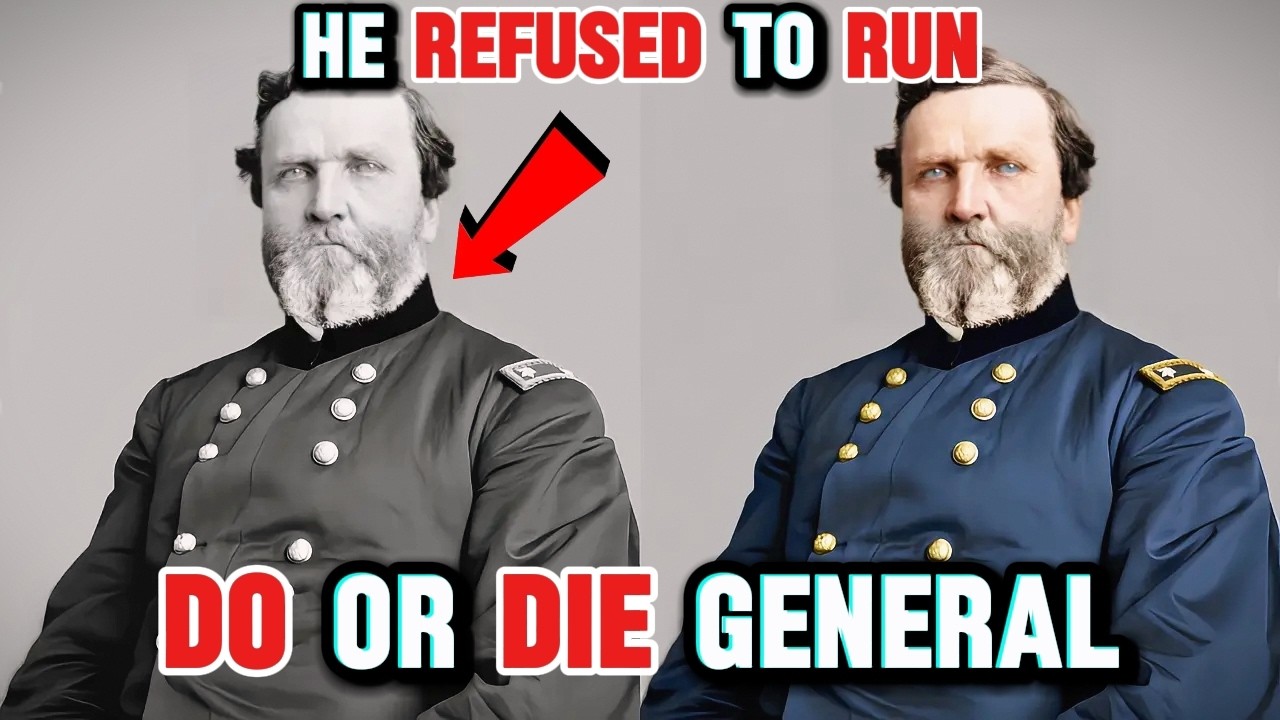
Yet along a wooded ridge, one commander refused to move. While soldiers fled around him, George Henry Thomas gathered scattered regiments, rebuilt a defensive line, and held his ground against repeated Confederate assaults. By sunset, an army that should have ceased to exist was still alive. Thomas earned the nickname that would follow him for the rest of his life: the Rock of Chickamauga.
But the story of how a Virginia-born general became the man who saved the Union’s most important western army begins decades earlier, in a corner of Southampton County where a young boy learned how quickly order could disappear. George Thomas was born in 1816 into a prosperous farming family. His world seemed pointed toward a predictable future, bound to the traditions of the South. Then, in 1831, when Thomas was just fifteen, Nat Turner’s Rebellion erupted in his home county.
The uprising sent fear across the region. As reports spread that armed rebels were moving toward the family farm, the Thomases fled, crossing woods and swamps to reach safety. For a young boy, it was a lasting lesson in how swiftly the familiar world could collapse. Years later, his father died unexpectedly, placing financial strain on the family and forcing responsibility on Thomas early.
Those who knew him later described him as calm, deliberate, and difficult to rattle. That temperament may have been forged long before he ever wore a uniform. At seventeen, Thomas appeared headed toward a legal career. Then came an unexpected opportunity: a congressional appointment to West Point.
He accepted, and the decision changed the course of his life. At the academy, he gained a reputation for discipline and reliability. Neither flashy nor charismatic, he was respected for something less dramatic: consistency. He served with distinction in the Mexican War and advanced steadily through the army.
Then came secession, the crisis that would define an entire generation. For Thomas, the decision was deeply personal. He was a Virginian. His family lived in Virginia.
Many officers in similar circumstances resigned and joined the Confederacy. Robert E. Lee made that choice. George Thomas did not.
He remained loyal to the United States, a decision that carried painful consequences. Some members of his family never forgave him. Former friends turned away. Yet Thomas never publicly wavered.
He followed what he believed was his duty, even when the cost was personal. That conviction was tested on the battlefield in September 1863. Near Chickamauga Creek, Union and Confederate armies collided in one of the war’s bloodiest battles. Fighting in dense woods shattered the ability of units to stay connected, orders went astray, and confusion reigned.
Then disaster struck. A gap opened in the Union line, Confederate forces surged through it, and entire sections of the Federal army collapsed. Panic spread, and retreat threatened to become catastrophe. At that moment, Thomas became the difference between defeat and destruction.
While portions of the army streamed from the field, he gathered soldiers on defensible high ground and organized resistance. Again and again, Confederate attacks crashed against his position. Again and again, his men held. Exhausted soldiers stood amid smoke and noise while the rest of the battlefield unraveled around them.
Thomas refused to yield, and his defense bought precious time, enough for the Union army to escape annihilation. The battle itself was a Confederate victory. Yet Chickamauga produced one of history’s great ironies: the losing side on the battlefield created the winning legend. Thomas emerged as the hero who preserved a fighting force that would remain crucial to the war.
Had the Army of the Cumberland been destroyed, the Union position in the West could have been severely compromised. One man’s steadiness altered the outcome of something much larger. The crisis was not over. The battered Union army retreated into Chattanooga, where Confederate forces soon surrounded the city.
Supply lines shrank, food became scarce, and animals died in large numbers. The situation grew so serious that Ulysses Grant sent a message instructing Thomas to hold Chattanooga at all hazards. Thomas answered with a sentence that captured both the situation and the man: “We will hold the town till we starve. ”
It was not rhetoric.
It was a statement of intent. The city held. Relief eventually arrived, the siege was broken, and the Union maintained control of a strategic gateway into the deep South. Yet something curious was happening.
Other generals attracted headlines. Others built larger public reputations. Thomas continued doing what he always did: he worked, he prepared, and he delivered results. Then came Nashville.
By late 1864, Thomas faced a different kind of enemy, not Confederate soldiers alone, but impatience from Washington itself. Confederate General John Bell Hood had launched one final offensive into Tennessee. If successful, it could disrupt Union plans in the West and breathe new life into Confederate hopes at a moment when the war seemed to be slipping away. Thomas believed victory would require something many people no longer wanted to hear: patience.
Winter weather had turned roads into obstacles. Horses were exhausted. Equipment was not fully ready. Reinforcements were still arriving.
Thomas refused to move until he believed his army could deliver a decisive blow. Officials in Washington grew increasingly anxious. Critics questioned his judgment. Newspapers wondered whether he had become too cautious.
Rumors circulated that he might be removed from command if he continued to wait. For a man who had already saved an army at Chickamauga and held Chattanooga against desperate odds, the criticism was striking. Thomas understood the pressure, but he also understood the cost of acting too soon. As reinforcements arrived, confidence slowly returned.
When Thomas finally moved in December 1864, Union forces struck Hood’s army outside Nashville with overwhelming coordination. What followed was not merely a battlefield victory; it was the destruction of one of the Confederacy’s last major fighting forces in the Western Theater. The Confederate line cracked, then broke. What Hood had hoped would become a campaign of revival became a retreat from which his army would never fully recover.
For Thomas, the victory carried deeper significance. His caution had been criticized, his delays questioned, his leadership doubted. Now the results spoke for themselves. The same qualities that had saved the Army of the Cumberland at Chickamauga, steadiness, preparation, and disciplined judgment, had delivered one of the most decisive Union victories of the entire war.
Yet even this triumph failed to secure the lasting recognition that followed many of his contemporaries. Part of the answer lies in personality. History often gravitates toward dramatic figures. Grant was aggressive, Sherman was controversial, Lee became iconic.
Thomas was different. He spoke little, avoided self-promotion, and left few personal writings. In fact, he ordered many of his papers destroyed after his death, creating an unusual problem for historians: the man who shaped major events left behind relatively little about himself. Another factor involves timing.
The Civil War produced larger-than-life personalities competing for historical attention, and even remarkable achievements could disappear behind more famous names. Thomas became a victim of his own reliability. When a commander consistently succeeds, people eventually begin to expect success. The extraordinary starts to look routine.
Perhaps Thomas forces us to rethink what military greatness actually looks like. Popular memory often celebrates bold risks; Thomas specialized in disciplined judgment. Popular memory admires dramatic personalities; Thomas cultivated restraint. Popular memory remembers the commanders who demanded attention; Thomas earned respect without seeking it.
Some historians have argued that his caution occasionally slowed operations. Others contend that his careful approach prevented costly mistakes and produced durable victories. The debate remains active, yet even those who criticize aspects of his command rarely question his competence, integrity, or battlefield effectiveness. George Henry Thomas did not save the Union alone.
No individual could. But at Chickamauga, he preserved an army when collapse seemed imminent. At Chattanooga, he helped hold a city that opened the road into the deep South. At Nashville, he shattered one of the Confederacy’s last major armies and helped ensure that Union victory would not be reversed.
Those are not footnotes. They are turning points. George Thomas never sought fame; he sought duty. He spent his career focused less on recognition than on responsibility.
In an age that often rewards the loudest voices, his story offers a different lesson: some of history’s most important victories were won by men who asked for no recognition at all. That is why Thomas remains worth remembering today, not because he demanded a place among the giants of the Civil War, but because he earned one.