By the standards of any measurable military record, one Union general finished the Civil War without a single defeat. It was not Ulysses Grant. It was not William Sherman. It was George Henry Thomas, and within five years of Appomattox, history had begun quietly erasing him.
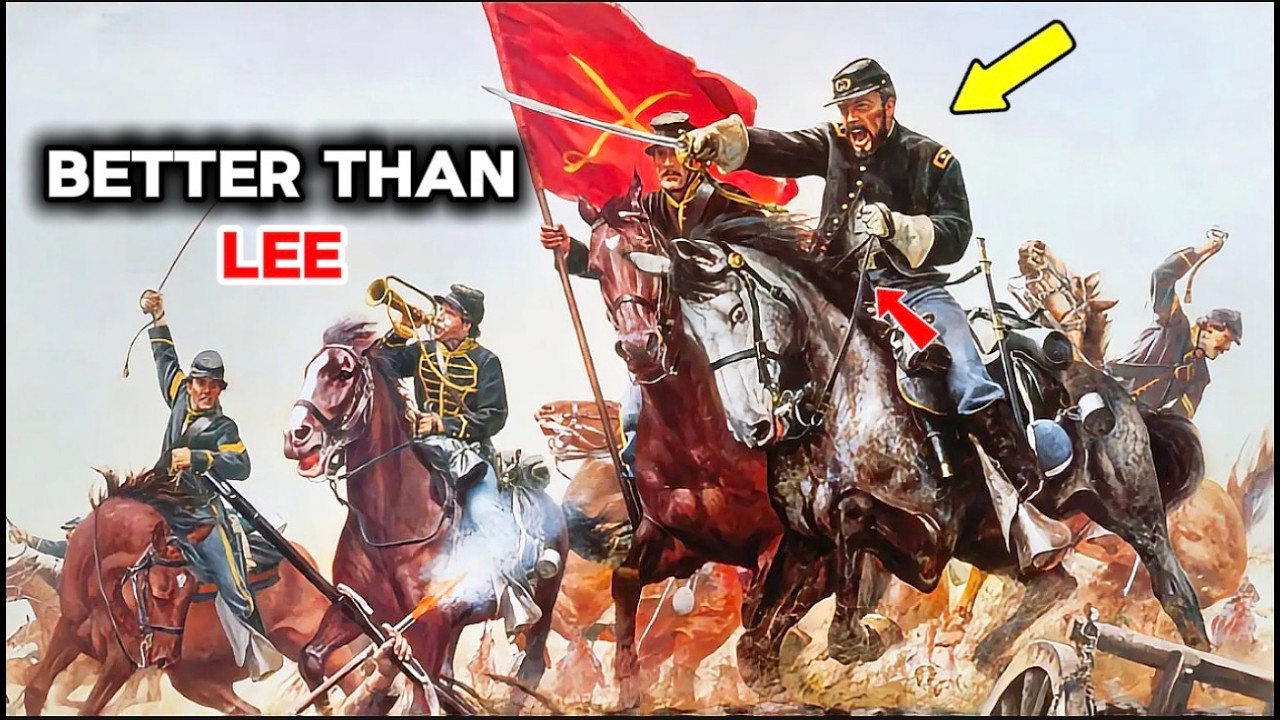
The reason had less to do with what he did on the battlefield than with who wrote the story afterward, and why those writers had every incentive to keep him small. Thomas was born in Southampton County, Virginia, in 1816, raised in the same plantation South that would later produce most of the Confederate officer corps. His family owned enslaved people. His neighbors would become celebrated names in Confederate military history.
When Virginia seceded, Thomas did something none of them expected. He stayed with the Union. His sisters turned his portrait to face the wall and stopped speaking his name. As far as his family was concerned, he had died the moment he refused to follow his state out of the country he had sworn to serve.
Thomas never reconciled with them and never explained himself publicly. He simply reported for duty. He was no political appointee. Thomas had fought in the Mexican-American War, served on the frontier, and taught artillery and cavalry tactics at West Point.
He was a professional soldier in a war full of amateurs, and it showed almost immediately. His first major test came at Mill Springs, Kentucky, in January 1862. Confederate General Felix Zollicoffer crossed the flooded Cumberland River in a rainstorm and attacked Thomas’s position. Thomas absorbed the assault, counterattacked with controlled aggression, and broke the Confederate army.
Zollicoffer was killed. Kentucky was secured for the Union in its first significant land victory in the Western Theater. The North celebrated briefly, then moved on. Thomas did not get famous.
He got his next assignment. That pattern repeated across the next two years. At Perryville, at Stones River, through the grinding campaign across Middle Tennessee, Thomas was the foundation of the Army of the Cumberland. When commanders around him panicked, Thomas held the line and fed reinforcements to the right places.
His soldiers called him Slow Trot, not as an insult, but as a description of a man who never rushed, never flinched, and never lost his nerve. Then came Chickamauga in September 1863. The Army of the Cumberland under William Rosecrans had been maneuvering through northwestern Georgia to force the Confederates out of Chattanooga. Rosecrans was good at maneuvering and less good at what followed.
The Confederate Army of Tennessee, reinforced by James Longstreet’s corps borrowed from Lee’s army in Virginia, was waiting for exactly the kind of mistake Rosecrans was about to make. On the second day of battle, a staff officer misread a dispatch and ordered a division out of the line to plug a gap that did not exist. The movement created a real gap. Longstreet hit it with everything he had.
The right side of the Union army came apart in minutes. Men ran. Officers lost control. Rosecrans himself was swept up in the retreat and left the battlefield convinced the fight was over.
Thomas had not retreated. With his flanks exposed, no reinforcements coming, and Confederates attacking from multiple directions, he pulled his core to a piece of high ground called Snodgrass Hill and refused to move. The men who had fled came back and formed up around him because he was the only fixed point on a battlefield that had dissolved into chaos. For hours he held.
When darkness ended the fighting, he withdrew in good order, saving what remained of the Army of the Cumberland from destruction. They called him the Rock of Chickamauga. It should have made him one of the most celebrated figures in American military history. Instead, it made him useful.
Grant arrived in the Western Theater that October and replaced Rosecrans with Thomas as commander of the Army of the Cumberland, a recognition of ability. Then Grant designed the Battle of Chattanooga to give William Sherman the starring role, a recognition of something else entirely: Grant and Sherman shared a trust built on years of cooperation, and Thomas, a Virginia man whose loyalty had never generated that kind of warmth, remained outside their circle. The plan assigned Thomas’s men to a demonstration. Make noise in front of the Confederate center at Missionary Ridge while Sherman did the real work on the flanks.
Thomas’s soldiers took Missionary Ridge instead. Nobody ordered them up that steep, heavily fortified slope. They went anyway, partly because staying meant dying in the rifle pits with no cover, partly because Thomas’s men did not stop moving until the job was finished. The Confederate line broke and ran.
The siege was over. Grant’s official report noted that the assault had been made contrary to orders. He did not dwell on the fact that the man he had assigned to a secondary role had just decided the battle he had built for someone else. The following year, Grant went east to confront Lee.
Thomas stayed west under Sherman’s command. Sherman got the dramatic story: the march to the sea, the burning of Atlanta, the spectacle that dominated newspapers. Thomas got the hardest assignment in the Union Army. John Bell Hood had taken command of the battered Confederate Army of Tennessee and marched north into Tennessee, threatening Union supply lines and hoping to force Sherman to abandon his advance.
Sherman did neither. He sent Thomas back to Nashville with whatever could be scraped together and kept moving south. Thomas was left with an incomplete army, a cavalry force without horses, supply problems that would have broken a lesser commander, and a subordinate in General Schofield who did not always follow his lead. Hood attacked Schofield at Franklin on November 30 in a frontal assault across two miles of open ground.
Six Confederate generals died in that charge. The Army of Tennessee lost a third of its attacking force in a few hours. Hood kept coming anyway and laid siege to Nashville, waiting for Thomas to make a mistake. Thomas did not attack immediately.
He was waiting. His cavalry needed remounted horses for effective pursuit, because Thomas understood that winning the battle was not enough. He needed to destroy Hood’s army so completely it could never threaten the Union again. That required patience, and patience was exactly what Grant had run out of.
Grant sent orders demanding an immediate attack. When Thomas did not move fast enough, Grant relieved him and sent General John Logan west as his replacement. Still unsatisfied, Grant ordered a train to go oversee the operation himself. He never arrived.
On December 15, 1864, Thomas attacked. What he had spent those extra days preparing was not a battle but a surgical dismantling. He crushed Hood’s left flank, pursued through the night, repositioned his entire force, and hit again the next day from a different angle. The Army of Tennessee did not retreat in good order.
It dissolved on the field, men dropping weapons and running, units losing cohesion. Hood lost so many men, artillery, and organization that his army ceased to function as a serious fighting force for the remainder of the war. Military historians have described Nashville as the most complete destruction of a Confederate army in the entire conflict, not a tactical victory but an annihilation. Grant sent a congratulatory telegram.
He did not give Thomas a new independent command. He did not elevate him publicly the way the victory deserved. Sherman’s march was already dominating the newspapers. Nashville was a headline for a week, and the war moved on.
The men who spent the next two decades deciding what the war had meant were already thinking about their memoirs. Grant’s memoirs appeared in 1885, two best-selling volumes, brilliantly written, carefully constructed. Thomas appears throughout as competent, dependable, and slow. The Chickamauga chapter does not linger on what Thomas actually did while the rest of the army fled.
The Chattanooga chapter distributes credit in ways that do not fully reflect what happened on Missionary Ridge. Nashville is handled in a few pages, and the relief order Grant had to walk back when Thomas won anyway receives no real examination. Sherman’s memoirs covered the same ground with the same editorial instincts. He had commanded Thomas and had no interest in building up a subordinate at his own expense.
Thomas died in 1870, five years after the war ended. He was fifty-three years old. He left no memoirs. He had no political machine working on his behalf, no faction of veterans organizing to protect his reputation, no family still speaking to him who might have carried his story forward.
He had a record, a perfect record, and a nickname, and a statue that went up in Washington in 1879 at a traffic circle most people drive through without knowing the name. The record, stripped of everything the memoirists added and subtracted, is this. George Thomas fought every major engagement assigned to him in four years of war and won every single one. He saved the Army of the Cumberland at Chickamauga when its commander had already given up.
He took Missionary Ridge when it was supposed to belong to someone else’s battle plan. He destroyed the last viable Confederate army in the West at Nashville with a precision no other Union general matched. He did all of this as a Virginia man who had chosen the Union in a conflict where Virginia men were expected to choose differently, in a theater that always played second to the dramatic back-and-forth in Virginia. The Lost Cause mythology that took root after the war needed Robert E.
Lee to be the greatest military mind the conflict produced. It needed the South’s defeat to be a matter of numbers and resources, not generalship. A Virginia-born general who stayed loyal, then built a better record than Lee by every objective measure, was not a story that mythology had any use for. So the mythology ignored him, and the Union generals who wrote the history had their own reasons not to elevate him too high.
The result is a traffic circle with a statue almost nobody recognizes, bearing the name of a man whose record stands untouched in the archives. The battles are documented, the orders preserved, the casualty figures clear. George Thomas never lost. Not at Mill Springs, not at Chickamauga, not at Chattanooga, not at Nashville.
History did not forget him by accident. Forgetting George Thomas required specific men making specific choices about what to emphasize, what to minimize, and whose story was worth telling at full volume. That effort succeeded for over 150 years.