On April 2, 1882, a man checked into room 80 of the Glenham Hotel on Fifth Avenue, sat on the edge of the bed, raised a Smith & Wesson revolver to his left temple, and pulled the trigger. He was 51 years old. His name was Cornelius Jeremiah Vanderbilt, and by the time of his death, his family had spent three decades trying to erase him. He was not the only one.
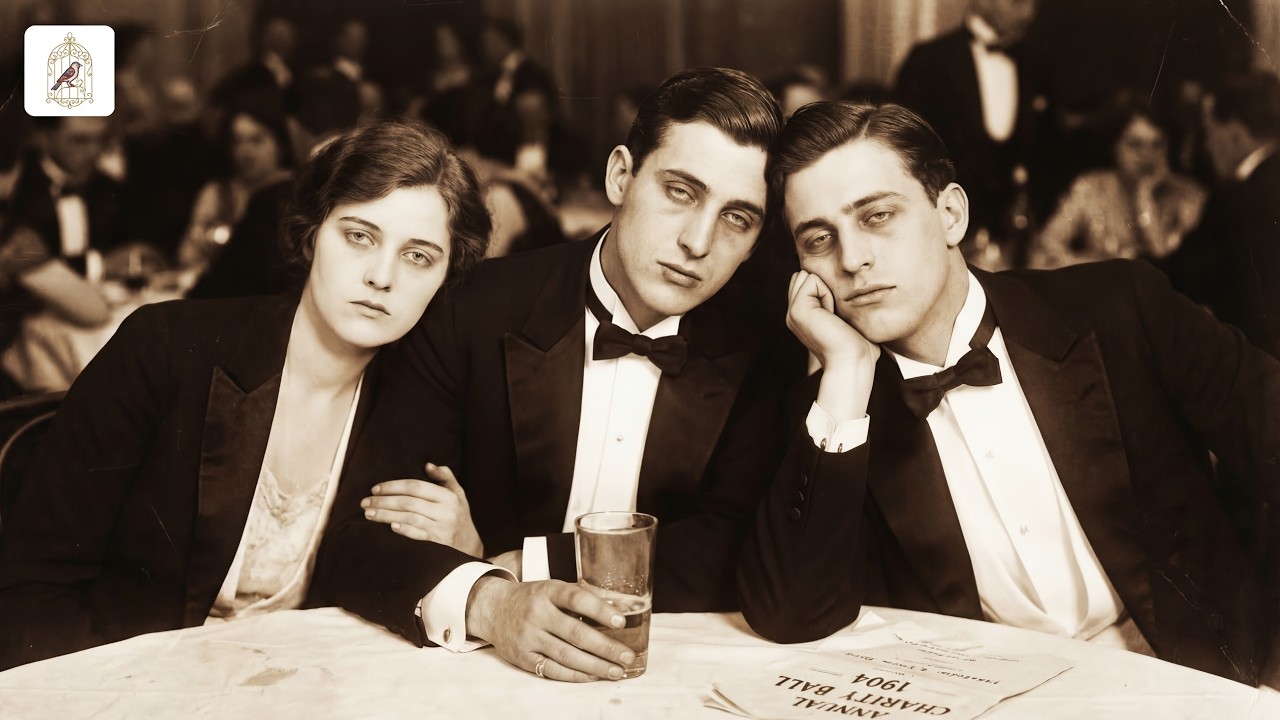
Across the Gilded Age, America’s greatest dynasties produced children they were determined to make disappear. Some were locked behind asylum walls. Some were buried under false names. One, decades later, was silenced with an ice pick to the brain.
This is what old money did to the children who threatened the brand. In 1877, roughly 100 million dollars passed through the hands of a single family, and every person who did not receive it became a target. The Commodore was dying. Cornelius Vanderbilt, the man who had climbed from a $16 ferry loan on Staten Island to the largest personal fortune in the Western Hemisphere, lay in his bed in Manhattan while lawyers shuffled papers and reporters waited outside.
When he died on January 4, 1877, his estate was valued at approximately 100 million dollars, a sum representing between one and a half and two percent of the entire gross national product of the United States. In modern terms, that would be somewhere north of 300 billion dollars. No American had ever possessed that much. The Commodore left nearly all of it to one son.
William Henry Vanderbilt received 95 million dollars. His brother, Cornelius Jeremiah, received the income from a $200,000 trust, not the principal, administered by a trustee William controlled. The eight daughters received between 250,000 and 500,000 each. The will was not a distribution.
It was a weapon, a final act of command declaring that most of the family had been found wanting. To understand why, one must understand what these families had become by the 1870s. The Vanderbilts were not a family in any sense that carries warmth. They were an enterprise.
Fortune required discipline, public performance, strategic marriage, and above all, control of the narrative. Every child was an employee of the brand. Behavior reflected on the stock. Marriages were mergers.
Scandals were quarterly losses. The same logic governed every great dynasty of the era. The Astors treated their family like a holding company. The Rockefellers built a culture of secrecy so profound that basic biographical facts were treated as classified information.
The Goulds, the Huntingtons, the Kennedys, all ran the same calculus. The family is the corporation. The children are the assets. And assets that depreciate are written off.
The Gilded Age produced staggering numbers. By 1890, the top one percent of American families held 51 percent of the nation’s wealth. The 400 families deemed worthy of Mrs. Astor’s ballroom controlled more capital than the bottom 11 million households combined.
A single dinner party could cost 5,000 dollars, a factory worker’s entire annual salary. Wealth existed to be displayed, and display demanded perfection. The question was brutally simple. Could you perform the role assigned to you?
Could you marry the right person, manage the trust, avoid scandal, and keep the machine running? And if you could not, the machine had tools for dealing with you. Asylum commitments required nothing more than a father’s signature and a compliant physician. Trust instruments could reduce a hundred million dollar inheritance to a controlled pittance.
Social ostracism could make a person vanish from every guest list and every conversation. And if all else failed, there were walls, real physical walls, attended by nurses who answered not to the patient but to the family that paid their salaries. Cornelius Jeremiah Vanderbilt was the Commodore’s second son, and from the moment it became clear that he suffered from epilepsy, his father began the process of elimination. The Commodore simply decided that Corneil, as the family called him, was defective merchandise.
In the nineteenth century, epilepsy carried a stigma closer to demonic possession than to neurology. A man who fell to the floor in convulsions was not sick. He was weak. He was tainted.
He was unfit. In the logic of the dynasty, a son who was unfit was worse than no son at all. The Commodore had Corneil committed to the Bloomingdale Asylum for the first time in the early 1860s. The commitment process required a physician’s certificate and a judge’s order, but both were formalities when the petitioner was the richest man in America.
Corneil was locked away not because he was dangerous or delusional, but because he was embarrassing. When the asylum director examined him, at least one physician concluded on the record that Corneil was no more insane than the doctor himself. The epilepsy was real. The seizures were documented.
But insanity? No. Corneil was lucid, articulate, self-aware, and painfully conscious of what was being done to him. His confinement was not medical.
It was strategic. The asylum was being used not as a hospital but as a warehouse. He was committed a second time and released again. Each cycle stripped another layer of standing, dignity, and the capacity to function as an independent person in society.
Then came exile. The Commodore sent Corneil to a farm in Hartford, Connecticut, a polite form of banishment managed by a man named George Terry, who became something approaching a genuine friend, perhaps the only one Corneil ever had. In Hartford, Corneil attempted business ventures that failed. He gambled badly and compulsively, accumulating debts his father refused to pay.
His brother William sometimes covered the debts, grudgingly, always with conditions attached. He married a woman named Ellen Williams, and for a brief period there was something resembling stability. But Ellen died in 1872, and with her death, the last tether holding Corneil to ordinary human life snapped. The gambling worsened.
He was arrested for fraud, sued by creditors, and each scandal fed the family’s narrative that he was unfit. Then the Commodore died and the will was read. One hundred million dollars. Ninety-five million to William.
The income from two hundred thousand to Corneil. The ratio was not an accident. It was a sentence passed by a dead man on a living one, and it could not be appealed. Corneil understood exactly what had been done.
His surviving letters reveal a man who saw the architecture of his own destruction with devastating clarity. In his final years, writing to George Terry, he compressed his entire ordeal into nine words. Oh, George, you must not desert me now. One sentence.
One plea from a man who had been abandoned by his father, his brother, the legal system, and the medical system, begging one friend not to complete the abandonment. The will contest followed. In 1877, Corneil and two of the Commodore’s daughters filed a challenge, cracking open a door the family had spent decades keeping shut. The trial dragged every secret into a public courtroom packed with reporters.
The contestants argued that the Commodore had been of unsound mind, unduly influenced by his second wife and a circle of spiritualists and clairvoyants. Witnesses described the richest man in America conducting seances in his parlor, asking questions of ghosts. But the truly dangerous witnesses were the Claflin sisters. Victoria Woodhull had run for president in 1872 and publicly advocated for free love.
Her sister, Tennessee Claflin, had opened a Wall Street brokerage with the Commodore’s financial backing. If the trial continued, they would testify about their relationship with the Commodore, and every detail would be printed. William Vanderbilt deployed the weapon dynasties always reach for when secrecy fails. Cash.
The Claflin sisters received over 100,000 dollars, and some accounts place the figure considerably higher. The payment was not a legal settlement. It was a purchase. William was buying their absence from the courtroom and, more importantly, their absence from the country.
The sisters left for England. The trial continued without its most explosive witnesses. In the end, the will held. The judge ruled that the Commodore had been of sound mind and that the distribution, however unequal, was within his legal rights.
For Cornelius, the failure was total. He had spent his last reserves of credibility and hope on the contest. When it collapsed, he had nothing left. The debts continued.
The gambling continued. The social exile deepened. On April 2, 1882, he walked into the Glenham Hotel. He was 51.
He was broke. He was alone. He sat on the edge of the bed in room 80, raised a Smith & Wesson revolver to his left temple, and fired. The family buried him quickly and quietly.
Within a year, his name had largely disappeared from public conversation. The liability had been eliminated, not by a single blow, but by a system of pressures applied over thirty years until the man simply gave way. The Vanderbilts had demonstrated the model. Other dynasties refined it, and the refinements were worse.
For nearly a decade, George J. Gould, eldest son of railroad baron Jay Gould, arrived at Manursing Island by yacht every weekend to visit a second family. With Guinevere Sinclair, a younger woman who lived in a house he provided, he fathered three children between roughly 1907 and 1914. His legitimate children knew the arrangement.
They called them the bastards. When George died in 1923, his will attempted to provide for the Sinclair children. The legitimate heirs contested it, and in 1925 the Supreme Court of New York delivered its ruling. The Sinclair children were declared to have no right, title, or interest in Jay Gould’s original estate.
They received approximately 200,000 dollars each. The legitimate heirs retained tens of millions. That ratio was the market price of illegitimacy expressed in arithmetic. The court did not merely reduce their inheritance.
It erased their lineage. They were Goulds by blood and strangers by law. John Jacob Astor Jr. was the eldest son of John Jacob Astor III, one of the wealthiest men in the country.
By the rules of primogeniture, he should have inherited the empire. But the Astors decided their firstborn would not inherit. His second son, William Waldorf Astor, was groomed for the role. And the firstborn was removed, not to an asylum, but to a brownstone on 14th Street in Manhattan, where he was attended by nurses and visited by lawyers.
There was no need for a lock on the door. Every person in his life answered to the dynasty, not to the man. He died in 1900 at approximately 78 years of age, having been confined for more than fifty years. He never married, never worked, never traveled.
He left no letters, no memoir, no record of his own voice. He existed as a body in a room. The person inside was never recorded and therefore never existed. Most Astor biographies give him a sentence.
Some give him less. Arabella Huntington lied about her name, her age, her birthplace, her marriage, and the father of her only child. Born in poverty in Richmond, Virginia, she attracted the attention of Collis Potter Huntington, one of the men who built the Central Pacific Railroad. He was already married.
She bore a son, Archer, whose resemblance to Collis was startling, but she maintained the fiction that the boy’s father was her departed husband. When Collis’s first wife died and he married Arabella in 1884, he formally adopted his own biological son. Arabella then rebuilt her life from the foundation up. She moved her birth year forward, claimed a different birthplace, destroyed letters, and burned papers.
When she died in 1924, the documentary record of her early life was virtually nonexistent. Historians found gaps where entire decades should be. She had not merely hidden inconvenient facts. She had torched the evidence.
The most total form of erasure belonged to the Rockefellers. William Avery Rockefeller, known as Devil Bill, was a con man who maintained two families under two names. With a housekeeper named Nancy Brown, he fathered at least two daughters, whose names do not appear with certainty in standard Rockefeller genealogies. John D.
Rockefeller’s campaign to bury his father’s past was arguably the most sustained act of biographical warfare in American history. He employed investigators to track his father’s second identity. He paid for silence wherever silence could be bought. The suppression worked so thoroughly that even Ida Tarbell, whose 1904 investigation of Standard Oil remains a great work of American muckraking, could not fully identify or locate the illegitimate children.
The Rockefeller half-sisters have no known biographies, no confirmed photographs, no surviving letters, no descendants who have publicly claimed the connection. They are empty spaces in the archive. Their entire existence was scrubbed from the record. The final escalation came with the Kennedys.
In November 1941, Rosemary Kennedy was 23 years old, the third child and eldest daughter of Joseph and Rose Kennedy. She had been born with an intellectual disability. She struggled in school and could not keep pace with her siblings, but she wrote in her diary about parties she attended and boys she liked, revealing a young woman capable of joy, humor, and connection. In her father’s calculus, she was becoming a problem.
Her behavior grew more volatile, and she had begun to show interest in men, a development that terrorized Joseph Kennedy, who was building a political empire and needed a flawless public image. He consulted Dr. Walter Freeman, the leading American proponent of prefrontal lobotomy. The surgery was performed at George Washington University Hospital.
Rosemary was awake throughout. As she recited the Lord’s Prayer and sang God Bless America, the doctors cut into her brain. They continued until her words became incoherent and then stopped entirely. The result was devastation.
Rosemary emerged unable to walk properly, unable to speak intelligibly, unable to care for herself. Her intellectual capacity was reduced to that of a very young child. She was incontinent and could not feed herself. She was 23 years old.
The family transferred her to St. Coletta, a Catholic institution in Jefferson, Wisconsin. The lobotomy was not publicly acknowledged until 1987. For twenty years, Rose Kennedy did not visit her daughter.
When she finally did, Rosemary reportedly became agitated and struck her. Rosemary lived until January 11, 2005. She was 86 years old. She had spent 63 of those years in institutional care, her mind destroyed by a procedure her father authorized in secret to protect the family name.
There is a deep irony. The fortunes these families sacrificed their children to protect did not survive. The Vanderbilt estate, 100 million dollars in 1877, was effectively dispersed within three generations. When 120 Vanderbilts gathered for a family reunion in 1973, not one of them was among the wealthiest people in America.
The Gould fortune vanished from the lists of great American fortunes by the middle of the twentieth century. The Astor wealth was diluted across generations. Only the Rockefeller fortune maintained its position, managed with the same discipline that had created it. The names on the buildings survived.
The fortunes, mostly, did not. The children those fortunes consumed were never returned. The dynasties that paid to erase their children now fund the museums, universities, and foundations that bear the family name. The Breakers in Newport does not mention Cornelius Jeremiah Vanderbilt in its brochure.
Georgian Court University does not name the three children a court declared to have no right to the fortune that built it. The Huntington Library does not mention Arabella’s boardinghouse past. The Rockefeller name is synonymous with generosity, not with the silenced daughters who have no names in any public record. The Kennedy name gave America a president, a senator, and eventually the Special Olympics, founded by Eunice Kennedy Shriver explicitly because of what had happened to her sister Rosemary.
Something good was built on the wreckage. But the wreckage came first. We live again in an age of dynastic wealth. The mechanisms of erasure have not disappeared.
They have been professionalized. Modern dynasty trusts can shelter wealth for up to a thousand years. Family offices employ teams of attorneys and public relations consultants whose function is the same as William Vanderbilt’s legal team in 1877. Protect the fortune.
Control the story. Ensure the family’s name emerges polished. The most extreme methods are no longer available. Asylum commitments can no longer be arranged with a father’s signature.
Lobotomies are no longer performed. The legal rights of illegitimate children have expanded. Disability rights law has made physical imprisonment far more difficult. But the underlying logic has not changed.
The family is an enterprise, and enterprises manage their liabilities. This story began in room 80 of the Glenham Hotel on Fifth Avenue. It ends there, too. On April 2, 1882, a man who knew exactly what his family had done to him sat on the edge of a bed and chose to leave a world that had never made room for him.
In his final years, writing to the only friend left in his life, Cornelius Jeremiah Vanderbilt compressed the entire story into nine words. Oh, George, you must not desert me now. No one answered. The fortune survived for a while.
The name survived, carved in marble above doorways that tourists photograph. The man did not.