On the morning of November 14, 1983, sixteen-year-old Sherry Jo Elliott left her home in Flint, Michigan, to walk the short distance to her school bus stop. She never arrived. Her mother, Joyce Shultz, had sensed something was wrong that morning. As Sherry prepared to leave early, Joyce refused, warning her that it was not safe, that she did not want to see police officers at her door saying her daughter had been killed or assaulted.
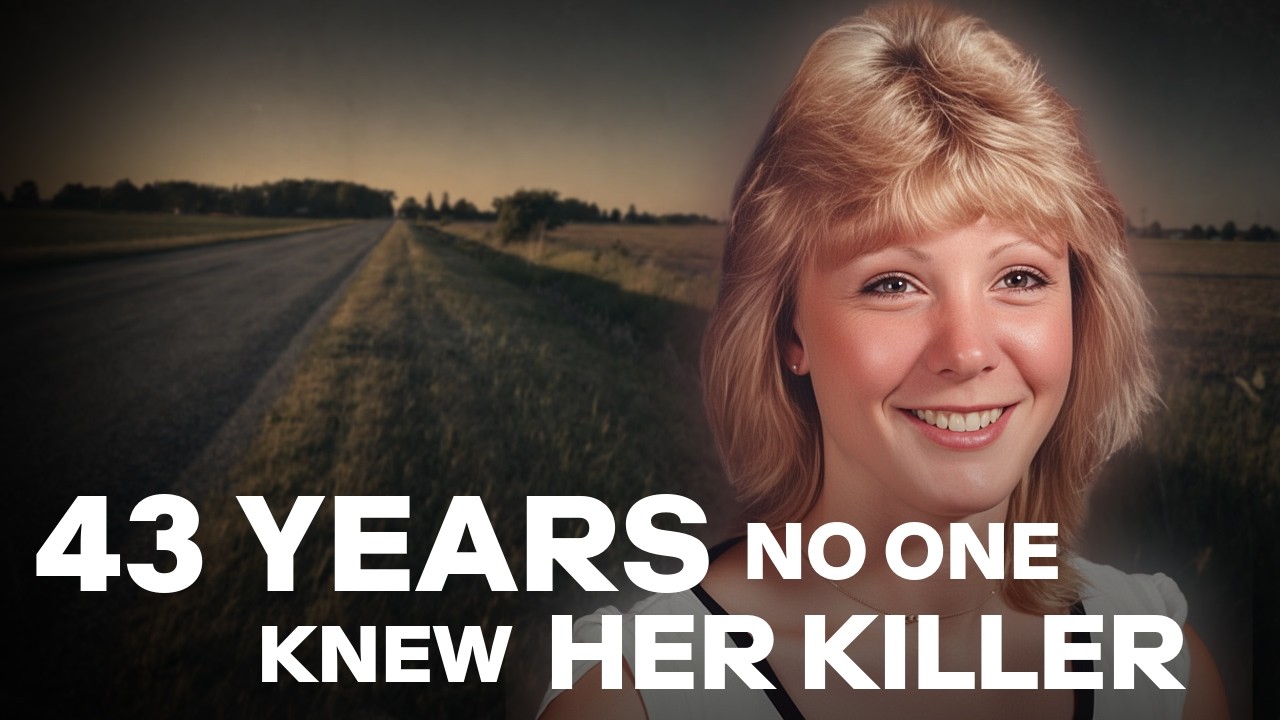
Sherry simply said she loved her mother and left. That was the last time Joyce saw her daughter alive. Sherry was a quiet, shy teenager. She was careful about her appearance, always dressed neatly with her hair styled.
She did not speak to strangers. Years earlier, when living with her father, a couple had stopped to ask for directions; her friend approached the car, but Sherry refused. She was not the kind of girl to run away. When she did not return home after school that day, her mother knew something was genuinely wrong.
Joyce called Sherry’s father, then the police. The response was dismissive: she was a teenager, she had probably run away. But nothing was missing from her room, no clothes, no belongings. Sherry would never leave with nothing.
The police insisted on waiting the standard two days before treating it as a missing person case. Joyce and her husband Bob drove to Flint, booked a hotel, and began distributing flyers. They searched the streets, checked trash bins and alleys, contacted every relative and friend they could think of. Joyce could not eat.
She would see a man in a restaurant or on the street and wonder: is he the one who took Sherry? The family contacted everyone they knew. A local crime-fighting organization offered a reward for information. The case was eventually broadcast on local news, and the police entered Sherry’s information into the national crime database, but the initial assumption of a runaway had already cost precious days.
Six days after her disappearance, on November 20, 1983, a local hunter checking his traps along Muller Road in Saginaw County, about fifteen miles north of Flint, found Sherry’s body in a drainage ditch. She was lying face down. Her pants were unbuckled, suggesting sexual assault, and she had been shot. There was no attempt to hide the body, only an attempt to dispose of it.
The crime scene was small, just a roadside ditch, and physical evidence was extremely limited. No bullet was recovered. The autopsy revealed she had been shot four times: once in the stomach, twice in the back, and once in the back of the head. Investigators believed she had still been alive when thrown into the ditch, then bled to death, possibly over several hours, lying half-submerged in cold winter water.
One bullet in the back of her head suggested an execution-style killing. Detectives arrived at the family home at dawn. They brought one of Sherry’s necklaces, which had been recovered, and asked Joyce to confirm it belonged to her daughter. When she said yes, the detectives told her the truth: Sherry was dead.
She had been raped and shot four times. Joyce’s husband identified the body because, as a relative later said, Joyce would not have survived it. At the funeral, the family asked a close friend to watch everyone who entered, looking for anyone suspicious, because they had heard killers sometimes attend their victims’ funerals. One man Joyce did not recognize turned out to be a long-lost cousin she had never met.
In the 1980s, Flint was a General Motors town. Manufacturing was booming, neighborhoods were decent, people had money, and crime rates were relatively low. A murder of a minor shook the community to its core. The Flint Police Department requested information from the public, and thousands of tips poured in.
Some said Sherry had been seen getting into a white truck. Another witness claimed she had gotten into a yellow Camaro. Detectives compiled lists of thousands of yellow Camaros and white trucks in the area, laboriously checking each one without the technology available today. They spent days and weeks on these leads, and none panned out.
The yellow Camaro witness later appeared to have lied, for reasons unknown. With most cases of this kind, the victim knows her attacker, and suspicion naturally fell on the last person known to have seen Sherry alive: her stepfather, Bob Shultz. He had inconsistencies in his story, and he refused to take a polygraph test. Police attempted a consensual wiretap, having Joyce call him, but it produced nothing.
Joyce defended her husband fiercely, insisting he could never hurt a child. Bob was deeply upset by the accusations. Police collected his DNA and cleared him, but the ordeal left its mark on the family. Over the years, detectives collected roughly 123 DNA samples from various individuals, all voluntary or compelled through warrants, and none matched.
Hundreds of people were interviewed. Thousands of tips were chased. Eventually the leads dried up and the case went cold. For nearly two decades, the family lived with the pain.
Joyce suffered nightmares in which Sherry asked why she had not found her. She feared for years that the killer would never be caught. Then in 2002, the Michigan State Police formed a violent crime task force for the Flint area, bringing in investigators from across the state to reopen the case. They revisited the old leads, the white truck, the yellow Camaro, the suspects, and took more DNA samples.
But DNA technology was still in its infancy, and the samples were compared directly against known individuals. None matched. The DNA profile from the case was entered into the CODIS national database, but since that database was not fully operational until the mid-1990s, there was no guarantee the killer was in it unless he had been arrested and sampled since then. The case sat unsolved.
In 2022, an investigator received a call from a border patrol agent at a Utah airport. A former neighbor of Sherry had been arrested there using an alias, had lived under that false identity for sixteen years, and had left Michigan shortly after Sherry’s murder. He had been questioned in the original case. A search warrant was obtained, a DNA sample was taken, and it did not match.
But for the investigator, this was the moment he began to believe the case could be revisited with modern technology. The case files had grown to tens of thousands of pages, collected by twenty previous investigators over forty years. The Michigan State Police partnered with Western Michigan University, whose students helped organize and digitize the files, checking backgrounds and determining which materials were relevant. In the fall of 2025, the state police contacted a laboratory called Othram to ask whether the DNA evidence was suitable for a new kind of testing.
Othram specializes in forensic genetic genealogy, examining hundreds of thousands of genetic markers to determine a person’s geographical origins and find relatives. There was no time to waste. The people most affected by the answer were aging. Sherry’s father was suffering from dementia.
Her stepfather had already passed away. It was becoming a race against time. In February 2025, evidence from the case, including semen found on a sanitary pad Sherry had been wearing that day, was sent to Othram. The lab determined the DNA was suitable and began working immediately.
The genetic genealogy search led to a woman in Wichita, Kansas, who appeared to be a relative of the suspect. She had seventy-nine grandchildren. Detectives traveled to Kansas, spoke with the elderly woman, and obtained her DNA sample. Her son also gave a voluntary sample.
Working with the Michigan State Police and student researchers, they spent months narrowing the possibilities through both genetic analysis and investigative work. In October 2025, the evidence pointed to a suspect from Michigan: Ronnie Collins. Collins was seventy-five years old, meaning he had been in his early thirties at the time of the crime. He was in the area in 1983.
He had no significant criminal record. He was a dental hygienist who had worked at a Michigan prison, which meant he knew exactly what awaited him behind bars. He was a family man, respected by his neighbors and friends, and he played in a band that traveled around Michigan, using a white truck to transport bandmates and equipment. The old tip about a white truck suddenly seemed significant.
An investigator spoke with Collins twice by phone. Collins put off the meeting until after the holidays, and they agreed to meet in early January 2026. The investigator had no intention of arresting him, only interviewing him. He prepared the location and waited.
Collins never showed. In early February, a search warrant was obtained for his DNA. When the investigators went to his home, his current wife told them Ronnie Collins had killed himself the day the interview was supposed to take place. In the investigator’s view, he was a strong suspect who had chosen to avoid facing the consequences.
His DNA was collected during the autopsy, tested at the state laboratory, and confirmed without doubt that Ronnie Collins was the man who had raped Sherry Jo Elliott in November 1983. The confirmation came too late for some. Joyce’s husband Bob had died in January 2025, never knowing the ordeal was over. When the investigator called Joyce to tell her the case was solved, he asked how it would affect her.
She said nothing had changed. She still could not hold her daughter, still could not tell her she loved her. But she learned details of Sherry’s final hours that she had not known before: her daughter had bled to death alone in a ditch, still alive when she was thrown there, lying in cold water for hours. The thought of what Sherry endured during three or four days in captivity tormented her.
When an obituary for Collins was published, praising him as a good man and a musician, Joyce responded publicly, writing that he had killed her daughter. So many people replied confirming the accusation that the obituary was taken down. Sherry’s aunt reflected on what had been stolen: a sister who might have married, who might have had children. Sherry was a beloved child, her mother’s only daughter, a caring and disciplined girl who loved coloring books and watching soap operas and eating frozen yogurt when she came home from school.
The killer had become a suspect in another unresolved case involving two girls from Oscoda who disappeared in 1969 after being seen getting into a white truck, but without their bodies, that investigation could not proceed. Ronnie Collins never answered for his crimes. He took the easiest way out, never facing questions from investigators or the family. But his identity had been established, and the family finally knew who had taken Sherry Jo Elliott.
It had taken forty-three years, but they knew.